
Given the current pace of technology, how can you know how it will impact your firm? Well, you obviously can't know for sure, but isn't it good to get an insider's viewpoint on how technology will change things? In this podcast with Derek Granger of Aris Growth, Derek talks about where he works and how he sees the changes coming through into today’s firms, changes that will have a significant impact, not only on recruitment and training, but also on fundamental work practices. To hear more about technology and to listen in to a wide-ranging conversation where we discussed topics from private equity to the importance of soft skills in accountancy, please listen in and scroll down this episode page for the contact information for Derek and for the additional, downloadable resources mentioned in the podcast. |
The Solution:
I see tools that are being built at the moment that really take generative AI to the next level, because, let's be honest, you see every day someone posting ‘just ask Chat GPT to do X’ to do with some tax question and it got it wrong - of course it got it wrong.
It's a large language model that's been built on billions of bits of data, but it's not specific to tax. You need to have solutions that are built specifically for tax. Chat GPT is never, well, never say never, with these things, but in its current format, it's never going to get you there.
But there are tools that are being built, I think you'll see a lot more, like agents, where there are multiple agents working together on tasks in 2026.
So, I expect us to see that starting to come through quite a bit more.
-
SHOW NOTES
-
TRANSCRIPT
-
CHAPTER MARKERS
SHOW NOTES



Welcome to the Humanize the Numbers podcast series. Leaders, managers, and owners of ambitious accounting firms sharing insights, successes, and issues that'll challenge you and connect you and your firm to the ways and means of transforming your firm's results.
Derek Granger:I wouldn't be betting against it working if it would. Well, I'm biased because I work with them, but um, but yeah, I see um, you know, the tools that are being built at the moment really take um, you know, generative AI to the next level. Because let's be honest, uh, and you see it every day. I'll see somebody posting about ask ChatGPT could do X, you know, um to do with some tax question and it got it wrong. Of course it got it wrong. It's a large language model that's you know that that's been built, you know, on billions of bits of data, but it's not specific to tax. You need to have them, you need you need to have solutions that are built specifically for tax. Chat GPT is never well, I say never, never say neither with these things, but uh in its in its current format, it it's never going to get you there. Um, so but there are tools that are being built. Um, I think you'll see a lot more um like agents and stuff where there's multiple agents working together um on tasks um uh over 2026. So I expect us to see that starting to come through quite a bit more.
Doug Aitken:Wouldn't you like to know how technology will impact accountancy in the next five years? In this podcast with Derek Granger of Aris Growth, you'll hear Derek's view from an insider perspective on the impact of technology and how it can fundamentally change the accountant's business model. Let's go to that podcast now.
Derek Granger:Hi, I'm Derek Granger, uh founder of Aris Growth. Um so I am uh well first and foremost, I'm a dad. Uh that's what I am. Uh I'm a dad to my two young boys, and uh um I try to be as good a husband as I can to my wife, but still working on that one. Um but um so what I do is I I've been working with and in accountancy firms for the last 15 years, 16 years actually now, um helping accountants uh really with growth. Um and quite a lot of that has been around um additional services that accountants offer to clients that are non-core um but that help them to grow, but also to have, I think, more interesting conversations with their clients, which then opens up a lot of other advisory stuff. So that's what I do. But you know, that well actually, so today, just this morning, uh somebody commented on a post of mine. Um in fact, I'm sure I'm fine to say who it was. So Ashley Leeds, um, who uh a lot of people will be familiar with. Um he done a podcast uh that was released this week with uh one of my clients, uh a company called Meshed, um, who are in insure tech business that work with accountants. And um one of the things that they spoke about was um was you know, the whole uh is is it Facebook or this isn't Facebook uh type thing and what's too personal for LinkedIn and what's not. And anyway, I I really liked what Ashley said about it. Uh and I'd done a post this morning and Ashley referred to me as a I think it was a um a respected and wise marketing guru, which is the first and the last time I think I'll ever be referred to as that uh because ultimately I'm a sales guy, right? That's what I am, and I'm not ashamed of it at all. Uh I've been in business development for for all of my career, so 26 years now, um, and that's what I do, it's what I'm kinda good at. The marketing stuff and all that, uh yeah, I suppose I'm alright at it. Um I I'm interested in it. Um, but uh yeah, I've never been uh referred to as a marketing guru before, but so I'm I'm a sales guy. Um and uh before we started this, you did say that Derek, you'll have no problem with talking. Uh and clearly that was like if I've not won the longest introduction ever, uh I must be close to it.
Doug Aitken:Uh certainly the most memorable. No one's introduced themselves as a dad, so well done. Um I'll need to remember that actually. That's uh it's a very human touch, so well done. Um so talking of which, our core purpose is to humanise the numbers. So, and we normally kick off podcasts by asking all our guests what they take from that. So, I'm interested in your take on it, Derek. What do what does that mean to you? Humanize the numbers.
Derek Granger:Having listened to a few of the podcast episodes, not all of them, uh, because there's a lot, um, but I'm I'm slowly working my way through them. Uh, I knew this question was coming, and there was part of me that was like, well, I well, I'd be controversial and say, Well, I don't think it is about the numbers. So I'm gonna I'll go with that first, but but know that I am not out, you know, it's not really the best thing to come on to a podcast called Humanize the Numbers and say, I don't think we need to humanise the numbers. Um, but ultimately like the numbers don't have feelings, they you know, they they're they are just what they are. For me, I think it's more about humanising the humans, the people that are doing the work. That that's the thing that I think uh we need more of. Um, and I think certainly with you know technology and the way that the profession's going, I think there's a real opportunity for people to really do more of the stuff that make us human, you know, really understanding you know what it is that clients are trying to achieve, um, you know, what it is that that they want to achieve actually within the firm. So that's one side of it. But then if I look at it from the side of um, you know, me and in business development, you know, those those numbers always tell a story. Uh because those numbers are the you know, those those conversations that you've had that have you know sometimes taken years to to develop to get to that point, you know, but but that you've worked on, you know, and there's there's a story behind every one of those. Um uh but also I think certainly when we when we talk about uh numbers, certainly from a business development perspective, I love you know being able to see numbers on that respect because there's nowhere to hide in sales. Like you've either you either get the revenue coming in out of the don't. Um but for me it's about you know the people that are that are really trying to achieve those figures and and working with them to try and get their strengths out and to try and help them to achieve those numbers and in a way that's enjoyable or as enjoyable as it can be, um, particularly when working with accountants who quite often don't see sales and business development as something that that is a natural thing for them. So so yeah, that that's my take on humanising the numbers as it is a bit.
Doug Aitken:Yeah, I love the um humanize the human bit, and in fact, that was the gist of your LinkedIn post that you were talking about, wasn't it? Um show your human.
Derek Granger:Yeah, yeah, absolutely.
Doug Aitken:Yeah, I did read it actually just before it came on, so I I know the one you're referring to with Ashley. Yeah, fabulous. Yes um so tell us a little bit about um early career. How did you get into sales? And because we met when you were working at Croner Eye, maybe about 10 years ago, I think it was. That was the first time we met. Um so where's your career taking you, Derek, and how did you get into sales in the first place?
Derek Granger:Um Do you know what I'd love to say that it was one of those like I've got a story that you know I was all intentional and and I you know everything I've done has led me to this, you know, this point in my career um uh by design, but most of it's just by flute and chance. Um uh I mean that's probably I'm probably underserving myself a little bit, but I um I was studying computer programming and web development um and um during the summer holidays I was looking for a job. Um, you know, we not not not to make this out or poor me because it's not um but you know I I didn't come from a from a uh you know a kind of affluent family at all. We were you know duck poor. Um my dad unfortunately was was really quite ill and died died when he was young, he was 49. But anyway, that that's a different story from a different day. Um but um but I needed I needed money. Um uh and uh I ended up I was in the job centre in Glasgow, I think I think it used to be in Baster Street, but it was somewhere up there. I was in in in the job centre, and this guy approached me uh and said about this job where I could earn like I think it's £500 a week, and I thought that sounds good. Uh and that's that was in like 1998 or something like that. Um so I went for this interview uh in um Hamden Park, and I remember Robbie Williams was was playing that night, so we were setting up for his his gig. Um and um yeah, we had to do all of these, you know, sell me a pen stuff and all that. But um, but I got the job and it was doing door-to-door sales, selling gas and electricity. Um so that's how I that's how I started in sales. Um it turned out I was pretty good at it. Um and I enjoyed it. And um eventually I kind of I I was I went back um to well it was quite in a um an access to unicorse. I was at um James Watt College, I'd left school when I was 15, um, but I was I was there and it was an access to to Uni when API. Um and I went uh it's just isn't for me. Um uh and I went and just went into sales and uh the first few years I was to be honest, I was just a typical young guy just trying to earn money. But uh done a couple of summers in IP though and then came back and thought I better get a real job. Uh and I did. Uh it was my first field sales role, got a car and all that. I thought I'm absolutely fine here. Um and then I met my wife, uh, or my wife to be at that point. Um, and she to be honest, and I spoke about this actually on another podcast, one one of her podcasts, um, and I forgot that I said it. So I watched it back and I said to my wife, but I've spoken nice about you here. So um, but but my my wife was my wife is my driving force. She also has been um uh you know my kids uh to a big extent now, but um she made me want to be better, uh, so I just really put everything that I had into being better uh and applied for a a job um uh for a company that were doing tax investigation insurance, uh company called Professional Feed Protection. Um and I was interviewed by uh James Hill, who is now one of the guys that runs the digital accountancy show.
Doug Aitken:So I met uh I met him only about a month ago.
Derek Granger:Yeah, I mean James is a great friend of mine. He's been a mentor, uh a friend, you know, boss, all sorts of things. Uh I should also mention Dan as well, because Dan's always been a good mate to me as well. But um, but we um yeah, I I took that job and kind of the rest, as they say, is history. That was my introduction into the accountancy market. Um, and I've been here ever since in various guises. Um ended up uh really involved in RD tax credits, um, and that led me to to EY, where I headed up a team there for a couple of years, um uh a business development team. Uh, and then unfortunately we were our team were made redundant in 2023. And at that point I thought, right, what am I gonna do? Uh will I will I go and get another job or will I give it a go myself? And and I I decided to give it a go. Um and um yeah, launch my own business, doing like fractional business development, go-to-market strategy type stuff. Um and I'd done some work with some accountancy firms, kind of helping them. But actually, what I then found was that the the easier or the the the the kind of um the path of least resistance for me was actually working with tech startups who are trying to either sell into the accountancy market or partner with accountants, and that's where a lot of my work now is is is working. So, you know, the tech the tech businesses are uh are are my clients who pay me, the accountants are the ones that I partner with um and that I help them with with with developing um uh kind of new service lines and stuff. Um so yeah, that's that's a bit about me and how I got here.
Doug Aitken:Yeah, good stuff. Uh I liked your your modesty about um I'd love to say it was all planned out and whatnot. I was exactly the same. It took me about 17 years at RBS to figure out that this regional manager job that eventually was offered wasn't going to make me happy. I was in the wrong role, I was pursuing it for the wrong reasons. So I ended up in business development too, and my last five years at the bank were just brilliant. I absolutely loved them. Yeah, and it it makes such a difference doing a job that you love. It doesn't feel like work, does it? And it's it's just comes totally naturally. But it was also the reason that I left RBS then because I realised that any other job wouldn't be as good. So I had to I was kind of forced to do my own thing almost, but no regrets. And how you how are you feeling about going on your own? No regrets or um not you happy where you're at?
Derek Granger:Um uh yeah, I'm really happy with where I've I've kind of landed now. Uh you know, it's I'm just over two years in. Um in the first year, I mean I I got off to a flying start, uh, and I'm uh I'm so fortunate um on that. Um I've always been the guy that that tries to help other people. Um, you know, people phone me up. In fact, I need to speak to you about something afterwards because you phoned me the other week about something. But you know, people would phone me and say, Derek, do you know what you know somebody that could help us with this, do you know something that could help with that? And I always try and help people. Um and I'm not gonna lie, there was a period during during kind of COVID time where I I was struggling. Um, you know, we we had I moved roles, we started an extension at a terrible time, you know, money was really tight, and it's you know it's been a struggle um even even to now, but um, but you know, I was feeling I just I wasn't really getting my kind of I wasn't getting back what I was putting out, but but you know, it was all I kind of knew. Um but then when I was made redundant, um I used to do these, I don't know if you remember, I used to do my my R and D ramble videos with me and the dog, and I've been about walking, and I just for me it was just well, I'm out walking with him anyway, I've got something to say, so I'll um I'll I'll do a video, but um but I I I decided to change it to my redundancy rambles and I done two of them. Um and straight off the bat I got so many people from from you know the the accounting community reaching out to me and saying, Derek, actually I've got some work for you, or you know, what but this and there was some things that that that you know they weren't the right fit, but but it there was enough that I knew that um by so that I I kinda I done that in the end in October and by you know by December when we were finishing up for holiday, I was like, yeah, I've got I've got a business here, um, and I get my first contract signed and incorporated the business and all of that kind of stuff. Um but it's been great. Um I I say this to people and and and I think a lot of people have similar views when they go out on their own. Is my my biggest regret is that I didn't do it ten years ago, but then I did it ten years ago, I wouldn't be where I am now. Um so I think things happen when they're meant to happen, but yeah, for me I'm so glad that I did it. Um not earning as much money as I used to do. But it's okay. Like yeah, I'm getting there.
Doug Aitken:Yeah, and you know, I I again I totally agree. Um, you know, I think I've found myself unemployable um in the nicest possible way, but it took a long time to cook me to that point, you know. And if I'd had the same thing, I would I would totally agree. Ten years earlier, I wouldn't have been right. You know, things I I agree, things happen for uh the you know the right reason at the right time and whatnot. Um your your RD rambles, you made me remember that. I used to you were exceptionally diligent at doing that on LinkedIn, it was a daily thing, to the point where I used to instead of looking outside to check what the weather was, I'd go into your videos and if the wind was howling and you had a bunner on or something, I'd read, oh it's raining today, okay.
Derek Granger:Yeah, brilliant, I love that.
Doug Aitken:Um what what sort of uh interaction did you get from LinkedIn on on your your RD rambles? Because they were brilliant, they're really good.
Derek Granger:Um great to be honest, and I mean that that was back. I I try to think when I started doing them. I mean, I I I've been on LinkedIn since 2009, um but for the first 10 years of that almost, like I I mean there wasn't very few accountants on it, which were my core market, and certainly in Scotland there were even fewer. Um, but it was kinda around about I think 2019 that started doing some video stuff. I can't remember when I started the RD rambles, it might have been during COVID, it may have been before it. Um, but at that point, obviously LinkedIn was very different as well to what it what it is now. Um but I I get really like amazing um uh responses from that, um, and it was great for generating revenue, um, for me at least generating opportunities. Um it did it came with its own problems as well, because uh when you stick your head above the parapet, um you know there'll be certain people looking to shoot you down, um and you know, particularly in that the R D industry as a kind of subsector of that you know, accountancy kind of tax sector is um it's went through a big difficult period, um that's for sure. But there's some some strong opinions on there, but also people that you know are very um argumentative and and and it and it and actually I found myself getting involved in it a wee bit for a while, uh, but then I realised that there's this really handy thing on LinkedIn that you can just like literally click and block people, uh to God's end, it really is.
Doug Aitken:You reminded me all actually of a Ricky Gervais sketch where he he says something similar about engaging with people on Twitter or or X, um, and he would say put something out there and he'd get a comment and he and he always prefaced anything that he was going to say by I shouldn't have responded, but I did. Straight down the rabbit hole. Yeah but yeah, oh I didn't realise about the blocking. That's that could be useful. Yeah, there's there's certainly some people who are keen to make a point on occasion. Um and whether it's a good, bad, or an indifferent point, they don't seem to mind.
Derek Granger:Yeah, well, I actually at the start of the year I've done a bit of a purge on on uh LinkedIn. So I only blocked a few people, it was a small number, but there were also some other people who I was just finding uh like I I was I was ending up getting myself annoyed at their stuff, or like finding myself down rabbit holes, um, you know, where that like for example, those people that make these crazy claims about how well they're doing, and then you go and I end up finding myself going looking up their accounts and stuff like that, and going, that doesn't seem to correlate with what it says here on Company's house. Um so yeah, I find that actually um you know going in and just muting people as well was actually a good way of doing it. Um so you're you know, you're not severing the relationship, but it's just like yeah, it's probably it's not a good use of my time because um yeah, you can end up finding that you spend a lot of uh wasted time on on social media, um, as everybody knows, but you know, LinkedIn's no different to that. Um, you know, it does have its way uh keeping you there longer than you you you really wanted to be.
Doug Aitken:Yeah, absolutely. Um so I'm interested in your thoughts on accountants, Derek, because like me, you're you're not from that world. Um when I worked at RBS, I used to kid myself on that the bank manager was the most important relationship that a business client had. I was wrong. It took me uh I I worked in a accountancy firm for a year and it took me till that point to realise that it's the accountant, head and shoulders above any other professional that the business client goes to. But I'm interested in your take. Um how do you f how did you find dealing with accountants and you know what's your perception of uh how they uh how they act in the marketplace?
Derek Granger:Um I love accountants, I I really love I love working with accountants. Um and you know, so for about about 10 years, really I was working directly with with accountants. Um then when I went to do the the NV tax credit stuff, I need a more client-facing, um, but still working with accountants, some some partners that would, you know, refer business and stuff. Um and then I really kind of came back into working with accountants um kind of almost exclusively um over the last couple of years. And and I I I was again I was saying that to some some friends the other week about just like how much I realised like once I stopped working with them so much, how much I missed them. Um so yeah, I think I think it's an it's a profession like no other. Um and there's a community within the accountancy space now, I think that is really special. Um but I do think like the profession's changing, you know, the the the people that are coming through now are very different to those that that came before them. Um some of that is good, but I think there's also some of the skills that some of the um the kind of previous generations uh were good at that are lacking um at the moment. Um uh and I and I think a lot of that I would say is around those soft skills and also th that ability to go out and you know essentially be a rainmaker, um, for wanting a better description. Um I I speak way uh I'm quite friendly with a number of kind of senior leaders at at large accountancy firms, and it's one of the areas that they find really challenging is where is that next kind of um you know, group. of um of those leaders that can actually go out and generate revenue as well. Where are they coming from? It's a difficult one. It really is. But um but yeah uh long story short uh lot love working with infants um and I um wholeheartedly agree like yourself they are one of the last few professions that I think can really kind of hold their hat on that trusted advisor um uh term there's not many um I mean I don't think even if you think the banks are I don't think people would look at their bank manager as their well they don't have a relationship with the bank manager but it's it's not that it's not that trusted advisor uh type of relationship um so yeah but I also think in in a lot in a lot of ways accountants don't make enough of that um whether they um they're aware of just how important they are and how how important their opinion is to their clients um or whether they're scared um you know because quite often you know those uh stereotypes about accountants that you know they tend not to be um you know as you need to have those conversations and stuff and you know um I don't think that's entirely true but um but yeah I do think um I think there's uh there's definitely areas that they they could improve on that's for sure particularly if I'm thinking from from a business development perspective.
Doug Aitken:Please forgive this interruption to the podcast you've heard Derek Granger talking about the importance of building better client relationships and how we can use technology to free up time to enable us to deepen our relationships. You'll find a link in the show notes to a business breakthrough that will tell you more about that very subject let's get back to the podcast it's interesting the point you made about the soft skills um you know I was talking to a firm recently the owners were lamenting about the younger generation for example not wanting to pick up the phone um and I and I asked them uh how do you teach them and they looked at me as they had three heads and what are you talking about? We shouldn't have to teach them to use the phone I said but you do because they don't use the phone. So you have to teach them and and they were appalled by this but I just thought it made perfect sense. I mean I I I think I was tainted but it it sounded a loaded question by the way and I didn't mean it to be a loaded questionnaire because I'm like you excuse me like you I'm intrigued by accountants I think that's the the best way to put it and at RBS we were trained to within an inch of our life on soft skills every month it felt I was away on a course and you probably had that at EY to an extent whereas in the in the normal general practice it doesn't happen.
Derek Granger:I mean it's one of the reasons we've put together manager programs just to to train people in those soft skills have accountability conversations you know how do they manage difficult conversations especially when they might be more prone to be introverted more driven by numbers than um interacting with humans you know there's there's a lot wrapped up in that isn't there oh without a doubt um I actually remember you sharing something on LinkedIn it was a few months ago now and it was about the way that the the different generations communicate and it and it really got me thinking and actually it kind of it did change not change the the the way that I thought um but it certainly made me think about that a lot more when I'm speaking to clients um and actually even in in practice with with with one of the the insure tech startups that I work with um and I noticed that that some of the younger folk in the team that you know they would they would send a message to someone but that to them that was it you know that's then done their part um whereas for me I I come from a different generation where yeah I might send them an email but if they've not applied to me within like a couple of days I'll probably I'll pick up the phone to them. Yeah um but but I do think it has to be a trained skill because it's just it's not natural to them to to to those you know coming through so if you've got younger members of the team you know twenties um uh you know even maybe into their 30s but certainly you know the the kind of um I don't I I forget all of the different terminologies my son was asking me dad what what what generation am I I don't know um what would I think the the Gen 10s or something I think he was he's Generation Alpha um your son both your sons will be generation alpha and then you've got Gen Z 20 somethings yeah and then millennials are are slightly older um you might you might creep into millennial uh category actually I don't I'm I'm I think I think depending on um uh who you you you listen to I think I can just about fit into that but I definitely don't yeah that is a bit of your stretch um but um but yeah I I'm I'm with you I really do think it's something that people do need to be to be training people in because even though you might have a you know a 20 year old who wants to communicate in one way if they're communicating with a you know a a senior business leader who's maybe in his you know late 40s 50s or you know she um uh and they're communicating one way but that person communicates a different way there's there's a mismatch there so I think it's um it's obviously you know being aware of who who your clients are and how they want to communicate with you um as well but then I think the other side of things I was speaking with an accountant in Edinburgh recently and he was saying to me that you know they're now finding the way some of their so they've started their um their practice I think 15 years ago but um you know they're now in their late 50s a lot of their clients are around the same age but the clients they're bringing in they're now they they're like they don't want to speak to to to the two partners they've now got a younger generation of of senior managers who are who are actually picking up a lot of the the the the kind of newer businesses because they resonate with them more yeah yeah definitely um yeah it's it's an interesting uh thought process there that things I mean the the biggest kicker that I often give back to you know when when owners are lamenting about the lack of skills and you know I I often ask who bred them that way it tends to shut them up relatively quickly.
Doug Aitken:Yeah um you know we we have to go take a bit of ownership for it it's you know it's it's our fault um but yeah just the the simple act of training I'm going to ask you about the accountants model Derek and I'm interested in your view on this because I I see a lot of firms where they're doing okay they're doing fine in inverted commas but they could do an awful lot better and I often wonder why there's sometimes there's a lack of action to improve things that might appear to be common sense almost um is is the is it that the accountant's model makes them lazy I know that sounds a bit if you hadn't said that I would have said it so um yeah I I do think I think that you know that the model and I think that just you know how things have been historically you know accountants haven't had to be that efficient to be successful and profitable.
Derek Granger:They've not had to really go out there and generate you know business um you know proactively a lot of it has come through the Ferals and um the likes um and also because you know if they're cut in revenue but you know as much as clients might complain about their accountants um most will stick with their accountant even if they're not very happy with them. So I think I think all of that has yeah see lazy yeah it's it you know it it feels a little bit harsh to say lazy but but I think it's a it's it's it's a good way to describe it.
Doug Aitken:And it has been a lot of people I was trying to think about another profession where when you get out of bed on the 1st of January your income is pretty much guaranteed. You know 95% of it you'll lose one or two clients but you'll gain one or two as well and um you know you the income is going to come in almost irrespective of what you do. But yeah it's it's just interesting uh even you know even lawyers solicitors they're they've got to get out there and make it happen.
Derek Granger:You've got to sell stuff well I I think I think one of the things certainly if you look at the the legal profession compared to to accountancy over the last few years you know it was always the way that accountants I I would have said were always ahead of the of um the legal profession in terms of adoption of technology and stuff like that. But over the last few years it's the legal profession have have you know really kind of I would say you know pushed much further ahead than accountancy with with um you know deploying um tech uh that can make them more efficient more proficient um because for them it's about freeing up time to be able to go and generate more more opportunities and and obviously a lot of their work is you know project based um as opposed to recurring revenue yes of course they will get that as well but um I think through necessity that that the legal profession has actually um you know adopted technology at a much quicker rate uh you know certainly the the new AI technology uh that's out there um I mean I also think that that the technology is not quite there for a lot uh of accounting firms as to where the vendors um are are maybe suggesting it is uh that's another conversation but um but yeah I think the model previously has just yeah just made it so that you know accountants could could be quite comfortable um whereas uh you know certainly the way things are going now uh you know technology being a big driver for it but also you know all of the the PE activity uh that's going on and the consolidation in the space I think I don't think that you know those accountants that don't you know change the way that they're doing things are are going to go out of business tomorrow but I think if they don't you know that it's gonna be you know over the next five years or so it's gonna become more difficult for them to compete um whether that's competing for clients or also competing for talent as well. Yeah yeah definitely just let's just um go down that rabbit hole a little bit Derek you talked about the PE activity and whatnot what's your take on that and how do you see it evolving over the next few years yeah what's my take on it uh I think there's good and bad uh you know I I'm not you know you look at uh you know certainly LinkedIn and you know social media in general and you know there's a lot of people that are are you know unhappy with all of the PE activity that's going on. But someone that's worked in you know certainly working in the RD space and working with you know venture backed businesses um and seeing how the VC market works you know PE's the the grown up version of that um and ultimately the you know the way that I I look at it is that for those businesses that are in a good shape PE will be good for them because it will make you know that that'll allow them to make those improvements um to be more efficient and there'll be some casualties along the way but there I I think what PE also does is is it will highlight those deficiencies and and the ones that don't make it there's a reason for it and probably because they weren't actually that great a business in the in the first place. So um I think we're going to see more of it. I think we've seen it in the last few weeks it looks like there was a you know a big push uh towards the end of the year where with deals getting over the line um after a period where it felt like it just to me certainly it felt like it just got a little bit quieter but um but I think we're going to see more of it in 2026. I know from speaking to a lot of people you know like the PE backed firms uh that are ready to go again for for their next uh kind of um uh run um yes there's going to be more of it so I I think if I if I'm an accountant um you you're gonna end up having you know you you'll have consolidation within the consolidators you'll have you know over the next few years you have a number of them that will be uh you know be turned into really sizable businesses um uh and then there'll be a lot of stuff at the at the bottom end and then I think there'll be a big kind of gap in the middle um but then out of that what you'll end up finding is that some of those partners that that that that are in those businesses acquired by the P firms will um you know decide to go again and they'll start and you know they'll quickly become that middle bit again. So yeah the the the the strongest they'll become stronger the weak will um probably um you know will see some casualties and so that that's that's kind of how I view it. Yeah yeah natural selection applies in accountancy as well yeah um just on the uh the the P side of it Derek who's um you know which which models catch your eye particularly um I I remember doing an exercise a little while ago and we got to at least about 20 different P in fact um another thought going through my head was that we've seen the account say age 50 plus 50 um and you know I think it for the first time I really noticed the impact of it in terms of the top 20 top 30 probably they they all seem to make a an appearance in the top 30 maybe maybe slightly more than that there's a another big firm we deal with in the I think 32 or 33 um but yeah how how's that how is it showing up in the 50 plus 50 for example and um you know how's that going to play through in due course yeah so I'm trying to think if I should be careful about what I say because I I I've got friends uh you know and and stuff that are that are in a lot of these bigger PE firms and I do work with with a number of them um I think I think and and here's the thing as well I I think whenever I speak to someone who is um you know not uh an inclined with PE they you know they'll they'll they'll um you know bang on about you know how it's terrible and everything else when I speak to other PE firms they quite often will point out all of the the the the reasons that they are better than the other ones and how you know so and so is or they're struggling and that's not working and all that. I think from what from from what I see like it and and this is true with PE but it's also been true you know look going back 10-15 years when you know firms would just merge you know just a normal you know merger type thing. I've not seen one merger where everything works perfectly uh I've seen quite a few where they've reversed back out yet because they realize they couldn't make it work. But but there's always challenges with it. And I think every every one of those PE firms has their own challenges but also they've all they've all got some real good benefits. I know the guys you know that that that that head that up the from you know the old Campbell Dallas team done a lot of work with them over the years that I mean they're 10 minutes down the road from me their Glasgow office and know them well. And quite often you know they'll I hear people criticising them but they're getting criticised because they're they're the one that's probably at the forefront of it. So you know you you're gonna get criticised but they've got some amazing advantages um that they are making in uh you know the technology stuff that they're um implementing behind the scenes and stuff like that. So you know actually you know there's a lot of I think there's a lot of pluses for for them um you know we've also got AEB in Scotland who you know they made a big acquisition um uh this week or last week maybe um and obviously have you know new new backing from Goldman Sachs so I think that that's going to give them an advantage uh I think I've I've heard they're trying to push into the London market more and that makes sense I can see how that would work for them uh you know then other ones like uh late summer uh for example I do I do quite a bit of work with some of the the the summer firms I think that's a great model that one um but then at the other side of things you look at for example streets who've got a very different model and I think theirs actually is something if I if I wasn't if I was a firm that wasn't wasn't really into the the PE model as it is I think maybe Streets model is a is is one that I would be I'd be interested in looking at. And there's a few kind of smaller players out there that are similar to to but as I say Streets is not well it's not a PE back but they are acquiring firms and you know that they've got a a good approach there. So so yeah I think there's positives and negatives to it to all of them but um yeah I guess you know it's down to the individual to to do do their due diligence and see which one fits for them um you know and making sure that that it's going to be the right fit culturally I think is is probably the most important thing. Yeah definitely we you've touched on technology there um Derek it feels like we've been in a space for many years where people were talking about the death of compliance and advisory is going to grow and whatnot and and you mentioned a couple of the latest buzzwords AI you know accountext was all about AI and how that's going to impact how do you see technology changing accountancy in the next uh few years I I I I am one of the people who think it's thinks it's going to change it like massively um and I say that with a little bit of inside knowledge uh so one of the companies I work with is a company called Claimer um who are the UK's leading technology partner to RD advisory firms and uh accountants who do RD tax work uh and we've made some some great inroads uh in terms of utilising AI um to reduce errors to improve efficiencies uh to make claims more defensible but um but those guys are working on something very exciting uh we we demoed uh to our first potential clients last week when I was in London uh we've got 10 design partners working on that which include some big top 10 uh firms um and top 20 firms um but that's got wider reaching application right across tax um and if we get that right uh that's going to have a massive impact um on it and we're not the only um uh firm out there that's trying to build technology not not not the same type of technology but that's trying to build technology um that will essentially mean that that people people's workflow the way that they do work will just change dramatically it will be completely unrecognisable to what they do at the moment um and I I I wouldn't be betting against it working if it well I'm I'm biased because I work with them but um but yeah I see I see um you know the tools that are that are being built at the moment really take um you know generative AI to the next level because let's be honest uh and you see I've every day I'll see somebody posting about ask chat GPT if it could could do X you know um to do with some tax question and it got it wrong. Of course it got it wrong. It's a large language model that's you know that that's been built you know on billions of bits of data but it's not specific to tax you need to have them you need you need to have solutions that are built specifically for tax um you know that that that that are built on on all of the the the regulations the legislations um and that understands the connection between things chat GPT is never well I say never never say never with these things but I in it's in its current format it it's never going to get you there. So but there are tools that are being built um I think we'll see a lot more um like agents and stuff where there's multiple agents working together um on tasks um uh over 2026 uh I expect to see that starting to come through quite a bit more and whether I don't think we'll be at the point I don't think 2026 it's not going to be the year that everybody changes and it's totally different. It'll be it'll be slowly but I think you'll start to see um you know particular tasks that are repeatable tasks um that more and more that either you know autonomous agents or or you know um EI and stuff like that will start to do a huge amount of that um and for me that's a good thing because it frees up people to do more of the stuff more of the human stuff the stuff that that you guys talk about um and I love I love the the the approach that you have and how you're trying to work with firms and I think I think it's almost almost me doing like a sales review which by the way I'm not getting paid for um but I think for those businesses that that implement the type of stuff that you're talking about along with the technology I think they're going to be in a good place going forward whereas those that don't as I say I think there's there's there's two problems one is just from an efficiency
Doug Aitken:point of view it becomes really hard to compete with with with tech uh in terms of um you know the the the the actual efficiency and and and you know the the profitability but most as you see about the the talent side of things how how are you going to convince somebody to come and work at your firm when they're doing they've been used to doing things the new way in the more efficient way and the more enjoyable way and then you're going no no no no no no we don't do any of that we're going back to you know pre-2000 stuff here um let's you know let's get back into doing all your reconciliations uh manually and through spreadsheets and all that yeah yeah it's gonna I think it'd be a hard it would be a hard sell I'm a you know like I say I'm a pretty good salesperson but I wouldn't want that job trying to sell that yeah yeah and big impact on training as well and you're right we do I I think our hope in all of this is that it allows accountants to have better conversations with clients more future focused conversations because they've got more time available to do it in fact we often use a a bit of IP just looking at where do you spend the the fee if you like um is it at the transactional level or is it at the relationship level? And of course the majority are still at the transactional level they're just spending it on doing the work um for the client and then getting out the door whereas the really good firms are spending more time at the relational level because they've used technology efficiently and effectively to to talk through the client the the client's accounts already via video. So the client by the time the client meets them the accountant I understand them that the video was great thanks right what we're going to talk about it feels like a much healthier conversation.
Derek Granger:Yeah I was speaking to an accountant the other week actually well I said I said a couple of months ago now um uh that we had on on the Meth podcast and um that's what they were saying they they do loom videos before um before when when they're sending the accounts over and you know there is then the option for the client to meet with them but quite often the client's like I've got everything I need thanks that's brilliant like you've explained it I've got it um and the other accounting that we had on was like I've never even heard of loom and but that's something that and I and I think I think there's a there's a big thing there and I actually I I I I've had to kind of rethink some of the the some of my own thinking on that is about um undervaluing the stuff that we just know and like you'll have lots of stuff like you've you know we've had many conversations over the year and and you'll you'll just rhyme some stuff out uh at times that I'm like that's a bloody that's a nugget and you've you've probably not even thought you know you're so you it's just I'm just telling you something that that's just in my head. And I think I think quite often we can um we can forget about you know when we're doing something and it's working that like you just think oh well everybody must know about that everybody must know what Luna is for example and you've got a lot of going no actually never never heard of that um uh and I do it quite a lot when it comes to like sales and marketing stuff there's things that I think it's just obvious but then I'll mention something well that's brilliant like really alright if you say so yeah um Derek really enjoying the chat as I knew I would um I'm conscious of time so I just want to close by and you've kind of touched on this already but maybe if we take a slightly longer time frame this time I'm just interested in the profession um and how it's going to look in the future and through what you've said about technology already I've got a good feel for you know the let's call it the medium term but not medium to longer term maybe ten years or so how do you think it's gonna play out in your view I I honestly I think anybody that tries to guess what it's gonna be like in ten years is it's just it's just that it's a guess I don't think I I I think I think the world of work will have changed so much over the next 10 years that that none of us will recognise it. The roles that you know my children will be doing uh so my boys are are um six and nine so you know they could effectively be coming into the working world uh then you know depending on which path they take I don't think the job exists yet that they're gonna do um I really don't so I think I think it's gonna be different um but I do think you know going back I think those softer skills are the things that that accountants will need. But also I also think I I think people will look at accountants or or or people that are looking to get into the accounting profession will look at it from a different view. And actually I think possibly that we'll see a lot a lot more businesses that are set up and um scaled quickly and then sold on um to to P House I think that'll become a kind of more standard kind of operating model is is that okay we're gonna use the latest technology latest stuff that's out there we're gonna build this firm um and then we're gonna we're gonna sell it on and I think that'll become uh and that's something I just thought of right there. So um asking again tomorrow I'll probably think something entirely different. But um but I think we'll see more of that which which then for me and and I guess this is it's probably a little bit leading into me I I I do think that for those accountants that are trying to do that that they will need to think about business development in a very different way. Because I think just now I don't I don't think most firms are geared up for it and I think well personally I think it's really really difficult to make business development work in an accountancy practice because um the marv ultimately you know certainly if you're if you're doing compliance type work you you can't make it work for a business development person. You know there's a reason that that most good business development people go into tech. There's more money in it. Like why are you going to spend that time in accountancy but also accountants want people and I I I'm often a a little bit of a rant here so if you'll indulge me I've seen somebody in uh quite a prominent accountant recently saying um on LinkedIn about potentially looking to to um bring in a full-time business development person um and there was people suggesting what they would need to pay them and stuff like and I I said if you're thinking you're going to get a good business development person at that at that level you're kidding yourself on you're gonna get somebody who you are going to need to manage uh and you're gonna need to hold a hand uh and you probably you'd be as well wiping out the you know the the uh the first 12 months forget about it um but then at the other side of it if you're looking for somebody to come in with lots of experience what they're gonna expect from a salary and stuff like that it doesn't mark up it doesn't match up and so I think there needs to be a different way of doing it. I tried doing it fractionally and I got it to work to an extent but the problem with doing that for me is I don't there was no way I could make that scale because you need to spend a lot of time with the accountancy firm so for me it just it was it it it wasn't working. So I don't know I feel like like there needs to be a different um kind of view from accountants about sales and about business development because I think a lot of them still look at sales as being this dirty word um you know and it's and it's not uh and even those that are good at it you know they they try and disguise the sales as all of these different frameworks and um you know uh different ways that they they they'll they'll work and stuff like that when you're like that's just basic sales like you you're you're you're but but like don't be afraid of it it's it's okay to sell to people because like 80% of business to business businesses and in the world use outbound sales methods whether that's cold calling whether that's deep you know email marketing LinkedIn whatever it is but um I think we need to go over this within this the the accounting profession that um that business development and sales is is is a you know a bad or a dirty word it's not like it's it's how business gets done yeah yeah absolutely yeah really good point and really interesting one to to leave us on Derek um our time's gone unfortunately um but really enjoyed the chat you make made that sound like really really morbid there our time's coming down maybe it's just my lack of sleep catching up on me that's what happens when you come home in the sleeper and you don't have a bed I feel for you mate I really do. Absolutely um Derek thanks so much for being a guest on the podcast really appreciate your time and thanks for all your insights oh thanks Doug it's been an absolute pleasure always good to catch up with yourself and um yeah it's been it's been interesting.
Doug Aitken:I hope people find some value from it um but yeah um you know if not if nothing else I'm sure they'll have enjoyed listening to yourself thanks again Derek you've just heard Derek Granger of Aris Growth talk about the importance of business development and selling skills.
Paul Shrimpling:These are subjects taught in the Accountant's growth academy to find out more go to remarkablepractice.com or follow the link in the show notes you'll find more valuable discussions with the leaders of ambitious accounting firms at humanize the numbers dot online.
CHAPTER MARKERS
START TIME | CHAPTER TITLE |
|---|---|
1:52 | Introduction to Derek |
4:33 | What does Humanise The Numbers mean to you? |
6:55 | Dereks journey into sales |
13:04 | Going solo |
16:15 | LinkedIn interaction and R&D Rambles |
19:38 | Why accountants are trusted advisers |
25:40 | The soft skills gap and training |
30:32 | Is the traditional accountants model making firms lazy? |
32:40 | Legal versas Accountancy: tech adoption |
34:58 | Dereks take of Private Equity aquistions |
42:00 | How Derek sees tech and AI changing the accountancy profession |
47:45 | The value of the client relationship |
49:40 | What does the future hold for the profession? |
Click the play button below and use the slider on the audio below to get quickly to the chapters in the podcast.
Resources relating to this podcast:
Derek and Doug discuss the importance of your relationships with your clients and how to use tech and AI so you can deliver work of a higher value.
How good are you are demonstrating and communicating the value you deliver?
Improve the value equation of your products or services and people will be willing to pay you more, your accountancy firm will be more profitable, and your future success will be more secure.
Fail to improve your value equation and you’ll experience price pressure, lost profits, and an uncertain future.
Only when you understand how to build your product’s value equation can you charge more and increase your profits.
The better you are at communicating the value equation of your product or service, the more you can expect client loyalty and a willingness to pay more.
As a result, you earn the right to make more money for your firm – all because you communicate and deliver greater value.
If you want to discover how to build your value equation, please click the button below to read the Business Breakthrough report 'Build your Value Equation'.
Click the button below to discover more about the Accountants Growth Academy.
Remarkable Practice Client Manager Programme
You secure your firm’s future growth and profitability when your clients are loyal, recommend you more, buy additional services and are open to regular price increases.
And what drives all of that?
Not just technical quality. Not just deadlines met.
It’s the behaviour and mindset of your client managers.
When your client managers improve how they engage and care for clients, your firm’s results improve.
So the question is: Could you be doing more to build your client managers’ skills and mindset?
That’s exactly what our Client Manager Programme is designed to do.
It helps client managers:
- Build deeper client relationships
- Deliver value beyond the numbers
- Handle pricing conversations with confidence
- Spot and act on opportunities for additional services
Great client care is no longer a soft skill. It is a strategic advantage.
Click the button below to read more about our Remarkable Client Manager Programme and, if you want to discuss it further, please get in touch via the 'chat with us now' button on the website. You'll speak to a real person, not a bot!
Your Firm’s Future – by Douglas Aitken and Paul Shrimpling of Remarkable Practice

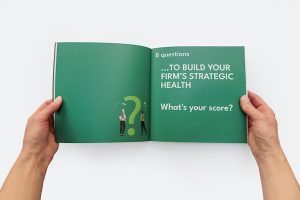

In a world of constant change, uncertainty, and increasing client expectations, one thing separates ambitious firms from the rest: strategic health.
In our book, Your Firm’s Future, we share a practical framework built around 8 essential questions that will help you assess and build your firm's strategic health.
Why does strategic health matter so much? Because when your firm is strategically healthy, it benefits your team, your clients, in fact, everyone connected with your firm.
Strategic health isn’t just an internal metric. It delivers a better outcome for everyone connected to your firm.
Click the button below to take the strategic health of your firm seriously by completing our Strategic Health Diagnostic
or
click the button below that to buy the book.