
What do martial arts have to do with running a medium-sized accounting firm? As we learn in this podcast with Rob Newman of Carter Collins & Myer, quite a lot. We didn't just talk about martial arts, though. In the podcast, we touch on the importance of how we work with our clients and how accountants can genuinely change lives. We also discuss Rob's LinkedIn style and how he's mastered the art of the inscrutable selfie from his car! For this and a lot more, please listen to the podcast. Scroll down this episode page for the contact information for Rob and for the additional, downloadable resources mentioned in the podcast. |
The Solution:
The only way to overcome that is to keep going and keep going and turning up and following the lessons and listening and practising and training and working.
It's the same in business; business is entirely that. Most of business fundamentally is boring. It's not glamorous and sexy; it's boring, but it's consistently, continuously doing it to the highest standard that you can achieve.
And you won't always be amazing, and it will go wrong, and stuff happens, but you've got to just keep standing up and keep getting going.
And 100% that's completely martial arts. I have no athletic ability whatsoever, other than what I learned and what I kept training. I was not and have never been a natural athlete, and yet I had 33 fights and won 30 of them.
-
SHOW NOTES
-
TRANSCRIPT
-
CHAPTER MARKERS
SHOW NOTES


Welcome And The Grit Principle
Paul Shrimpling 0:05
Welcome to the Humanize the Numbers podcast series. Leaders, managers, and owners of ambitious accounting firms sharing insights, successes, and issues that will challenge you and connect you and your firm to the ways and means of transforming your firm's results.
Rob Newman 0:21
The only way to overcome that is to keep going and keep going and turning up and following the lessons and listening and practicing and training and working. And it's the same in business. Business is entirely that. Most of business fundamentally is piss boring. It's not glamorous and sexy. It's piss boring, but it's consistently, continuously doing it to the highest standard that you can achieve. And you won't always be amazing, and it will go wrong, and stuff happens, but you've got to just keep standing up and keep getting going. And 100% that's martial arts. That's completely martial arts. I have no athletic ability whatsoever, other than what I learned and what I kept training. I was not and have never been a natural athlete, and yet I had 33 fights and won 30 of them.
Doug Aitken 1:10
What does martial arts have to do with business and accountancy in particular? In this podcast with Rob Newman of Carter Collins and Meyer, you'll hear how Rob's experience with martial arts has dissipated into every part of running an accountancy firm. Let's go to that podcast now.
Building A Firm From Nothing
Rob Newman 1:31
Hello, my name is Rob Newman. I am one of the partners of a firm of accountants in North Manchester called Carter Collins and Meyer. We look after owner-managed businesses across Greater Manchester, typically up to about £5 million a turnover. But we have everything in between, and we have some outliers, people in Carlisle, people in Aberdeen, and people all the way down in New Key. It's very varied. It's a general practice. Within the general practice, there's a couple of other businesses as well. For the listeners in this, we turn over a couple of million pounds of accountancy fees. We do several hundred thousand pounds of financial services work. We do another several hundred thousand pounds of will writing. And I've got a microscopic forensic practice myself, which is just me. Disputes, dispute resolutions, uh divorces, weird and wonderful stuff, which gives me some great stories to tell of some of the things. The firm itself uh started from basically nothing in 1999. Um, it was a small bag of fees that I bought out, uh, 35,000 quids worth of work. Um it's we I've done some takeovers along the way. I've done 13 acquisitions, um, all smaller stuff. I'm not I'm not some sort of big consolidator. Uh it's very much been self-funded along that way. I do have two partners. They own less of the equity than me, so it's still very much my outfit. Um, but I couldn't run, we couldn't be a firm without Andy and and Fiona. Um we have 30 staff. Um, and um people say, where did the name come from? Because it isn't the name of the firm that I actually bought out. And I have to admit nowadays I made it up on a train because I wanted it to sound really old and established. Um and I took three three names of things that I thought kind of captured a solid English sounding name, a solid Irish sounding name, and a name that vaguely sounded Jewish, because that's kind of my own heritage. And um, yeah, there we are. It sounded like we'd been around forever, when in actual fact, at that time it was me over a chip shop in in Rochdale.
Doug Aitken 3:38
Oh wow. Well, you nailed the name anyway, I'll say that. Um for a kickoff.
Rob Newman 3:44
At least there's been one good thing in the last 27 years.
LinkedIn Selfies And Real Opinions
Doug Aitken 3:47
Um well, great to have you on, Rob. Um, thanks for giving up your time. Really appreciate it. And um, star of LinkedIn as well, which is the the reason that I first um uh was aware of your name. Um, can I say that you're infamous for in-car selfies?
Rob Newman 4:08
Do you know where that started? Simply because I didn't know what else to do. I started putting some some posts out on LinkedIn about three years ago. Um, and it initially they were just responding to other people. And and as any listener here will realize, I have can uh I have fairly strong opinions and can be a bit of a gobshite at times about stuff. And I'm responding to people and I'm starting putting some of my own things, and I realize that the best posts always need graphics, and I needed some graphic, and I've got no graphic ability whatsoever. And I tried to turn on Canva and couldn't get it to work. So the easiest thing was to take a photo of myself. And now, if I don't put a photo of myself up, I actually get people saying, Oh, where's the selfie today? Why haven't you got a picture in the car? Um, so it's been kind of become a bit of a thing. I then had to make sure. Then the next comment I started getting was about glasses because I I do have uh a lot of my glasses are actually vintage, and I I buy a lot of old glasses and put new lenses in and have them repaired and stuff. And people start talking to me now about where where do I get my glasses from? And um I don't think they ever read the tax side of it. It's it's kind of like, oh, I like I like the the jacket you were wearing, and what great glasses you've got. So um, yeah. Uh I have to say, LinkedIn is is um is is one of those fabulous mediums, though. That um, you know, I had I have no LinkedIn training, I've got no LinkedIn background, and I've ended up with 25,000 followers on LinkedIn from a standing start of just putting my own opinions on there. And anybody listening to this, I would say talk on LinkedIn, your own personality, particularly in independent firms like like a lot of us are, is what draws people to you. And don't be frightened of it. You're gonna get people disagree. I had a really infamous time last year with mortgage brokers. I wrote a piece as to um, I the actual title was Why Are All Mortgage Brokers A-holes? And um I I ended up with like 500,000 views of this thing because I'd got I got really fed up with a mortgage broker that particular day asking me to do projections for a set of accounts, and they don't understand how difficult that is for an accountant, not physically doing it, but the regulatory issues around putting projections together. And I ended up writing a big long formal piece for the mortgage industry and some of their technical journals to try and help actually then educate the mortgage industry, and it's amazing what can come out of it. Talk, please put people put out there. It's it's a fascinating uh arena. As I say, you you do sometimes get it wrong, but yeah. So thank you for that. I appreciate it that you came across me that way.
Doug Aitken 6:45
Definitely uh authentic as well, which I think is uh what you were trying to say about LinkedIn. That it's it's just you, um, you being you, and if people don't like it, well tough, just move on. Um exactly, but exactly.
Rob Newman 6:57
Hey ho, it's just the way it is. Um not every post lands, not everyone particularly likes always the opinion. Um, I put a thing up yesterday that my my post yesterday that I wrote was again, it was this is often the way somebody was irritating me. For for two years, I had outsource your business, outsource your business, let's send all your work offshore. And it's something that I don't fundamentally agree with. Um I it I have less logic for that stance than I have for a lot of things that I would say. I just it just doesn't feel right to me to be offshoring or outsourcing my work. There is an economics factor to it as well. It may make sense if you're in central London or something, but when I look at some of the prices, I can do it as cheap in Rochdale as some of these offshore people seem to do. And I've then got workers in Rochdale and families I look after, and there's 30 people that pay the mortgage off of what we do. And you know, to me, that's quite an important thing. But then in the last three months, it's been AI is the salvation of your business. And if only you you convert everything to AI, you can sack everybody, and your whole business will now be this. And it's like, come on, guys, it's neither of these uh are completely the way that they all have uses, they've all got a thing. But yesterday, that rant about AI, I had 153 views on, so nobody was interested in my view on AI. Um, so it's not always perfect.
Doug Aitken 8:19
Yeah. Oh well, we might delve into that arena um as the conversation develops, Rob. I'm certainly interested in your view
Humanising Numbers For Real Decisions
Doug Aitken 8:27
on it. Um we always ask our podcast guests at the outset about our core purpose, which is to humanize the numbers. Um, what what do you get from that, Rob? What's your take on humanize the numbers?
Rob Newman 9:34
I think humanize the numbers is a fantastic phrase that you guys use because particularly at the sort of level of businesses we do, the the smaller business, the micro businesses, and you know, even up to that sort of five million pound turnover, the the decisions that people make based on the accounting information they've got literally changes lives. It literally both the both the business owners and the individuals in that business, it's such a personal thing when you're in small business, and people are so intertwined with it that getting them to uh understand, appreciate, use, um, and have a feel for what's going on in those numbers, uh, because the numbers are the language of that business, whatever technical industry you're in, those numbers that you're coming out with in your management accounts, even in you know, even your VAT return in your bank statements, in your final accounts, literally change how you decide to do things on a day-to-day basis. Am I taking somebody else on? Am I giving pay rises to my staff? Can I move premises? Can I buy a machine? And you've got to be able to put it across and deliver it in a way to the users of it, something that makes sense to them. There's no point us guys sitting here going, well, your your eBit DAR is A, B, and C and this and that, and some loads of complicated stuff. You you've got to be able to get it in such a uh the the message clicks, you can see in their face that they're they're kind of going, look, I I I can see what you're doing. Oh, right, oh, that's what that means. Um, I believe I'm quite good at that. I can be a bit marmitey, I know. I can I can I can I can piss people off when I tell them, you know, your business is junk, it's rubbish, it's closing down. Um and I've had, you know, this isn't this isn't a proud boast, but I there's been numerous times where I've gone in 22 months' time your business will go bust, and in 22 months' time their business has gone bust. You know, it's that's that's not a proud boast of how clever I am. It numbers the numbers mean something to me at this stage. I can see patterns, I can, I can recognize things that are coming. And I desperately want business owners to have that same sense. Not to be accountants, not to do the same job that we do, but so that they're getting something that allows them to go, do I buy that machine or do I move down the road? Or can I, you know, let's be less businessy. Can my family have a Florida holiday this year as opposed to um a cheaper Spanish holiday? Can I, you know, all of that kind of stuff. To me, that's what humanizing the numbers are. It's it's it's linking them, linking what you're seeing on a piece of paper to the personal decisions and the personal things that people are trying to do. Planning it. Yeah, where are you going with this? How do you get out of it? I, you know, one of my long questions for people. I did a stint, did a couple of years in corporate finance in one of the big four firms before setting up on my own. And the big thing in corporate finance was always, you know, how do you get out of this business? What's your exit strategy? And that's long been my one of my views to it. Corporate finance doesn't, I don't feel exist in the sort of category of businesses that I deal with in the same way. You're more into like a business brokerage type of setup. But that whole thing of, well, how do you get out of this? You know, I know you're you're Mr. Local Engineering CNC machine guy now, but it's all dependent on you. Where's this going? How do you sell this? How do you and it's often not a sale, but you know, how do you how how are you going to be able to stop? What happens if something goes wrong? What happens if you know you've got two young kids and and you drop dead? How do they take care of it? And all of that, again, is that humanizing the numbers thing, making it relevant to where they are in their own life now, and how do you get to the next bit of it and what does this mean?
Doug Aitken 13:24
Yeah, it's interesting your views there on the education, Rob. I meet a lot of accountants who tend to take um numbers or numeracy rather as um taken for granted that everyone assumes everyone knows numbers to the same level as they do, which of course is not true with clients, especially. In fact, some are very scared of that. So, what was that moment of realization for you, and how did you adapt your approach to clients?
Rob Newman 13:59
So I um I leave the corporate um actually on my birthday
The Client Meeting That Went Wrong
Rob Newman 14:05
in 1999, and I I stick a sign on a door. And one of the very first clients I ever got um was known as um Eric the Viking. I'm not giving away any any trade secrets when I call him that because he's he's not he's not known as that anymore, and he's long retired now. And this guy had um on his right hand he had love tattoos, and on his left hand, hate tattoos, and he had a big spider's cobweb on his neck and no teeth, flat nose, and um he he um he he sits there, and I have to tell him that he's he's doubled his income for that year, and instead of being on the old SC60s that he used to be and getting a tax refund, he's now going to higher rates of tax and he uh actually needs to pay tax, and at that point he proceeds to turn over the table and lunge at me to try and strangle me. And um I realized that I hadn't quite delivered this in the way that it needed to be delivered. Um, now I've I did a stint in the army and I have long trained and practiced martial arts. So I'm disarming this guy as he's trying to strangle me, and I'm literally putting my elbow in his face at that point, thinking I still haven't actually managed to explain this in such a way as he actually understands it. And it took the whole calming down piece of getting him down to the local pub and actually putting a couple of pints inside him that didn't actually lift him up, it reduced him down to realize that the the way that the corporates had had um taught me was not going to work in my new life as a local business accountant. Um and it became very much, and that is actually that is a 100% true story, it became very much a um how do I communicate this to people in such a way as it means something to them? And that became in in some respects, it became quite easy because I mean I I came from nowhere myself, you know. I never knew my father, my mother was uh came from Ireland, my mother always worked in factories and everything else. I wasn't very good at school, I didn't do particularly well at school at that time. Schooling came for me later. Um, I I came to it more as an adult, and you know, now it's a different thing. Now I've got umpteen different qualifications and things, but at that time, the only thing that ever floated my boat when I was earlier was martial arts and was being around that type of world. So it it became a step back of, you know, if I'm back in Southwark and having to explain something to somebody, how am I going to get this across to them? Which means between coming from that background and between coming from martial arts and my stint in the military and everything else, I always have to do any of these podcasts or anything I do like this, and with a big caveat of please forgive me if I get overexcited because I'll start swearing. And I don't mean anything by it, just punctuation. But I have found that it's one of the best ways for me to with the sort of clients is to be natural like that and be willing to swear and be willing to actually communicate and not be the stereotypical. Now, nowadays that's much easier than it was in 2025, you know, 2020 onwards, four, five, six on Twitter. It's quite easy to be unstereotypical, it's quite easy to be open neck shirted and and swear and stuff. 27 years ago, when I was getting going on this, that was a major issue still in the profession. If you didn't turn up in a grey suit with a white shirt and a and a dark tie on, it you were there was something wrong with you. If you if you spoke with the wrong voice and swore, that it was you were still very much an outcast at that point. And it's only in the last few years that I've seemed to feel like I've found my place in the profession, even though I've been plowing my own furrow for years. I always felt like the outsider because I was so different to it. And it's only it's basically since the pandemic and starting to respond to people on things like social media and putting numbers out and writing LinkedIn posts and talking to people like yourself that now you feel like the world's caught up with me. I actually I actually belong nowadays on Twitter. Um, so yeah, that's how I believe I've done it, and that's how I believe is using my own experience of things and just trying to be as human as I can be. You know, where did I come from? And yeah, I fell into this because I did, I fell into accountancy completely. It was, it wasn't some big plan of mine. I kind of, it was, you know, the military bit that I did didn't quite work out the way I wanted it to. I found myself at a loose end. I managed to get a job in a firm of accountants, and the next thing is I sort of passed some of the exams. And, you know, having been told off several times along the way for the way I went on and things I said. I mean, one of the very first times I ever got told off, it was the it was uh the days when everything was audited, and we're going around um trying to get information out of people in this place for an audit job, and nobody really wants to help us. So I went out and got a big box of chocolates. And every time anybody in the accounts department did anything to help us, I'm giving them a chocolate and kind of going, Thanks very much, you know, for helping me on this. And the audit partner calls me in and went, You can't you can't do that. You you can't give them a chocolate. I mean, that that's that that could be seen as bribery. And I'm like, sake here, I mean, it's a chocolate, you know. To me, that was just how you went on because that's the world I came out of. But nowadays, again, it'd be fine, but it it wasn't then.
Doug Aitken 19:41
Yeah, yeah, well, it it just turns the wheels, doesn't it? It just lets people see you're human and and you are asking them for a favor after all. So yeah, it makes perfect sense. Yeah, fab. Okay, so in terms of um your a lot of your LinkedIn content, Rob, is um
Teaching Tax Online With Personality
Doug Aitken 20:00
very specific and educational. And you've got you've got a YouTube channel now?
Rob Newman 20:06
Yeah, we have. Yeah.
Doug Aitken 20:07
Yeah. So what's the what what is it that you're um trying to achieve with this education? Where did that all come from uh in terms of starting an education series?
Rob Newman 20:20
So I first started with YouTube in 2020 during the pandemic and and it did quite well for me. And I'll be honest, I just basically ran out of energy, which is why it it lagged. What I do, I I came back to it again this year, having had a couple of years on LinkedIn for those, and the a lot of the content I'm putting out is around five general themes, um, which is across the course of the the week. I'm trying to show I'm I'm always trying to show I'm human. Um, so I I try and bring in some sort of point of human reference during some stage of the week. Be that a piece of personal development to something, you know, I read this book or I went to this or I listened to this podcast or something. Um, be that a thankfulness piece, which often goes down really well. Of you know, I I'm a big believer. Despite my whole martial arts tough guy thing, I'm a big believer in really simple stuff as well, of like going for a walk in the sunshine. And you know, um, I'm very, very lucky where I live. I have a I have some national trust land literally at the back of my house, and I can kind of go through the gates and walk up the hill. And you know, at six o'clock in the morning as the sun's kind of coming up, wow, how lucky am I, a kid from a council estate in South London, to now have this, you know. Um, so there's those side of things because again, in small businesses, everything is personal. You know, um I then try and do a specific tax piece a week. Um, there's an awful lot of tax is very confusing for people. And what can be really simple for for me, dividends. People don't understand what dividend is, and that that's not in any reflection of them, that's us lot as in the community for not explaining it to them properly. Just like I, you know, my wife's a nurse, and there's there's no way on God's green I could do any of her job, you know. Like she starts talking about putting a cannula in somebody. I'm like, I don't know what you're on about. And it's it but they don't they wouldn't expect otherwise in their world, they know that it's a different thing. Whereas, as you touched on before, in ours, people seem to think that well, everybody knows this, and they don't. So an awful lot of the tax pieces are that type of stuff, you know. One of my biggest hits of last year was explaining the um trivial allowances rules and just putting it out in in 250 words of this is the sort of thing you can look out for and how it can work for people. And I got half a million views on that and and like nearly 5,000 comments on on that, um, which is again to somebody that's around it all the time, you know, it's just trivial allowances. What's that? Well, it's a big deal if you've never seen it before. The next piece then is stuff that's happened. Happening. I'm not political other than politics has a massive impact on tax policy and business policy. You know, I think all the political parties are utterly useless, all of them. And you know, they can all go and boil their head as far as I'm concerned. But it has a massive impact on us and us as business owners and practitioners and everything else. So I'm trying to stay up to date and do my version and interpretation of some of that stuff. And, you know, I very much try and bring to that as well that things are never as bad as you think they are, but never as good as you would hope them to be. And to try and bring some sort of balance and commentary around that. I'm a big history buff, so an awful lot of what you will read and see can rhyme with the past. And I'll try and bring the rhyme of history to it. As if nothing else, we'll where this is where it came out of. I'll then try and do some specific pieces as well about some of the specific areas that uh we look after. So I've got a bit of a specialism in CICs and charities, for example. And the reason that came about is because of my own martial arts club. Um I'm very lucky. I have 250 students in my martial arts club. I teach traditional karate. I've done all sorts of martial arts and I have different gradings and stuff in different things, but I teach traditional Shukakai karate. Uh, that's where I started from. My original instructor came from that, and that's what I try and pass on. If you want to go off and do more extreme stuff, I'm fully in supportive of it, but it's not the bit that I teach. So a number of years ago, whenever I can't remember what was what, 15 uh CICs come around. A martial arts club is not a it's not a charity, but it's not really a business most of them. You can make them a business, and we do have people that do, but it's not real a lot of the people that do it are like me, they've got another job, they've got something else going on. It's not their core thing they're trying to do to make a living. And I stumbled into CICs and I stumbled into this structure that was a thing between it, and I turned my own karate club into a CIC. Um, and I went looking for some funding, and I got some local council funding, and I can provide a lot of tuition for a lot of the kids because where where my club's based is a the deprived area of Greater Manchester, and I can do an awful lot of tuition, as I say, for free, and I can give them equipment and karate geese, and and because it's being supported. And a couple of people then other clubs would ask me about well, how did you do that? So I'd tell them, and then of course, quite quickly it dawned on me that this was a whole accountancy piece, and you know, now I've got over 150 CICs and charities across the UK, often in that sort of space, some sort of club, be it a gymnastics thing, be it martial arts, be it fencing. Um, we have pure charity type stuff as well, doing what you imagine as charities, but that that became a focus of actual work as well. And because I'm trying to speak to those people that I'll often have that as a as a piece. My other types of stuff occasionally will be just pure commentary where I just am fed up with somebody like I was on Sunday, telling me you need AI to change your business completely. Um, and I'm not against AI, but you know, it's not it's not the solution to everything.
Doug Aitken 26:02
Yeah, yeah. Where do you stand on AI in in relation to the profession, Rob? Because that
AI As Tool Not Takeover
Doug Aitken 26:08
there is a lot of commentary about it, and I'm due at a Kintex in a couple of weeks, and I just know it's going to be talked about left, right, and center. Um, so where do you stand on it?
Rob Newman 26:19
So I I just I came into the profession just as self-assessment came in, 1997. And I that meant I just caught Lotus 123, right? And then I caught Excel, and then I caught um was it Audit Man, and then we saw, right? AI is another tool. It's another tool. It's going to change the way we do things. Of course it is, right? It's going to make things different. And just like somebody, you know, 45 years ago, half the job of accountancy was adding things up on a till roll. And nowadays you wouldn't dream of doing that. I wouldn't necessarily even like to predict how it will change things because some of that probably hasn't even been worked out yet. It'll be, you know, the generation beneath me that kind of think, oh, we could do this or that or something else. Absolutely, it's going to be there, it will change things, but it's not going to wipe out the profession because we'll just adapt. I honestly, there'll be in lots of industries, there'll be lots of current roles fundamentally changed or moved on completely. But it doesn't mean that the entirety of lawyers, plumbers, brickies, accountants, surgeons will all disappear. Um, it just becomes different. And you know, it's yeah, there's levels of AI as well, depending on what you're talking of. You know, I'm a huge advocate, and it's known that I talk about uh auto entry by Sage. And I'm a huge advocate for it because it changed my firm. We were one of the very, very early adopters of auto entry, even before Sage actually owned it. And it had a huge one of the reasons that I don't outsource and don't offshore to places is because I use auto entry. And we have, you know, you can give me a bag of crap and I can turn it into a set of accounts quite quickly using UK staff who can then talk to you onto it. And that that's AI. That's and I've been doing that since you know 14 onto it. Generative AI, uh we use it all the time because we've written a load of GPTs that edit emails and edit letters and have the voice of CCM built into it so that you can waffle on in any way that you want, but then it sort of rewrites it in a reading age of 15, removing the big words. That's literally that's part of the prompt. It's literally we have a reading age of 15 set to everything and um good to it. Where that will end up, as I say, I wouldn't like to see, and I am absolutely for it as a tool, but it's not gonna wipe us all out, it's not gonna end everything, it's not all over. It it's an adaption, just like Lotus 123 and Audit Man were adaptions.
Doug Aitken 28:56
Yeah, yeah. It's funny, I had an interesting chat with someone along the same lines two or three weeks ago, and he was trying to suggest wipeout, and he inadvertently drew an analogy between like when the motor car came along, so suddenly there was no need for as many blacksmiths because people didn't use horses as much. But when I pointed out, you know, the the facts are that unemployment stayed at a relatively stable level during that time because people retrained and found new skills and they they adopted new skills to cope with the new technology, what in their case cars. Um so I see that in in very much the same space that yes, things will be different, but we'll still need humans, and we'll just need those humans to be more adaptable and learn new skills and learn new tools as you phrased it. Is that is that fair summary?
Rob Newman 29:52
Fair absolutely fair summary, it's completely what I see. I think that's absolutely true. Um, it would be different sets of skills, it'd be different things. And as I say, some of those are too early to predict. We don't know what that's going to look like. Um, if I did, I could make billions from it, and you know, I wish I could. Um I I'm not that clever. Um, but no, it as you say, the blacksmith analogy is is a is a prime one. And it then also, you know, you could take that across to so many things because the irony is now, you know, in those days rich people had motor cars and poor people rode horses, whereas now it's the rich people that ride horses and poor people drive cars. You know, yeah. Uh something that's always close to my heart. I love clothes. I love traditional clothes, and you know, I I love having I have stuff made and things, um, and I use tailors for that. And you know, that's become that became quite niche for a period of time. And yet, if you mix in that circle now and talk to them, they say there's a massive outcry for tailoring. And there's a big push to try and reskill and bring people back into those because more and more people want it because of the advent of high of disposable fashion. People are actually wanting to move away from that. Well, it's it's many respects, it's a totally unnecessary thing because there's plenty of boiler suits I could stick on to stay warm. But I want my hunting tweeds, you know. Um, and I think it's the same thing. You see, in watchmaking, you know, the the watch world has never been stronger in the last few years for the top-end handmade watches, whereas you can get a Casio for 10 quid, and a Casio is a brilliant watch. There's nothing wrong with a Casio whatsoever. But you know, the the the world of of Vacheron and Patek Philippe with their 50,000 pound handmade watches has never been stronger, but there's no need for it whatsoever. Um, and it's the same principle, it just tastes and adapts, and people change, and you'll come up with something different. And as I say, the profession. There's no way in the run-up to MTD. I actually stuck a LinkedIn post out. I'm sat in a Costa Coffee, and the guy from across the way from me, he's not a client, he pulls in in a van, and on his van, he has a pile of paper on his dashboard. Absolute. And like the capture put on, I I took out his reg plate and kind of went, Do you think this guy's MTD ready? Because there's no fucking way, you know, and he clearly fell into, he's clearly gonna be, because he's Smith and Jones plumbing, he's absolutely in that. And what he wants is to be able to walk into someone like me with a big bin bag and me to digitize it for him. But yeah, you still have a purpose for us, and he still wants to talk to somebody about something, so yeah, I completely agree.
Doug Aitken 32:33
Yeah, what do you see as the role of an accountant, Rob? And I know that's a a very general question,
The Accountant As Interpreter
Doug Aitken 32:40
but I've I've I've got a feeling I know where you'll go with this, which is why I feel safe asking you. But yeah, how would you describe the role of an accountant?
Rob Newman 32:51
I'm gonna start with the with the caveat bit to it, which is it depends where you are and what you're doing. You know, one of the amazing things about the accounting profession is where you can end up and what you can do. And although I chose a particular path of the accounting profession, which I love, thoroughly love, the small business accounting, independence, being my own man to it. I trained with people that are directors in corporates, and they're not even necessarily the finance director in corporates. You know, one guy is now he's he's CEO of a gaming company. Um, and you know, you've got people that write software, you've got people that are statutory auditors, you've got bookkeepers in charities, all came from a similar sort of place. So there's a there's a million things depending on where you are. So the answer I'm giving is the role of the accountant is in my world and my lane as opposed to broadly in the profession. Because it kind of depends where you are. Even though, even then, I will spread it back out. Fundamentally, you're an interpreter, you are a messenger, somebody that is saying, look, what's going on? You know, there was an old joke that used to be on the wall. Accountants and men that came down from the hills after the battle is fought and stabbed the wounded, right? And to a degree, it is still that job because you are capturing things, you are capturing information, you are capturing, interpreting it, and handing it back to other people to make decisions with. Now, depending on where you are in that eco-cycle of it, in my own business, I am the business itself. So I'm I'm using my own accounts to make my own business decisions. There's a number of clientele that I have that I'm very intertwined with their business and you know, almost like some sort of finance director type role to it, in which case I'm very involved in the decisions that they're making. Some of them are purely transactional. They turn up, they bring in a bag of crap, we create a tax return from it, and they want to know how much tax they've got to pay, and I'll see you next year. It's still that interpretive thing. We still, I still believe we're one of the most trusted of the professions, and they still turn to us first for things. You know, I had a I had a guy walk in the other week and he had been in partnership. Well, no, he hadn't, he's technically in partnership now. He had he'd started as an apprentice butcher literally 40 years ago in this place, and the guy he was apprenticed to is now suffering, he's now on the real back end of dementia, he can't recognize where he's at. He's been a partner in this business for 10 years, and he's first put a call for what do I do? And I don't mean financially, it's just like how do I deal with this? Was he came and saw me because this fella's ill, he has no other family, the guy that's been with him since he was 16 feels like his son, and the only person that they trusted of well, what do we do was to come in and talk to the accountant. They didn't go to the lawyer, even though the lawyer had been involved in it, because they didn't go to some business consultant, they came in because they've trusted me for the last 27 years with their finances and feel like I know what's going on with their life. They came in and what's the rules around it? And that that's nothing to do with accountancy, that's just a relationship thing. And yeah, I think in any area of the accounting world, I think it is about that as well, albeit in different ways. You know, you're in some big corporate, it's not going to be quite as personal as that. If you're yeah at my end of it, it can be very personal. Um, so I don't know if that was what you were expecting me to say, but uh Yeah, yeah, definitely.
Doug Aitken 36:30
I think I just um I think sometimes I get confused by how accountants, and maybe it's a humility thing, but they downplay the impact of what they do a lot. Um, possibly because of familiarity, you know, this knowledge of the numbers, the way that numbers work, it's so ingrained, and they see the patterns, the word that used earlier, see the patterns so early. I always remember a story of a lady who worked with us, her brother ran a garage down in um South England somewhere, and um was always all over the shop with his finances, very stressed um as a business owner. And then we heard from this guy's sister that suddenly things had changed. He'd he'd met with the accountant, um, he's got his life back, he was no longer working weekends, he's seeing the rest of his family far more frequently, he's um you know, you name it, by any measure, he's in a far better place. We talked to the accountant, and his story was I just started doing quarterly accounts for them.
Sam Pearce 37:42
Yeah, yeah.
Doug Aitken 37:43
Now, there's clearly a disconnect between the two stories, but hopefully you get my point that the accountant was grossly underplaying the impact that he was having, whereas the um from the client side, it was life-changing what he was doing. And I just wondered if you had any experience of uh you know any similar stories, even.
Rob Newman 38:05
Yes. Um, there's one that always comes to my head, and as soon as you brought this subject up, it immediately came to my head. So uh God, what are we it this it must be 20 years ago? Um, that this couple wandered into
When Advice Prevents Disaster
Rob Newman 38:17
my reception when I was still in the town centre over a shop, and that they wandered upstairs at about 4:30 one afternoon, and they bring me a simplex D cash book and a pile of receipts, and they're saying, I'm I'm um, we'll pay you for your time, but could you have a look at this for us? And I'm like, Well, we won't worry about paying. What do you actually want to do? And they were looking at buying a post office, and they were looking at buying this post office down the road somewhere, and I open the simplex D cash book and I kind of take out a calculator and a piece of paper, and within about five minutes, kind of go, you do realize this is losing about 80 grand a year, don't you? And that thundering silence is exactly what happened, and they were no, you go, yeah. Well, look, if you do this and this and this, it's that it's losing about 80,000 pounds a year. Well, what does that mean? Well, that means you're gonna have to fund it and you're gonna have to do something to turn this round. And they were about to put their entire they were about to remortgage the house and put their life savings into this post office. And when the stage of about 45 minutes, they decided they weren't progressing with the post office and they weren't doing it. Now, I never heard from Ever again or didn't charge him anything. But I know I saved that family from being completely wiped out because they would have been completely wiped out, and again, that's not me just being I'm amazing. I don't mean it like that. Yeah, it's um you know the the the other impact story that I always tell, and I'll I'll say it in 30 seconds as opposed to the two years it took. A lady wanders in, right? It took it was a two-year saga, this one. So she wanders in again. I'm still in the old office. Well, I'm in the mid-office at this point, an old police station we had for a while. So I'm in the old police station, she wanders in, and she's got a bankruptcy petition from HMRC. And the following week, they're going to make her bankrupt. This is 15 years ago, just shortly after the financial crash. They're gonna make her bankrupt the following Friday for £500,000. And I'm like, oh wow, okay, that's that's quite a lot. What do you do? And she owned a little sandwich shop and she wasn't that registered. And I'm like, how the feck does somebody owning a sandwich shop that's not registered owe £500,000? Anyway, to cut it short, she had 10 UTR numbers. Right? Oh so she had 10 tax references, and what she'd been doing is she'd been filing her own tax return every year herself in the days where you could fill it in by hand, put your national insurance number on it, and wander into the local tax office. So every year she'd done this and they've created a new tax reference number for her and then raised an assessment on the outstanding ones. So by year 10 of this, she now had like 10, 9, 8, 7, 6, 5, 4, 3, 2, 1 assessments. Debt management had then lumped it all together, treated it all as one debt, and said she had to pay the whole thing in one go. Nobody had actually thought why she got 10 tax reference numbers. Now it took two, two, over two years to get to the bottom of the fact that she had 10 tax reference numbers and uh that it was all nonsense. She didn't owe anything at all onto it. And I'd love to turn around and go, I actually got a refund, but I didn't. I mean, she just owed nothing. It was just it was just nonsense, this whole thing. And again, this is a woman that has lost everything she owned and would have been taken away from her, and she'd have been put through the official receiver's office, and she'd have had the entirety of like pain and misery thrown at her, something that didn't exist. And again, like the satisfaction you got from that, and I think I ended up charging like 600 quid or something, you know. But it's it's that's not the point. It is, you know, you are here to make a living, I know, but it's to have that sort of impact on something is like bloody hell. Um, because people can just get so lost in the systems. Um again, that's some of the messaging that I try and put out, particularly on YouTube. I talk an awful lot. I'm not insolvency practitioner, but I talk an awful lot about insolvency, and I talk an awful lot about what happens when businesses hit the shit and what you've got to do and how to protect yourself and how to come out the other side to it. And again, not because I'm I'm qualified in that, I'm not, it's just pure experience. And in part, I had a similar disaster myself. I mean, I was really into property at one point in my life and had a hunting fund from one of the national high, the big high street banks. In 2008, they gave me uh 14 days to repay 15 million quid. And exactly, I had it all in property, but you know, I had that level of property, but you you just can't do it. You can't, and if I hadn't have been in the world I'm in, I'd have lost everything. I mean, I had to sell all the property and it all had to go, but that's not the point. I'd have I'd have ended up bankrupt and all of this. And so I will talk an awful lot about that to people um in what I do because that's the impact, that's where it really has the impact um onto it, and it's what we do do, it is what our world is. So use it.
Doug Aitken 43:15
Yeah, yeah. Where do you get most buzz from, Rob? And all the work that you do, you you clearly you're running a team, uh, you're doing
Ambition, Adventure And Staying Alive
Doug Aitken 43:23
a lot of client work, you're doing a bit of business development, you're you're kind of a bit of an all-rounder in that role that you've got, but where do you get your juice from?
Rob Newman 43:33
Depends on the day. Uh I I I as a as an individual, I go up and down and I flip-flop, and I can be loving technical accounts for six months, and then it's the last thing I want to do as an individual. And it's why the business has been as it has, and it's why we've got different areas of business, and it's why also you know, I can be really engaged for a while and then I'm not, you know. 2017, I always talk about I went and spent three months in Rio training Brazilian jiu-jitsu, and I didn't give a toss about the business at that point because I just wanted an adventure to it. Yeah, um, I I I would have to step outside of accountancy to to give an answer, which is in my world viewpoint, you're only alive once, and you should try and make the most of that. You should try and make the the most of being alive and experiencing everything that you can. Because, in my own view, it's the experience of it that is the fire that gives you a reason to do something. And the moment you don't have an interest in living anymore, why are you alive? Which is why my own things will ebb and flow. And you know, I've written 13 books and two novels, and you know, I'd spent I spent a month this year in Japan training in a dojo out there, and you know, I ride motorbikes. Yeah, hey, yeah, you've got one of my books. Yeah. Um and etc. Because of this, because that that's what brings it to me is that that whole thing of living, doing things that you know, everyone else when I when I first started training, everyone told me it was impossible to to have a firm of accountants, create a firm of accountants, or you can't you can't create a firm of accountants. Well, you know, I and then I'd look around and go, well, other people did. They can, I can. You know, the hardest thing I have ever done in my life was a thing called P Company. P Company is pre-parachute selection training, which you have to do in order to join the parachute regiment. And I got through P Company, and it it gave me this sense of if I can get through P Company, I can do fucking anything. I can do absolutely anything. Because there's no way I should have made it through P Company. I mean, you know, it just like I was just a little kid from nowhere. How the hell did I do this? Um and so yeah, I again I hope that answers what you were saying.
Doug Aitken 45:52
It's absolutely and and I think um, you know, your enthusiasm is is obvious as well, which has got a a lot to play, um, a big part to play, I'm sure. The the time has flown by, Rob, as I knew it would, but I've got a couple of questions that I want to um ask you still. One is in relation to the martial arts, and and I'm not trying to fictitiously
Martial Arts Lessons For Business
Doug Aitken 46:15
build a bridge to business uh if there isn't one, but I just wonder what you've learned in martial arts that stood you in good stead in business, if anything.
Rob Newman 46:25
Oh, uh they are linked. Structure, organization, discipline, and keep going. Right. Brilliant. The the whole point of martial arts you is making the unnatural natural. You walk in on day one and you have in whatever it is, you know, and I got humbled again. I I in in in Shukakai Karate, well, in Shotokan karate, I have a third Dan, in Shukukai, I have a Danza degrees of black belt, in Shukakai, I have a fifth Dan. And then I went and trained Brazilian Jiu-Jitsu and had to start as a white belt and got completely mangled by the people I went in with, right? So I go from teaching the like the class and being the main man to being completely mangled and thrown off the wall and strangled on all occasions, right? And the only way to overcome that is to keep going and keep going and turning up and following the lessons and listening and practicing and training and working, and it's the same in business. Business is entirely that. Most of business fundamentally is piss boring. It's not glamorous and sexy, it's piss boring, but it's consistently, continuously doing it to the highest standard that you can achieve. And you won't always be amazing, and it will go wrong, and stuff happens, but you've got to just keep standing up and keep getting going. And 100% that's martial arts. That's completely martial arts. I have no athletic ability whatsoever, other than what I learned and what I'd kept training. I was not and have never been a natural athlete, and yet I had 33 fights and won 30 of them. Um, it's it's just keep going.
Doug Aitken 48:00
Um yeah, Fab. Um that's good. I I kind of knew there would be links, um, so hopefully I wasn't spoon fooding you too much there, but always interesting to hear. Um, I guess my final thought, uh Rob, is just around the future of the profession. Um, I I like to ask guests, just you know, in your view, how do you see the profession moving
The Next Five Years In Accountancy
Doug Aitken 48:24
let's say in the next five years or so? You know, a reasonable um timescale for a number of things to happen. But you know, what what's your own take on what the next few years has in store for us?
Rob Newman 48:37
Um profession you I think you I think the consolidator phase is going to slow down. Um I think they are kind of reaching almost the natural limit of what they have available to them. Um most of the, you know, I've now become a larger independent at this point because all of those independents that were large have all been bought up and disappeared. And just by standing here, I've ended up as that. I mean, I've been approached by every consolidator I think that exists at this point and continuously am, because they're almost getting desperate for new meat at this point. Now, I I won't sell. I I I sold a practice out to a national in 2007 and had a disaster in doing it, which is in my book, Going the Distance, which is available on Amazon. Um and had a complete disaster in doing it. So I have no interest whatsoever in selling out, and I'd much rather hand over. So I think that's gonna slow. I think there's gonna be a continu, you know, that there are more there are when I first started up. The statistic that used to be put out in 1999 is there were 20 odd thousand firms of accountants in the UK. And the statistic that's put out now is there's about 45,000 firms of accountants in the UK. And most people can't name more than five, you know, even if you're in the profession, you might get to 10, and then you'd start struggling after that. So there's loads and loads and loads of micro uh practices, one, two people practices. I think they will continue. I think they have a tremendous place for it. Um, I think the area of the market that, and I'm not just saying this because woe is me, but I think the area of the market that's probably hardest is around my sort of size because you're not this nor that. Um you're not massive, but you're not tiny onto it. It's it's not necessarily ideal as a place to be, but uh, you know, I'm very happy where I am, and I'm not looking to do anything about it. Um, I, as an individual, am happy not to get some big capital event. I'm quite happy to pass on the firm to other people and take a capital account in the old-fashioned way that people used to do it. Um clearly, the tools are changing, clearly, more AI-type tools are going to be built into things. And again, I don't mean generative AI. I mean things like you know, bank feeds are AI, um, invoice reading systems are AI. Um the generative stuff will link in further to email systems so that Outlook will automatically correct your emails rather than copy them through some GPT or something. Um, I think the use of video will increase, and I think you will have to be willing to talk to people more. Um but it's it I don't I honestly don't see the next five years as suddenly being an entirely different universe that's not recognizable today. It will be an evolution as opposed to anything.
Doug Aitken 51:34
Yeah, yeah. Yep, evolution, not revolution.
Rob Newman 51:39
Yeah, yeah, very much.
Doug Aitken 51:41
Yeah, fab. Rob really enjoyed our chat today. We probably could have gone on and on and on some more.
Rob Newman 51:48
Um guarantee we could have done.
Doug Aitken 51:53
But we'll call a halt just now, anyway. Uh, really appreciate being a guest on the podcast. Thank you so much.
Rob Newman 51:59
No, thank you very much for having me, and thank you to all the listeners if you've made it this far.
CHAPTER MARKERS
START TIME | CHAPTER TITLE |
|---|---|
1:31 | A small bag of fees |
3:47 | LinkedIn in car selfies |
6:45 | Being authentic on LinkedIn but not always perfect |
8:27 | What does Humanise The Numbers mean to you? |
14:59 | Not everyone understands the numbers - just ask Eric The Viking |
21:07 | The importance of education with the human touch |
27:02 | AI is another tool not a takeover |
33:33 | Robs take on the role of the accountant |
39:05 | How the right advice can prevent disaster |
44:23 | Making the most of being alive |
47:15 | Martial arts lessons for business |
49:24 | Robs take on the next 5 years for the accountancy profession |
52:12 | Conclusion |
Click the play button below and use the slider on the audio below to get quickly to the chapters in the podcast.
Resources relating to this podcast:
Rob has written a number of interesting business-related books, and here is a link to all of them so you can pick and choose.
Included in this collection is a 3-part series called The Business End of...
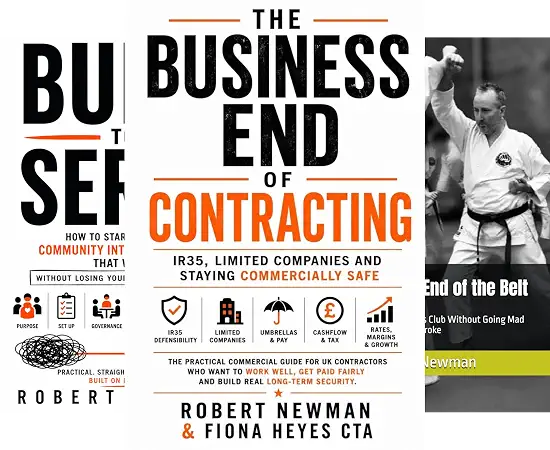
The three books in the series are:
- The Business End of Contracting
- Built to Serve
- The Business End of the Belt
I am sure you will agree after listening to this podcast that Rob is a fascinating person with some brilliant business insights, so his books are definitely worth diving into.
To access the series, please click the link in the button below.
Click the button below to discover more about the Accountants Growth Academy.
Remarkable Practice Client Manager Programme
You secure your firm’s future growth and profitability when your clients are loyal, recommend you more, buy additional services and are open to regular price increases.
And what drives all of that?
Not just technical quality. Not just deadlines met.
It’s the behaviour and mindset of your client managers.
When your client managers improve how they engage and care for clients, your firm’s results improve.
So the question is: Could you be doing more to build your client managers’ skills and mindset?
That’s exactly what our Client Manager Programme is designed to do.
It helps client managers:
- Build deeper client relationships
- Deliver value beyond the numbers
- Handle pricing conversations with confidence
- Spot and act on opportunities for additional services
Great client care is no longer a soft skill. It is a strategic advantage.
Click the button below to read more about our Remarkable Client Manager Programme and, if you want to discuss it further, please get in touch via the 'chat with us now' button on the website. You'll speak to a real person, not a bot!
Your Firm’s Future – by Douglas Aitken and Paul Shrimpling of Remarkable Practice

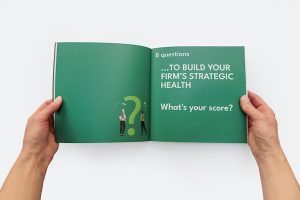

In a world of constant change, uncertainty, and increasing client expectations, one thing separates ambitious firms from the rest: strategic health.
In our book, Your Firm’s Future, we share a practical framework built around 8 essential questions that will help you assess and build your firm's strategic health.
Why does strategic health matter so much? Because when your firm is strategically healthy, it benefits your team, your clients, in fact, everyone connected with your firm.
Strategic health isn’t just an internal metric. It delivers a better outcome for everyone connected to your firm.
Click the button below to take the strategic health of your firm seriously by completing our Strategic Health Diagnostic
or
click the button below that to buy the book.