
Who’d have thought that document management could be sexy and interesting? In this podcast with Ian Cooper of FYI Docs, Ian acknowledges that doc management isn't really that sexy, but it did make for a very interesting podcast. Ian and I talked over a range of subjects, not least the inevitable rise of AI and the accelerating pace of technology. I especially appreciated Ian's views on how AI can help the accountant with the human side of their business. So listen in on this thought-provoking podcast and scroll down this episode page for the contact information for Ian and for the additional downloadable resources mentioned in the podcast. |
The Solution:
What's really interesting about this, I think, is that suddenly the leaders of the business have big change management projects in place or have to manage change, and change is the hardest thing to do for anybody.
We're sort of innately trained to fear change from back in the Stone Age; change meant the unknown, and the unknown meant danger, and so change management is hard.
I think there is a big gap at the moment for people who can help facilitate change in accountancy firms, so having the right change facilitators is a big thing.
-
SHOW NOTES
-
TRANSCRIPT
-
CHAPTER MARKERS
SHOW NOTES



Doug Aitken 1:09
How will technology and artificial intelligence affect the future of accountancy? In this podcast with Ian Cooper of FYI Docs, you'll hear Ian's view on how important the human element of accountancy is always going to be. Let's go to that podcast
Doug Aitken 1:29
now.
Ian Cooper 1:29
Hey, good afternoon, Doug, and good afternoon, listeners of Humanize the Numbers. Um it's uh Ian Cooper here today. So I'm fortunate enough to be invited back for my second um time to share um share what I've learned over the few years I've been in this industry with uh with the rest of the team. So started uh just a little introduction to myself. I'm Ian Cooper, uh father of two, two boys, 12 and 15. Um they are a bundle of energy, love sports, uh, and so do I. So that's always uh nice that uh we go and get a chance to spend some time doing some football things together and cycling and being outside on the water, etc. Um, I've been in the industry for it's almost the 22 years. Uh in fact, on the 4th of August, 22 years ago, uh I joined a company called Digital. So they were a uh specialist provider of tax and accounting software, or tax at the time, um, to accountancy firms. And for those 22 years, with the a slight um move away for nine months, I've worked directly with accountants and technology uh in that time. So um I've worn several hats, starting in um sales, moving then into um marketing. Then I was a co-founder of a company called Hosted Accountants with two others that was ultimately sold to Iris. Then uh I went back to where I was been, so I'm a big fan of Don't Burn Your Bridges. I went back to Thomson Reuters, who were actually the company that acquired Digital and learnt product management. So I was a product manager there, specializing in uh practice management software and document management software. So it's quite a niche industry, but um spent five, six years there, um, loved my time there, great company to work for. Um, but also I was studying an MBA part-time executive course. So that lasted for three years. Um, in fact, it lasted a little bit longer because COVID got in the way. Um but came out of there and went, right, I've learned some serious skills, so um as part of this, um, and it was just time to spread my wings and look to go a little bit further and see see what more I can do. Um, which almost takes us up to the modern day. Uh tomorrow will be my four-year anniversary at um FYI, FYI software. I did a competitor analysis back in 2019, and and I was like, guys, look at what these guys are doing. It's really good. Like they're genuinely doing some very good stuff here. Uh, it was a small Australian company about two years, a year old at that time, but you could already see the vision. So joined, um lucky enough, I spoke to um one of my customers, a really good friend, her name's Jessica Pillow from Pillow May. Yeah. She said, I'm thinking of getting back into the industry, Jessica. What do you recommend? She went, Oh well, I've just started using FYI software. Um, do you want an intro to the CEO? Um and and co-founder, I was like, that sounds pretty decent. Um, three weeks later I'd signed up and I'd started work. So um it's uh that's uh yeah, a very short, condensed timeline of my experience in the industry. But um, sort of like I say, for the last eight, ten years specializing in document management, process automation, and practice management, which puts me into a bit of a small niche when there are a few of us get together. Um other people sort of make their excuses and step back slowly from our from our slightly too detailed conversation. But uh yeah, it's a it's a good space
What “Humanise The Numbers” Means
Ian Cooper 4:58
to be.
Doug Aitken 4:58
Fab. Well, welcome um back to the podcast, Ian. Uh delighted that you're giving up your time again, really appreciate it. And thanks for the intro. Very comprehensive and uh a good few things to fire at there. Uh I'll start off though, as as we normally do. Our core purpose is humanize the numbers, hence the name of the podcast. Um, just wondering what you get from that, Ian. You know, what what's your interpretation of humanize the numbers?
Ian Cooper 5:25
Yeah, that's a really good question, because I mean this is what it's all about. It's a people business at the end of the day, isn't it? Um I mean, I think numbers tell you what's happening or what's happened, um, but humans decide the rest of the story. So this is um bringing those numbers to the front and getting them to be um explainable um for accountants to explain what those numbers mean. That's uh that's what it really can sort of really counts for. Nobody really cares about the numbers themselves, they they care what it means to their family, to their um, to their company, to their employees, and it's about that that part of taking the numbers out of accountancy and bringing the human part back into it.
Doug Aitken 6:08
Yeah, fab. It's interesting. I we did a I did a session with accountants a couple of weeks ago, and one of the things um in one of the sessions I asked them, what is their role? And someone said a storyteller, and I loved that. I thought, oh that's yeah, I would have said that. A problem solver I would have got a bit storyteller, yeah, definitely. Um partly, and you've made me think about it then that yeah, the numbers tell a bit of a story, but it's the humans that bring it to life uh in the end, um and and add the the flourish, if you like, or the context behind the numbers.
Doug Aitken 6:44
Um so uh tell me about your MBA as well. Um Ian, you you made me think of I I got shivers down my spine. I did a part-time MBA through Strathclyde um graduate business school uh a wee bit longer ago than you, but yes, there was a a lot of endless nights studying and three years of hard graft. So, how did how did you actually find the subject matter? Um, you know, how how did it work?
Ian Cooper 7:12
There were some shivers down my back thinking of that first module I did. Um I didn't actually go to university, so I got got into um the extra uh extra MBA based on work experience and corporate sponsorship, um, which I was very lucky to get. The first module, it was called um strategic operations management. Nothing like I'd done in any of the in any of my roles that I'd ever done. And I remember sitting in the lecture hall with uh there was probably about 30 full-time students and then maybe another 10 part-time exec students. I remember sitting there going, oh my gosh, I don't know what's going on, like for four days. And um, and then I I handed in my first essay and got 51% uh from the first module, and I was like, if I fail this, I I might actually not carry on with this. And and I struggled through and then I learned to learn. And that was a really fascinating part of um of going and doing a course later on in life that um I'd had this kind of concern that it was going to be really hard, um, and it was, but it was as much in my head as it was in the content. Um, the amount of experience you pick up with 22 years worth of um worth of working, it brings so much to the fore. And as soon as we started getting into marketing, um, change management, innovation, uh, finance, and then the leadership and the management, it really started some hardcore skills around domain expertise, and then these soft skills started arriving on my plate. I was like, wow, this is really interesting. Uh I it was a fantastic journey, and it was the I guess the experience of watching yourself go through these plateaus of learning and going, yeah, I've learned a bit there, stepped it up, and some of the modules were just phenomenal. Um, there was one about um sustainability, but it was around um it it was using nature in conjunction with sustainable businesses, and it was talking about these companies who would go through huge restructures and they'd bring and it was for the shareholders, and then you'd get the corporate um the consultants coming in and they'd be sprinkling the fertilizer, which would be an extra benefit here and an incentive there to try and get the morale back up. Uh, and then it was contrasting businesses with that kind of model for those that were much more sustainable, where there was career progression, and you could see the company really understood its clients and its staff, and it worked together in this kind of symbiotic relationship. So there were some real um, really big highlights there, and it was actually at that point that I realized that being a product manager, um as a sales consultant, you could deliver a product and a solution one at a time, so really transactional, and you knew you were doing good things, and you knew the people that you sold it to were going to get benefits. Product managers, product management suddenly took that a little bit wider because you could write a bit of functionality and then anybody that uses it benefits. Uh, but then I realized the leadership aspect of that. I'd learnt so much that if I can pass on some of that, then I've got a team of people with that those years of experience that I've got. So suddenly that kind of exponential growth of being able to um to make a difference. So that it's what that's probably what I got out of it the most.
Doug Aitken 10:33
Yeah, great. It's interesting. My our paths um are relatively similar from that viewpoint. I did mine when I was still at RBS, um, and I learned I I was the same, I didn't go to uni, but I learned to learn um I love that phrase that you quoted, but it was the same thing for me. It was it was just the context of it was brilliant, and the timing of it was perfect. So even in my day-to-day role at RBS, I'd be looking at situations or looking at things that are happening, and I could put the context of it around my MBA. It was fab. I I really enjoyed it. I think I learned tons from it as well, but yeah, it was a a really great experience for me as well. Yeah. So um tell me what piqued your interest in FYI docs.
Why FYI Rebuilt Document Management
Doug Aitken 11:22
Um, you you mentioned that you saw them doing good things, and what what were those good things?
Ian Cooper 11:28
Yeah, that's a good point. So I have worked in document management for a long time, which was the cornerstone of where FYI came from. It doesn't get much love. It's not much, it's not very glamorous. People see it, it's just not a bit, it's not a sexy part, it's not a payments, it's not a ledger, it's not uh um forecasting, it just doesn't get much love. But when you say when you see a company that's doing it well, uh it makes you sit up and take note. There's also um a kind of misunderstanding in the industry that documents replace that you put things after they're complete. So a place for them to gather dust, and it's a compliance, you have to keep tax returns for seven years, you need to keep trust information for ten years. Um they it's a place to gather dust that it very rarely gets revisited. Whereas Rob Cameron, our CEO and co-founder, he's written three document management products uh in his lifetime. Um and he is a chartered accountant, he was at uh trained at one of the big four, where he wrote first the product. Um he flipped document management on its head, and rather going rather than putting documents as a place to die and gather dust, bring them into the workflow. Every client interaction from a phone call, an email, a scribbled-down thing on a on a napkin at a BNI event or something, everything is um so much information is being captured, but it wasn't being used by the accountancy firm. Um so much inefficiency from not having your templates in the right place, uh, or uh having to rewrite information. So seeing what Rob had done of being able to build workflow, um job management, tasks, CRM documents into a single platform, um with what I knew they could deliver was quite phenomenal. So um yeah, and then and then the sprinkling of gold dust over the top of the FYI platform was bringing in automation because so much of an accountant's day-to-day work is repetitive and consistently the same, whether it's daily, weekly, monthly, quarterly, etc. A lot of those processes create documents, sending an email to a client, creating working papers, engagement letters, all of this creates from a standard pack of documents the ability to go, right, at this point in my operating procedure, we always send an email. We always create the working papers. So why ask a human to do that when you can automate it? So it's yeah, it's the automation engine on top of the document management that's really kind of revolutionized where um what what I see is uh document management in in accountancy space.
Capturing Client Context With Better Systems
Doug Aitken 14:10
Yeah, yeah. I mean, what what you said there about um capturing client information, that seems to be a a real challenge for some firms. Even today, um, you know, often challenge firms and well, what's their favourite coffee? Or what type of car do they have? What's the registration so you can book them into your car parker? And they just don't know the well, they they kind of know, but it's stored up here. So there's nothing that you can actually use. Um and and yet so many firms don't seem to be going down that uh route of of um knowing more about their clients and even less about their team, by the way, but that's a that's a different thing altogether. Um I I'm gonna ask you about what might seem a dumb questionnaire. And it's it goes along the lines of what do you think of accountants? But let me just contextualize it. When I was at RBS, I used to think that the bank manager, we had the best relationship with the client until I went to work with accountants, and then I realised how wrong I'd been. Um and they're clearly at the centre of everything that the client does. Um and yet when I look at some of the working practices and the way that they do things, it you know, as a relative outsider, it makes my toes curl sometimes. And I'm just interested in your background too, having worked with accountants for a while. I I'm not meaning to accountant bash, by the way, um, but just interesting your perspective on how the profession is, I guess.
Ian Cooper 15:43
I I think it's a great observation because there is the traditional money makers within the business, the partners, the ones who go and build those relationships and build that level of trust. Um, the people when you see somebody doing it, well, you realise just their next level, and you can see that their firm's going to be a massive success if it isn't already.
unknown 16:06
Yeah.
Ian Cooper 16:06
I've got an example. I drove to see a firm and it must have been 15 years ago. Um, and it was before iPad room in the reception, but there was a sign in my parking space saying, Welcome, Ian Cooper, we're so pleased that you're here. And it's such a simple thing to do. But um, uh and it was analog, it wasn't anything it wasn't anything with technology, uh, it was just a nice welcome to sort of show that they cared that I was there. Um so you've got examples of that through to examples of doing a three-hour demonstration, going ins and outs of um some really intricate areas around time of billing, uh, and then after about two and a half hours like, should I have a glass of water, please? And um so you've got you've got these, you've got these extremes between what they do. Um it literally was uh it literally was like that. So what do uh this is an interesting one, isn't it? Because I think for the last 30 years, accountants have been delivered technology primarily to make them more um efficient at doing their jobs, but not necessarily more effective at doing their jobs. So to be more effective in capturing, oh, how many children do you have? What's their date of birth? Uh when what's their dog called? Whatever it is, those soft bits around the outside, which cements the accountant to be their trusted advisor, not just somebody that presents them the numbers at the end of the year. That's the kind of um information where it hasn't systematically been deployed by a huge amount of firms. Um I think it's increasing, and there's some work by some AI note-taker tools that are doing some brilliant stuff because also you go to meetings, you talk, and there's lots of great stuff, great ideas come out. There's probably 20 tasks come from that meeting. You might remember five of them. So then you leave, and you've got you want to do the right thing, or uh the client wants to do the right thing, but because it hasn't been taken properly, it gets lost. And it's no fault of anybody, it's just life, busy life. Um, but with these AI note takers, for example, you're suddenly capturing all that rich information and then being able to feed that into a workflow afterwards to make sure that those bits that are action to really drive change in your client's business, they're becoming available and at your fingertips.
AI In Practice And The Profession
Doug Aitken 18:26
Yeah. We we've got 16 minutes in and haven't really mentioned AI yet, but I'm gonna have to go there. Um, how do you see AI impacting, well, first of all, your own product, um uh Ian, but then also the wider profession.
Ian Cooper 18:43
Yeah, okay. Um, I think it's going to be huge. Um, I don't think it's gonna be quite as dramatic as everybody's um everybody's saying at the moment. I think um uh it's not gonna be human versus AI at all. I think the AI is gonna take over, um, take over the bits that humans don't really want to do, aren't very efficient at. Well, CEO's got a vision of driving productivity, uh reducing the time spent on admin and compliance tasks by 50%, which we monitor it. We've got some clients up in the 20, 25% range at the moment with how much they actually automate. Um but the next frontier to really get to that 50% um is going to be by leveraging AI. Our vision of it, and we've we've got a bit of an unfair advantage because we've got all those documents that captures all of that rich information. Uh, we've got a CRM um system which captures all of the contextual information about your clients. So you've got the the content from the documents and the history of the clients, you've got the context because you've got the um custom fields, we've got a flexible data model. So we can then combine those two parts. And and what our our AI play is actually quite clever because you don't even know you're using it. Um it does the emails come in, it looks at the content, and from that content it will automatically create some tasks. We know the client manager or the payroll manager, that so they can be directed to the right people, and it can also do your draft emails. So, and again, everything's happening in that single platform now. From an AR from a user's point of view, they've seen an email's being drafted, they don't care. It could have been an intern or a uh sort of a trainee that's drafted the email, but it's there, it's ready to be sent, and we've got that human in the loop to make sure that AI doesn't get carried away. Uh um, yeah, sorry, it doesn't get carried away um in terms of what it's sort of stepping beyond where we want it to be.
Doug Aitken 20:44
Yeah.
Ian Cooper 20:46
So um in terms of the industry as a whole, I don't think it's going to be um it's gonna quite um disrupt the uh number of bums on seats and number of accountants doing the work. I just think it's gonna be uh doing different work, it's gonna be less around that processing of data, um, chasing information, rewriting emails from scratch, um, but and doing routine tasks. It's gonna be more around the sort of um communication, using accountants, using their what they've studied multiple years for, they do their CPD for, and that's really understanding um the numbers to deploy their commercial thinking, user judgment, build the client relationships, become the leaders in their business, their clients' businesses. So um yeah, I think it's uh it's really quite a rosy future, I think, for uh where accountants um where the accountancy profession will be. But like I say, the experts are going to need a different skill set. Yeah, potentially one that they got into the industry in the first place for, uh and then suddenly lost sight of it because of the admin burden.
Doug Aitken 21:53
Yeah. No, I would agree with that. And and you know, for all the accountants who flourish in that. Space, they love that type of work because it makes a material impact to the client. And and you know, for every accountant who still sometimes says, Oh, my clients don't want that sort of thing, um, well, how do you know until you've offered it? And if you're you know, if we can harness things like AI properly, we can offer it at a you know a very small cost, and suddenly you're you're having even better conversations. So um yeah, I share your optimism for the future of the profession, but uh there's some challenges around it as well. I wonder what your thought is on you said the the word judgment, for example, in the let's call it the old days, pre-AI, um accountants trained through the data processing, through the bookkeeping, and starting to build judgment, I guess, just through years of experience. Um and and when AI is doing its bit, all those years are potentially cut out. So, how do we train people in in future um you know to build judgment when we don't have that years of experience, if that makes sense?
Ian Cooper 23:12
Yeah, well, that's a really good point, Doug. I think the the part of this is becoming it's a different skill set. Like the the accountant of tomorrow or 2030 will require a different skill set. Um, a lot of this is gonna become uh learning judgments gonna be coming from good conversations with clients. So this is going to be about client relationships because they won't get to get see the numbers in quite the same way they did in that slower way of doing it. Uh, it's gonna be incumbent, I think, on the current leaders to pass on the knowledge of how to get that information out of your clients about what they want to do with their business with their um uh for their self-assessment returns. So it's gonna be this um coaching business owners, but in turn the owners of accountancy firm need to be coaching the business coaches of the future. You said about RBS and banks think they thought they had a relationship with their clients, um, and then suddenly you see what a relationship with the clients really like when they come in and you understand they want their kids to go to university and they're worried about them not being able to afford a house and actually sitting down and going, right, well, your business could grow at this percent um if you make some of these changes.
Doug Aitken 24:31
Yeah, yeah, yeah, I totally agree.
AI Inside FYI And Prompt Templates
Doug Aitken 24:34
Uh what is what's AI doing specifically for FYI right now? How how do you see it shaping your future uh products?
Ian Cooper 25:38
There are future products um gonna be, I mean, at the moment we we've taken an agnostic approach to it. We we believe that AI plus automation together is when that uh the real benefits come. So it's not just going, oh, AI's here and we just whack it in the product, and it's not a just a sort of a generative AI large language model that's being used. Um we have uh very detailed prompt templates. So there's people, if you gave um AI tools to let's say a co-pilot to a group of people, there would be some that jump in two feet and then go, ah, I can't create a picture of a flamingo in a bath of custard. But then you've got other people who will take this steady approach and they really understand it and embrace it. So some people are just they just really like it. They like watching that process of training an agent to deliver more and more accurate responses based on what the firm would do themselves. Um, and so we've got this idea of template management or prompt management where the people in your business that like that kind of thing, they invest their time in it. Uh they invest their time, and then the other people in the business benefit from that. So when they see an email come in, um they can refer to uh the company's policies and procedures handbook. So we can pull in key documentation on how to complete a certain job, it can review what the standard operating systems are or processes are for doing a set of accounts, or what industry the business is from. So it takes that part of it out, and again, it just means that the accountant which would spend time researching um the information and potentially using a generative language model to do that research, the research just gets put in front of them when the work's ready for them to do.
Doug Aitken 27:25
Right.
Ian Cooper 27:26
I don't know if that clearly sort of puts our value proposition into play there.
Doug Aitken 27:31
Um yeah, to an extent. I mean it's it's always interesting finding out um you know
Reimagining Services And Finding Invisible Time
Doug Aitken 27:37
what's next, if you like. Um, but sometimes, you know, it's good to have a look at what's what's not changing. And you know, we've we've touched on a couple of things already, uh, one being that relationship between accountant and client, and I do share your view that it's it's very much uh um something that will develop and enhance. I often look I often look at a general portfolio of accountancy clients, and you know, we we've all done the calculations. Okay, I've got a thousand clients, and what's your total turnover? Oh a million pounds. Okay, so that's a thousand pounds average fee. Um how many are paying 15-20 grand versus how many are paying £100, £150? You know, it's that that curve, and so it can only be a relatively small number that you're really interacting with properly. Um and I think where I'm going with this is that you know, do we do we have a better opportunity to interact with more clients, build better relationships, have deeper conversations because of AI, because that can only benefit the economy, clients, you know, the world.
Ian Cooper 28:58
Yeah, yeah, that's right, 100%. I think um, I mean we've we've spent what 30 years digitizing the work of accountants, so becoming incredibly um efficient, paper became digital, filing cabinets became document management, and phone calls became emails, and tax returns was put into software. Uh, but the human was still doing most of that work, they were still filing the they were still filing the emails, but big meaningful chunks of that work is gonna be removed. Um and it is kind of it's lost time, it's like invisible time today. And unless the new processes and ways of working are um strategically deployed or considered when happening, you're just gonna try and do more of the same work with the same amount of people, um, which is one possibility, uh, but by doing more of the same work without using more human aspects of things that humans are good at, that will be an area that's at risk, um, where it is just digital processing, because uh ultimately AI will do a lot of that for you. So the ability to recognize that invisible time, the admin time that's being eaten up of everybody's work um every day, using and deploying that time to help each of your customers, even the ones on the smaller fee today, um, maybe they could be on a bigger fee, but if you if they've on a small fee, you put them into that B category of they're just there, and maybe one day we'll get rid of them, um, or maybe one day we're we'll put their prices up 20%. Um, but there's some nuggets in there that with a bit of work, you would really they would come to the front and um recognize some of the value of that what the accountant can do. But like I say, you can't show that value without reimagining some of the services that you deliver. It's really hard. It's really hard when you've done the same thing for 30 years, 20 years, to then reimagine how you're gonna service that same category of clients that you've always serviced in a certain way. Um it takes uh it takes somebody with vision and conviction to push that through. What's really interesting, I think, about this is suddenly the leaders of the business have big change management projects in place or have to manage change, and change is a hardest thing to do for anybody. We're sort of innately trained to fear change from back before we're living in stone, like living in um stone houses, change meant unknown, and unknown meant danger, yeah. And so change management's hard. Yeah, I think there's a big gap at the moment about people that can help facilitate change in accountancy firms. Yeah, and I know there's some very good companies, Doug, but that offer that type of service, and that wasn't a sales plug for you guys, but um but change for change facilitators is a big thing.
Doug Aitken 32:07
Please give this interruption to the podcast. You've heard Ian Cooper talking about how AI
Change Management Support Mention
Doug Aitken 32:15
is one massive change management program. You'll find a link in the show notes to a business breakthrough that will tell you more about change management in your firm. Let's get back to the podcast. Yeah, it it's I was actually going to ask you how what resistance are you getting? You know, what what resistance do you
Resistance To Change And What Works
Doug Aitken 32:33
sense from accountants? And and just while you were thinking about that, Ian, we we had a session a couple of weeks ago with a group of accountants that we work with, and uh AI was the topic, and you know, did a bit of scare tactics initially, then then a bit of um positivity in terms of look, here's what a couple of firms are doing right now, but you're you're spot on, it's a change management piece, and you're also right that our brains are wired to keep us safe, so change um you know change doesn't come into keeping you safe, but we are good at it, ironically. Humans are good at change, but we hate it. Um so you know, is this an area where accountants are going to embrace change? You know, what what are you seeing when you're talking to clients um or what are you hearing?
Ian Cooper 33:25
I think the um it's very interesting because those that see that uh we we're lucky, we're we're relatively new to the industry. We've got about in the UK, um globally we've got about 48,000 users, about two and a 2,700 firms in the UK. We started taking it seriously about four years ago, but we are replacing multiple systems with a single platform, and the um understanding of what commitment that takes to deliver that project, uh it has to be clear. Uh, this isn't a chuck a piece of software in and get on with it. This is a this is a change working processes and an ability or in a chance for you to imagine ways of working. Now, we're lucky because people come to us because they heard about us and they know that we can deliver that change and they're on that trajectory anyway. They are they want to modernize, they want to revamp their processes, um, they believe there is a better way of doing things. So we have we're um the leaders are already bought into that concept of what that actually means. That being said, um, a good change management project will, from a larger firm's point of view, have partner engagement and it will have the right team underneath them to and empowered to do make change to deliver that. So that a lot of our work that's done in the pre-sales environment is really understanding the topology, the makeup of the team that they're going to have in place to make this change successful.
Doug Aitken 35:04
Yeah, yeah. So you're um head of operations for UK, is that right?
Ian’s Role And How His Week Runs
Ian Cooper 35:10
Uh it's sort of getting do anything that gets in the way of my team doing their work. Really. Um which I thought which I guess is like analogous analogous to what AI does, isn't it? It AI takes care of the boring tasks of filing, which stops people doing the stuff, their work. So yeah, I'm yeah, a human bit of AI, I guess. Without the learning model behind me.
Doug Aitken 35:36
Yeah. What's um what's a typical week look like for you, Ian, if if you can get such a thing? I appreciate most weeks will be completely different one from another, but give us an idea what sort of things you're involved in.
Ian Cooper 35:50
Yeah, well, I'm lucky enough to um we work closely with a number of other vendors. So our integration partners are really important to us. Um, we've got uh an event zero con coming up where it's uh likely an integration trail. So making sure we understand what the value proposition is of having a product that integrates with FYR and what it really does. So spending time making sure that the I understand the value proposition of our partners and then being able to pass that on to the team. Um because of a few years' worth of experience, I do get involved with the sales process from time to time, and we'll sort of um be there as a peer and educator, but um answer some of the gnarly questions that might get thrown at the sales team. We've got in the UK at the moment a sales team of three, and then we've got uh three on boarders and then a support specialist. So I'm responsible for managing helping them complete their day job. Yeah, it's uh it no one no one week is the same, yeah, which is fantastic and interesting. But when you need to deliver a big project, um, but you've got people who you uh who are my number one priority, that that keeps sort of getting to the top of the page to make sure that they've got what they need to do to do their job.
Doug Aitken 37:08
Yeah, yeah. So if someone was uh flipping to you and to use your uh your product,
Onboarding Timelines And Migration Reality
Doug Aitken 37:14
how uh what's the kind of timeline and how how do you work with that firm to onboard?
Ian Cooper 37:21
Yeah, it's we various levels of onboarding packages. We've got um something called an assisted onboarding where um a consultant will be given to them a name consultant that will see for the project from the beginning through to the end, and it will be very much a case of setting homework, right? To to reach the next week's set of tasks, you need to do X, Y, and Z. And we give them probably the most comprehensive onboarding manual that I've seen. Uh, it we work in it in a collaborative way, it's in our portal, they can view it, they can update it, uh, and then they get homework assigned to them. Um so that's one of the models. The next one we have something called concierge, and that is very much handholding, bespoke to their different ways of working, and that will take them through to having all of the cabinets configured, all of their documents migrated, the job set up with recurrence as well. And so that would be a much bigger project. Uh one of the and I don't like using the expression, but it it it's kind of true. One of the motes that we've created, or our our founders had the vision to create, was that one of the reasons document management isn't as competitive a space as you'd think it might be for the fact that everybody creates documents at every interaction is the migration path and the processes we've built there. Over 25% of our RD budget from launch is spent on making sure that migration path is as seamless as possible. But I mean, we're talking about moving tens of millions of documents, terabytes, training up 300 staff, rewriting workflows, um, and these projects can take three to four months.
Doug Aitken 39:04
Yeah.
Ian Cooper 39:04
Or a standard um kind of you want our base level of configuration, we can generally turn that around in sort of four to six to eight weeks.
Doug Aitken 39:12
Yeah.
Ian Cooper 39:13
But again, this is um as much about empowering the team at the accountancy firm as it is uh sort of doing the technical heavy lifting. But so a lot of change management, a lot of soft skills our consultants require.
Doug Aitken 39:27
Yeah, yeah. You mentioned XeroCon there, which is upcoming um accountext and whatnot. How do these events actually work for you?
Events Content And AI Driven Search
Doug Aitken 39:35
What's the what's the biggest plus for you, events like that?
Ian Cooper 39:39
Yeah, it's interesting. So this um this year especially, we have made sure we've taken our consultants to all of our events so that because we get more and more customers coming up and going, oh, how do you do this? How do you do that? So the first couple of years was lead generation, and then it's slowly now it's as much CRM, our client relationship management uh as it is about picking up new business. We we sponsor events like the alternative um Tech Summit that's uh in Y Boston Lake. Brilliant. Um, fantastic audience, the um CIOs, CTOs of probably the top 250, 300 firms out there. Uh so the level of conversation you're having there is very much different from some of the other events where you've got an owner that is just too busy. This is their once-a-year chance to go out and research everything they need to research, and so we're you become you know how to be getting prepared for those events to make sure that you don't you you you adapt to your audience. Yeah, that it's still a massive generator. I mean, email marketing, incredibly hard to do effectively. Uh phone calling, I don't know how many spam calls you get a day, Doug, but it's probably half a dozen. It's just um so phone telemarketing is becoming much harder, email marketing's becoming much harder. So we do have a disproportionate amount of um uh need for these events to be successful to generate leads for us at the moment. But we're um because most people now do 80-90% of their research into you before they even speak to you. So it's making sure that when they speak to you, you're done, you're ready. Um, so we're we're we're we've got five content writers full-time in the company, and the primarily around writing content for our support articles, uh, to make sure that that's well uh as good as and comprehensive as it can be. But the knock-on effect of that is that we've got so much rich content that we do rank very well with the search engines and increasingly with your GEO search, which is your AI-driven searches. So somebody came to me and said, Oh, I was just about to buy this piece of software, so I really like their email management. So I said, I thought I'd just do a quick search on um on one of the tools. Uh tell me some good email management tools for accountancy phones, and we were top of the list. So um, you know, it's people are now bypassing doing a Google search, going straight to AI, doing really detailed research, uh, and then maybe approaching you.
Doug Aitken 42:20
Yeah, yeah, it's interesting you say that. I I've been doing the same recently without really thinking about it. Um yeah, when I do pause, I I couldn't tell you the last time I did a just Google um research. That's interesting, isn't it?
Ian Cooper 42:35
Um you know the uh sorry, Doc, the the old expression of um do the right thing even nobody's even when nobody's watching. 100% agree with that sentiment, and increasingly so, because everybody's always watching at every minute of the day, or they can be listening with technology. So um it's something that I uh I sort of stand by that we deliver the best experience we we can at every opportunity.
Doug Aitken 43:06
Yeah, definitely. So um companies Australian, as you've said um before. Wh where is the profession in Australia compared
Australia Versus UK On Tech Adoption
Doug Aitken 43:14
to UK? Is it further ahead? Is it behind?
Ian Cooper 43:19
Yeah, it's still further ahead. Um it's sort of been, I would say the gap's narrowing, um, but I would say they they're a couple of years ahead, maybe three. Uh, and that's uh reflected in us to the USA as well. So there's been this tail of technology adoption. I my the there's some challenges for UK firms, which Australian firms don't have, and that is the age of the country means there's so many different types of laws, so many different types of companies, so many different types of trading entities that you but that a general practice in the UK has to know so much. So making that change is becomes harder. There's also a societal or a societal um uh anomaly here, and that is the Australians are a bit more, let's just give it a go, mate, what could go wrong? Um, approach to approach to life. And and you do see it, uh, whereas the um due diligence, the attention to detail that happens in our pre-sales process is significantly um quite often significantly bigger than that undertaken by maybe some of our um Australian counterparts.
Doug Aitken 44:32
How does that help in in driving um the the product spec, for example? You know, if if you're say Australia's two years ahead, how does that help you um you know, that knowledge, knowing what's coming? You know, how does that inform what you do in the UK?
Ian Cooper 44:51
Very good question. Very good question. The interoperability between programs, I talked about the importance of our integration partners. That's a big chunk of what the Australians have always done. If you think about Xero's business model originally, it was because they acknowledged what they could do and they then said, but we can't do it. But with our API, plug this in, plug that in, and you've got a full system. For FYI, we do document management and practice management. We are competing against some large incumbent suppliers, the CCHs, the IRIs, Thompson Reuters of this world that have built a business around an integrated suite, and they've really done that a fantastic job of saying you've got to have an integrated suite because you can share one bit of data and it flows between everything, which is correct. The modern technology platforms with API first approach has that ability to really have the ability to choose best of breed, but have a single set of data still. And the the beauty of the best of breed is every person of 140 people at FYI, they know document management and practice management inside out. We know how to support it, how to build it, how to uh write content for it, how to train on it. So you get that niche specialism without sacrificing the that efficiency that comes from integration. So I think that's probably the big, big part of it. That being said, we've got some amazing technology companies in in the UK that are expanding overseas and looking to launch in uh in Australia. Our AML and KYC legislation in the UK, it's brilliant, it's phenomenal, it's comprehensive, and lots of countries are looking to go down that path. Whether accountants agree that uh it's um good for uh good for their workflow, I don't know. So we've got companies now doing um going into other jurisdictions and launching in those jurisdictions because of how much they've learned. Open banking. Um, open banking's phenomenal. And the when you talk to an American about what open banking actually means, they can't believe it. Um and we've got banks over here now launching over there because of what that actually brings. So there's lots of opportunities where we are uh well defined, well governed, and that is then creating reverse opportunities to go elsewhere.
Doug Aitken 47:37
Yeah, yeah, good stuff. Um, Ian, I'm I've just looked at time and time is whizzing by, but I just want to touch lastly
Private Equity And The Data Prize
Doug Aitken 47:45
on uh private equity. We we've you know the last um two or three years dominated by PE. Um and I just wondered how that's affected your business, if at all. And and how also, second part, how you see it playing out in the next few years.
Ian Cooper 48:05
Yeah, it's hot on the topic. It's hot on the it's a hot topic at the moment. And I have to admit that any predictions that I have will probably be wrong because I was thinking that this year it would begin to slow down a little bit, uh, which is completely the opposite of what's actually happened. We have um one of the strong points of FYI, sorry to talk about FYI again, but we have a platform where you can easily get data in and get data out. And these finances and companies, the private equity funds, know that the massive amount of the value of the acquisition and the purchase they're making is actually the data that that they've got about tens of thousands of small businesses or individuals. So that we've we're in quite a sweet spot in terms of what our platform can do in that area. We've got four private equity funds that have chosen the FYI platform as being their cornerstone for future growth, and that's a nice play to be in. That being said, we've lost a few clients that have been acquired by other private equity funds, and we've lost the um lost business to them. So it's not um it it's okay in terms of where we are. In fact, we're in a very nice position, and it it's part of our strategy to really hone in on what those demands are from those large firms. Where's it heading? Where's it heading? I think where it's heading, and I think this helps overall, just by buying and buying somebody comes in, has a huge amount of money and go go and buy more firms, just keep buying firms. And now the realization that you've actually got to bring those systems into place to get any economies of scale is beginning to begin to um be noticeable. I mean, we saw a a billion pound valuation on um uh one of the networks or one of the funds earlier on this year that didn't quite meet the valuation and couldn't get the fundraise at the market. Um so there's now that consolidation around the technology, and because that's what's going to drive that consistency of process, standardization, conformity of doc uh data, and then the realization of what the that what the fund has bought becomes um becomes starts to become more of a reality.
Doug Aitken 50:28
Yeah.
Ian Cooper 50:29
Where do we go in the next three years? Uh I mean they're talking about super consolidators, aren't they, or super, super funds bringing them all in together. But I think it's uh the barriers to entry for people starting up in accountancy, not just the not huge barriers to entry. And so much of this is around human relationships, and so much of these local re or regional firms, their partners that have built relationships with people, and it almost doesn't matter which badge they're wearing, those people go to where that partner is, where they've had the relationship. So I wouldn't be surprised to see the number of smaller agile startups filling in some of the gaps and start to emerge.
Doug Aitken 51:15
Yeah. Fab, um Ian, thanks so much for your time today. Really enjoyed our chat. I need to call it to
Wrap Up Plus Next Excerpt Teaser
Doug Aitken 51:22
a halt now, I'm afraid. Um, but really enjoyed our chat. Appreciate you giving up your time and hope to speak to you again sometime soon. Thanks so much for joining us.
Ian Cooper 51:32
Thank you very much. It's been a pleasure to join you, and thank you, Doug.
Doug Aitken 51:41
You've just heard Ian Cooper of FYI Docs talk about how AI and the onset of even more technology is one big change management programme. Change management is a subject taught in the Accountants Growth Academy. To find out more, go to remarkablepractice.com or follow the link in the show notes.
CHAPTER MARKERS
START TIME | CHAPTER TITLE |
|---|---|
0:31 | Introduction |
1:29 | Ian's journey so far... |
4:58 | What does Humanise The Numbers mean to you? |
6:44 | Ians MBA and learning to learn |
11:22 | FYI document management and the influence of automation |
15:43 | Accountants - Efficient or effective |
18:43 | AI in FYI and the profession as a whole |
23:12 | The skill set needed for the future |
24:34 | What AI is doing for FYI now |
29:58 | The opportunities AI brings |
33:14 | The challenges of change management |
36:36 | Ian's typical week |
38:08 | Onboarding and migration |
40:03 | The biggest plus from events |
41:32 | |
43:14 | Australia versus UK on tech adoption |
48:45 | How will PE play out? |
Click the play button below and use the slider on the audio below to get quickly to the chapters in the podcast.
Resources relating to this podcast:

Leading and managing change is a critical skill for success in your firm. However, if you simply continue to do what you’ve always done, what happens?
Will you continue to get the same results you’ve always attained? No!
Doing the same old things – in essence, standing still – ensures that your accountancy firm will go backwards as competitors move ahead.
Click the button below to read our Business Breakthrough report and discover how to manage change in your firm.
Click the button below to discover more about the Accountants Growth Academy.
Remarkable Practice Client Manager Programme
You secure your firm’s future growth and profitability when your clients are loyal, recommend you more, buy additional services and are open to regular price increases.
And what drives all of that?
Not just technical quality. Not just deadlines met.
It’s the behaviour and mindset of your client managers.
When your client managers improve how they engage and care for clients, your firm’s results improve.
So the question is: Could you be doing more to build your client managers’ skills and mindset?
That’s exactly what our Client Manager Programme is designed to do.
It helps client managers:
- Build deeper client relationships
- Deliver value beyond the numbers
- Handle pricing conversations with confidence
- Spot and act on opportunities for additional services
Great client care is no longer a soft skill. It is a strategic advantage.
Click the button below to read more about our Remarkable Client Manager Programme and, if you want to discuss it further, please get in touch via the 'chat with us now' button on the website. You'll speak to a real person, not a bot!
Your Firm’s Future – by Douglas Aitken and Paul Shrimpling of Remarkable Practice

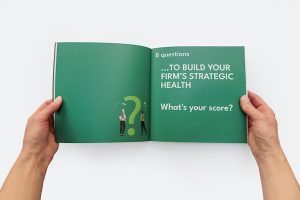

In a world of constant change, uncertainty, and increasing client expectations, one thing separates ambitious firms from the rest: strategic health.
In our book, Your Firm’s Future, we share a practical framework built around 8 essential questions that will help you assess and build your firm's strategic health.
Why does strategic health matter so much? Because when your firm is strategically healthy, it benefits your team, your clients, in fact, everyone connected with your firm.
Strategic health isn’t just an internal metric. It delivers a better outcome for everyone connected to your firm.
Click the button below to take the strategic health of your firm seriously by completing our Strategic Health Diagnostic
or
click the button below that to buy the book.