
When adversity strikes, how do you react? In this podcast with Donna Field of Autumn HR, we discuss how she faced adversity in the form of a business, one in which she was emotionally and financially invested, disappearing overnight. This ultimately proved the catalyst to setting up what is now a thriving business, with Donna doing work that she loves and bringing huge value to her clients. I really enjoyed my chat with Donna. We talked about a number of things – the importance of team engagement, the positive effect of having weekly one-to-ones with your team members, and, of course, the beneficial impact that a good HR partner can have on your business. Please scroll down this episode page for the contact information for Donna and for the additional, downloadable resources mentioned in the podcast. |
The Solution:
This is probably going to be quite controversial to my HR peers, but I actually encourage my clients, in particular, to use AI within HR. There are a lot of HR consultants, HR managers, and HR professionals who are cautioning businesses on using AI when it comes to HR. Now, I do have to caveat that by saying please don't put a question into ChatGPT and hope that you're going to get the right answer.
But I do think that businesses can really streamline their processes, and HR being one of them, with AI, and quite frankly, if businesses don't get on that train, then they will be left behind because it's moving at such a pace.
-
SHOW NOTES
-
TRANSCRIPT
-
CHAPTER MARKERS




Welcome to the Humanize the Numbers podcast series. Leaders, managers, and owners of ambitious accounting firms sharing insights, successes, and issues that will challenge you and connect you and your firm to the ways and means of transforming your firm's results.
Donna Field:This is probably going to be quite controversial to my HR peers, but I actually encourage my clients in particular to use AI within HR. Yeah. You know, there are a lot of HR consultants, HR managers, you know, HR professionals who are cautioning businesses on using AI when it comes to HR. Now, of course, I do have to caveat that that by saying please don't put a question into Chat GPT and hope that you're going to get the right answer. But I do think that businesses can really streamline their processes and HR being one of them with AI. And and quite frankly, if businesses don't get on that train, then they will be left behind when it comes to because it's it's moving at such a pace.
Doug Aitken:How do you deal with adversity? In this podcast with Donna Field of Autumn HR, you'll hear how real adversity caused Donna to stop, to pause, to think, to reconsider all her options, and eventually set up the thriving business that is now Autumn HR. Let's go to that podcast now.
Donna Field:Hi, my name is Donna Field. My business is Autumn HR, and I have been an HR practitioner for more than 20 years for my sins, and um personally I have been married for 20 years this year, so uh a big anniversary this year, um, and we share uh one daughter, Ava, who um will be 16 next month, so we've got uh lots of big celebrations coming up for her as well.
Doug Aitken:Yeah, not her 16-year-old. Well, you'll know all about it at home then.
Donna Field:Oh honestly, it's uh I've I've had to strap myself in for the last couple of years, so yes, yes, I've been through that as well.
Doug Aitken:So uh it's quite exciting when they find their own feet.
Donna Field:I know, I know. Well, she's um just finished Nat Fives, so gone in uh to S5 this year to do her hires, so um yeah, fun at fun and games.
Doug Aitken:Yeah, okay. Well delighted you could join us, Donna. Thanks for joining the podcast. Um tell us about before HR, what did you do uh before autumn or before HR?
Donna Field:Before autumn, HR? Yeah, well I mean I've been um after graduating, I was very, very lucky actually. Um whilst at university I was working uh part-time in a supermarket, and uh I was very very fortunate in that the store manager there was very much um focused on HR and he just got it and we developed a really sort of strong rapport and when he found out that was studying HR and what was involved, he was very much a manager who was um focused on his particularly his managers and the development of his managers, and uh so from a very very early point in my career before I even graduated, um I was super fortunate to be you know in an environment where I was having access to management meetings, I was understanding you know key performance indicators for um departments, I was understanding and observing how his management style and how he sort of was interacting with uh with each person and and very much taking into consideration the personalities of each department manager, it was a fairly large store, so um so yeah, I was very very fortunate from that point of view, and when after I graduated, I actually stayed on within the supermarket for about a year and again just had much more exposure to um HR in an area level um and not just that one sort of location, and um and I moving on from there uh after graduation and my first real job if if uh if you want to call it that, I stayed in retail. So I um I was uh HR manager for an independent music retailer called FOP. I don't know if you know there was one in um yeah yeah one in one in the largest one in Glasgow was in Union Street, uh there was one in Rose Street in Edinburgh, Coburn Street, Byers Road in Glasgow, uh and then they were dotted all around the country and um and yeah it was there for uh a few years and um from there at that point um because I had been in retail quite a lot um I was sort of questioning whether or not HR was something that was really still lighting you know that fire. Um and at that point I actually thought about going into teaching um and I decided well what I'll do is I'll stay in HR but I'll go into a completely different sector and different industry just to see if I get you know that sort of bug again. Um so went from retail into the construction industry, so that certainly did um that did give me that uh new challenge that I was looking for, so went to uh manage HR manager to a small um construction business employing all trades across the board, um and yeah that was really fun. It was an eye-opener actually, because a lot of people in HR say, you know, well, you come up against the same problems because you know people are people, and you know, businesses are you know either firefighting or developing their people, or but that is true to an extent, um but it's a completely different setup, you know, and different people different in operationally as well. So I really I thoroughly enjoyed I thoroughly enjoyed my time there. Um and then from there actually I went into um I joined a firm with uh employment law solicitor and went into employment law consultancy work, and um I was doing consultancy work with with that business for 11 years and eventually became uh a director and minority shareholder in that business, and um yeah it was very very unfortunate because after the um pandemic we suffered um quite a lot of our clients suffered actually um post-pandemic, and you know there was businesses collapsing around us, and it just became too difficult for us to to continue. So um unfortunately that business collapsed, and uh that was in 2023. Um and I must say uh Douglas on the back of that there was a lot of soul searching, uh I had to dig deep, and uh there was quite quite a lot of grief that went on with that because you know you're you're so so heavily invested and part of something for such a long period of time, so um yeah, I had to dig real deep there, and uh and you know I thought to myself, well, at the back of my mind now and again, you know, over over the years, you know, it would maybe sort of come up to the surface of you know what would it be like, but it never ever went further than that in terms of you know what would it be like to to start my own um consultancy business, and then yeah, I think when that happened, um I think I took that as a sign from the universe that you know now's the time, and um and yeah, I was almost sort of I think looking back I can see it as you know me being sort of pushed towards that opportunity and you know exploring that. So um, so yes, 1st of September 2023, Autumn HR was born, and uh so just celebrated two years of trading. Um and yeah, a lot a lot of learnings along the way. Um a lot of resilience, a lot of uh uh all all the all the good things where you you need to dig deep and find that extra something from somewhere.
Doug Aitken:Yeah, definitely. I I've been made redundant in the past as well, and I had one or two excitements around businesses, so I can start to imagine what you've gone through. But y you've used the phrase digging deep quite a few times. Um Donna, what what did you learn about yourself, first of all, in that business collapse? Um if there was one thing or maybe two or three things that you picked up, you know, what what would you say those were?
Donna Field:Well, I think first of all, I think you're s you're stronger than what you think you are. I think you know a lot of people will uh in those really tough times will um you know just ask uh well I think around it for me personally speaking, you know, certainly I did go through a period of uh there's sort of embarrassment or shame or guilt attached to it. So you know it could be quite easy to spiral in those um emotions, and I think just learning to you know really turn those into a positive and and take positive action yourself for me personally. You know, that's um that's uh journaling. Um you know, I went on quite a bit of a self-development journey, uh, meditations very self self-care uh mostly um meditation, um, exercise. I mean I think you just cannot underestimate uh the the mental strength that are the mental strength that I gained through physical exercise and just being able to really get um put things into perspective and take action because you know once you start to understand um and process what's happened, but then thankfully I was very I was able to very quickly sort of turn around and start thinking about well, what do I want and what does that look like and what action do I have to take to make that happen? So um I think um at the time uh as well as journaling, I would also do um voice notes. So I've actually got quite a lot of voice recording from back then, and and some of it is um you know I'm just out walking the dog and I've decided you know something I thought might come into my head, or you know, I might I might feel start to feel a different way or just feel a change. So if I was I would just voice record it, so um I've listened back to some of it, uh, and it is crazy. The uh you know, because you don't actually sit and stop and reflect as much as what you should, you know, and to really accept and to really recognise, sorry, uh just how far on you have come, and um don't get me wrong, there are some parts of it that are probably uh a wee bit raw and I've not quite listened to all of it because you know there's such there's such emotion in it, but um but yeah, it's that it's good to have and I'm sure I'm sure at one point in time I will go back and and uh and pull it all together and uh and who knows something else might come out of it. I don't know.
Doug Aitken:Sounds like a book in the making there to me.
Donna Field:I know absolutely, absolutely.
Doug Aitken:It's it's interesting your point about reflection. Um I mean when we go into firms, the work that we do with accounting firms often we're the ones that have to um tell the owners, look, just hang on a minute, let's just take a step back and think where we were a year ago or two years ago. And they'll they'll sit and look at you and yeah, but it doesn't feel different. And I said, Well, hang on, here's your figures, here's what you were telling me two years ago, here's how it felt two years ago, according to what I've got in my notes here. And it's only then that the oh right, yeah. That's a good point. I know because they're too close to it, and um I I've had something similar personally. I had a an operation last year from which the recovery has been really slow. Um no, no, uh nothing noticeable, so I can get around quite and do my job perfectly well, but I know where I'm at, and it's not where I want to be at. But it's interesting that now when I'm going back to firms that I visited three or four months ago, I know that I'm in a better place. I can because I can anchor it to that situation as opposed to this seat. Does that make sense?
Donna Field:Oh, absolutely, absolutely. And I think I think we are guilty of that, uh you know, because similarly, you know, I'll go into clients um and I'll do a very similar um sort of profile around you know what does it look like just now, what does it what what do we want it to look like, you know, one year from now, two years from now, five years from now. But when it comes to yourself personally, you know, you just you don't always uh apply the same importance to it. So yeah, I completely understand where you're coming from there.
Doug Aitken:So when you started um autumn, how many clients did you have, or did you have any expressions of interest from people, or was it just genuinely a blank sheet of paper?
Donna Field:Uh I had one client. I had one, I had one client. Um so yeah, it was uh it was it was I mean thinking back it was crazy, but I just knew that um I just knew that I wanted to really start from that blank sheet as you've said and you know not necessarily uh do things the way that I had done before or deliver a service way that I had done before, and I saw it as a real opportunity to you know stare at a blank wall or stare at a blank piece of paper and and really focus it on my strengths, you know, and really make so that the services that I was able to deliver were very much aligned with what fills my cup, and because then you know I knew I could um hit the ground running and really feel a sense of alignment with what um what value I wanted to provide and and be very be very clear um with clients um on what that looks like as well because I think you know if I think if you're in a bigger firm or you know if you're yeah or are working within a larger organisation, inevitably there are things that you're gonna do that you don't enjoy as much as others, you know. So I really did see this as an opportunity to really focus on the parts of HR that I love to do and um and tailor some support around that for businesses. And um and yeah, I mean it was I was uh I wasn't always on the networking scene for you know business within a the uh the particularly the Glasgow uh business scene and I think um putting myself back out there in that uh perspective, I think that was probably something that was quite daunting for me. Um but it was also something that I very much wanted to, you know, um step into that sort of feeling of uh being uncomfortable because I knew that you know it would be quite easy for me to sit in my comfort zone and you know um and see, you know, see where opportunities could could put potentially lay with um could potentially lie, sorry, with uh with business connections that that I already had, but I but I defin I deliberately did not pursue any um sort of existing relationships to to force myself to to go into that um uncomfortable environment and and because I knew that growth would come from that as well, personally, but as well as new connections and you know potentially new new new clients. So yeah. So yeah, started with one.
Doug Aitken:I it was interesting what you said about you've referenced a couple of times about what fills your cup, and I'm a huge fan of um doing work that you love because it just it doesn't well, it doesn't feel like work for a kickoff, but you're automatically faster, aren't you? And I I'm I I preach about that a lot with the firms that we work with because I think there's a misconception that you've got to be an expert at everything, and by definition you just can't be.
Donna Field:Um absolutely, absolutely, and yeah, you're absolutely right, you know, things things uh if if you're not really enjoying it, you it takes longer, you know, and it's uh it and it's something that you just don't have the same enthusiasm and sort of you know willingness to to get your teeth into it and get and get the job done, um and it and it can feel like a chore.
Doug Aitken:Yeah. So what does fill your cup? What type of work do you love doing, Donna?
Donna Field:Well, um in term uh I mean I love I love helping uh business, I love helping businesses uh solve their problems, you know, their people problems. So, you know, for me quite a lot of the time Douglas, it was a case of um a lot of my business relationships start from quite a sometimes quite an uncomfortable and painful place for for the client because you know they're firefighting, they've got a problem, and it feels huge to them, and uh and they just want it fixed, and they just want to make sure that you know they are doing things the the correct way, compliant with you know uh uh employment law and um and that they can see a solution to the end. So I love providing that solution and fixing that that problem, but um that's very much uh uh a one problem, one fix solution, and and once that's done, then um then it really just depends on the business and how much they value the uh potential that there is for developing HR further in in their business. Um I training is a huge passion of mine. I love um getting involved in uh delivering training, uh learning and development. I love to see um you know, if I'm having one-to-ones with my clients, employees, you know, I I love having conversations around um what they want to achieve and helping them with the route and the different paths or different training programmes or courses or or experiences, whatever it may be, for to see them reach their potential and what their goals are. Um so I think I think that's the two sort of fundamentals, you know, providing that solution for the problem and uh providing the training and learning and development.
Doug Aitken:Yeah. What do you think is the biggest misconception about HR Donna? Um you know, I find sometimes whenever we say the the words human resources, sometimes people glaze over a bit and it maybe it it's clearly got a connotation with them. So what what do you what in your words, what's the biggest misconception?
Donna Field:I think the biggest misconception is that uh you're someone who is coming in to fire people, you know, you're you're you're called you're called upon because you know someone's getting the boot. And um and don't don't don't get me wrong, there certainly have been times when I have been called upon for that reason, but um, but yeah, it's uh it's much much deeper than that, much wider than that, so much more you know positive uh outcomes uh and opportunities around it, but certainly you know it's uh I I hear a lot of the time um oh here comes HR or uh sometimes if it's uh one of my Glasgow or uh Paisley clients it'll be that HR woman. Um I don't I don't know if uh if your national ritual uh quite understand me there, but uh yeah it's I think we get the gist of it. Yeah, I hope I hope so. But yeah, it's um could seen the the misconception is that it's uh very the the the negative connotations and that you're there to um to to to pr provide doom and gloom for someone.
Doug Aitken:Yeah. And how has the business grown? Donna, what give us an idea of where you know where you're at now?
Donna Field:Yeah, so um I haven't employed anyone yet, but I have actually been uh writing my uh or or updating my uh 12 month plan for for next year and I'm hoping that next uh next financial year I'll be in a position to to bring someone on and and uh expand the the team from me. Um really would like to um potentially give a graduate an opportunity and um really uh you know give quite a lot of um training and exposure within a consultancy setting. I think I a graduate could um really benefit from that because of the variety that is that is involved in um so especially within the HR outsourcing part of the the service that I provide. Um so yeah, um so gone uh from a people perspective, uh not quite there yet in terms of uh join anyone joining, but it's not far off. Uh in terms of client numbers, uh client numbers have uh within year one um we finished with uh the year end with retainer-based clients going up to about 12 and then year two doubled. Uh financially um doubled uh turnover. I've actually um just had a conversation with the uh accountant uh two weeks ago and I've already reached um my turnover from end of year two into uh May from March to present day. So yeah, it's um it's definitely going in the right direction. Um and I think uh yeah, I think it's I would have to change the business model if I um if I was going to continue to try and do it on my own because at the rate that it's growing at the moment that that would not be sustainable. So I would uh but it's not what I want to do. I don't want to change the business model, I want to continue to grow, um and and yeah, but I would I would love to have a team, you know, that's uh working working with me and we're and we're we're growing it together.
Doug Aitken:Yeah good stuff. What what does your perfect client look like? How would you describe your perfect client?
Donna Field:Um my perfect client, my I I love to work with um businesses who have been established already for you know a couple of years at least. Um the sweet spot is you know anything between um sort of 20 and 60 employees. Uh the reason that I say that is because um quite a lot of the time businesses haven't actually invested in their own HR manager or HR advisor at that size. So um and when you reach the sort of 40 plus employee number point, um you really do start to see cracks appear if HR has not been a fundamental part of your uh business growth journey. So um, and naturally, you know, when it's not when there's not that investment and that time given to you know understanding who your team are, what motivates them, where they're going, what they want to achieve, you know, um turnover, employee turnover is high, that then brings its own problems around recruitment, not just the costs of recruitment but the time involved, and you and businesses start to see themselves in a uh cycle of um yeah, just high costs around recruitment and um and lack of employee engagement. So that hopefully that answers your question. But I you know that's where I usually find that employ uh businesses will get the most value from the services that I can provide.
Doug Aitken:Yeah, no, it does make sense. Um certainly structural is one of the triggers that we look at as well. Once they reach a certain size, then you really have to get someone looking after occasionally we've had firms appoint ahead of people as opposed to an HR. Um what would you describe that distinction, uh Donna? You'll know far more about it than me. So how how would you distinguish between the two roles?
Donna Field:So I think with head of people, um I've I tend to see that more in larger corporate um, so you might see it within banking, you might see it, you know, potentially more global um organisations where um not necessarily global, doesn't have to be global, but certainly la much larger groups um and the focus is um very much on the well as it says in the name, the you know, the the the focus on recruiting the right people, attraction, uh attracting the right people, rewards, um and then the the the development of the team, you know, so excuse me, sorry, um the the constant sort of learning and development to make sure that you are um having the the skill set and the talent within the business that you need to meet present and uh future. Goals. Now it's not unusual for a head of people to you know not get involved in other aspects of HR, but you tend to find that within a title or a job role of that sort of head of people, the there will be other specialists reporting into them that would perhaps um take on other aspects of uh HR. So, for example, you can have um employed relations managers, they would be managing you know disciplinaries, grievances, things like that. You would have a learning and development team that would focus on um the training and learning and development of the team. Um, in some cases, there's also talent and acquisition as well. So, um, so yeah, it's I think the size of the organisation and what's needed, and whether or not there would be more than one HR um person in the business that would determine whether or not what we would call an HR generalist would be required, and that would be very much typically you see that as a standalone role, um, yeah, and there's not no one else is really doing HR in the business. Um, and then you know, you'll kind of graduate or go up from there to perhaps an HR manager who has maybe an HR officer or an HR administrator helping them with um admin the you know the administration side of it. But to be honest, Douglas, with the introduction of AI and all of the you know um developments that are taking place with um software that's available, you know the administration side of it almost takes care of itself if you invest in the right systems and the um in the software that's out there.
Doug Aitken:So I was going to ask you about AI and you know how how is that impacting on HR and how will it impact in future?
Donna Field:Yeah, I did a post about this recently actually. Um this is probably going to be quite controversial to my HR uh peers, but um I actually encourage um I encourage my clients in particular to use AI within HR. Yeah, you know, there are a lot of um HR consultants, HR managers, you know, HR professionals who um are cautioning um businesses on using AI when it comes to HR. Now, of course, I do have to caveat that that by saying please don't put a question into Chat GPT and hope that you're going to get the right answer. Um because there there will be some mistakes around that, but I do think that businesses can really streamline their processes and HR being one of them uh with AI, and and quite frankly, if businesses don't get on that train, then they will be left behind when it comes to because it's it's moving at such a pace, and um and who doesn't want to do things, you know, if if it's gonna give them more time, if it's gonna give them more you know, opportunities to do things that they actually enjoy doing, why wouldn't you incorporate automation and AI systems that are going to allow you to do that? So certainly I think specifically within HR, yes, there is um there are a lot of things uh and a lot of uh technology out there that is uh supporting efficiencies. What AI will never be able to do is uh the human connection. So you know a huge part of uh human resources is human connection, human engagement, and you know AI will never be able to read the room to see you know what the uh what the vibe is if there's anyone you know in particular who may be um particularly challenging or or not engaged and won't be able to hold difficult conversations when it comes to um performance conversations or exit conversations. So AI will not ever be able to replace that unless we're going to be seeing you know robots walking down the street with human human programmes in them, um but certainly there there is a lot and I embrace it, you know. I'm learning a lot all the time uh with lots of different um systems that are out there. I've got a week, a daily um I think it's called the AI rundown, um so it's a daily uh email that uh that I receive, and it basically just every day gives updates on what's available out there, um how it can help. Um, don't get me wrong, I don't read every one of them that comes in every day, but uh but it just goes to show how quickly it is it's moving, and I was lucky enough to go to uh an event with a client actually on well, it was so it was a Scottish Enterprise event, and they partnered up with a company called Bellrock Technology who is specialising in AI, and it was uh three workshops and there was one-to-one um opportunities uh there as well, and you really got the opportunity to sit down with the experts and go through all of your business processes and identify areas where AI could step in and and just make that um process flow a lot a lot more easily. Um and you know, I I'm telling everyone about it because I just think it was such a fantastic event, and uh you know there's lots of there's lots of these um events happening up and down the country, and you know, I would encourage all business owners to to really get on the train and and really understand it because um yeah it's it's growing at a pace.
Doug Aitken:Yeah, fab. Um you talking about the human side made me remember that I've forgotten to ask you our key question, which I usually do at the start. You distracted me, um Donna. So our core purpose is to humanise the numbers, to bring a human perspective to numbers-dominated profession, accountancy. Um but what what does it mean to you that phrase humanize the numbers?
Donna Field:Humanize the numbers. Well, I think um I think it's probably always been something, you know, think about human and numbers in particular, for example, within uh within a business setting They've probably traditionally been looked at very paradoxically and it being something that was that is not um uh a joining of forces if you like. Whereas yeah, you know, whereas for me I I I just think that for financial success, then uh treating human welfare should not be separate from the numbers and it should be very much integrated and and and integral to it because I think with um with human connection, you know, with with engagement, with you know understanding uh your people, understanding their personalities, understanding you know who they are individually, what they want to achieve, then that and it's once for and from my uh point of view, I think once you master that then inevitably that will bring financial success and those numbers you know will um yeah those numbers will uh will will grow and you know that the profitability will grow. Um but really getting a hand-alone engagement and and connection as early on as possible um I think would really uh help humanize the the business financial matrix. Um and um yeah, Fab.
Doug Aitken:Um just on team engagement, Donna, I mean we're huge fans of it. We've swapped um notes on LinkedIn um I I'm sure over the piece and one of the uh key measures of team engagement that we look at is the Gallup Q12 survey. I mean there are others, but we find that one just I think it's a piece of genius, frankly. Um and i it was interesting that my uh colleague was talking about a business that he was in uh just last week where the first time that this firm had done the survey, they their score was five. Uh which for anyone listening on any scale is not good. Um they redid the survey uh three times since then and have jumped to the latest score recently was fifty-four. Now wow. Um where was the main change? Well, but that's just exactly where I was going to go. The the main change they implemented was weekly one-to-ones with each team member. Which I'm proud to say I had a little bit of input into them doing so um and met a fair bit of resistance actually at the time. Because people um and I'm gonna ask you why in a minute, but people often share things like, Well, I I don't have time to sit down formally with my team every week. And I'll often challenge back deliberately by saying, But oh, so you don't care about them? Well, of course we care about them. Well, but how do you show it? How do you show that care? So my question, uh I guess, Donna, is why is it that we perceive humans as leading as as needing less interaction than a machine or a computer programme or a PC or a whatever it might be? Why why do you think that's the case? Is it because it's difficult?
Donna Field:Well, it's uh it's very much down to the leader uh and their their own sort of personality and their own uh uh uh approach and how much they see that as an investment or a cost. Um and I think that's it's uh it's it's the easy way out not to do it. It's the you know, it's the easy it's and just to you know how many times have you probably heard well you know we do it this way because we've always done it that way. That's that's just the way that we do it, and and you know, well if you all if you've always done it that way and it's not working for you, then what are you what do you expect, you know, to come that you know from the future nothing will change. So you know what change you know are you prepared to invest the time and energy into um in order to to because quite I think quite a lot of the time leaders will they will know instinctively a lot of the time that something's quite off, that there's just something you know that's maybe just not quite um sitting well. Now that might be a financial metrics, it might be that you know financially it's just not working out, it might be that you know there's maybe a particularly difficult team member who's you know maybe quite argumentative or just that you know person who just sometimes likes to be a bit challenging or a bit of a thorn in a thorn in their side. Um but I actually welcome that, and I think a healthy team should feel comfortable enough to challenge each other, and you know, if if if everyone has um a very clear understanding of what the business's core values are and what the behaviours are that's expected within within the business, and and it's easier when employees have actually had an input into what those values are and what they stand for. Um but if if you have that, if you have that as a key measure, then I encourage employees and teams to call each other out when someone, you know, is perhaps not displaying them, or you know, is um uh I'm a big fan of above and below the line behaviours, and um you know I think it's it it shouldn't be seen as a personal criticism or uh you know something that's viewed as too negatively when when a team member has the the courage and uh the relationship is healthy enough for someone to say your actions were below the line or your actions haven't met our core values, and you know it and you know let's not I don't mean it from the point of view of putting them down or you know making or embarrassing them, I mean from the point of view of you know, well let's let's work together to turn this around, you know, let's understand why that has happened and let's try and um make sure that we that we all do better next time.
Doug Aitken:Yeah. No, it's uh we when we work with firms on values, um I'm a huge fan as well, the team have to build them. They have to build them, they have to say what what are the values that you hold dear in your because usually it's a reflection of the current culture in the office anyway. Um they're just really writing down what's currently tolerated and expected and accepted, um, be that good, bad, or indifferent. But that's got to be your starting point because you know often you see it the other way where businesses have invented a set of values that the owners heard at a leadership course, maybe and thought, Oh, this will be good, but the team are looking at it and saying, That's not us, we don't do that, we can't do that. Yeah, and it it just never works. The other challenge that I often give to businesses who say that they have a set of values in place is well, tell me how you recruit against those values and tell me who was the last person that you sacked for not adhering to those values.
Speaker 5:Yeah.
Doug Aitken:And it tends to get the cringe reaction of oh, well, we've not gone that far. Oh, right, okay, so it's just words on the wall then. Yeah. Please forgive this interruption to the podcast. You've heard Donna Field talking about the importance of core values and behaviours. You'll find a link in the show notes to a business breakthrough that will tell you more about those same subjects. Let's get back to the podcast.
Donna Field:Oh, definitely. And just going back to your point around those one-to-one meetings, uh one-to-one weekly meetings, you know, it it it only has to be a couple of minutes part of that meeting where you know it could be so beneficial for for the manager and the the employee to to actually reflect and say, well, you know, what examples do you have of where you've um demonstrated those core values, you know, in the in this week or last week, or or perhaps when you haven't. And you know, it just it just reinforcing them and making sure that they are being lived is the only way that you know they that they will um ha have ha have a high impact and and have high value.
Doug Aitken:Yeah. Um it reminded me of the weekly one-to-ones as well. I I I keep going back to Gallup Q12, but I do think it's a piece of genius. But the first question, as you'll know, is um at work I know what's expected of me, but they're feet there's so much wrapped up in that um that a weekly one-to-one can provide clarity on. And I've met people in firms who when you ask them what tell me what your role actually is, they struggle to answer, they genuinely struggle. Um, and yet a weekly one-to-one is just one of the many things that can influence that and provide the clarity. Sorry, what were you gonna say?
Donna Field:Oh, definitely. Oh sorry, I was just going to say when I've come up against that, it's not always the case, but um quite a lot of the time the the the roles or you know, the the duties, the responsibilities that are um that that person is responsible for tends actually to be so far-reaching and so you know what you would expect to perhaps sort of um overlap into other areas, and it can that can make it that's what can make it so difficult for them to sort of define and describe um what's expected of them, what impact they have, um and what they're responsible for, um because it's never been clearly defined and it's so vast, you know. But really drilling down on the detail around that. I don't mean to say that from the point of view of trying to shrink people's roles, I don't mean that, but it if we can have simplicity around what's expected and you know what they can take ownership of and what the responsibilities are, then you know that's that's the the basic fundamentals.
Doug Aitken:Yeah, yeah, fab. Um Donna, I'm conscious of time, we're kind of coming to the end of our time together, and I'm trying to think of a suitable I'm gonna ask you for an example, actually. Um and I'm just wondering if you can think of an example of a great outcome that you've had from uh an HR intervention. Again, I'm just trying to get rid of the the misconception that you're only there for the bad things, because sometimes in in the firms you work with we talk about I I talk about not necessarily difficult conversations but necessary conversations.
Donna Field:Yeah, of course.
Doug Aitken:Just to highlight the point that the and and also the difference between being nice and kind. So the nice thing to do might not be to point out that you've got a bit of egg on your chin and just hope it goes away, but the kind thing to do would just be to, you know, quietly sidle up to you, distract other people and wipe it off. But kindness implies action, doesn't it? So I I'm leading you, I'm kind of leading the way a little bit, but just giving you time to think about you know, give it give us an example of an intervention that you've had that had a material impact on the business.
Donna Field:Yeah, um I mean the f an example that's coming to mind um for me, Douglas, is uh I have worked with uh a client who for about for over a year now, and um and I think initially there was one employee who right from the start was someone who was always mentioned as a problem within the business. Um you know they they didn't, you know, they turned up late, uh their attendance wasn't great, they were very much seen as um someone who doesn't get involved when it comes to um the Christmas night out, for example, you know, wouldn't go. Uh if there was the odd sort of uh lunch or um event, then they wouldn't go. So so there was this sort of message being put to me from the very beginning around, you know, this person's not doesn't really want to be here, we don't think, um, doesn't really contribute positively, you know, is quite dure around the office, um, but they're very good at their job technically, you know, they t technically they know uh you know they they know their um their job inside out, you know. This person was uh from an engineering background. Um so I think being able to really start to get under the skin of that and get under the skin of um you know what what what that employ how that employee feels, um how they felt as though they contributed to their department, how they contributed to the business goals, um and really just trying to um understand you know why was this perception of their absence wasn't too good, they were late, but actually, you know, there was a bit of flexibility that was built in there, and they thought that there was a certain amount of flexibility that like they never ever they didn't ever think that they were doing anything wrong and it was never ever communicated to them that you know the leadership team thought that uh oh well they're just not turning up or so communication, understanding, and just really trying to um bridge that gap, now that doesn't always work. I have to say, you know, there are uh there are there are occasions when the relationship just has broken down and it's just just doesn't fix itself, but in that particular occasion, I I mean it was just all down to communication and understanding, and the minute that you start to talk to someone and start to you know hear it from their perspective, and you know, just put language around that for the leadership team and for the leadership team to actually be able to say to themselves, all right, I didn't realise that. So, and then get them involved in you know conversations and talks with them, and and this particular engineer had so many fantastic ideas as well. Um and the leadership team knew nothing about it, and they didn't feel comfortable going to the leadership team to say, you know, have you thought about this, have you thought about that? So, yeah, there was a bit of mediation, there was a bit of communication, a bit of you know, guys, you know, sitting down and listening uh and and talking can sometimes be the best solution. So that that was a really good turnaround because it's sit because I wasn't expecting it to go that way, you know, just from how it had initially been presented. I did think that it was probably headed down down a different road and it completely flipped and um and yeah, it's uh and they're thriving, so so that that was a good outcome.
Doug Aitken:Uh fabulous. Great. Donna, thank you so much for being a guest on the podcast. Really enjoyed our conversation.
Donna Field:Oh, thank you very much. Thank you for inviting me. I can't believe how quickly it's gone, actually.
Doug Aitken:I was you've just heard Donna Field of Autumn HR talk about the importance of core values and behaviours and how they direct behaviour in an accountancy firm. These are subjects taught in the Accountants Growth Academy. To find out more, go to remarkablepractice.com or follow the link in the show notes.
Paul Shrimpling:You'll find more valuable discussions with the leaders of ambitious accounting firms at humanisethenumbers.online. You can also sign up to be notified each time a new podcast is made available.
Speaker:You're about to hear a short excerpt from a podcast with Steve Price from BWP Inspire. If you'd like to hear more, go to humanisethenumbers.online or find us on your favourite podcast platform.
Speaker 2:Around two years ago, maybe a little bit less than that, we completely reframed what everybody will refer to as the annual accounts review. So we do the annual accounts, it's the it's the cornerstone of our annual work with them. No matter what other services we do along the way, the cornerstone is to is to get those annual um accounts done. And accountants for years have been talking to their clients and talking them through, and conversations have been more traditional in some firms than others. But what we've tried to do in that meeting, and to answer your question as an example of this, the client managers, when they sit with their clients, we have completely reframed that meeting. We're using models now, and we split it into three sections. So, first of all, is looking backwards, that is the review of the accounts. Now, that is the traditional accounting um annual accounts meeting right there. The second section is looking forward. We use modelling software to look forward to say, okay, what are your ambitions? Where do you want this firm to go? Improving lives coming in right there. And then the third section is delicately, but necessarily, what steps could we take to work with you more on this and to and to be part of that journey? Now I say delicately because it's not a sales pitch, and I'm very adamant about that. We we we spend a lot of time, but it is, and I make no bones about this, it is a win-win situation if we're able to generate additional work, additional revenue by making a bigger impact and getting closer to impacting with them. So I hope that serves as an example, it's not a specific client example, but it's how we've reshaped our processes so that we can be more impactful and play into our purpose every single time we conduct one of those meetings.
CHAPTER MARKERS
START TIME | CHAPTER TITLE |
|---|---|
1:43 | Introduction |
3:00 | Donna's career journey and what retail and construction taught her |
9:28 | Digging deep after adversity |
13:15 | The importance of taking a step back to reflect |
16:09 | Starting Autumn HR |
20:25 | Doing work that 'fills your cup' |
23:05 | Misconceptions about HR |
24:38 | The growth of Autumn HR |
27:24 | What Donna's perfect client looks like |
29:47 | Head of people versus HR role |
33:00 | Where AI works and where it doesn't in HR |
38:01 | What does Humanise The Numbers mean to you? |
39:56 | Gallup Q12 |
41:45 | Human interaction - investment or cost |
42:30 | |
46:54 | One to one meetings and core values |
50:58 | The moments when HR intervention really pays off |
Click the play button below and use the slider on the audio below to get quickly to the chapters in the podcast.
Resources relating to this podcast:
Donna and Doug talk a great deal in this podcast about why the engagement of the team matters and the importance of one-to-ones and manager-led support.
They discuss the Gallup Q12 and why knowing what's expected of you and doing work that you love increases engagement.
How many of your team are doing work that 'fills their cup', to use Donna's phrase? Have you ever measured your team engagement with a survey such as the Gallup Q12?
The more actively engaged your team, the more likely you are to improve the productivity, profitability, client care, and team retention in your firm.
If you want to know more about the importance of Employee Engagement to the overall success of your team and your firm, then please click the button below to read the Business Breakthrough report 'Improve Employee Engagement'.

Doug and Donna also talk about the importance of establishing core values and behavioural standards in your firm. Donna discusses 'above the line' and 'below the line' behaviours and why it's okay to call people out in a constructive way if their behaviour falls below the line.
If you want to know more about the difference establishing behavioural standards and core values can make to your firm, please click the button below to read the Business Breakthrough report 'Healthy Workplace Wins'.

Your Firm’s Future – by Douglas Aitken and Paul Shrimpling of Remarkable Practice

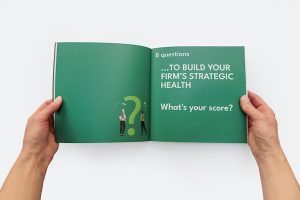

In a world of constant change, uncertainty, and increasing client expectations, one thing separates ambitious firms from the rest: strategic health.
In our book, Your Firm’s Future, we share a practical framework built around 8 essential questions that will help you assess and build your firm's strategic health.
Why does strategic health matter so much? Because when your firm is strategically healthy, it benefits your team, your clients, in fact, everyone connected with your firm.
Strategic health isn’t just an internal metric. It delivers a better outcome for everyone connected to your firm.
Click the button below to take the strategic health of your firm seriously by completing our Strategic Health Diagnostic
or
click the button below that to buy the book.
Click the button below to discover more about the Accountants Growth Academy.
Remarkable Practice Client Manager Programme
You secure your firm’s future growth and profitability when your clients are loyal, recommend you more, buy additional services and are open to regular price increases.
And what drives all of that?
Not just technical quality. Not just deadlines met.
It’s the behaviour and mindset of your client managers.
When your client managers improve how they engage and care for clients, your firm’s results improve.
So the question is: Could you be doing more to build your client managers’ skills and mindset?
That’s exactly what our Client Manager Programme is designed to do.
It helps client managers:
- Build deeper client relationships
- Deliver value beyond the numbers
- Handle pricing conversations with confidence
- Spot and act on opportunities for additional services
Great client care is no longer a soft skill. It is a strategic advantage.
Click the button below to read more about our Remarkable Client Manager Programme and, if you want to discuss it further, please get in touch via the 'chat with us now' button on the website. You'll speak to a real person, not a bot!