
What does leading your ambitious accounting firm with purpose actually entail? In this podcast with Steve Price of BWP Inspire, Steve shares how they arrived at their core purpose, as well as how they've rolled it out and how they lead with purpose in their firm. He covers a number of thought-provoking subjects in the podcast, including how they totally revamped their annual accounts meeting system to make sure that they covered purpose-related questions, ensuring that they were really living out that core purpose in the eyes of both their clients and their team members. Please scroll down this episode page for the contact information for Steve and for the additional, downloadable resources mentioned in the podcast. |
The Solution:
The time for sitting on the fence is probably fading. We need to take a view, and don't get me wrong, Doug, we've got plenty of clients where we would describe the relationship as predominantly transactional. We would love to be in a much more value-added position with every single client, but we're not, and that's our challenge, that's our journey.
But our best clients, and by best, I mean the ones where we're able to make the most impact, who happen to be the most profitable as well, obviously, because it is that win-win, but they're the ones where the relationship is at the other end, so we are much more centred around the relationship and the contact with them.
-
SHOW NOTES
-
TRANSCRIPT
-
CHAPTER MARKERS
SHOW NOTES



Welcome to the Humanize the Numbers podcast series. Leaders, managers, and owners of ambitious accounting firms sharing insights, successes, and issues that'll challenge you and connect you and your firm to the ways and means of transforming your firm's results.
Steve Price:The time for sitting on the fence is probably uh fading. We need to take a view, we need to understand where we see it at that. And don't get me wrong, Doug, we've got plenty of clients where that balance, as you've just described, would be predominantly transactional. We we, you know, we we would love to be able to sit in a in a much more value-added position with every single client, but we're not. And that's our challenge, that's our journey. But our best clients, and by best, I mean the ones where we're able to make the most impact, happen to be the most profitable as well, obviously, because it is that win-win, but they're the ones where the relationship is at the other end, so we are much more centered around um you know the the relationship, the contacts with them.
Speaker:How do you, as a manager or firm owner, put into practice your firm's purpose? Well, on this podcast with Steve Price of BWP Inspire, you'll hear how Steve has changed the agenda of some meetings in order to follow through on this. He also talks about his recruitment process and training people up, among other insights. Let's go to that podcast now.
Steve Price:Hi Doug, pleased to meet you. My name's Steve Price, as you know, um, and I am I'm proud to tell you that my practice is BWP Inspire. We're based in Manchester in the Northwest. Um, let me give you some quick facts to uh to paint the picture. There's there's 20 of us. We're serving uh predominantly business clients. We uh we do uh serve um uh personal clients as as well for for taxation reasons, but most of our focus sits around business clients. What makes us um what makes us unique? Nothing. What makes us rare though? I think that might be the question that I'd like to start off with. What makes us rare still, even now, 2025 in the accounting sector, is that we still lead with purpose. Those government forms, that compliance work is very much falling out of the back of what we predominantly strive to do, which is to help our clients create better businesses and therefore better lives. So that's what we're all about here. We don't specifically sector on a niche, we have um strong um uh leans into creative digitals and also um uh manufacturing firms, and there's actually something quite uh, well, I think it's quite exciting happening in the future, which uh I'm sure you'll let me go into detail as we get talking, Doug. But yeah, that's BWP in a nutshell. Um, and I'm I'm glad to be here talking to you this morning.
Doug Aitken:Brilliant, great to have you, Steve. Um in fact, great to have you back on the podcast, um, which is uh a big endorsement. You must have been so interesting that we decided to get you back. And Paul did the first one, so um a change of presenter today, but uh delighted to have you back again. Um you've already got me thinking, Steve, uh, about leading with purpose. Um just explain that a little bit more because in our work with firms, we're we're beginning to see a lot more firms with a core purpose. What they actually do with it though is a slightly different thing. So just tell me what and tell the people listening, what does leading with purpose actually mean?
Steve Price:Well, let's let's talk about your purpose and my purpose and how I reckon they're quite aligned. So you talk uh both both you and Paul talk about humanizing the numbers, and and I love that. Let me give you my frame on how our um purpose fits in with that. So, our purpose um is um crunching numbers, inspiring business, improving lives, and where I'm going with that really is uh what we do, how we do it, and then why we do it. So let's get right down to the why. We all know about that. Simon Sinek told us all about why we should start with why. But it's that improving lives. Okay, so here's here's what I reckon we're constantly trying to do at Inspire. If an accountant is fulfilling their true calling, their true objective, then they are going beyond the numbers, they are going beyond all the statutory requirements, and they're helping um the their client, their business owner, by using the numbers to create a better business, whatever that means for the owner, because better can mean very different things, it's a very personal thing. When we do that, when we help them improve a business, we're actually helping them improve their life. Now, clearly, I am talking about owner-managed businesses here, but that is the that is the uh the the vast majority of our clients, and it will be for most of the people listening to podcasts. When we help them to improve their business, what we're actually doing is helping them improve their lives because a business owner and their business are so intrinsically connected, we know all the time whether it's their finances or whether it's their day-to-day life, they are completely entwined. And and most people for that, it's great, it's a passion, it's their soul, it's their heart, it's their baby, if you like. But if we can help them navigate through that and make it better, then as I say, I'm gonna repeat, I know I'm repeating myself, but I'm doing it on purpose. We're actually improving their lives, and that's a human thing, yeah. That's our purpose. So in everything we do, and let me maybe take this to the extreme in every phone call, in every conversation, in every meeting, in every piece of work we do, we might be doing a VAT return. But what I'm challenging my team to do is go beyond that, live into our purpose. That's what our core purpose is for, yeah, so that we can always look to improve the business owner's life as well. And I think if I if I've got this right, Doug, and if you agree with me, I think that's why I believe we're quite well aligned. When you say humanize the numbers, that's my frame on what I think is the same thing.
Speaker:You've just heard Steve talking passionately about his firm's core purpose. If you want to learn more about this topic, there's a business breakthrough report in the show notes so that you can read it in the time it takes to drink a cup of tea, back to the podcast.
Doug Aitken:Yeah, I I mean I I love what you said there, Steve. Um and it's interesting when we do that type of core purpose work with firms. Um I've never met one yet who can't get somewhere similar to improving lives. That that is why they got into accountancy in the first place. And um, you know, there's always a there's always a so what to it. You you produce the numbers, well so what? Well, if you have got the the the numbers it helps you make better decisions, well so what? And suddenly you're at you know that type of place, improving lives, making lives better, whatever it might be. And um and I love your example there of it playing out in the team. What what sort of stories do you have from team members that make you think you know what, we're on the right we're on the right track here? Do you have any examples from team members when they've lived out the core purpose?
Steve Price:Yeah, so I mean I d like like any firm, we we have uh people at different uh stages of their own progression. So some are doing more junior work and some are doing more senior work, and naturally this falls um at the sharp end upon most of our senior team. So I think the best example to give you is um around two years ago, maybe a little bit less than that, we completely reframed what everybody will refer to as the annual accounts review. So we do the annual accounts, it's the it's the cornerstone, it's the of our annual work with them. No matter what other services we do along the way, the cornerstone is to is to get those annual um accounts done. And accountants for years have been talking to their clients and talking them through, and conversations have been more traditional in some firms than others. But what we've tried to do in that meeting, and to to answer your question as an example of this, the client managers, when they sit with their clients, we have completely reframed that meeting. We're using models now, and we split it into three sections. So, first of all, is looking backwards, that is the review of the accounts. Now, that is the traditional accounting um annual accounts meeting right there. The second section is looking forward. We use modeling software to look forward to say, okay, what are your ambitions? Where do you want this firm to go? Improving lives coming in right there. And then the third section is delicately, but but necessarily, what steps could we take to work with you more on this and to and to be part of that journey? Now I say delicately because it's not a sales pitch, and I'm very adamant about that. We we we spend a lot of time, but it is, and I make no bones about this, it is a win-win situation if we're able to generate additional work, additional revenue by making a bigger impact and getting closer to impacting with them. So I hope that serves as an example, it's not a specific client example, but it's how we've reshaped our processes so that we can be more impactful and play into our purpose every single time we conduct one of those meetings.
Doug Aitken:Yeah, I really like that, Steve. I think um what you've made me think about there is you're right, it's not the cross-selling part, it's the actual asking the question: what would improve your life right now? You know, what would improve your business life? What would improve, what would reduce stress for you, um, what would uh make you happier, what would um make you uh whatever it is, and suddenly you're having a you're having a feelings emotional conversation as opposed to would you like um more frequent management accounts? That's a sale, that's definitely a sale, but yeah, actually asking them what would improve their lives, and and if it eventually they come down to okay, would it will would it help to have more frequent information? Because you've built the bridge emotionally and people buy emotionally, as you know, then suddenly the door is open for you to pursue. Um yeah, I like the way that you go about that, and you know, improving lives, it's such an easy question to ask, isn't it? What would improve your life right now?
Steve Price:Yeah, and and the answer is always going to be personal because the the the f the the easiest way to answer this is the um the the the balance that most people are trapped in, which is offsetting time against money. So there's also there's almost a pivot point for that, and any social media guru or whatever will tell you you have to try and break that that relationship if you really want to build a business. And and I agree with that as well, but most people are certainly in the um the early uh years of their uh business life cycle are trapped into that. They work harder, they get more money, they work uh they they they they don't work so many hours and they get less money. So that's the easiest way to start to answer this. But actually, we all we talk about mind freedom, we talk you just mentioned stress, uh fulfillment. Are they two different sides of the same coin? Actually, once you're able to uh develop and hopefully start to create a good business, and once you can start to break the time-money conundrum, actually, most people are actually looking further than that. It's fulfillment, it's a sense of purpose. That's when you know you're working with a really great client because you're at a really good stage in their life cycle. And I think as accountants, again, we have you reference back to the numbers. The numbers can unlock a lot of the answers to these questions. But as you've rightfully said, Doug, in my opinion, rightfully said, it starts with personal questions, and that can be just as emotional as it can be technical or or or numeric-based.
Doug Aitken:Yeah, yeah. I I love uh doing that type of work with firms where you actually get under the skin, and you know, you find out why they set up the firm in the first place. And and often accountants will get even accountants will get a bit emotional about the fact that they've lost sight of that in the grind of just doing. Does that resonate with you at all?
Steve Price:Oh, it's too it's too common. It's almost you know, you know the answers you're gonna get. You know, you can open up this questioning very, very simply, very I think this is kind of simple NLP uh stuff, but I've not really uh studied that. But you just say, what is it you want in life? What you know, if you could have anything, what is it that you'd want? And what are the things that you think are the obstacles to getting you there? Two simple questions, and most people cannot answer question number one because they've never stopped, they've never found the headspace to actually say, What is it that I want? And that then relates exactly back to what you've just said, Doug, which is why did I set this thing up in the first place all that time ago? And almost certainly, if you've not done any work yet with this client, there's a disconnect between what they set up uh in the first place for and what they're getting now. And I think you know, we can use words like accountability, but just make people accountable to what they actually want to be. That it's just as simple as that, if you like, but it goes much deeper, it needs to say, okay, so how might things be if we actually start to work on this and get back to what might be your your objectives, and in order to do that, you do the what if or the so what scenario because that is what the core is. We talk about a core purpose, we need to get to the core of what the issue is. One one one business owner might need, I don't know, let's say another an extra £50,000 a year for whatever reason. That that that's the answer to what he wants. Another guy might have all the money he needs in the world, but he never gets to take his children to school, or he misses out on sports day, or he misses out on weekends because the business has swallowed him up and he never saw it coming, and there isn't a day you can trace it back to say that's when the that's when it happened. It just happens over time, and nobody ever looks back to check in on themselves. Could that, should that be the accountant's role? That's that's my point there. And I and again, I'm gonna link it back right to the start when I introduced myself. I don't think I'm unique in saying that. I think a lot of accountants are starting to realise this, but I reckon I'm still rare. I reckon most don't, and I reckon that is the true calling of what our role is.
Doug Aitken:No, I I completely agree, Steve. And I'm just wondering how did clients react initially to that re-engineering of the um uh the the engineer process, you know, this looking back, then the looking forward, and then the what if. What was the reaction from clients?
Steve Price:Yeah, so you know what the first reaction is because it's like anything. If I say to you uh this morning, morning Doug, how's things? What do you say instinctively, impulsively? You say, fine, thanks. You might be carrying all kinds of stress in your head, but you tell me it's fine, thanks. We have to get through that veneer. And of course, we're talking about money, aren't we? We're not quite doctors where we're talking about really, really private stuff, but we're not far off. We're talking about money. So, what do we do when people start asking questions? What do we do when people start asking questions that we don't like the answers to? We we we shield, we cover up, or we start telling the answers that we want to believe rather than those that we have. So you've I you you you tend to have a couple have to have a couple of stabs at this. You have to have a lot of empathy, you have to know where they're coming from. Yeah, you have to keep asking questions because as soon as you start making judgments or you start trying to tell them how you think it is, well, you've lost any chance of getting the truth out of them. Because if I say to you, Doug, if you're my client and I say, How's business going? These numbers look really good. I'm assuming everything's okay. What are you gonna say? You're gonna go, Yeah.
Speaker 5:Yeah.
Steve Price:But I don't know, you might be working seven day weeks and you haven't and you haven't had a holiday for the last three years. Good numbers, but not a good life. So you have to, you know, you have to keep going, I don't know, let's let's talk about an onion with all these layers. You have to peel back the layers to get right down to the core, and that that's a skill. Now, yeah, ACA, ACCA, SEMA, they don't teach you that skill. That's not a technical skill for us accountants, and I think that's the disconnect a lot in our sector. These are soft skills. If we're gonna beat off A AI, which I know is the the big uh the big topic these, if we're gonna beat off it, I I I think this is it. We're talking about it now. These these skills about how to really work and and create an impact with clients is is is is the key to it.
Doug Aitken:I'm sure it is. Yeah, yeah, I totally agree. Um and and it's a really interesting point you made about listening, you know, the the empathy part, because you're quite right, the instinctive answer is usually fine, or if you lead the client along, you're gonna get the answer that you think you're gonna get without actually getting to the nub of what the issue is. I mean it would show up later in the disconnect with the numbers, but um you're right, that skill of listening. I mean, it's something I I still need to be better at because often we're thinking about what we're gonna say next, as opposed to really listening to what the client's saying and freeing yourself up to not worry about what you're gonna say so that you're giving that individual your hundred percent attention.
Steve Price:Yeah, yeah, so so um contrast that with the what the client's agenda is as they step into the meeting. The client's agenda, nine times out of ten, is to find out what the tax bill is and what date it needs to be paid. That that that's quite often their their open gambit of what they're they're here to see the accountant from because that's what accountants have been telling clients and only only that for years. So they come in saying, Oh, you know, suck through my teeth, what's the tax bill gonna be? And just remind me when the date is. I know I've been doing this for the last 15 years, but remind me, remind me what the date is, and then we come at them with a completely different agenda. Now bear in mind, I'm not talking about hoodwinking clients in a meeting. We're actually big fans of sending pre-workout to say, look, let's let's ask you some questions, touching on this already in the first place. So we've got an idea of where your mind's at, and you've got an idea of where it's going. So I'm not talking about hoodwinking, but what I'm saying is accountant and client meet, and I still think we're in a transitional phase where that client is coming in expecting to be told what the tax bill is and not that much else. Maybe sign a document here or there, and we're as part of our purpose going forward, we're here to say, Well, you know, that's a two-minute thing. Let's get on to where we can really help you. So, what I'm trying to say is the skills in navigating round that asking the right questions, pushing but not pushing too hard, listening and not jumping in, not making judgment. Wow, this is really hard. And to tell you, Doug, today that BWP Inspire and all its team have got this absolutely nailed and we're flying would be a lie. Of course, we haven't got it nailed. Yeah, it's it's something we're you know, we're constantly working to, but isn't that what a core purpose is? It galvanizes us and it sends us in the same direction. So that's yeah, that's what we're on to. I'd I'd I don't know, I'd I'd say we're we're we're part way there. But again, let me just because I think it's really important, you know, what makes you unique? It's a really nice question to ask, but I don't think you have to be unique. You don't need you don't need to be a unicorn. I think it's easy to stand out as an accountant because we are quite rare if we just spin this round and start driving and acting like this for our clients. So yeah, yeah, that I mean that's the the the the real point that I want to make today. I do I I um I just think it's probably easier than what most accountants who aren't doing it think it is. You know, maybe they've been doing it for a long time and their own change, their own adapt uh adaptability is the issue. But really, if we're gonna make it through the next um decade, if we're gonna make it through this digital um uh transition, if we're gonna make it through AI, I don't think this is a choice anymore. I think this is what we we absolutely have to do.
Doug Aitken:Yeah, yeah, I agree, Steve. Uh uh in a sense, some people listening might think that you've actually made it sound difficult because these are soft skills that aren't taught now. You know, obviously this is our uh our area, but um were you self-taught or you know how did you learn to do that sort of thing?
Steve Price:That's a great that's a great question. Um well I certainly haven't been to any um um uh lectures on this or done any courses in it, but I suppose I'll answer that with two two ways. First of all, I'm SEMA. Um I don't think that answers all the questions, but I started in industry, which is probably obvious uh being SEMA, and so I always um came from a background of uh you know I had no statutory reporting to do. I I I didn't do the VAT returns, I worked within um a costing um area, and so I think I don't want to you know start rubbing one institute off against another, but the SEMA way of coming through is to understand the real value of numbers in their cost and their value to the firm. So I think I had a good footing in that to begin with, and then I decided, and there's a whole story behind this why I flipped from um industry into practice, but my practice to this day is the only practice I've ever stepped foot in. I've never um I've never worked in any other practice, and that used to scare the hell out of me for the first few years because how would I know what to do? But I later found out that was probably the best thing I had because it forced me to understand what is really and I've and I found my way was to get to know clients, create that relationship, build trust so that I could start asking questions. Did I know really where that was all going in line with what I'm talking about today? Not really, I've I've built all that over the years, but I knew there's a story behind the numbers, and in order to try and understand that story and then help them impact on that story, you have to start having conversations and asking questions. So I don't know whether it sounds arrogant, but I think that just comes in instinctively, or at least my background um as an accountant. But then the second part of the story, so even though I've never been to a course, I have gone out of my way to immerse myself in what I believe are really good communities. And and there's no point in naming them, I don't think this is a branding exercise, but there are some really good communities out there, both face-to-face ones and um and and online ones, where you know there are a lot of accountants all are trying to do different things, but amongst us, if you start talking to and you start having conversations with like-minded accountants, then you can grow together. And we're we're so privileged to be in such a great sector where certainly my experience, we don't see each other as competition. Yeah, we believe the competition is for us as a collective to try and be more impactful for for UK business out there, and that's we're so privileged to be in that. And when I meet another accountant who's willing to share and you know be but be vulnerable, tell me where they've made mistakes, and I share mine, that's when we both learn. I don't I think that's better than any course you could go on for it, to be honest, Doug.
Doug Aitken:Yeah, absolutely. Um it's almost a movement, isn't it? I I've got uh dealing with another few firms like that who and one of them in particular is almost starting a movement around this because he feels so passionately about it. Um and I agree, you know, in terms of the future. Well, just give me your view, first of all, Steve, on what do you see as the future for accountancy? First of all, just to frame it up and then we'll delve into the accountant's role in that.
Steve Price:Right, okay, that's a that's a really big question, that one, Doug. Um the future of accountancy. So um I think it takes two to um two channels, two two levels. We have so far discussed um the the human side and our role to play in doing that, and of course, if somebody wanted to label that, they might call that advisory or something. I'm not that keen about necessarily having to label things, but we've talked about that as a channel. The other side then is about us adopting the tech, but it's got to be the right tech, you know. Everybody's very keen to talk about app stacks and what they use. It's almost like we're collecting conkers. If we were schoolboys in the playground, what have you got? What are you changing? Account X is here, what can we buy? What shiny product can we unwrap? And I know I'm not uh developing anything that we haven't all talked about for a year, but tech isn't avoidable, you know. Talk about MTD if you want. If you really don't like tech, you're gonna have to have enough to get through MTV MTD. But tech is the way we're all gonna um uh evolve or escalate our roles, because it's alright, me saying sit down and having questions with your with your clients all day, but you do have to actually do the work in the background as well. So, how do we do that? The tech, the tech is gonna do that. So, when people are gonna start to get uh fearful of tech replacing us, then if your comfort zone is in nothing more than just working on numbers for a statutory purpose and you run a mile at the idea of actually communicating with a client, then perhaps you may need to be a little bit uh worried. But the savvy accountants and the movement of accountancy, if I can actually answer your question, Doug, the movement of accountancy is in balancing that tech with the human side. And I know me and you are on exactly the same page where for me at least, for us at least, perhaps, it's not a hundred percent tech. I know it could be, but not for me. I'm not interested in that in my firm. I'm not interested. I'll go and find another vocation, another firm to run if it's just about the tech, it's about balancing the two between them, and I think that's the future of a currency. People, again, if that's a pivot, if that's a line, people need to work out where along that line they want to be. And I'm firmly decided it's the middle, it's the balance between the two, which is the future for me.
Doug Aitken:Yeah, yeah. It's funny. Well, I was talking about this, uh, I miss I think it was just yesterday, about the the balance where you know, if you imagined a continuum that says relationship at one side and transactional at the other side, um, and I was asking them where do you spend most of your most of the fee for that client? Do you spend it at the relationship side or do you spend it at the transactional side? And of course, you know, given the situation, they they were answering, oh, it's more at the transactional side. And I was fast-forwarding with them then and challenging them about the use of technology and saying, well, you know, how's that going to play out when the transaction happens an awful lot quicker? Um either that you know, there's that two things can happen. Either the client is gonna not gonna pay the same fee, they're gonna pay a lot less, or you've got an option to spend more time at the relationship side. Does that make sense?
Steve Price:Oh, it makes a hundred percent sense, but the question is different practice owners like me, partners, whatever, will view that conundrum in very different ways. And I think that we everybody can take a different view, and it's fine, but we need to take a view. The time for sitting on the fence is pr is probably uh fading. We need to take a view, we need to understand where we see it at that. And don't get me wrong, Doug, we've got plenty of clients where that balance, as you've just described, would be predominantly transactional. We we you know we we would love to be able to um sit in a in a much more value-added position with every single client, but we're not, and that's our challenge, that's our journey. But our best clients, and by best, I mean the ones where we're able to make the most impact, happen to be the most profitable as well, obviously, because it is that win-win, but they're the ones where the relationship is at the other end, so we are much more centred around um you know the the the relationship, the contact with them.
Doug Aitken:Yeah, tell me about a couple of client, uh not necessarily live examples, Steve, but just I I'm intrigued about the reaction to how you've restructured the firm and how you've especially how you restructured those year-end meetings, so the past, um the the future focus of the numbers, and then the the the what-if um scenario. I'm just I really want to get to the nub of what the reaction from the clients was. Um and you can either tell that through an individual story or just a generalization about you know, because I see sometimes in firms where the accountant will say, Well, the clients actually love getting asked questions like that. After they get over that initial, wow, I've never been asked that before. Yeah, but you are now, so how would you answer it?
Steve Price:Yeah, yeah. So let me tell you how we've backfilled a bit of this process because we put it all in and then we realised one critical bit was missing. So we we've got our client journey now and we've mapped it out. So once a client on boards, etc., and they're now into a cycle with us, whatever that cycle is quarterly, monthly, annually, whatever that might be. Then we do have the pre-year end meeting, which is you know, uh nobody on this podcast needs that explaining, but it a little bit more of a tax focus, perhaps, because uh of the opportunities. Then we then we do the year-end accounts, and then we have the post-year end accounts. I've already talked about that meeting, but it's more from a business or profitability or business building uh perspective looking forward. That is our that is our minimum product, if you want, minimum standard. All clients, all all business clients get that included. That's our minimum thing. And then we look to fill in the gaps for the cycle so that we can have a more regular uh meeting with them. And you can call that management accounts, you can call that uh Uh accountability coaching, you can call that um uh annual strategy meetings. We all know the sort of things we can do that will fit to uh to firm out that cycle. But one thing we noticed was when the clients were talking to us and answering our questions, you know, we do get a mix, we get um apathy. Oh, that's really interesting. Thank you. Can you send me a copy of uh the numbers you've just explained? Yeah, yeah, yeah. And off they go, and you know, yeah, head in the sand, maybe I don't know, but they've got other things to uh to think about clearly to absolutely blown away. Wow, now you put it like that. You know, because we'll ask we'll ask questions like, what if you could improve your margin by one percent? Do you know what that looks like? And then we model it and we show them. Now, what if you can improve your margin by one percent and also reduce debt of days by two days? What does that look like? Let's start modelling that in your um in your bank account. Wow, well, I won't have a problem, I won't be hand-to-mouth with my cash anymore. Only two days less, only one percent margin. Right now, let's work on a plan on how we do that. So you get all those sort of conversations starting. But what we realized was the gap was that when we said, What if it could be one percent better? What if it could be this? What if it could be that? You know, there's sometimes some blank faces. There was, oh, I've never really thought about that. And of course, they're in the moment, they're caught in the thing, so they gave the easiest answer. So we thought, what if we already knew the answers to these questions before we got to the point of showing them the accounts? Bear in mind, this is not rocket science, this is all straightforward stuff. So now, as part of the um on boarding with clients, we now have a goal setting exercise so that we know, and I again I know I'm not saying anything that hasn't been said so many times before, but putting it all together is the real key. So client on boards with us, and they might be a new startup company, or they might have been established 20 years, but we say, What does success look like to you? And of course, we don't mean business success, we mean in your life. So now we start to talk about do you need more money, do you need more time, do you need more fulfilment, or do you just need a balance of those three? Therefore, when we come to that meeting and we start asking questions in the accounts meeting, we now have a point of reference because we can look at these accounts and hopefully, hopefully, we've got some idea as to whether these accounts are fulfilling what their hopes are or not. So we can approach that in a different way and say, Well, we we we we we know this business is not serving the business owner, we know there's pain, so we can approach the question in a slightly different way. Yeah, that that that's only quite a recent introduction, so maybe I'll need to catch it with you in another year or two and tell you how that's gone. But I think that missing piece is really, really critical to what we're trying to do.
Doug Aitken:Yeah, I think I would agree, Steve. I think it is important. I mean, even in our our work with firms, we we always have a personal goals refresh every year for that reason, because and things change, you know. Even in the last few years, I've had a uh brush for cancer, I've lost my dad, uh had um two new grandchildren. They're all significant life events that make you stop and just you know take stock a little bit, isn't it? And and am I still doing what I want to do? And the answer every time is yes. So I I've never changed anything, but I could see how it could change, and um and and also you know, uh as you know over the years money ebbs and flows. Sometimes you're in a good place with money, sometimes you're not, and and then at different stages of life, maybe you want to invest more because you know I'm going to be peak earning years now, kids are off the hands, blah blah blah. So it's so important to check in with people. Um I always remember Paul telling a story about a lady that he worked with who for eight years in the trot when he was doing a a review, look you're your director material. Do you not want to no no not interested until one year? Kids were off her hands, she could devote the her time and attention full-time to the role, and all of a sudden the answer was yes. And if he if you hadn't been persistent and kept asking the question, she wouldn't have the career that she does now. And and it's uh so the the personal goals are a moving feast, but I love that you're anchoring the improvement towards that. So you you know, just as an example, you told me at the start you wanted a family holiday for the kids in Florida. Well, this level of profitability with six months to go means that you're well on track for that, and in fact, you can afford a better hotel. That type of thing.
Steve Price:Yeah, yeah, exactly. But also, can you afford the two weeks off work to go there as well? And and of course, the numbers don't always tell you that, so this is why we have to go beyond. Yeah, but you didn't write. Now we can talk about real life things, um, and another way to frame it, without being specific about a um a particular client, but our approach is I personally am quite big on um exit planning, and and you'll know as well as I do, exit planning doesn't mean leaving the business now, it means building a business that one day you can, should you choose exit planning. But if you start saying to a client, so if you open the question the conversation up with, have you got an exit plan? Now, unless you absolutely have just hit the nail on the head, and that's exactly what they're thinking at that moment in time, the answer you're gonna get is head down, shifty eyes, no no no, please don't talk to me about that. No, no, no, no, no. No, I'm far too busy to even think about that. Because it has this stigma to it. So, but yeah, I know, and I I think I'm right to say, I know, that they really should have a contingency for this because, of course, there's all different ways to exit a business. People assume it means selling, but we're all mortal, we're all exiting the business one day, one way or another. So we need we need to have that, we need to have a business that's structured ready to deal with that. But again, if you go in with have you got an exit plan, the answer is no. Move on. Next question, please. So you have to come, you know, in order to try and be your um be your most useful, be your most impactful, you have to navigate around around this. So you said earlier on in the conversation, Doug, you don't say to somebody, uh, would you like some management accounts with that? Because it's a means to an end, it doesn't mean anything. You don't say, What I really do with my best clients is help them to form an exit strategy. You need to understand what's going on in the lives, like you've just said, there real life factors, real personal factors in the family and beyond, and then see if there's any any any weaknesses, any vulnerabilities along with the goals that they're trying to achieve. And again, we go back to the conversation we've already had, which is how to navigate that into how we can best help them.
Doug Aitken:Yeah, yeah. So you're you're now 20 people, uh, Steve. How many of that um those uh team are for are client focused and and having these sort of conversations?
Steve Price:Um quick top up. Um it would be around half, maybe maybe 60%. Um what we're trying to do differently is really put the um the onus in a in a good way, you know. We don't want to put too much pressure on, but we've got an apprenticeship scheme here, and we've really, you know, everyone's struggling for a recruitment, so we've got a whole programme lined up now. I'm very, very proud of it. I've had one particular junior member actually develop the programme for us, you know, so it's done, it's done from the inside kind of thing. So we've got this five-year development programme, and of course, it includes exams, but it's more about how they develop with experience through, and one of the key factors I was very keen to put into that is picking up the soft skills earlier on in the career. What we see far too often is that you know, a trainee comes into a practice, all the skills they're taught are around data capture, uh, bookkeeping, the the the standard, maybe more bookkeeping-led elements of the job we do. Meanwhile, tax, high-level accounts, and all uh uh client communication is handled by the senior people. So, what we're trying to do is um put their exposure to that, give them training and hopefully confidence in that at a very early stage. So, I mean it's it's quite simple in how we do it. We we shadow in a lot of meetings, we we we work off a system of rocks, which I think you know, Doug, we we're very proud to run traction here, and we have rocks, but they're basically just the the name for our accountable goals. So, one of our juniors, their rock, might be, and he's quite often, to attend, I don't know, at least three client meetings with a senior in the next quarter, and then we choose which of the what which of the meetings to have, and then we sit with them and say, right, what did you learn? What do you why do you think they ask that question? So we've got about 10, about half. I haven't done the math, but about around half of them client-facing, but some of them are leading it and some are on their journey. But I think that journey is important. I think the traditional model is more to keep juniors well out of the way of actually working for clients and submit everything they do to the client manager or the partner, and I'm totally against that, completely against that.
Doug Aitken:Brilliant. I love that as well. It's funny, I was watching something on LinkedIn yesterday, Simon Sinek interviewing a lady, and she was talking about Gen Z, and and I think he asked her something like, um, what's the biggest skill that you could teach Gen Z right now? And she said, I would I would encourage them to talk to strangers. And Simon said I said, Yeah, yeah. And we we I think everybody went, Oh wow. But but she explained, well, what does it teach you? It teaches you uh trust, vulnerability, communication skills, and she reamed of about a dozen things, and every one I thought, you know what, that's absolutely bang on. And she said she made the point, very valid point that when we're all going about with our heads and our phones, we've lost that ability to better connect with people. Now, people of our age, Steve, if again dare bracket myself in the same uh age category, we we had that skill because we didn't have phones when we were young, yeah. So we had to talk to strangers, whereas youngsters brought up these days just don't have that skill. So I'm so chuffed that you're actually taking that similar stance and teaching them early. Does that how does it affect your recruitment, Steve? Um, if I could follow on, you know, how how are you recruiting these people?
Steve Price:Yeah, so yeah, I mean, I I I doubt I'm different to anybody else out there, which is this is my biggest uh uh thing. With um we are recruiting almost predominantly at a uh an apprentice level, so we're trying to get the levels um well escalated, you know, at stages through the business. Um I'm gonna give you the easy answer, but it's as if it's plucked out of a textbook. So we try and recruit upon values and upon potential. So if somebody comes to us, and when I'm when I'm talking about apprenticeships, our sweet spot certainly at the moment is um 18, so post-college, and we say to them, okay, so you've got the opportunity now. I mean, not everybody is in this position, but quite often, go away to university, get a degree, come back and see us in three years and and start to go for your chartership off the back of having already won a degree, or come over to us now, don't do university, um, maybe do the AAT um route. We sponsor you for that and bring you into a work environment. Now it's very important that I don't tell them which one to do, but we can give them another viable option. People talk a lot about degree apprenticeships at the moment. I don't think it's that, but I think it's the accounting sector's answer to that, which is obviously the AAT, and then they can flow into that. So um your question was how does that affect our recruitment? What it means.
Doug Aitken:I think where I was wrong, Steve, um, is that and in a way I'm actually chuffed that you're you're not doing anything that much different. You're recruiting on values, which is great, and potentials, but I think I'm putting myself in the in the shoes of those listening to it, thinking, well, you're obviously recruiting different a different type of person. It sounds like you're not, but you're actually just devoting the time to train them, which is the key thing.
Steve Price:Yeah, and it's what we train them on as well. So don't get me wrong, they need to know double entry bookkeeping. Let's let's get let's get past that. We know we know that they've got to be technically sound, but that's not the differentiator. The differentiator is these is these soft skills. So in that interview, rather than me saying to them, what do you understand by a balance sheet? What do you understand by debits and credits, or what do you to try and understand if they've got any accountant knowledge? I'm asking questions like, What do you think the role of an accountant, just like Inspire, just like us, should be? Now I know they don't know the answer to that, and to be honest, it's quite subjective anyway, but I'm just keen to know how open their eyes are, what perspective, because the the best chance they've got to answer that question is as they've walked into our office and met and spoke to a couple of our team and developed all these ideas about what actually goes on in accounts practice. So I'm trying to sort of glean their um their thoughts, their thought process, and this is this idea about do they have potential. So I'm interested what they've got to hear. Well, sorry, I'm interested to hear what they've got to say to a question like that rather than marking it right or wrong. Another question is tell me tell me why you think accountants is the right sector for you. Now, again, there's no right or wrong, but why why are you sat why are you sat in my office? Why not um any other um uh profession you could have uh you could have gone to? And it's it's whether they sell their I don't know their their passion, their commitment at such an early age, you know. I didn't I didn't know I wanted to be an accountant at that age. And I've got to be careful because I'm not saying they absolutely have to be nailed on at that at that age, but I need to know what commitment they're gonna they're gonna bring into the firm, and I think that's what I've labelled at the start of this conversation by saying their values. I just want to know where they're coming from because if they've got that push, that thrust, that ambition, and they've got an inkling of what it is we're really trying to do. And we took on somebody less than a month ago, and she impressed the socks off us, she didn't know anything about accountancy, but she knew she wanted to be in an office environment where she could use her skills towards helping people. That's enough for us, and then we'll see where that goes.
Doug Aitken:Yeah, that's fabulous. I love that. I I I've got a real hobby horse just now. Um, Gary Ridge, the ex uh CEO and chairman emeritus of WD40, huge fan of his, and he he had this saying that I think he nicked from Ken Blanchard talking about um people and working with them. Do you want to mark their paper or do you want to make sure they get an A? And I just love the distinction. What he meant was what you're doing is you're making sure they get an A. You're beginning in these people and you're not allowing them to fail in front of a client, you're actually taking them aside and saying, it's okay, we'll teach you. We'll teach you those soft skills so that when they do get in front of a client, you know they're going to get an A. Now I may be putting words in your mouth there, but that's how it feels to me. I think one of my biggest challenges with the profession is that and it's maybe the way that accountants are wired, Steve. We're taught to look for mistakes and faults and numbers that aren't in the right place and whatnot, but we're too good at marking papers, and maybe we should be better at making sure people get an A. I like it, doesn't it?
Steve Price:I do, I agree with you. I like it, I love I love the analogy you've got, I think it fits really well. Um yeah, I mean, did you mention WD-40 there?
Doug Aitken:Yeah, Gary Ridge. Um he's the he's the ex, he was the CEO. I've got his book here in front of me. Brilliant, brilliant book.
Steve Price:Yeah, I've not come across him, but I do know there's a really interesting story about WD-40 and how they repurposed what it was for after all the staff were nicking it. It's a really great um story. Well the staff had done that.
Doug Aitken:Another business that leads with purpose. I mean, and they sell oil in a can, for goodness sake. You know, they're they don't have nearly the same profound effect that we could have as accountants on the lives of business clients, and yet they lead with purpose. And um he's just a genius, he's a humble, humble guy, but but I like it.
Steve Price:I'm gonna look him up. Can I just add another point in though, um Doug? Because you you said to me it's good to hear that we're not doing anything different in principle, you know, we're not going out and finding super apprentices or anything, or we've got some sort of untapped difference. Here's a point where I think is a key to a difference, and this might rub some practice owners up, but I reckon one of the keys is not just looking for which apprentices you get, it's the role of their managers. So I think one of the key parts is ensuring you have Slack amongst your senior team members so that they have the time, they have the space to um to spend time on the juniors and develop them. So we we have one-to-ones, we have arranged one-to-ones. We then have formal appraisals as well, but we have much more frequent one-to-ones. Now, if that senior is overworked or is running, overworked is too easy to say, but they are running to a you must have 95% client time or whatever, the the the model there. What's the first thing to go? What's the first thing that they say? I wanted to do it, I know I should have done it, but I just didn't have time. And of course, how many practices have got all good intentions, but actually just don't get round to what they do? In order to make this fine, and all the good stuff we've been talking about with junior development and apprenticeship, in order to do that and to pass that knowledge down, you have to create Slack at the top, and you have to actually say, look, this is non-billable time that we are investing into the future of our resource to make it there. And I think that singularly is probably the biggest key to making all of this fit together.
Doug Aitken:Yeah, brilliant. I totally agree again. I think I mean we've got a model that starts at your firm's success, and if you think about the success of any accounting firm, it's ultimately dependent on client loyalty because if they stay longer and they pay more and they recommend you more to others, that's what builds your firm success. Now, what's behind client loyalty? You've got to have an engaged team. You can't do great client meetings and put a face on every time if you're miserable as sin. So you've got to have an engaged team, and and the key factor behind having an engaged team is not you, Steve, although you'll be really good at it, it's your manager, it's the immediate line manager. So they have such an impact on the the ultimate success of a firm. And again, great to hear of that investment in time, the just uh giving people the um the the ability to take time out. It's non-billable, it's okay, it's one for the future. Steve, I'm gonna I'm gonna call a halt to what we're doing here. Um I literally could go on for hours, so you may well get a third invitation which we'd be unheard of in Human Eyes the Numbers podcast, but I've really really enjoyed our chat. Um, thank you so much for being a guest today, Steve. Uh any final thoughts or or words from you? No, I just um give me a shout.
Steve Price:I'll I'll I'll I'll gladly come back. I uh I love talking to you, I love talking to Paul. I've learned a lot of both of you over the years. You know, if you like the sounds of what I I say sometimes, maybe you can resonate with with conversations we've had in the past, you know. So thank you.
Doug Aitken:Yeah, absolutely. Thanks again, Steve. Thanks, Doug.
Speaker:You've just heard Steve Price talking about leading with purpose and focusing on the relationship with your clients instead of just the processes that you do for them. If these are topics that interest you, why not check out the Accountants Growth Academy? You can find information about it at remarkablepractice.com or check out the link in the show notes.
Paul Shrimpling:You'll find more valuable discussions with the leaders of ambitious accounting firms at humanize the numbers.online. You can also sign up to be notified each time a new podcast is made available.
Doug Aitken:This is a short snippet from a podcast with Caroline Carter of Carter Clear, in which she talks about how her diagnosis of uh ADHD allowed her to make sense of the world, allowed her numbers to start talking for her. If you'd like to hear more, go to your usual podcast platform or listen to it on humanizethenumbers.online.
Speaker 1:Think about when you sign up for a software. Accountants love software, don't they? You get a free trial for 14 days or 30 days. That's what we do with clients. Um so we'll kind of prep a set of management accounts um and send it to them for free for two to three months. And it's that then the next month they don't they don't get that. We explain to them that we're kind of gonna trial it and see if it adds value to their business. Do they find it you know informative? Is it helping them? Can we tweak it and we get their feedback? And then they make that decision then whether they want to kind of take up that service or not.
CHAPTER MARKERS
START TIME | CHAPTER TITLE |
|---|---|
1:02 | Introduction |
3:28 | What does leading with purpose actually mean? |
6:10 | Improving lives... |
7:07 | Reframing the annual accounts review |
14:07 | The simple questions that go deeper |
16:32 | The clients reaction to Steve's meeting process change |
19:15 | The client agenda contrast - relationship versus transactional |
22:33 | Steve's journey to the soft skills |
25:46 | The future for accountancy |
30:05 | The client reaction to 'past, future. what if' |
34:39 | The personal goals conversation |
36:33 | Being big on exit planning |
38:50 | Training the team for client focused conversations |
42:45 | The challenges of recruitment |
46:47 | |
48:48 | The crucial roll of managers and slack at the top |
Click the play button below and use the slider on the audio below to get quickly to the chapters in the podcast.
Resources relating to this podcast:
This conversation between Doug and Steve kicks off with the idea of leading with purpose. Everything Steve does at BWP Inspire is purpose-driven.
This is their purpose:
- What we do – we crunch numbers
- How do we do it – by inspiring businesses
- Why do we do it – to improve lives
Steve talks with such obvious enthusiasm about how everything they do in their firm is driven by their purpose. He talks about going beyond the numbers, connecting with the goals of the business owner, and working with them to ensure their business improves their lives.
If you want to know more about the importance of defining your core purpose and leading with it, please click the button below to read the Business Breakthrough report 'Lead with Purpose'.

Click the button below to discover more about the Accountants Growth Academy.
Remarkable Practice Client Manager Programme
You secure your firm’s future growth and profitability when your clients are loyal, recommend you more, buy additional services and are open to regular price increases.
And what drives all of that?
Not just technical quality. Not just deadlines met.
It’s the behaviour and mindset of your client managers.
When your client managers improve how they engage and care for clients, your firm’s results improve.
So the question is: Could you be doing more to build your client managers’ skills and mindset?
That’s exactly what our Client Manager Programme is designed to do.
It helps client managers:
- Build deeper client relationships
- Deliver value beyond the numbers
- Handle pricing conversations with confidence
- Spot and act on opportunities for additional services
Great client care is no longer a soft skill. It is a strategic advantage.
Click the button below to read more about our Remarkable Client Manager Programme and, if you want to discuss it further, please get in touch via the 'chat with us now' button on the website. You'll speak to a real person, not a bot!
During the podcast Doug and Steve discuss Simon Sinek and the importance of the 'Why' question. If you want to read more of what Simon has to say about why you should start with Why, please click the button below to read his book.
Towards the end of the podcast, Doug mentions Garry Ridge, ex-CEO of WD40, and the phrase 'Do you want to mark their paper, or do you want to make sure they get an A?'
Doug talks about how Garry trains and teaches his team, allowing them to fail, and why the best learning comes from permitting them to do things themselves and make mistakes along the way.
You will hear in the podcast that Doug is a big fan of Garry Ridge, so if you want to know more about the way Garry led WD40 with purpose, please read his book by clicking the button below.
Your Firm’s Future – by Douglas Aitken and Paul Shrimpling of Remarkable Practice

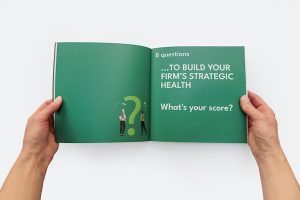

In a world of constant change, uncertainty, and increasing client expectations, one thing separates ambitious firms from the rest: strategic health.
In our book, Your Firm’s Future, we share a practical framework built around 8 essential questions that will help you assess and build your firm's strategic health.
Why does strategic health matter so much? Because when your firm is strategically healthy, it benefits your team, your clients, in fact, everyone connected with your firm.
Strategic health isn’t just an internal metric. It delivers a better outcome for everyone connected to your firm.
Click the button below to take the strategic health of your firm seriously by completing our Strategic Health Diagnostic
or
click the button below that to buy the book.