
How do you ensure that you are continually delivering value to clients in such a way that they never question the fees that you charge, especially in the volatile, uncertain world in which we're living? In this podcast with Phil Hobden of Sage, Phil and I cover several topics that are particularly relevant to the profession today, including: how do we deliver value? During our chat, Phil shares some great insights gained from the nine years he spent working with accountants in a tech space. He's developed a good understanding of accountants and their motivations and capabilities, and we have a really interesting discussion around how accountants explain to clients just what it is that they do. Please scroll down the podcast’s episode page for the contact information for Phil and for the additional, downloadable resources mentioned in the podcast. |
The Solution:
Oh, I'm just an accountant. Really?
Well, I think that's pretty cool…
So you can identify risk in my business, you can help me stay compliant, you can help me avoid fines, you can help me grow, you can help me get paid better.
Well, okay, that's more than just an accountant.
If you put all three of those people in my business, that's a significant amount of salary.
-
SHOW NOTES
-
TRANSCRIPT
-
CHAPTER MARKERS
SHOW NOTES
Connect with Phil
- LinkedIn: Phil Hobden
- Website: https://www.sage.com/en-gb/
- Email: phil.hobden@sage.com



Paul Shrimpling: 0:05
Welcome to the Humanize the Numbers podcast series. Leaders, managers, and owners of ambitious accounting firms sharing insights, successes, and issues that'll challenge you and connect you and your firm to the ways and means of transforming your firm's results.
Phil Hobden: 0:21
I'm just oh, I'm just an accountant. Really? Like, I think that's pretty cool, right? So you can identify risk in my business. You can help me stay compliant, you can help me avoid fines, you can help me grow, you can help me get paid better. Well, okay, that's more than just an accountant, right? If if you put all three of those people in my business, that's a significant amount of salary.
Doug Aitken: 0:42
Do you interact with your clients or do you have a relationship with your clients? In this podcast with Phil Hobden of Sage, you'll hear Phil's views on how we can develop better relationships with clients and why that's so important given all the changes that are facing the profession right now. Let's go to that podcast now.
Phil Hobden: 1:04
Hi, I'm Phil Hobden, head of business development at Sage in the UK. And for the last nine plus years, I've been helping accountants implement technology into their practices to streamline and I guess supercharge the way that they deal and work with their clients. Um I'm a podcaster, uh, I'm a speaker, uh, and I'm really happy to be here today uh with Doc.
Doug Aitken: 1:28
Fab. Welcome, Phil. Great to have you on the podcast today. And um some interesting memorabilia behind you. You're also a film buff.
Phil Hobden: 1:38
I'm also a film buff, yeah. I always leave that bit out. I think the room, I think the room probably speaks for itself a little bit. It does. Yes.
Doug Aitken: 1:45
Um and don't see the video, then you're going to uh lose the effect here. But trust me, there's a lot of uh very interesting film memorabilia. Anyway, great to have you on again. Um, Phil, and this is a second time. Uh I think Paul had the pleasure of interviewing you the first time, so we'll see where our conversation goes today. Um, Phil, we always ask our guests first question on the podcast. We talk about our core purpose, which is to humanize the numbers. And I'm just interested in your perspective on that. What does that mean to you? That's a really good question.
Phil Hobden: 2:22
I guess I guess for me it's it's about understanding. It's the same kind of thing that I've always done. It's about understanding the the people behind the business and the people behind the accountancy firms, what drives them, where they want to get to, and and and what they're looking to achieve, and then helping them do that. It's what I've done with with technology and software, right? So so, yes, I deal and sell or work majoritively with accountants, but it's often helping accountants to have those more human conversations with their clients to understand where the growth mechanisms are, where they can support better. And and ultimately, if you do that correctly, your practice will grow and your business will grow, and you'll have a better outcome for yourself on that. So to me, that's what humanising the numbers really is.
Doug Aitken: 3:06
Yeah, fab. You've mentioned the last nine years, Phil. What was your experience before then? Where else have you worked? So yeah, it's an interesting question.
Phil Hobden: 3:16
So before I jumped into the space of working with accountants, I was in banking and finance, and before that, I ran my own business. So I ran I came out of university, I uh built a media company, a small media company. We we made some films, did some corporate work, commercials, music video, that kind of stuff. But you know, the the market changed fundamentally with the arrival of Netflix, and a lot of the outlets and and places like that changed. So it was very hard to make money out of that. We had a particularly bad experience with a US distributor as well, who um did a very good job of hiding all of the money we made under some very impressive contracts. Um, so we saw nothing. So I made the decision that I needed to get out and get a career for life, and I decided to go into banking and finance. Unfortunately, I decided to go into banking and finance not a huge amount of time after um the financial crisis, uh, and I went into one of the banks that was quite involved in that. So I found myself in that bank. Um, and over the course of six years, I think I was my teams were made redundant four times. So the department I was with got shut four times, and it got to the end when it was coming around again, and I was like, Do you know what? I can't do this again. It's it's happening too much, you know, there's no guarantees. And ultimately it was the right call because what happened was once again that team got made redundant where I was going to, um, and so on and so on and so on. So I jumped out of that industry and and and ended up in tech because I love technology, I love talking to people, as you well know, Doug, I'm a I'm a talker. Um, but I love technology, I've always been really interested in tech. So being able to kind of put like the people and the tech side together was great. And I landed in the accounting industry and really enjoyed it. In fact, um I was working back then for future in a lot of that team I'm now working for at Sage, so that's that's pretty cool, right? It's a nice cyclical journey for me to come back and work with people that I've worked with previously and worked with before.
Doug Aitken: 5:18
Yeah, I got a strong sense of that. I remember reading your LinkedIn posts about um you know joining Sage, but there was that connection with um with future. Again, it's the the human element, isn't it? You there's people you work with, you know, like and trust, and it makes it so much more easy to fit in places, doesn't it?
Phil Hobden: 5:38
Oh, it's it's a hundred percent that right. Like, like, look, I've I've had some experience, I've been lucky to get some experience in different businesses, but going to work with people that you get on with, you trust, and you have that shorthand with is is phenomenal. And yeah, it's it's a privilege to be working with some of those people again and in in in a bigger company now. Um the challenges are are different. The challenges are there, right? The challenges are always there. Whatever business you work for, they just become different. The challenge when you work for a small fintech is is you know raising money, getting those early clients, keeping the business going, and kind of riding that momentum. And and the problem you have when you've got a bigger company is kind of you have that momentum, but then it's kind of making sure what you're doing is right for the customer, you never lose that kind of human purpose at the center of it. Because you know, if you if you make clients and customers just numbers on a you know, accounting on a bit of an Excel spreadsheet or a Salesforce or whatever it is, then they won't be your customer for long. You need to understand them, you need to kind of be able to know what drives and motivates them. And if you can do that, that's great. So that's a a different challenge when you're dealing with you know hundreds of thousands of customers. That becomes a lot more difficult when you're dealing with two, three, four hundred. It's a lot easier. But you know, it's a different different sides of the coin, but you know, both sides have its own set of unique challenges.
Doug Aitken: 7:04
Yeah, I was going to ask you about that, about how the the journey has been since you joined Sage, because it is a big company compared to where you've been latterly.
Phil Hobden: 7:16
Yeah, it's it's definitely one of the largest businesses I've ever worked for. Um, and that gives lots of opportunity, which is fantastic. There's loads of places, there's loads of people that can support and help and know what you're doing, right? But the challenge is I've been here five months and six months, and I I'm still trying to find out some of these people. I get people messaging me on a daily basis, then, hey, I'm I do this. I'm like, brilliant. I didn't even know that was a thing. Brilliant, we have that. Wow, cool. Um I I wonder, like, like one, two, three years down the road, I thought, yeah, I'll still be doing that. But um, it certainly makes it fun because you are always discovering something new. I I love discovering new things, I love meeting new people. So, you know, working in a large organization, there is that. Challenges sometimes, you know, like it's it's fair to say historically, we've maybe not been the fastest moving of organizations. I think that that culture is fundamentally different now. Uh, you look at what we're doing around MTD, around AI, we're positioning ourselves ahead of the market rather than behind the market, where maybe we were with cloud. But but you know, you you look at it now and you go, yeah, we've got a really good opportunity to to kind of drive a different narrative, drive a different path. And and and I guess the reason I'm here is I I love what Sage is doing. I love the vision that they have, I love where they see themselves, I love the fact that you know they've got that realisation of maybe some of the mistakes and errors we've made in the past, and and they've learned from that. And they're saying, well, actually, we can do things differently this time, we can do things better, we can kind of get ahead of the market rather than chasing.
Doug Aitken: 8:54
Yeah. It's interesting your your previous experience. I too worked in a a bank, uh, a large bank, RBS, for a number of years, too. So the the corporate background is um is something that I I in the end I just couldn't wait to get out of. Um, as you said, very political and lots of cyclical stuff that you but you began to see every two or three years. Someone would come in, want to put their own stamp on it and whatnot. So I'm interested in you know what what differences you see with Sage and RBS in terms of um Sage 2 is a big business now. So I was particularly interested in that nimbleness that you said around leading the market instead of following. You know, how does that differ from a business like RBS, which is also big and political?
Phil Hobden: 9:46
Yeah, I mean, it's funny, isn't it? Like, like I think I joined the bank at the worst time you could possibly join a bank. Um you know, I literally joined when the boat was on fire and something, and you and you're like, am I gonna do I don't know which which way I'm gonna go. Um, and I was part of the Williams and Williams and Glynn project um for two and a half, three years, which was the spin-off of you know, the regulatory spin-off because of everything that the the finance that the bank took, and and you know, what was originally Project Rainbow was gonna be the sale to Santander, went on to be Williams and Glynn, and ended up being um a big nothing burger in the end and turned into something completely different. So I think I I picked a particularly spicy time to join that organization, and and that was for someone that that thrives on change and and that that was great for a long time until it wasn't. Um I think the problem at the bank is that people didn't necessarily listen. So, you know, you could tell them what the market was saying, you could tell them what the people were saying, you could tell them what the customers were saying, but but ultimately they didn't. I wouldn't say they didn't care. Clearly there was they did, but they were driven by a different set of purposes. They had a regulatory purpose. Um, you know, a government mandate which they had to adhere to, and therefore we were just swept up in the wave of that. Sage is a huge company, right? Like, but what's really interesting about Sage is a huge company with loads of different kinds of sub-brands and divisions within that. Now, the division I work for is predominantly dealing with um new smaller accountancy firms. So, you know, those that's we you would say maybe sit outside that mid-market. Um the team and the reporting lines that we have are it's a really agile team. And what's really interesting, it's kind of like um, it's kind of like a team within a team, right? And from from the leadership down from Nick to Helen to myself, there is that kind of idea of you know, test, learn, fail, try again, right? So do do do little things. If they don't work, tweak them, roll them out again. And we recently had our our um 2026 kickoff, um, because our financial year starts um in October. And one of the the core tenants of that was be bold um and make bold moves. And and I think that's I think that's probably the most interesting thing is we're being encouraged by the business to be bold within our framework, of course, yeah, but to to be more bold in what we do and and how we approach things and and maybe not do things the way we've always done them to question, go, well, why do we do it that way? How can we do it better? What can we do with the customer in view? And I think that's really cool that in a big business, you can have some of that agility that we had within within the smaller business, within the future leads of the world, right? So I think that's where big business works, where you can take that that startup mindset and put it into a larger framework where you've got a much more bigger amount of support. And this is how we ended up spitting out the the Goldenhind boat event that we hosted and the event we've got coming in December. It's this this idea of kind of be bold, try stuff, see if it works. And if it does, repeat it, and then we'll grow it properly and and and do more. And you know, so yeah, so for me, I think that's where I see the two organisations being different is you know, the bank was driven very much by regulatory and governmental purpose, whereas we're not, we're driven by a sense of genuinely wanting to to do the best for the market sectors we serve.
Doug Aitken: 13:34
Yeah, yeah. Um I'm going to ask you about accountancy as a profession, but just to position it, when I was at RBS, I did business development, and I used to kid myself on that um you know I was at the centre of what the client wanted, and the clients would always ask me and blah blah blah. I wasn't. It was always the accountant they would go and ask. Um, so where do you see accountants having experienced different professions too? Um, you know, what's your view of where accountants sit in professionals, Phil?
Phil Hobden: 15:02
I'm I think there's two views to this, right? I think where accountants see themselves sitting and where businesses should see them sitting, right? Like I think because accountancy has always been a kind of a compliance-driven profession, like I I think I think accountants have always seen themselves as an important part of an SME business's life. Because for most accountants, and hey, I did it right when I had my company, I tried to be in my own accounts one year, I made a complete hash of it, went to an account, and they charged me twice as much as if I'd done it must done it the first time. Lesson learned, don't be tight. Um, side note, I found that out recently when I went to Iceland and we hired a two by a two-wheel drive car and it snowed, and we really needed a four-wheel drive car. Don't jeep out. There's a big there's a big lesson in life. Yeah, um, you know, you know, uh buy cheap, buy twice, as they say, or or in my case, buy cheap and and spend your entire two days driving around Iceland thinking going to die. Um, so I think accountants, I think accountants have always seen themselves at the heart of the business and a he a heart at the heart supporting them. I think where that has changed is businesses need more support. Now, going back to the banks, right? When I was at um a business I worked for after Future League, we talked a lot about the impact of the closing down of banks, right? The de-skilling of business support within banks. Because 20 years ago, you'd have two levels of support for business. You'd have your bank manager and you'd have your accountant. Your accountant would do your compliance, your bank would do your finances, and then everything else you generally dealt with, right? Like, um, the bank managers have gone. There are no bank managers left. If you've got a turnover of under three million, good luck getting a personalized relationship manager, right? Like, you're not going to get one. Those days just do not exist anymore. So if you're a small business looking for financial advice, there is a massive gap in what you do. I would have always suggested, anyway, that the banks are never the best place to hold that relationship because they are product driven, right? As you all know, Doug, when you're in a bank, you have 10 products. If you need a product number 12 and you can't provide it, then that's it, right? So the banks are not exactly agnostic and never were, but they would be there to a point. So I think when you take that level of support out of the accountants or out of the businesses, sorry, who feels that?
Speaker 2: 17:43
Yeah.
Phil Hobden: 17:43
And in my view, it's the accountant, right? Because the accountant, through the compliance work that they do, understand your business. They understand your seasonality, they understand your metrics. They probably know more about your business than you think that they know, more than they think they know. So if you're uh an accountant that has a good understanding of a client's business, you can be there then to support them with other areas. And that touches on that finance side, that touches on the the cash flow side, which is so critical to businesses, right? We know that the majority of businesses fail due to cash flow more than pretty much anything else. So I think I think the accountant is central, has always been central to SMEs in the UK. I think now as as banks have kind of pulled away from that kind of smaller end of the market, accountants are even more important because they can fill that missing piece in. And guess what? You do that, and you're you're providing more than compliance, and you're providing more than like, you know, the race for the bottom compliance pricing, right? Like, which is very prevalent, as you know, in the industry, right? You can go online if I if I went on to Google now and said annual accounts, I could probably find someone to do it for 250 quid, right? Easy. Chuck and my receipts, Chuck and my whatever, they'll do it for 250 quid. They won't know anything about my business, they won't necessarily they'll care to a point, obviously, but they you know they they don't see past that one job. Um, so I think if you've got an accountant that can understand your business and can then support you, brilliant. And from an SME perspective, great, because very few SMEs go into um a business because they're good at finance or accounting, unless they're a finance or accountant, obviously. Um, but they go in because they're good at what they do, be it building a widget or providing a service. That's the gap. So a very, very long-winded answer to your question, Doug, as I sometimes tend to do, but I think actually accountants have always been at the heart of small business, and as as the world has evolved, they're more central to that process. They just need to realise it sometimes, they just need to realise the value they can add. And and I guess the hardest bit then is explaining that to a client and getting the client to see that as well. Because clients are cost sensitive, right? Like they are, so you've got to then show that value, and that sometimes is the hardest bit, is is the the the kind of explaining it because again, you know, accountants are generally not salespeople.
Doug Aitken: 20:20
Yeah, I'll I'll come back to that in a minute, Phil. But if I've heard you're right, it's they they have been central, but they're now becoming crucial.
Phil Hobden: 20:28
Is that a fair purity in some cases?
Doug Aitken: 20:32
And and you also hinted at in your answer that how do accountants see themselves? I'm keen to explore that part because I'm I'm kind of getting the inference for and I might be putting words in your mouth, but I'm kind of getting the inference that accountants don't see themselves that way, or some don't. Is that fair? I I think I think we've got uh I think we've
Phil Hobden: 20:53
Got an industry of different levels, right? Like, um, and I think for me, some do see themselves as that critical um kind of middle of like critical point to the business, right? Absolutely. I think some less so, and then some not at all. It's a tricky one because you know how how do you define that within within uh within what you do? Probably the easiest way to look at the services that you provide and and and the depth of providing, right? Like how far beyond the compliance are you going? What does that look like within a firm? But I I do I I I think probably accountants see I think they do see themselves in different positions, they do see themselves in different value. And I think generally accountants do underestimate their own value to what they can provide.
Doug Aitken: 21:57
Yeah, yeah. And so that that was the part I was keen to dig into. What how does that translate to the client? Because as you rightly pointed out, clients are price sensitive, but I would often argue they they sometimes don't know what they don't know. So unless the accountant is offering something additional, how does the client know? Is it you know, is there any something in that, do you think?
Phil Hobden: 22:23
Yeah, I think I think there is. I think there's a whole piece around how we prop uh how we position and how we um or how accountants position and and and kind of talk about their services, right? Like I think there's a whole piece around that. Um I think like I I remember having uh I did a futurly webinar recently with with an accountant, and she was talking about how she does uh as part of her onboarding or or sales pitch to to SME, she'll build them a really rudimentary forecast using Futurely and say, hey, look, like this is the position of your business now. If your business grows by 5% each year, this is where you'll be in three years' time. Um and these are some of the risk areas around what I'm seeing. Now that's a 10-minute job, right? Genuine, plug it in, produce a standardized forecast report, give it back to the customer. But from a showing value perspective, that's huge, right? Like if I'm a customer and I'm looking at three or four different accountants, if one of them does that for me, I'm gonna sit there and go, ooh, that's good. Yeah, that's really good. Um, and that's the accountant I want to work for. So yeah, I think I think there is a huge piece in, but it's value, right? Like, like if you ask someone, anyone in any industry to sell themselves and the value that they bring and and and what they do, if you're not a salesperson, you're probably gonna struggle with that, right? Like salespeople, we're really good at talking about our own value and why we're brilliant. But if you're not that, you're probably gonna struggle with that a little bit. So I think there is a there is a positioning, there is a point to where, as an accountant, you're probably not always the best people to shout about the value and and the expertise you bring. But absolutely, when you realize that yourself, and then you can talk about it and bring it to life with some stories about how you've helped other clients. I think that to me is is kind of the gold standard of where I think the profession could get to if everyone was doing it. If everyone, if every accountant was doing that, can you imagine that the the how supported and how um valued they would be the the support they would give and how that much value they would have from the clients?
Doug Aitken: 24:39
Yeah, yeah, absolutely. It's part of the work we do with accountants, and it I I love doing it because it's it feels like an area they never delve into. And as you say, if you ask them to explain what they do, they they immediately default to products. I provide this, I provide that. Instead of change lives because of but yeah, I'm just yeah, I get that lot, just an accountant.
Phil Hobden: 25:02
Oh, I'm just an accountant. Really? Like, I think that's pretty cool, right? So so you can identify risk in my business. You can help me stay compliant, you can help me avoid fines, you can help me grow, you can help me get paid better. Well, okay, that's more than just an accountant, right? If if you put all three of those people in my business, that's a significant amount of salary.
Doug Aitken: 25:22
Yeah. Yeah, great way to think about it. Um, yeah, it's interesting. It's it's always the emotive language that they tend to struggle with. Um, and yeah, it's the emotional language that creates a bond with the client. Uh and and you're not going to be able to do that.
Phil Hobden: 25:37
Yeah, and hey, some so I can say some are very good at this, right? There are some bold standard accountants out there that that talk about this and do this really well. Um, and I think if I look where the industry was nine years ago, we've definitely moved on. We've definitely got better as an industry. We are less compliant focused, albeit compliance still is such an important part. Mt. The best way to look at this, right, is that MTD is an opportunity, right? Look at MTD. Some people are pro, some people are anti, some people see it as a compliance thing, some people see it as a pain, like, oh, we've got to do this. If that was me, I'd be looking at that as a huge opportunity. Because now I can. Now the government is telling me that my clients need to do this. So I'm gonna have to rationalise what my work goes into that. So potentially I'm gonna have to review my pricing, right? Like, like, because I'm potentially gonna be doing more. But actually, I'm not just reviewing my pricing, I'm reviewing the value I add. Um, and then actually, now I'm doing this four times a year. Well, do you know what? Potentially, there's four touch points a year that we weren't having when we were just having one. So now we've we've quadrupled the amount of touch points, and now I can be more impactful to your business on three other occasions.
Doug Aitken: 27:02
Yeah.
Phil Hobden: 27:02
Around those conversations, there's opportunities to, and you know all this, right? Like so, MTD for me is a huge opportunity. And if you're looking at it as something that's a negative, I think people are not seeing the potential that that this legislation brings.
Doug Aitken: 27:18
It reminds me of um auto enrollment when it came out on the pensions fund. It was very similar to that. There were some accountants, and there's a long lead time, if if memory serves me right, and there's some accountants who charged at it, but they were very much in the minority, and the majority waited until the very last moment and kind of grudgingly, oh, so I'm really going to have to do something here. Um, and yet, as you say, if the mindset is more this is an opportunity, then wow. Um, so I'm just interested in that from the viewpoint of you know the the the accountancy model, Phil. You know, if we looked back a few years, the the model was that you got paid anyway, so when you go out of bed in the 1st of January, you've pretty got much got 95% of your fees guaranteed before you do anything. Some clients will die, some will move on, some will stop, but you'll gain some. So is it the model that makes accountants behave the way that they do, do you think? And and if so, how is that model going to change in the years to come?
Phil Hobden: 28:23
Yeah, I think I think the model absolutely has uh is part of that, right? Like um, I think you know, historically it's a rel like you say, it's a relatively revenue kind of dependent, uh revenue kind of um consistent business, right? You know what you're gonna you're gonna get. And actually, if that means that you know at the end of the year you return a similar profit with with little extra risk, yeah, it's a pretty good business model in all, really, right? Um however the cost of service going up, wages, businesses, uh, rates, software, technology, all of this is going up right. So so you are gonna have to people are gonna have to put their fees up. And I think if you're not doing more for the fees that you're charging, people will start to question the value.
Speaker 2: 29:20
Yeah.
Phil Hobden: 29:20
And if you start to question the value, that's when you then there's that increased risk around actually, will we have this level of recurring revenue and repeatable revenue each year? So I think I think actually the model the model is pretty sound, right? Like it's a pretty good business model, it's why there's so many accountancy firms and why so many are successful. But I think the model is being pushed by external factors, and then you add in changes within legislation and everything else, which again fundamentally pushes how you operate as a business. I think at that point you then start to go, maybe we do need to evolve our model because actually this model is very good for 20 years ago, but actually, is that model necessarily relevant for today?
Doug Aitken: 30:09
Please forgive this interruption to the podcast. You've heard Phil Hobden of Sage talking about the importance of articulating the value of what you do. You'll find a link in the show notes to a business breakthrough that will tell you more about that. Let's get back to the podcast. So, just given a crystal ball, Phil, how in your view, how should accountants or how could accountants change their model to reflect the impact of AI, the value equation that you rightly pointed out, the legislative changes, you know, how can they can they remain relevant to clients?
Phil Hobden: 30:50
Oh that's a very good question. And I guess I guess it's one that I'm not I'm probably not best placed to answer in specifically, right? But I I can answer broadly. Um, I've always said that like my my role has never been to tell accountants how to do their business properly, right? I leave that to experts like you guys. Um, but like what I can do is kind of help them look at where the trends are and what services they can do to enhance what they offer. Look, ultimately, AI is going to have an impact on accounting firms, be it at one end, it could potentially um reduce the need for headcount. I think that would be a huge mistake, by the way. I don't think AI should be used to replace, it should be used to enhance. Actually, if you're using AI really smartly in your firm, you can reduce the the time to compliance. And therefore, you could utilize that spare capacity to go out there and deliver more personal services, right? Because you're you're taking away that layer of grunt of that layer of work that let's be honest, probably most people didn't come into the industry to do.
Speaker 2: 32:03
Yeah.
Phil Hobden: 32:03
Like so you get rid of all of that, and then what do you do with the spare time? In fact, I'm hosting a webinar um in a couple of weeks around the impact AI is having in firms and like where you've got traditional billing, you know, time-based billing. Actually, if AI is reducing the time to serve, then actually your implementing it will reduce your profit margin, which then has an impact on your business. And actually, one person I spoke to said what they're generally finding happening, if you say five minutes on the job, someone is not then going to do something else for that five minutes. They're having a longer coffee break or bigger chat with someone, right? So, so actually, I think it's forcing the industry to go, we've got to price more sensibly. Like, I'm a massive fan of monthly pricing, and and like, but you have to be careful that you deliver the right service for the price you're charging, and scope creep doesn't become because scope creep's difficult when you time price by the hour. Scope creep is really difficult when you're pricing on a set fee, and you've got someone phoning you up 30 times a day going, can I do this? Can I do this? Can I do this? So both models are inherently flawed by the human nature of an accountant, which is to be helpful.
Speaker 2: 33:22
Yeah.
unknown: 33:22
Yeah.
Phil Hobden: 33:23
It's tough, right? So where do you go? I think I think ultimately technology is a great driver to reduce the your cost to serve. And if you can reduce your cost to serve, don't make the mistake of then going, right, we can get rid of 10 people. Actually, what better services, what more services can we offer to enhance that that that interaction with our clients, to make it more relevant, to make it more value for them.
unknown: 33:48
Yeah.
Phil Hobden: 33:48
Um, and then how do we price that accordingly?
Doug Aitken: 33:51
Yeah, I love that. It's similar. I mean, we we have a continuum from transactional to relational, and it's that same thing, Phil. I often challenge firms. You know, where where is the bulk of your fee spent? And they suddenly get it that uh it's it's building the transactions at the moment, whereas you want to shift it up towards relational to remain relevant. Yeah, I love that. Um, yeah, a transaction takes seconds, right?
Phil Hobden: 34:19
It's transactional, it's the very nature of the of of what you do. If you do a million transactions, it's a million, it's a million kind of minor minor moments. If you do a thousand proper interactions, so rather than transaction transactional, you become interactional. Like, I think that's really interesting because you know, I remember challenging an accountancy firm and asking them about you know how much do you know about your clients? So you've got 150 clients. How many of them do you know? Yeah, oh, we know them all. Okay, so how many have more than one kid? Oh, we don't really know that. Okay, so you know that. Okay. So what what's that client trying to achieve with their business? Yeah. Oh, we don't really know that. Okay. What do you know about them? Oh, we know that their tax return was they had to pay £150,000 in tax last year. Okay. So you don't really know anything about the customer. What you know is you know about their transactions, yeah, but actually you don't know what's you know, you don't know what's um driving them and and where you can support them to be better and to achieve those goals.
Doug Aitken: 35:31
Yeah, absolutely. It's putting yourself in the client's shoes. You know, what what what what they're trying to achieve, you know, what's important to them is is the key, I guess. And um I have very similar discussions um with firms where um even the the point you made earlier about shifting from once a year to four times a year is such a big opportunity, isn't it? And in terms of developing because once a year is a transaction. You you can't possibly have a relationship with someone if you're only seeing them once a year. But four times a year starts to become ah, that's that's different.
Phil Hobden: 36:10
Yeah, it's and then hey, do you know what? Maybe five times a year, six times a year, you know, it can grow from there, and I think but I I always think about kind of my best interactions with people, right? Like my best interaction with people, do I remember someone that do I remember someone that I I met in a shop and I had a transactional relationship? Probably not, right? But I know I can remember the last relationship I had with my dentist, for example. Like I've been seeing my dentist. In fact, I'll tell you what, actually, better better one of this is my optician. So I worked out my optician, I've now had for 25 years, right? 25 years. Um my wife now uses him, my daughter now uses him. Um, I know his name, I know bits about him. When I turn up, he knows that I am I've got a slight stigmatism in my eye, and that for the last, let's say, 10 eye tests I've had, there's been a slight ring of uh kind of fat around the inside of my cornea, which could lead to a sign for high cholesterol, right? Random fact, right? But he knows that every time I go in. Now it might just be because he's got a great bloody note on a bit of paper, but you know, let's hey, that's a different side of things, right? You know, you can still have those relationships and notes. But I go in there, and every time I go in there, he knows me, he knows the family, he asks how everyone is, you know, he remembers all of this stuff. Yeah, there's a reason why I don't go to any other optician, right? Like, it's because he he knows me. I've got that personal relationship with him. He knows stuff about me and he remembers it or recalls it from his system or whatever. That's a hell of an interaction. 25 years with an optician, like my relationship with him is longer than my relationship with my wife and my daughter. Yeah, yeah. Absolutely. Like I met him before I met them, and they are customers of him because of me, and so are other people. When he retires, like he moved businesses, I moved with him. Like when he retires, I don't know what I'm gonna do. It's gonna be a devastating day for me. Yeah, but there's a human element to that relationship, right? Like, like, do I spend more money with him? Probably not. In fact, I go to him, get my prescription, and because I'm not a great fan of the glasses of boots have, I go to another shop and buy glasses there. But he's the reason I keep going back to boots, and probably when I'm in there, I'll buy something else because I'm walking around the shop, right? So, yeah, so that's beyond a transactional relationship, that's a personal relationship, that's a human relationship, and that's why, and I I see huge value in that. So, you know, my dentist is the same. I go to a dentist that's three towns away because I used to live there, but I've had him for eight years now, right? Like, so I keep going back to the same dentist. I have to travel, like they have a surgery round the corner from me, but I travel miles, I travel like half an hour just to go to the dentist because I know, trust, and like him.
Speaker 2: 39:37
Yeah.
Phil Hobden: 39:38
Right? Really important, and I think the analogy there for a business and accountant is is really strong as well. Like, build that and the value that you could like last time I went to see Stanley, the dentist, he like sold me an electric toothbrush. I'm sure he's on commission. Um, but it was an additional service, right? Yeah, like and you see you see the point here, right? Like trust, like he could tell me I needed to do something and I would believe him.
Doug Aitken: 40:06
Hmm. Yeah, yeah.
Phil Hobden: 40:08
And that would become about dentists and opticians today, Doug.
Doug Aitken: 40:12
Well, well, it's a great analogy though, isn't it? And and it's um it's sometimes just um uh letting accountants see that they're in that same space, isn't it? Um and suddenly how would you behave differently? You know, I often I I should have posted on LinkedIn about this the other day about you you walk into one accountant's where you're just um who are you and why are you here, type thing, and would you like a coffee and it's a bit of a chipmug and you wait ten minutes late and versus um you know, firm B, where your car park space is reserved for you and the receptionist is waiting for you and knows you. Hi Phil, um your usual flat white or Would you like something different today? You know what a difference that experience is. And you've not even met the accountant yet. And we pay, we pay for experience, right?
Phil Hobden: 41:03
I always uh when I used to do training for accountants, I always used to ask a question. And the question when people and also this works by the way when people challenge you on price. Like, like I've had people challenge me on on price of software, price of technology. And like my my my comeback to them is what car do you drive? They go, sorry, but what car do you drive? They go, I that would be stereotypical here, but let's say it's an Audi or a BMW, right? Um, but they come back and say Audi, okay. Why do you not drive a Tatar? Or why do you not drive a bassile or whatever, right? Like, like a Tata, by the way, used to be the world's cheapest car. It was an Indian car. It was a box of wheels, but it had two and four doors, five doors if you count the book. Um, it had four wheels and an engine and a gear stick, it went forward, it went backwards, it did everything else that every other car that you could drive on the road did. Right? Maybe a little slower and maybe not quite as safe, but that's the point, right? So it still did everything. So if you only cared about, if people only cared about price, we would all be driving around in tatters or whatever. Like, but we don't. We drive around in Teslas or Audi's or BMWs or or or whatever, because we we put value onto the badge, we put value onto the engineering, we put value onto the manufacturing, the quality, the the features, right? So, yes, we are price sensitive for sure, but we're also value-driven.
Speaker 2: 42:42
Yeah.
Phil Hobden: 42:42
And if you put that value to the front before you put the price, you will win 90% of the time. 10% always gonna lose, right? You'll always lose on price to a proportion of the market. But actually, if someone comes in and all they're interested in price, I would argue that you probably want to just say thanks, but we're probably not the accountant, we're probably not for you. Because actually, we want to value the relationships and interactions of our client, and that's not price-driven, that's value-driven.
Doug Aitken: 43:11
Yeah, absolutely. Yeah, definitely. And and you know, your your brand that you mentioned earlier, your brand is just a series of promises, isn't it? But how often do we or does the accountant articulate those promises? I I mean I had this discussion with a firm recently talking about which week in the year do you promise that you're going to send draft accounts to the client? And they just laughed and said, no, no, oh no, we're nowhere near. We just um do them when we can. Well, how much more could you charge if you promised that you'd get them in the second week in October? That's when we do your accounts, and I'll meet you in the third week in October to talk about them, and we do it every time without fail. Does that not suggest you could charge a little bit more for that just by being trustworthy and delivering on your promises? It's it's the brand thing, isn't it? And yet we don't think about brand in those that those ways.
Phil Hobden: 44:06
No, I mean there was a period of time, I think it's better now, but there was a period of time where you used to get um like people's websites, accountants' websites say not your average accountant. Like everyone was not the average accountant, therefore, just by their very nature, everyone is the average accountant, right? Like um in fact, the way you could not be the average accountant was to go online and put I am the average accountant, and then by that very nature you you actually now not no longer be the average accountant. Um, but it's just that that thing, right? Like, I'm not your okay, but what does that mean? That's not that's a you know, that's uh there's there's something to dig into that, that that whole idea of how you present talk about. And I've said for years, like like we've seen a slight move to accountancy firms bringing on business development people, right? Don't want to say salespeople, but let's say business development, because they realize that that's not their wheelhouse. So actually, yeah, bring on someone that's good at that to develop the business in the same way that you see you know, tech businesses have business development, customer success support, right? That model is there for a reason because customer success people generally are not good salespeople. Salespeople are generally not good customer success people by their very nature, right? So like understanding what you where your strengths are and putting that into your proposition and and then kind of playing to that, I think is really important. Again, going back to the evolution earlier, absolutely, I think I it's the same way that when when tech when businesses, and it's not just accounting businesses, right? It's businesses, they start to implement technology. And invariably, if you implement technology and you're not someone that is naturally good at implementing technology, you're probably gonna struggle, it's probably not gonna be the most effective way of doing it. But sometimes bringing in someone to be that expert to make sure you implement that correctly can actually save you so much money, yeah. So, like it's all in that proposition, that brand, the way you kind of present yourself to market. But yeah, I think I think there's a huge piece on it. Like, I think it's like I said earlier, the industry has definitely got better. Like in the years I've been here, um, I still think there's a there's a a way to go, which I think is is is good as well. There's there's stuff to to go after.
Doug Aitken: 46:41
Yeah, absolutely. And and really interesting in context as well, in terms of how Sage has developed its brand over the past few years as well. Um, how how have the MTD roadshows been going down? Yeah, look, brilliantly.
Phil Hobden: 46:55
Um, I think what people forget about Sage is we have been in the UK for over 40 years. We're a UK business. We're literally got a massive head office in Newcastle, which I go up to um every month or so. Um, you know, our our developers, our AI developers are set up in Newcastle in uh in an office. Um, I always joke, this is a very bad joke, by the way, we should call it way AI. It's Geordie. Apparently that did not go down well with marketing. Things like that, Taylor. Um but there's something for that record, right? Like I was I had a great conversation with someone at Sage the other day, and they were saying about how one of our biggest strengths as a business, if you look at us as a tech company, is that we have for 40 years been dealing with businesses of all sizes. So from your one or two-man band right the way up to your kind of large enterprise level client, right? They can all utilize Sage in some way. So when we build an AI product, we're training that on a data set, which is from large companies right the way down to small. So if you're a small company, one or two people, be it an SME or an accountant, whichever way you want to look at it, and you're using a Sage AI product, you're using a product that has been trained on a data set that is massive, so so much more extra. So it gives you a level of sophistication, of um kind of data and everything else that you just can't get anywhere else because we've got that track record, and we're finally starting to kind of talk a bit more about that and and kind of leverage that. And I love that, right? So, so yeah, look, it it's been really interesting to see Sage's evolution over the past five years from the sidelines. You look at um Account X last year, and you couldn't go anywhere without seeing Sage. Um, there's a real confidence in in what we're doing, and and part of that is around the work we're doing around the around MTD, and we've kind of led a lot of that conversation. Chris Downing has been fantastic being at the front of that, right? Chris is a fantastic spokesperson for the power of MTD and the positive change that's gonna have. And you know, I think when MTD lands and that continues to evolve, and you know, our first agentic AI product is around MTD agents, so having an agent that will assist the accountant around doing MTD. So, again, taking out, like we said earlier, taking out some of that day-to-day repeatable task that that technology is so good at picking up, so you that you can then be freed up to to actually, rather than just doing a return for your client, doing a return for your client and then picking up the phone and saying, Okay, so this is what we see, this is what it means, and this is what it means for your business moving forward. Yeah, really powerful. So, yeah, the road shows have been going great, and um like seeing Sage lead that since before I came here, and and now when I'm here and being a small part of it, um it's fantastic. And I think it's it's a real credit to the business to kind of really start looking at where our strengths are and kind of maximising those.
Doug Aitken: 50:18
Yeah, yeah. Well, it's been a fabulous discussion, um, Phil, and I wish you and Sage every success uh going forward. Thank you so much for being a guest on the podcast. Keep up the train selfies.
Phil Hobden: 50:34
Uh do you know what? It's like the amount of travelling I've been doing recently. Uh like I'm like, like, like, I just I am terrible at doing selfies. This thing started because I am notoriously bad at doing a selfie. So I like I'll do a pose or do a picture and everyone will look at me and just go, are you alright? Like that was terrible. Yeah, I know, sorry. Um, yeah, you're not happy to be going somewhere. So no, I am. I just I just have the worst selfie face ever. So um I will I will 100% carry on inflicting bad selfies on the world. And on if you follow me on LinkedIn or connect with me on LinkedIn, every Sunday I also do a movie-related post. It's got nothing to do with accounting or technology, right? It exists solely because so many people would do scrolling LinkedIn on a Sunday. I thought I'd give them something fun to do. Um, and occasionally I even talk about technology and accountancy. Occasionally.
Doug Aitken: 51:26
No, it's Fab Phil. It's been a pleasure talking to you. Thanks so much for being a guest today on the podcast season. Thank you as always.
Phil Hobden: 51:32
Thank you for having me back.
Doug Aitken: 51:36
You've just heard Phil Hobden off Sage talk about how we articulate value versus the fees that we charge. Making sure that we deliver value consistently to clients and pricing accordingly to it are subjects taught in the Accountants Growth Academy. To find out more, go to remarkablepractice.com or follow the link in the show notes.
Paul Shrimpling: 52:00
You'll find more valuable discussions with the leaders of ambitious accounting firms at humanize the numbers.online. You can also sign up to be notified each time a new podcast is made available.
Doug Aitken: 52:18
This is a short snippet from a podcast with Paul Miller of Cornish Accounting Solutions in which he talks about the importance of telling stories. If you would like to hear more, go to your usual podcast platform or listen to it on humanize the numbers.online.
Paul Miller: 52:36
And the other thing that we do is that when we meet with prospects, I also say, Well, you're assessing me whether you want me to act for you. I'm also assessing you. And I open with them, I say, invariably I will come back to two two main criteria about whether I want to work with you. A, whether I like you because life's too short to deal with people with a pain in the arse. We've all got the client always brings up. We think, oh, well, what's he want today? I don't really want to speak to him. And B, whether I can add value to you. Because if I can add value to you, you won't see my fees expensive. So we would we would stick to what we know and love, we would stick to what we're good at, and we would stick to what we can improve and make better.
CHAPTER MARKERS
START TIME | CHAPTER TITLE |
|---|---|
1:04 | Introduction |
2:22 | What does Humanise The Numbers mean to you? |
3:16 | Phils journey |
5:38 | Working with people you trust |
7:04 | Journey at Sage |
9:36 | Leading instead of following |
13:34 | Accountants as professionals |
20:53 | An insustry of levels |
26:37 | Looking at MTD as an oportunity |
31:50 | How can accountants remain relevant? |
34:51 | From transactional to relational |
42:03 | Being value driven |
47:55 | The MTD roadshows |
51:18 | Conclusion |
Click the play button below and use the slider on the audio below to get quickly to the chapters in the podcast.
Resources relating to this podcast:
Phil talks a lot in this podcast about value – delivering value, what value means to you, the accountant, and what value means to your clients.
Something you might see as something simple to do for your client, something that might only take you 10 minutes, might be infinitely valuable to your client and might be the one thing they have always been looking for but have never had.
But as a profession, most accountants are not that good at selling themselves or talking about what they offer, what they deliver, and how they can make a difference to their clients' lives.
How good at it are you?
Your success is determined by your ability to communicate your value to your clients. It pays to attain absolute clarity on how to show the value of your firm and your firm’s products and services in a conversation.
If you want to know more about the importance of demonstrating your value to your clients, then please read our Business Breakthrough report, 'Client Value Counts', by clicking the button below.

Click the button below to discover more about the Accountants Growth Academy.
Remarkable Practice Client Manager Programme
You secure your firm’s future growth and profitability when your clients are loyal, recommend you more, buy additional services and are open to regular price increases.
And what drives all of that?
Not just technical quality. Not just deadlines met.
It’s the behaviour and mindset of your client managers.
When your client managers improve how they engage and care for clients, your firm’s results improve.
So the question is: Could you be doing more to build your client managers’ skills and mindset?
That’s exactly what our Client Manager Programme is designed to do.
It helps client managers:
- Build deeper client relationships
- Deliver value beyond the numbers
- Handle pricing conversations with confidence
- Spot and act on opportunities for additional services
Great client care is no longer a soft skill. It is a strategic advantage.
Click the button below to read more about our Remarkable Client Manager Programme and, if you want to discuss it further, please get in touch via the 'chat with us now' button on the website. You'll speak to a real person, not a bot!
Your Firm’s Future – by Douglas Aitken and Paul Shrimpling of Remarkable Practice

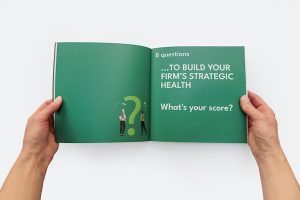

In a world of constant change, uncertainty, and increasing client expectations, one thing separates ambitious firms from the rest: strategic health.
In our book, Your Firm’s Future, we share a practical framework built around 8 essential questions that will help you assess and build your firm's strategic health.
Why does strategic health matter so much? Because when your firm is strategically healthy, it benefits your team, your clients, in fact, everyone connected with your firm.
Strategic health isn’t just an internal metric. It delivers a better outcome for everyone connected to your firm.
Click the button below to take the strategic health of your firm seriously by completing our Strategic Health Diagnostic
or
click the button below that to buy the book.