
When we discuss technology in relation to accounting, it is clear that there has been a rapid pace of change for years now – and it's only accelerating. With the advancements in the field of artificial intelligence, perhaps the speed of change will accelerate even more. When I interviewed Luke Farren of The Modern Firm recently on the podcast, I felt that Luke's comments about why accounting needs shaking up are certainly worth a listen. |
The Solution:
I've always had a slight frustration with how quickly the industry is prepared to adopt change, of course, certain firms being better than others.
But what I think has happened over the last couple of years is that many firms have suddenly woken up to the fact that all of these buzzwords like AI and automation are suddenly no longer that, they're quite materially there, and they realise that those things are going to change the future of the profession over the next five years or so.
So when I speak to a lot of firms, they're kind of almost reactive and default to that problem statement, “we need to do more around AI, we need to automate this and whatever else”.
But when you really break down that problem statement, you realise that what they've got, which again is a byproduct of maybe not doing much change for the last 20 or so years, is fragmented systems or perhaps no systems at all in some part.
I was working with a prospect recently, a pretty well-established mid-market firm, and they're running their entire practice management world across a really quite sizable revenue portfolio out of Excel spreadsheets.
We've still got like worlds in which really quite big, well-established practices haven't applied the level of thinking they need to around technology.
So in simple terms, you can’t build on the hype that is AI and automation and stuff at the moment without addressing some of those more fundamental issues.
-
SHOW NOTES
-
TRANSCRIPT
-
CHAPTER MARKERS
SHOW NOTES


Welcome to the Humanize the Numbers podcast series. Leaders, managers, and owners of ambitious accounting firms sharing insights, successes, and issues that'll challenge you and connect you and your firm to the ways and means of transforming your firm's results.
Luke Farren:I've always had a slight frustration with how quickly the industry is prepared to sort of like, you know, adopt change and move. Again, kind of a spectrum to that in terms of certain firms being better than others. But what I think's happened over the last couple of years is many firms have suddenly woken up to the fact that all of these buzzwords like AI and automation are suddenly no longer that. They're quite materially there. And they realize that those things are going to change the future of the profession over the next five years or so. And so for me, when I speak to a lot of firms, their kind of almost reactive and default position to that problem statement is right, we need to do more around AI. We need to kind of like, you know, we need to automate this and whatever else. But when you really break down that problem statement, you realize that what they've got, which again is a byproduct of maybe not doing much change for the last 20 or so years, is fragmented systems or perhaps no systems at all in some part. Again, I was working with a prospect recently, a pretty well-established mid-market firm. Again, I won't go into details because I might start to give it away if I start talking about geography and stuff, but they're running their entire practice management world across a really quite sizable revenue portfolio out of Excel spreadsheets. So we've still got like worlds in which really quite big, well-established practices haven't applied um the level of thinking they need to around technology. And again, you can't, I guess, in simple terms, build on the hype that is AI and automation and stuff at the moment without addressing some of those more fundamentals.
Doug Aitken:How important is what's happening with technology and artificial intelligence in accountancy right now? In this podcast with Luke Farn of the Modern Firm, you'll hear Luke's views on not only why technology is so important, but also the likely impact of implementing such technology and why that's so important to every accountancy firm right now.
Luke Farren:Let's go to the podcast now. Cool. Um, yeah, hey Doug, great to be speaking with you and everyone. Um I guess just a bit of background really on myself and the modern firm. So, yeah, in a nutshell, I run a consultancy business now called the Modern Firm, which has been in the UK accountancy um market only since about February or March time earlier this year. Um, and it was born from a place really of realizing that for me the whole industry um is kind of at this really interesting juncture when it comes to technology and process and how ultimately firms need to consider and reconsider in certain cases and how that strategy applies to their practice moving forward. And I think for me it's been born from a place of working in the accounting industry for the last 15 or so years. Um I started my career at a small owner managed practice in Cheltenham in the Cotswolds where I currently live. Um I did the whole kind of move down to London thing and worked across a variety of different practices during my time down there and actually became part of the founding team at a small boutique advisory practice called Acclivity. And Acclivity was a business that was run quite lean from a people perspective, but was quite sophisticated at the time from a technology perspective, and we had all of the right platforms and systems and automations in place to run that business quite autonomously, which allowed us to kind of focus more on um relationship-led kind of client advisory type work and spending less time on the more mundane, repetitive compliance and admin burden. Um, that business was ultimately acquired by Cooper Parry, one of the larger consolidators back in January 2023. And I spent a few years at Cooper Parry in a couple of different roles, but always um sort of focused around technology and operations and um towards the second half of my time there involved in our MA integration capability, so um effectively integrating the acquisitions that Cooper Parry were um making into um the kind of central nervous system, I guess. And then I did what every sort of rational mid-30 year old with a big mortgage and young family does, and that's quit a well-paid, stable corporate career to um launch a technology consultancy business, which yeah, came to market now earlier this year. And the modern firm ultimately works with other accountancy practices now, some big ones, some small ones. We've worked with everything from sole practitioners through to some really neat top 50 firms, helping them through that challenge surrounding um digitalization, I guess, digital transformation. That's the easiest way to look at it. And for me, it comes from a place of the whole industry at the moment, as I've said, being at this really interesting juncture, not necessarily having the capacity or the skill sets internally to do this stuff well themselves, realizing that they need to kind of do these things. And so, yeah, I hope that's the gap that we can help plug, really, both from a capacity and from an expertise perspective.
Doug Aitken:Fabulous. Um, thanks, Luke. Great to have you on the podcast. Um we uh did a webinar a couple of months ago, actually, uh, which we enjoyed as well, and great to get the background. Uh, before we dive into quite a few things that you've said already, actually, Luke. Um, our core purpose is humanize the numbers. That's the name of the podcast as well. I just wonder what that phrase means to you. What do you take from that um phrase, humanize the numbers?
Luke Farren:Yeah, I I I could interpret or perhaps sort of translate that in a few different ways in my own language, but for me, I think it's a really poignant and quite important um, I guess, catch-all really for how we need to be looking at the accountancy industry moving forward. I think trying to sort of like break down the complexity and the kind of like the numbers and all of the kind of, I guess, sort of like, you know, jargon that can sometimes sit behind the world of accountancy and advisory and actually help clients interpret and understand what all of that means is super important. You know, again, if we take the theory that I pedal quite hard that compliance is becoming an a more kind of autonomous, you know, bigger sort of race to the bottom, it's a bit of a cliche, but I think ultimately technology is going to only compound the ability to um deliver client work in a more compliance work that is in a more autonomous fashion. And so we have to ask ourselves the question where is the value of the accountant moving forward? And I think for me, that word humanise and the kind of like the the softer sort of side of this industry is where many people are gonna have to focus their time and efforts even more materially moving forward because I think ultimately um the role of the accountant remains a super important one in the future of um this industry. Technology and AI isn't looking to replace that um um role. I think it's an enabler, but ultimately we are gonna have to figure out where the value add is. And I think humanizing all of that is a really, really kind of poignant way to look at it. So, yeah, so I don't know if that was your intention behind it, Doug, but great catchphrase in terms of I think where the future of the industry is headed.
Doug Aitken:No, it was it was exactly as you've described, Luke, it was realizing that you know it it's a people-dominated profession, simple as that. And you know, and and for all the advances in technology, that is still where the value comes from. Um and that may shift, it might change slightly. But you know, I I I was with another firm last week and they were they kept saying we're problem solvers. Clients come to us with problems, and we helped them solve them. And um you know, some of those are very human problems. They're they're not technology, they're not spreadsheet problems, they're problems that they need solved. Um so yeah, I'm a huge optimist that um like you that humanity's got a big, big part to play in our profession going forward. Um really interesting the background, uh Luke. Uh tell me about your time pre-Cuper Pari in in terms of the um uh boutique agency that you had or consultancy, how what kind of things were you doing at that point?
Luke Farren:Yeah, I'll give I'll give you the quick potted history. I always think it's quite an interesting story to to recall. So um when I first moved down to London back in 2015, I think it was um I took a job um at an accountancy practice that had a presence across North London as well as um as well as South London as well. It was a smaller firm called Richmond Gatehouse, and that business was ultimately at the time headed up by um an old partner and colleague um of mine called um Asi Ahmed, and he um had a particular specialism of working with um predominantly venture-backed high-growth technology startups. Um, my time at Richmond Gatehouse was a relatively um short-lived one purely because another opportunity at the time cropped up that for a few years took my um time away. But Asif and I very much stayed um connected and involved. Um, and to cut a really long story short, he he he telephoned me back end of 2019. I think it was um again, we'd been working together in the background through that time in terms of some freelance and consultative type work. And he told me he had plans to carve out of um of his previous practice and sort of move and set up a new boutique advisory that he wanted to have a real focus around um the kind of operating model that underpinned that, the um kind of like focus around technology and automation, um, again, client service, that whole kind of um, you know, sort of like, you know, value add that we can offer to clients without needing to burden them with lots of manual workflows and manual delivery. And again, long story short, um we ended up um kind of, I guess, joining forces, doing that piece together, um, launching Acclivity, which was a business that then ran independently for four years. Um, again, that client base was one that specialized in working with those venture-backed high-growth tech startups. So, by definition, a client profile that kind of expects a more tech-first, tech forward away or approach, I should say, to how work gets delivered. Um, it was obviously around the time as well where the world went a bit crazy because of COVID. We ended up sort of launching the practice pretty much a month or two before the world sort of yeah blew up a little bit, which you know at the time presented a whole host of challenges, but equally a whole host of opportunities when it came to being able to position and sort of pivot the offering in a way that um has only become so normal nowadays in terms of remote working and sort of like cloud-based services and all of that stuff. So I guess um, in hindsight, I look back on that as a period of um you know interesting opportunity in a weird way for how and when Acclivity was born. Um, but yeah, that practice ultimately um always was going to have a ceiling in terms of how far it could be taken independently. And because of the profile of clients that we were exposed to, and because of the um, I guess, sector expertise specifically that Acclivity had in the market, um, that was one of the reasons why Cooper Parry ended up finding it an attractive um acquisitions target. And um, yeah, after several months of um, I guess back and forths, we ended up merging Acclivity as a portfolio with Cooper Parry um being one of the first transactions that completed post-Waterland um private equity investment, um, which is ultimately where we then found ourselves working um originally in the tech and high growth team, acting as that early stage offering to the wider um kind of full-stack service that that team could provide. Um, and again, there was you know paraphrasing all of this slightly, but one of the great reasons that um Cooper Parry did like the Ecclivity portfolio is because the way not just the client base was structured, but the way that the um workflows were structured, the technology that we had in place to um deliver that work, and whereas naturally as some of that stuff got folded into a bigger private equity-backed machine, kind of over time things got unpicked and merged and sort of refined. Um the foundations that we bought into that business, I think were a really helpful springboard to take ultimately um yeah, things to that kind of next phase. So yeah, it was a uh it was a pretty fast-paced, but interesting, uh, interesting time.
Doug Aitken:And an interesting acquisition for Cooper Party as well, as you kind of hinted at. Um not overly conventional, if I might put it that way.
Luke Farren:I would agree entirely, yeah. Um and if you look at what they've done since in terms of f further and future acquisitions, I mean, you know, a company that I think um is doing some really great stuff in the private equity back space at the moment. Uh, you know, uh we could have a whole separate podcast on the the kind of pros and cons of private equity backed platforms versus um those remaining independent. I won't I won't sort of um try and railroad too much of this conversation with that. But however you skin it, Cooper Parry, yeah, are doing some really great and interesting things in this space. Um yeah, Acclivity was definitely an unusual acquisition. I think, you know, an example perhaps of wanting to acquire a particular um sort of um sort of people set and sort of client base in a very particular niche that ultimately um served a very particular purpose as part of a sort of yeah wider service line strategy. Um but yeah, look, uh yeah, interesting, interesting times um back then. And I think still I I watch on from the sidelines now in terms of what CP are doing and where they're headed and stuff, and yeah, no one can knock their enthusiasm um and motivation, that's for sure.
Doug Aitken:Yeah. And uh, how did they use um some of what you had uh Acclivity without going into too much detail, I suppose, or giving too much away. But I I think I'm interested from the angle, Luke, of you know, if it was me, I'd be keen that some of my work was used ongoing so that you didn't feel it was just a transaction, if that makes sense.
Luke Farren:Yeah, 100%. I think that I could I could pluck out a few different examples, be that from the world of client onboarding through to um maybe how um certain compliance work ended up being delivered from a reporting perspective, for example, or even some of the advisory work. I think the the tools and the systems that we kind of grew up in um with Acclivity, I think in the world of at the time and probably still now to an extent, um, you know, private equity-backed mid-market platforms, very different sorts of um, I guess, solutions. Like if you look at a lot of the SaaS products that exist in the market and a lot of the workflows that underpin them, you know, you can make strong arguments that they work really well at a sort of um a sort of smaller firm end of the market, but trying to apply some of that stuff into a larger mid-market firm um, you know, instinctively and objectively can be a bit of a weird fit for multiple different reasons, be that from um kind of just, I don't know, the complexity of the software through to maybe how that software um interacts with different functions across the business. And I think CP and specifically the team that we ended up joining saw an opportunity around how um some of those workflows used perhaps in isolation across different pockets of um pockets of that particular service line could be really beneficial in terms of barrier to entry from onboarding clients again through to delivering certain streams of client work. And so um it was an interesting kind of like I guess evolution if I've looked at it or reflected on it over time as well, because I think, again, without getting into too much detail, what did and does become quite evident over time is that whereas those things are great at perhaps solving a particular problem in a particular service line over here, the ability to actually kind of scale that sort of stack and sort of that that kind of like delivery model as part of a much bigger, again, mid-market platform can be a bit challenging and can create friction. Um, but ultimately I think that's what was the attraction at the time. And I think to a large extent we did quite a good job of being able to bring over some of the good bits whilst also then leveraging some of the um I guess benefits and good bits that came with being as part of a much bigger network, a much bigger organization, and that had much you know bigger you know, budgets and appetites to scale and all of that sort of stuff.
Doug Aitken:Yeah. When you were in the middle of change management with you know working with businesses, um tell me some tell me about some of the challenges in that space. I'm thinking again about the human angle here that you know sometimes people um while we are good at change, we don't like it necessarily.
Luke Farren:100%. And I think you know, I I I can I can answer this question through the through the lens of Cooper Parry experience, but then also very much through the work that we're now doing in the modern firm and about how we're working with multiple different client profiles across across the UK at the moment. I think I think I might have mentioned some of this as well on the um um on the webinar that you and I did a couple of months ago. But for me, you can have the best technology stack in the entire world, you can have the best architecture or the best blueprint in terms of what you want that um operating model to look like. But unless you get buy-in from your stakeholders and buy-in from your people, then frankly, it's not worth the paper it's written on. Um, the only real way you can get that buy-in is by operating um, I guess, the right layer of change management that wraps around the outside of it. Um again, I've I've developed recently kind of whole playbooks that underpin that in terms of how best to approach change management, how best to um approach the kind of stakeholder sets that you have across your organization, breaking them down into the right segments, making sure that you've got the right forums and audiences with the right people to really get under the skin of what that problem looks like. But I think again, it doesn't matter if you're operating in a sort of private equity-backed mid-market platform like Cooper Parry or a sort of smaller, sort of like 20-person, um, you know, sort of like three service line organization, you can't approach this stuff with a top-down sort of like, you know, dictator type approach to it. You have to make sure that you go into your um your people across the whole organization and work through things um, I guess, constructively and methodically, and making sure that you give the right people the right forums to be able to um to be able to vent their frustrations and sort of table their concerns. You know, again, I find myself describing kind of change management sometimes as a very big therapy session, and I think that you know that can in some um in some cases come across as slightly, I guess, you know, slightly jokey and humorous, but it's true. Like you have to give people the forum in the space to be able to kind of like vent and talk about their problems. And if you don't understand that as is by doing that, it's very tricky to be able to move on to sort of like you know, change or implement anything, quite frankly.
Doug Aitken:Yeah, I agree. And I'm laughing because I see a lot of similarities in terms of what we do, and and very often it's sharing it with the team and getting the team involved at a really early stage, which tends to accelerate the process and and buy-in. Whereas the tendency of a lot of firms owners is to just tell us, we'll tell the team.
Luke Farren:Yeah, 100%. And I think and it's funny as well, isn't it? Because like you can you can look at this in in other ways. I spent I spend I spend a lot of time talking to software vendors that operate in this space who do brilliant jobs um for what it's worth of um you know developing software that can really help um accountants become more efficient and um you know actors um enable us to be able to make um practices yeah more kind of streamlined, more efficient, all of those things. But I think if you try to kind of like dictate um sort of like software vendor down that this is the way that you need to do it, this is you know, with without considering actually a more kind of rational sort of approach to to how that software needs to fit into an organization and perhaps consider the nuances that wrap around the outside of what makes a software good or not. Um and again, I think deep down software vendors probably know that. Um, this isn't to sit here and start slagging off like you know, sales teams or kind of like you know client success teams in in big software vendors. There are some brilliant, brilliant, brilliant ones out there. But I think ultimately, um, if you're kind of like forcing things into a firm without doing it via a proper sort of change management framework, it can be tricky to get that buy in and adoption.
Doug Aitken:Yeah, definitely. Um look, you told me not to dive down this rabbit hole of PE, but we're going to have to, aren't we? Just but but let's do it from let's do it from a positive perspective. Um you know, j just generally, how do you see PE playing out over let's say the next five years or so, Luke?
Luke Farren:It's a really interesting topic and one that I stay really closely aligned to for maybe some obvious and maybe some less obvious reasons. Um obviously I came um into a private equity backed um platform following um my time in a more independent firm and so I I find that whole transition and that whole kind of I guess ecosystem piece really quite interesting and I guess I also stay closely um aligned and interested in the topic just broadly because I think it's gonna be such a fundamental component of the profession over the next um um few years and beyond. I don't think it's going away anytime soon. I don't think we're going to see um a particular slowdown in consolidation. Again, I could argue across both independent and private equity backed ends of the market, I think consolidation is going to continue to happen at pace. Um I, um, without sounding too much like a politician with this kind of next part of my answer, remain relatively um kind of on the fence as to the kind of like pros and cons that underpin it. I do see um upside and advantage to um practices that go down the route of private equity or end up forming part of a private equity-backed platform. I think by definition, you're um in a world in which um, you know, innovation will uh continue to happen, arguably at pace. They've got budgets that can kind of make things happen in a much more material way. Again, we can argue sort of you know whether or not that's a good or a bad thing. Again, people do make arguments that perhaps some private equity-backed platforms are going too quickly at kind of too many things at the same time. But you know, the reality is resource is more of an abundance when you're part of a sort of um private equity-backed platform. So, you know, in that for that reason alone, I do see some benefits. I equally see the other side of it that um can be, you know, people or firms specifically just becoming more um, I guess, of just a number of part of a much bigger kind of um sort of machine that ultimately uh can you know devalue um uh both staff and perhaps kind of um opportunity. And I think that it can be a bit of a tricky um sort of environment to um operate in if you're not prepared to play a particular game. And again, I'm trying to perhaps walk a bit of a typerope there with that answer, but I think you know, if you're if it it it can it can be a problematic environment to be able to operate if you're not minded in a particular way. I mean, transparently for me, one of the reasons why I wanted to um leave Cooper Parry for all of the good things that came with it and all of the opportunity that it presented myself is that I by definition am somebody that's more kind of entrepreneurially minded, more kind of innovative in terms of my ability to um want to make um kind of decisions and make them happen quickly. Naturally, when you're part of a much bigger corporate machine, the red tape, the bureaucracy, and I get why all those things exist, but having those things in place can sometimes make it quite challenging um to move at a pace that perhaps some people want to. So I don't know. I I see private equity as a really interesting component in the future of the profession. Um, I do have some concerns that um across you know various um multiples that we're still being um seen um that things are being paid for and stuff. I think valuations seem a little bit wild at the moment. It's not my area of kind of like like strong expertise, but you know, the slight skeptic inside me thinks, well, how much longer can this continue in terms of some of the valuations that are being banded around for some of the bigger transactions and bigger platforms that are operating at the moment? You know, what is the end game to all of that? Where is it gonna head? What is that gonna mean in terms of um in terms of where I guess the private equity end of the market ends up bottoming out? Is it a is it a consolidation of the consolidators? Is it an IPO of some description again? You know, what you know, what what is that end game? I'm not an expert on that, but there is there is part of me that is a little bit um cautious and perhaps sceptical about maybe what that might mean in reality.
Doug Aitken:Yeah, and I I I share some concerns as well. I think the maybe the biggest opportunity is still for for one with a clearly identifiable brand. I just don't get a sense of anyone out there with a brand, with a story to tell. And in fact, we sometimes hear it from the flip side that um firms are discounted from pitching for audit work, for example, if they're PE backed. Which clearly is telling a story in a different way, isn't it? Um but yeah, interesting to to chew through and and think about. I I picked up the disillusionment with the big corporate environment. I worked 22 years at RBS, so I have previous in that um uh scene as well. I think in the nicest possible way, you're telling me that you're unemployable, because I certainly am.
Luke Farren:Yeah, I think I I think so. And look, granted, my my my my time sort of like running um, I guess, well, rerunning my own business again, um, has only now been nine or so months um young. The reality is I've always described myself as relatively unemployable. I think many of my past employers would probably um sort of smile and concur with that as well if they heard me say that. I think I've always been somebody that um kind of enjoys thinking outside the box and not necessarily um enjoys being told, you know, that you know straight is straight. And having you know, I've always liked to kind of think about how um you know things you know could be different or can be done differently. So yeah, I'd concur with that. I think I'm pretty unemployable.
Doug Aitken:So um CP, you had two-year tie-in there, or was it three?
Luke Farren:Uh two years. So um, yeah, it was it was it was two years, the first year of which was spent working as head of operations for our tech and high growth team based down in London, that team that we joined post-transaction, and then yeah, latterly working across our internal um COO office in the um in the kind of integrations and MA um space.
Doug Aitken:Yeah, okay. So where did the itch come from about the modern firm?
Luke Farren:Um it's funny, I've spoken to a few people about this recently. Um, and I actually the other day was running over um my internal accounting with my accountant and bear with me here because there's relevance to what I'm about to say. And we were end we we were reviewing my kind of um my balance sheet and trying to do some sort of cleanup work and stuff around the numbers, um, and I ended up finding this old inter-company code that I created on my balance sheet that specifically said the modern firm setup costs. Um and that got created about three years ago now, and in fact, possibly a bit longer than that. And for me, the concept behind the modern firm was actually born four years ago now. Um, I had an idea around wanting to take a consultancy offering into the UK accounting space to um effectively support other firms on that journey. And at the time it was born from a place of realizing that what we were doing in the world of Acclivity was a model that we could um, you know, sort of almost cookie-cutter in a way and translate and take into other practices. And so um we spent a bit of time kicking around that theory. We got some branding drawn up. Um, TMF has recently gone through a rebrand, but the original logo and brand that got created was actually done four years ago now for that reason. Um, and in a way, I'm kind of happy that um I kind of parked that own um thought process in my head and it allowed us to go into Cooper Parry and the bit that followed. I think that's now proven a really important and quite poignant sort of chapter in my in my story. Um, but nonetheless, conceptually, this has been around in my head for quite a few years now. And I guess it really comes from a place of realizing that accountancy um in its traditional sense, I think has is something that's needed to um you know be shaken up and addressed a bit for some time. Again, I've worked in the profession for um you know 15 years, which I think is long enough to realize that there's been a real sort of shift over that time in terms of how practices can operate, specifically through the lens of what opportunity is out there through tech and process. And so I think for me, I've always had a desire and an appetite to help firms that I've worked in, but I guess with the lens of TMF, more specifically wanting to help kind of as many firms as possible at the same time, which is why and where this was born from. And so if I'm being honest, again, like this itch has been around for let's call it four years or so. I guess it kind of more materially reared its head um kind of summertime last year. Uh, and then as I say, after a bit of sort of self-reflection and and you know talking to people that I know, love and trust, I decided, yeah, again, to do what every rational mid-30 year old with a big mortgage and young family does, as I've joked about already, and sort of sack off the day job and uh try and try and make a thing to see a fair. So um, I don't know, ask me again in 12 months' time whether that was a sensible or uh or an irrational decision. But so far it feels uh it feels like an okay path.
Doug Aitken:Yeah, excellent. I I sense um maybe a slight frustration drove the decision as well. Is that putting words in your mouth or is that fair?
Luke Farren:No, I don't think that is. I think I think I've always had a frustration that um, and again, I'll try not to offend too many accountants when I say this, but um um I've always had a slight frustration with how quickly the industry is prepared to um sort of like, you know, adopt change and move. Um again, kind of a spectrum to that in terms of certain firms being better than others. But um, I recently described this to um a client of mine that I'm working with that I personally think, and again, without offending too many people, that the industry for the last 20 years or so has been asleep at the wheel a bit when it's come to really meaningful and material um sort of technology change. Again, we've seen sort of like scatters of change um within there, like cloud accounting and sort of like the you know zero app ecosystem and things that have spawn out of um places to help accountants. But I think broadly the entire industry um in part has been asleep at the wheel for the last 20 years. What I think's happened over the last couple of years is many firms have suddenly woken up to the fact that all of these buzzwords like AI and automation are suddenly no longer that. They're quite materially um there and they realize that those things are going to change the future of the profession over the next five years or so. And so for me, when I speak to a lot of firms, their kind of almost reactive and default position to that problem statement is right, we need to do more around AI. We need to kind of like, you know, we need to automate this and whatever else. But when you really break down that problem statement, you realize that what they've got, which again is a byproduct of maybe not doing much change for the last 20 or so years, is fragmented systems or perhaps no systems at all in some part. Again, I was working with um a prospect recently, a pretty well-established mid-market firm. Um, again, I won't go into details because I might start to give it away if I start talking about geography and stuff, but they're running their entire practice management um world um across a really quite sizable revenue portfolio out of Excel spreadsheets. So we've still got like worlds in which um, you know, really quite big, well-established practices haven't applied um the level of thinking they need to around technology. And again, you can't, I guess, in simple terms, build on the hype that is AI and automation and stuff at the moment without addressing some of those more fundamentals. And again, for me, it goes back to the fact that if firms in hindsight had spent more time over the last um you know 10, 20 years addressing some of those core um things, then perhaps they'd be in a better place now to um capitalise on what is coming. But look, there's still time to do all of that stuff. Um it's not all doom and gloom. I think we have got an opportunity now to um kind of you know get the house in order, as it were. But um, yeah, for me, it there really was a frustration that a lot of firms haven't done this stuff sooner. Um, you know, I'm not going to conquer Rome on my own or the world in a day, but I think if I can go out there and try and help as many firms as I can um with the um exposure and expertise that we've had, then yeah, maybe that goes somewhere towards helping to fix some of that frustration.
Doug Aitken:Please forgive this interruption to the podcast. You've heard Luke Farn talking about the importance of the human side of managing change. You'll find a link in the show notes that is this breakthrough that will tell you more about that same subject. Let's get back to the podcast. So I'm thinking about um technology. People will always say that new technology is going to change things, and they've been saying it for a large number of years. So some people listening to this might think, well, why is it so important now? So without asking what's hopefully not too much of a dumb question, Luke, why is it so important that accountants get this right now? What's happening? What's coming at us that we can't ignore?
Luke Farren:It's a really interesting question, and I kind of I kind of draw a little bit on that previous observation that again, for the last 20 or so years, there's been a lot of people that have been a bit asleep at the wheel. And I don't mean that in a way that's hopefully too um offensive or derogatory. I just think that ultimately there's been a lack of understanding that technology has been creeping up um over the last 20 years in a way that we've now reached this kind of climax that, again, AI, automation, all of the things that are now becoming a bit hypey are here. Um, I do think there is a bit of a um overhype at the moment around some of those things. I think we are going to start to see a bit of a correction, almost in terms of um, and not just from a markets perspective for that matter, but a bit of a correction when it comes to AI and maybe some of the hype that's been built up over the last um the last year or so. I think there has been a lot of noise. But however you try and reframe what AI and what automation um kind of is and what it means to the profession, it's here and it's come um again at such a pace and is going in such a trajectory that I really don't think people can afford any longer to um just default to the fact, well, you know, we've been here before and um, you know, be that through cloud accounting or sort of like tech change that's happened before that. Um, because people are right, you know, we've had iterations in um kind of time where uh yeah, we've had tech change, we've had kind of regulatory change that has meant that the profession has needed to um, I guess, kind of like pivot and adapt. But I would argue that the trajectory of those things in terms of the impact that they've had across the profession has been much shallower versus where we're at at the moment, which is a much kind of steeper curve. And so I think it's almost the easy thing to um default to or the easier thing to um sort of refer back to that, well, you know, again, I'm gonna choose to ignore this because we've been here before and AI and or sorry, technology change more broadly has um has kind of you know been here in the past. I I don't think that's true in terms of where we're headed. Um we might not be in a place where we are going to look at AI change or technology change um perhaps as um scarily or perhaps as hypey again as I think we maybe have been led in certain pockets to think over the last few months. Again, there is a bit of a correction I think that might happen, but the reality is this stuff is coming, um, is going to change not just how the accountancy industry looks, but I think how um industry looks in general over the next um over the next couple of years. And I think people should um you know kind of accept that a bit and wake up to the fact that you know this is here to um to change how we work and operate.
Doug Aitken:Yeah, yeah, definitely. And in terms of the modern firm, then Luke, let's go back to the start of the business. Um how how did it feel first and foremost, taking the big scary step on your own?
Luke Farren:Um I've always been somebody in life, as I as I've as I've alluded to a few times through this this conversation of um, again, entrepreneurial at heart, a bit of a risk taker, um, calculated risk, I think is important, um, not risk for the sake of risk's sake. Uh, but nonetheless, and again, I won't I won't make the joke for the third time, but I think there is something quite unearthing about sacking off a kind of monthly um, you know, paycheck that that covers your mortgage and your bills and all the rest of it to um take up on a consultancy business that by definition can at times feel a bit feast and famine in terms of the um demand and the clients and stuff that you're working with. Uh, you know, I definitely didn't have the luxury of um you know huge coffers or savings behind me when it came to um you know launching the business. So there was a there was a gamble there, and I think initially to answer the question, it was it was it was exciting, but it was quite daunting at the same time. But I've always been somebody that kind of firmly believes in trusting your gut in life. And I think for me, my gut feeling was that the time was right now to take this offering into market. Again, I'd been conceptualising TMF in my head for three or four years or so. I'm glad in hindsight that I didn't take the leap at the time that I um that I'd kind of like created all the branding and all of the thinking that originally sat behind it. I'm glad that I allowed it to run for another couple of years or so, um, especially that Cooper Parry chapter. But in my gut, the time was right for when we launched. And you know, touch wood, we've been working with some really, really great clients since launch. I was fortunate to be able to put in a bit of groundwork before officially clicking go on the launch event, which happened in March. And so it wasn't like we were walking in on day one to a completely blank piece of paper. We had some um, I guess, um, yeah, initial client work and stuff that we'd backed up. And we've been really fortunate since then, as I've said, to work with some really, really great practices um over that time. But yeah, it was daunting. There's no there's the the there's there's no there's no sort of point trying to pretend it was anything other than that. But equally, I think in life, you know, if you really sort of like try your hardest and kind of apply, you know, maximum effort and stuff, you know, one way or another, even if it's not always the way that you originally think, things work out okay in the end. And I think that's kind of almost my main takeaway to both myself and to others as well. I think sometimes overthinking can be, you know, um, you know, the the the end of people, frankly. I think sometimes you have to take advice on stuff.
Doug Aitken:Yeah, yeah. Um, I'm interested in that bit about um you know the the overthinking part. People do um sometimes catastrophize. Uh in fact, we we we were talking with a group of our accountants two or three weeks ago and used a mnemonic to describe uh fear, false evidence appears real. And 99% of the bad things that go on in our heads never actually transpire. But in your case, it seems to have like I followed your um your progress on LinkedIn, you're you're very good on LinkedIn, um, also very vulnerable, telling that as it is actually on LinkedIn. And it's good from a viewpoint that you don't seem to be afraid to make a decision. And if that turns out to be a wrong decision, you'll make another decision and go and fix it. Is that fair? That's sort of that's one of the things I've picked up from um you know following on LinkedIn that you're you're you're moving very fast to um stay well ahead of the environment you're in.
Luke Farren:Yeah, and and and and I appreciate that as an observation, I guess. And I think if I reflect, yeah, I I I agree with that. I think um I think in life, um I think human nature, and again, it doesn't matter if we're talking about things like posting on social media, which is a place where by definition you have to be a bit vulnerable if you're gonna be your true authentic self, um, or whether or not we're talking about um, you know, kind of you know, more material sort of like you know, technology transformation change happening across an accountancy practice, for example, I think, and and and whatever else that might fit in between that as well. I think people by definition um like to overthink and like to catastrophise all of those things that you've mentioned, I completely agree with in terms of it's it's human nature, isn't it? I think a lot of the time. And I think for me, um, I guess one of my strengths. Strengths, if I had to reflect, is that I'm not afraid to make decisions. They always come with a degree of, I guess, um thinking and caution. I don't just do things completely blindly without without thinking about it. But nonetheless, I think it's better to fail fast. It's a bit of a cliche in project management, but that whole kind of fail fast mentality that, you know, do something and yeah, great. If it works, brilliant. Um, if it doesn't, then okay. As long as you haven't done anything too materially um wrong in terms of your um, you know, your um kind of like, you know, brand or your reputation, then ultimately you can afford to pivot and you can afford to um yeah, try and you know, build on that and go again. It's as simple as that. And I think that's it. I think when you run your own business, you have to be somebody that ultimately is um that ultimately is prepared to make decisions quickly, fail fast. Uh, I say it to a lot of clients I work with when we're implementing technology projects as well. I think that, you know, for me, um, you have to kind of sort of be prepared to make decisions that ultimately might later down the line be, you know, built on or might be iterated or might be changed slightly, but that whole kind of fail fast mentality is super important for me.
Doug Aitken:Yeah, absolutely. Um, totally agree as well. I think what one observation we have of working with accountancy firms is that there's a desire to arrive at the perfect decision, which inevitably means it takes too long. Whereas we're very much um supporters of look, go with version one. Version one is better than version none, and then you can tweak it and change it and make version three the perfect one or version thirty-three or whatever it might be. Yeah, it's uh we definitely see that in practice as well. In in terms of uh the future of accountancy, Luke, um where do you see uh accountancy developing over the next few years? And where do you see the opportunities in that for firms that want to embrace technology developments and want to embrace change?
Luke Farren:Um, yeah, again, a really good question. I think I'll answer that just in one sec. I think just to very quickly sort of just like add and build onto that last point that you mentioned, which I think kind of feeds into this next bit as well. But for me, that whole kind of you know, start now, get perfect later mentality as well for any practice, I think is really, really important. I think so many firms, um, you're right, are trying to constantly look for that kind of silver bullet, that sort of optimal outcome that in reality is always going to be quite tricky to um achieve. I think being able to figure out um, you know, what it is that they need just to get started is super, super important. So yeah, I think that's a really, a really kind of important point to build on. I think for me, in terms of where the future of the industry um is headed and where we might go from here, uh, I'm really, really positive personally about opportunities that are in front of us. I spend a lot of time talking about this to clients that we're working with and to um, I guess others when I when I either do content or just generally um you know friends that I speak to in the profession. I'm super positive about where where we can head. I think technology, automation, AI, a lot of those things that we've been talking about will fundamentally act as an enabler for firms to be able to do more value add, more um kind of exciting stuff in the future. I think that you know, through that lens, I think firms will have the opportunity to be able to spend more time with their clients, will be able to spend more time doing stuff that's of interest both to them and to their clients as well. And so I think ultimately I see that there's a huge opportunity there for firms to be able to build on and ultimately um yeah, deliver more value into clients. I think it's as simple as that. I think I've got more theoretical views that ultimately new service lines will have to be explored, more um kind of a more joined up approach across professional services, um, i.e., maybe perhaps blending the world of like law and accountancy into kind of like one ecosystem is perhaps a more sort of like longer-term horizon in terms of where we're headed. I think data is ultimately going to become um key and king as well in terms of the value that um a practice can realise. I think the insights and the information that firms have got available to them via the data that they're working with from a client perspective, I think are super um, super important. And so, yeah, I think there's a whole there's a whole host of things that could end up happening in terms of in terms of service line iteration, um, sort of like you know, sector kind of like you know, mergers and stuff. But yeah, I'm super positive about the future of the profession. I think again, tech becomes an enabler, not a replacer. Um, and for me, yeah, it's an exciting time to be part of the accountancy industry.
Doug Aitken:And what's next for the modern firm? I I if I picked up um your LinkedIn post properly, I think it was today actually. Uh, I get the feeling you're going to be hunkering down fairly soon. And and is that uh um a bit of a new product uh development or what's what's going on? If you can give it away, of course.
Luke Farren:No, of course there's lots of interesting things going on at the moment. I think um, I mean personally, I'm about to embark on a new chapter of um parenthood for the second time. So we've got a little one on the way in the next um, well, anytime now, really, in the next couple of weeks uh uh um at most. So yeah, for me, December is certainly gonna um be a bit of a juggling act in terms of um yeah Christmas and the festivities that surround that, as well as trying to keep a um sort of business running whilst also trying to welcome a new arrival into the world. So yeah, for me, I think yeah, December's gonna be pretty um pretty interesting and challenging. As we get into next year and beyond, I mean, look, we're gonna continue doing what we're good at in terms of working with as many accountancy practices that we can to help them overcome those challenges surrounding technology enablement, process optimization and yeah, modernisation really. So for me, that remains a really important cornerstone of um of next year and beyond. Um, we are starting to expand the work that we're doing into the legal sector as well. For me, I think the world of professional services, as I've alluded to, is becoming a more intertwined, more joined up world. And if we can take some of the thinking and theory that we've um developed over the accountancy sector and help take that into the legal sector as well, then that's super exciting. Um we've also got a couple of projects that we're running on the side of that, um, which centre around the acquisition space. Um without giving too much away there for me, um, you know, if we've got the ability to be able to perhaps acquire a few books of work and actually bolt them together and create a truly best in class breathing ground when it comes to the modern firm, i.e., creating almost a real-world living, breathing kind of playbook of what a truly modern practice can look like, then for me that's a super um interesting and exciting opportunity that we can take um take forward. So yeah, I'm quite excited about um about those projects. But yeah, I think um yeah, lots of really interesting stuff going on as we head into next year and beyond. Um and yeah, we'll have to kind of watch this space maybe with a few more things on top of that.
Doug Aitken:Great stuff. I somehow get the feeling you're not not going to be short of things to do.
Luke Farren:Well, I hope I I I hope not. No, I mean what I need to um I guess kind of realize as well that as human beings, we do only have so many hours in the day, and it can sometimes be very um very tempting to get pulled into all sorts of different and exciting directions. Um, I think the reality is there's a whole host of opportunity out there, if nothing else. I'm trying to um, you know, emphasise and demonstrate that. And I'm excited about the impact that we can continue to have um yeah, across both the accountancy and perhaps the legal profession as well as we head into next year and beyond. But for me, there's a whole host of opportunity out there. I'm I'm super fortunate as well that I'm surrounded by a really great team as well. We only launched the business back in February, but we've already been able to scale um to a UK team of five of us in total with two more hires planned early next year, um, as well as a team based out in Colombo in Sri Lanka, as well of um a comparable number at the moment. So I am fortunate that it's not just me driving this car anymore. We do have um a really, really great team of people that we're building around us. So yeah, that's super positive as well.
Doug Aitken:Yeah, it's fab. Um you you've made me think of I don't know if you've read the traction books. Um I have, I have, I have you're coming across as a clear visionary leader. Um, Luke, who who's your integrator? Who's the person that takes all your ideas and filters them or helps you implement?
Luke Farren:Uh I could again, I could probably answer that in a couple of different ways. I think if I had to try and pin it down to a single personality, it would probably be my darling wife and who who who does a fantastic job actually working as our head of operations at TMF now as well. Um, as I've perhaps just alluded to, she's going to be a bit tied up herself over the next uh few months with new arrival. But Louise does a brilliant job in terms of being able to take my scatty um sort of visionary thought processes and actually kind of like structure them in a way that we have direction and clarity. So um she is brilliant, but also I can I can I could choose any member of our team, be it you know, from Michael through to Rima through to Leila and again some of the new hires that we've got planned next year. I'm a firm believer that ultimately hiring people that are better than you in different areas and surrounding yourself by those people to um you know take you know, yeah, again, those thought processes and those visions and stuff and structure them on paper is a super important, um super important thing. Again, that's the only real way that you can scale um a business. And yeah, I'm fortunate that I'm surrounded by some really great people.
Doug Aitken:Yeah, great stuff. Just in closing, um Luke, one one final question, and I'm keen to understand just and and there may be nothing, but what have you picked up from today that's maybe jogged your own thoughts and made you think, hmm, I need to do more of that or less of that, or or maybe just a reminder, yeah, this is what I'm about. Has there been anything that stood out for you in the course of our chat that's maybe jolted your brain into thinking slightly differently?
Luke Farren:Yeah, it's an interesting question, actually. I've not um I've not ever really had to sort of reflect on the back of that, off the off the back of the podcast recording. So I think that's a really great question. I mean, I mean, selfishly, if I if I try and sort of um look at it through um maybe things that I've said, I realize um I realise that what we're doing, um, you know, there's a lot of what we're doing, I should say, at the moment, again, trying to sort of support a lot of different profiles of firms into a lot of different sectors across a lot of different things. Um, and I say sectors perhaps, I mean law and accountancy as well, trying to run all of those things at the same time with the same effort, despite the fact that we're building a really great team of people, again, both in that core team and the co-founders that I've got that um operate both publicly and privately around what we're doing. Um, there's a lot going on. And I think sometimes, you know, if I reflect, trying to ensure that we apply the right level of critical thinking and effort as well to each of those efforts, I think is important. And I need to remind myself that moving into next year, trying to juggle and prioritize all of that whilst also juggling and prioritizing a happy and healthy family life as well. For me, um, I think for any like any business owner will be a forever challenge. Again, I'm I'm super passionate and super motivated about trying to um do all of the things that I've mentioned and more. And for me, realizing that um you can only um do you know certain amounts of so many things, I think is a challenge. So, yeah, I guess if I reflect, that's probably something. Um, but yeah, it's an interesting question, Doug. It's a good one.
Doug Aitken:Good stuff. Um, Luke, I'm gonna have to call a halt there um to our chat. I've really enjoyed the chat. Thank you so much for being a guest on the podcast.
Luke Farren:No, that's okay. Thank you, Doug. I really appreciate you having me, and yeah, hopefully um yeah, we've managed to unpack some good stuff there.
CHAPTER MARKERS
START TIME | CHAPTER TITLE |
|---|---|
0:21 | Introduction |
2:22 | Introducing Luke |
5:06 | What does Humanise The Numbers mean to you? |
8:10 | Lukes life before Cooper Parry |
13:05 | How Cooper Parry used some of what Luke had at Acclivity |
16:06 | The challenges of change |
21:59 | Private equity’s upside and risks |
27:53 | The itch to start The Modern Firm |
30:48 | Decisions driven by frustrations |
34:30 | The importance of getting AI and tech right now |
37:31 | Stepping into the unknown of starting a business |
39:57 | Embrace FEAR and move fast |
43:06 | |
45:00 | How Luke sees the future of the profession |
47:04 | What's next for The Modern Firm |
51:32 | Conclusion |
Click the play button below and use the slider on the audio below to get quickly to the chapters in the podcast.
Resources relating to this podcast:
Luke and Doug talk a great deal about change in this podcast, in particular, the challenges surrounding change – that you must get team buy-in, and that change must be structured, managed, planned, and agreed by all. They discuss the topic of change in relation to tech and AI, but also in relation to any change, in any profession. Change will only succeed if it is planned and if everyone is onboard.
If you want to know more about how to manage change successfully in your firm, please read our Business Breakthrough report, which outlines a proven solution when it comes to leading and managing change.
1. Give your team obvious and logical reasons for change.
2. Make sure you get their emotional buy-in.
3. Share a crystal-clear path to change and you’ll achieve successful change in your firm.
To read the Business Breakthrough report in full, please click the button below:

Click the button below to discover more about the Accountants Growth Academy.
Remarkable Practice Client Manager Programme
You secure your firm’s future growth and profitability when your clients are loyal, recommend you more, buy additional services and are open to regular price increases.
And what drives all of that?
Not just technical quality. Not just deadlines met.
It’s the behaviour and mindset of your client managers.
When your client managers improve how they engage and care for clients, your firm’s results improve.
So the question is: Could you be doing more to build your client managers’ skills and mindset?
That’s exactly what our Client Manager Programme is designed to do.
It helps client managers:
- Build deeper client relationships
- Deliver value beyond the numbers
- Handle pricing conversations with confidence
- Spot and act on opportunities for additional services
Great client care is no longer a soft skill. It is a strategic advantage.
Click the button below to read more about our Remarkable Client Manager Programme and, if you want to discuss it further, please get in touch via the 'chat with us now' button on the website. You'll speak to a real person, not a bot!
Towards the very end of the podcast, Doug describes Luke as a visionary leader and mentions a book by Gino Wickman, Traction – Get a Grip on Your Business. To access the book, click the button below.

Your Firm’s Future – by Douglas Aitken and Paul Shrimpling of Remarkable Practice

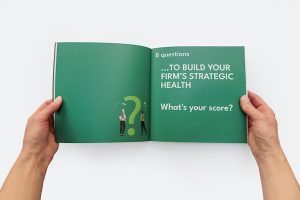

In a world of constant change, uncertainty, and increasing client expectations, one thing separates ambitious firms from the rest: strategic health.
In our book, Your Firm’s Future, we share a practical framework built around 8 essential questions that will help you assess and build your firm's strategic health.
Why does strategic health matter so much? Because when your firm is strategically healthy, it benefits your team, your clients, in fact, everyone connected with your firm.
Strategic health isn’t just an internal metric. It delivers a better outcome for everyone connected to your firm.
Click the button below to take the strategic health of your firm seriously by completing our Strategic Health Diagnostic
or
click the button below that to buy the book.