
One of the most important and influential books I've read in recent times is The Answer is a Question, by Laura and Dominic Ashley-Timms. It’s important because it lays out a clear pathway to transforming the quality of conversations across your team. It will also influence how you're going to raise the bar in terms of the conversations you have with your clients. If you listen in to this podcast discussion with Dominic, you're likely to walk away with insights and ideas that could save you and everyone who is in a management role in your firm a time savings of somewhere between 20% and 40%, which is, by the way, what Dominic suggests is more than likely. Please listen to this podcast and scroll down the podcast’s episode page for the contact information for Dominic and for the additional, downloadable resources mentioned in the podcast. |
The Solution:
We had one organisation tell us they used to start all their meetings with:
“What's the objective of this meeting?"
Now they don't. They say: “What question will we have answered by the end of this meeting?”
And they'll spend the first five minutes refining the question, and they're finding that's cutting through so much crap because they're absolutely focused.
They've told us they are now winning back time to do better quality strategic thinking, and that's what managers struggle with the most.
They don't have the capacity to think about how they could be better because they're absolutely swamped.
So winning back that capacity is not just a nice-to-have; it allows managers to get back into the role of being a line manager, to think about how they're going to improve their relationships with the team, but also to start to do the higher value thinking that they could be doing in their role, which is much more strategic.
-
SHOW NOTES
-
TRANSCRIPT
-
CHAPTER MARKERS



Paul Shrimpling 0:05
Welcome to the Humanize the Numbers podcast series. Leaders, managers, and owners of ambitious accounting firms sharing insights, successes, and issues that will challenge you and connect you and your firm to the ways and means of transforming your firm's results.
Dominic Ashley-Timms 0:21
We had one organization tell us they used to start all their meetings with what's the objective of this meeting? Now they don't. They say, What question will we have answered by the end of this meeting? And they'll spend the first five minutes refining the question. And they're finding that's cutting through so much crap because they're absolutely focused. Um, and so they they've told us they've now they're winning back time to do better quality strategic thinking, and and that's what managers struggle with the most. They don't have the capacity to think about how they could be better because they're absolutely swamped. So winning back that capacity is is not just a nice to have, it allows man managers to get back into the role of being a line manager, to think about how they're going to improve their relationships with the team, but also starting to do the higher value thinking that they could be doing in their role, which is much more strategic.
Paul Shrimpling 1:16
If you take seriously the insights that Dominic's about to share on this podcast, his research across thousands and thousands of managers suggests that you and your manager team can get 20%, maybe up to 40% of your time back compared with how you work now. So that's like someone saying, Oh, you only have to work a three-day or a four-day week to achieve what you're currently achieving, and then use the other time to help drive your firm and your career forwards. I can't tell you how pleased I was to have Dominic and his insights on this podcast. Let's dive into the detail of it now.
Dominic Ashley-Timms 1:58
Hello, I'm Dominic Ashley Timms. I'm the CEO of Performance Consultancy Company called Notion. We've been around now for 25 years, and we specialize in helping teams of leaders and managers to be more effective and able to pull the skills and talents of their entire workforce into their businesses, resulting in higher levels of engagement, performance, productivity, and collaboration.
Paul Shrimpling 2:21
Brilliant. So, what sort of um companies do you work with then, Dominic? Just trying to get a handle on um the nature of the organizations who uh value what you do.
Dominic Ashley-Timms 2:34
So we work with uh an entire range of organizations, all the way up to very large corporates, including the likes of uh um Warwick University, Sainsbury's, uh Virgin Atlantic, um, NBC Universal in America, um, all the way down to much smaller organizations as well. It's wherever there are organizations who employ managers and have the potential to improve their performance and at the same time depressurize, they're the ideal clients for us.
Paul Shrimpling 3:01
Right, okay, okay. So there's a um a stress benefit here, there's a performance benefit from the leadership management point of view, and there's a results benefit because the team's actually working better because of the skills of the managers. Have I understood that right?
Dominic Ashley-Timms 3:14
You have, absolutely. Right, cool, cool beans, cool beans.
Whisky, Travel, And Human Stories
Paul Shrimpling 3:17
So a little bit about yourself, Dominic. Just sort of connect with you as a human being.
Dominic Ashley-Timms 3:22
Yeah, we work work incredibly hard, as you can imagine. There's a huge demand for the work that we're doing, um, especially as now we have a new generation entering the workforce. Um, but when in in our spare time, I uh have an appreciation for whiskey, have an extensive whiskey collection, enjoy attending whiskey events up and down the country, and travelling uh uh both here in the UK, Scotland, and internationally, visiting distilleries uh everywhere I can.
Paul Shrimpling 3:46
Okay, I know you you did tell me off the map that you were off to China. I just wondered if you've got distilleries lined up over there.
Dominic Ashley-Timms 3:52
There is actually a distillery just opening um uh under Glencadam, and uh we've been invited to go and visit it before it opens. So I'm really excited to go there and we're gonna be there in two weeks.
Paul Shrimpling 4:04
Um, just because I'm now attempting to wind up my um um uh partner and fellow shareholder of the business, uh Douglas, who's a um um mad malt Scottish malt whiskey fan. Um is it just Scottish malt or are we uh partial to an Irish as well?
Dominic Ashley-Timms 4:24
It's just Scottish at the moment, though. It's it's uh it's mainly Scottish at the moment, but now I have an international collection as well. So I have Taiwanese, Indian, um, and uh Swedish. So there's a few whiskies there, there's a couple of Irish, but the Irish market's starting to develop now. This distillery is opening right across Ireland, so uh it's gonna be a very, very interesting time. But no, in the main it's Scottish models. Yeah, very good, very good. Favourite one? Port Charlotte, which is port Charlotte, which is uh an expression that's made by Berkladig, and uh they have exceptional whiskies, including they also produce Octamor, which is the world's peach, smokiest whiskey. So some really, really good stuff there.
Humanise Numbers Through Better Management
Paul Shrimpling 5:04
Very good. Well, you've just appealed to Douglas because he's a big fan of uh the peachy whiskies, and I'm fairly certain Doug and I were having a conversation about Port Charlotte over Christmas, so it's a night and very good. All right, yeah, yeah. Let's dive into um what this uh podcast is all about. So, given um your experience in uh consulting and training and coaching, what's what's your take on the phrase humanize the numbers, Dominic? Remembering that you know our audience are leaders, managers of accounting firms. What does humanize the numbers mean for you?
Dominic Ashley-Timms 5:35
Yeah, I think this is a really powerful question. I think for for me and the work that I do, this really relates to how organizations look at and treat their layers of management. And it's all too easy to look upon managers as just super workers and employees as just uh numbers in the machine. Um, and even the structures that we have in our organizations really do regard humans as resources. You know, we're still called human resources, it's still about metrics and KPIs and OKRs and it's it's it's challenging to often recognise that we have a workforce here who have skills and talents to offer our organization and who want to come to work and to be engaged and want to do something purposeful, and they want to be recognized and acknowledged for that. And actually, if we have managers who are capable of using a management style that does that and invites contribution for people and celebrates that and acknowledges and sees the work that people do and provides appropriate appreciative feedback, then we start to really change things around and rehumanize uh the numbers in the machine within organizations. That's what it means to me.
Paul Shrimpling 6:46
Okay, so getting the best out of the people within the business as human beings, not just as a cog in the machine.
Dominic Ashley-Timms 6:54
Yeah, it it is that, but I think I had a conversation with someone recently around just what does the word company even mean? And and let's just think about that. I mean, a company doesn't really exist without the people. The people working together are what creates the productive output. Yet we try and utilize people almost as the system and the process, but it's not, it's really the willing contribution of people working together that create the extraordinary results. So if we recognize that that is the only meaningful metric for how we can improve as an organization, then we need to be be doing something very differently when it comes to how we manage that resource and how we engage that resource and how we how we enable people to be able to step up and come to work and give of their best and enjoy doing that and and be in a workplace that they want to be in, managed by people who appreciate what they're capable of.
Paul Shrimpling 7:53
Brilliant. Uh I just want to pick up on um I've just written two W's down because you it's as if maybe, and I know I'm putting words into your mouth, but I want you to pull this apart. It's as if that the focus within our companies is on the work, but not on the willingness of our team to do the work. So the focus is on let's get the work done, but when actually what we also need to be working on is the team's the individual's willingness to do the work, and that's about the skill of the managers, the leaders.
Dominic Ashley-Timms 8:27
It it is that, and I I completely agree. I think it's it's all too easy to to just get into that mechanistic transactional aspect of work, and and so many managers, I I often do this when I'm when I'm talking to audiences, I just ask people to please put up your hand if you have a to-do list. And of course, everyone puts up their puts up their hand. And then I say, So just uh do me a favor, just keep your hands up for now. But um if any of you have completed a task that you saw was not on your to-do list, and therefore you wrote it on your to-do list so you'd enjoy the dopamine hit of crossing it out, um, keep your hands up. And and pretty much everyone keeps their hand up. And I say, well, you know, that's a really good that's a really good example of you measuring your value each day by the number of tasks that you complete. Uh, and that's a really strong signal that perhaps we need to begin to reframe and be thinking about really am I finding those opportunities to engage with the people in my team and to help them to contribute and step up? And am I thinking about how they're advancing and how they're developing and how I'm acknowledging them in order to create that work environment in which people feel that they can contribute, um, and then that if and when they do that, that that's acknowledged and appreciated. Um, and and I think that's that's the the powerful difference here.
Paul Shrimpling 9:53
So we're 10 minutes into this conversation, and and it's shown up maybe three times now, is you you seem to have an emphasis towards recognize, value, appreciate what our team's doing. Is that is that uh a gap that you see in most organizations, in most managers' skill set, Dominic?
The Frankenstein Manager Problem Solver Trap
Dominic Ashley-Timms 11:08
I think it is, but I think I think the larger gap uh is is really in the mental model that managers hold about themselves as managers. And I think this goes right back to the truth for for everyone. I'm sure your listeners will be nodding as I talk about this. But when you first become a manager and you take on responsibility for perhaps managing a team, no one ever really sits you down and says, right now you're a manager. Here's some ideas how about how you might want to adapt your communication style in order to be able to get the very best out of people. And in fact, the reverse is true. We're typically thrown in the deep end and and left to make the best job of it we can. And so, you know, that those those of us who are more or more motivated will read some business books, we'll go on some courses, um, and we'll we'll take nuggets from wherever we can and sort of build those into our persona as a manager. But when we really step back from that and look at what's happening to each manager, effectively we're all bolting on these bits and bobs we pick up along the way. And in in our book, we describe this as becoming a Frankenstein manager. And we are all unique Frankenstein managers, and there's no there's no overriding rhyme or reason or philosophy guiding our approach as managers, and so we default to being typically the problem solver, and that's the mental model that most managers have: that they are there to solve the problems, to keep the lights on, to keep the show on the road, um, which means that when people come to them for help, um, they they feel obligated to help. They probably used to do that job, they know how to fix that problem, so they'll offer that advice. But you know, in that moment of providing the advice or that direction, and perhaps sending someone away with a flea in their ear, you've actually robbed them of an opportunity where they could have shown the thinking they could have done, and they might have learned in that second if we just approached that moment differently than just directing them in that moment. So we we risk going throughout our day uh actually marginalizing all the people around us, which is demotivational. At the end of the day, we can easily slip into micromanaging. And the negative side of that, of course, as managers, is we take a lot of the work on ourselves. So we have reports now all around the all the Western economies of sort of 50% of managers and executives report feeling burnt out. And it's because they're stepping into every problem brought to them because that's the mental model they're laboring under. I'm the problem solver, in the absence of having been given any other mental model for how they might or should be performing as a line manager who has a team.
Paul Shrimpling 13:52
Yeah, that's brilliant. It's uh you know, problem solver fixer, another label, I guess. I love your phrase. Um, when you as a manager leader adopt the fixer role, the problem solver role, um you rob your individuals, your team of an opportunity to grow, develop, think, perform at a higher level, feel a sense of progress and self-worth. It's quite significant. That I I'm gonna take that on board, uh, Dominic, because I I've I've often said is if you ask if you as a manager are asked a question by one of your team, and like you say, you're running that mental model, which is oh, I'm the problem solver, you'll answer their question and they'll go away and implement or instigate whatever's the solution within your um your your genius as a as a problem solver.
Dominic Ashley-Timms 14:47
Yeah.
Paul Shrimpling 14:48
Um, but will they do it with the zeal and enthusiasm and engagement? Uh uh compare that with if they come up with the solution, the the zeal and enjoyment and pride of implementing their idea would be on a completely different plane, wouldn't it, to the one that they've been told what to do?
Operational Coaching And Purposeful Inquiry
Dominic Ashley-Timms 15:08
Yeah, you're you're absolutely right. And I think that is the difference. When you when you when you advise someone, you you have that satisfaction of feeling that you've helped, but you've just sent someone away with an instruction to carry out. So there's no opportunity for you to give them some appreciative feedback or to acknowledge the extra effort they made. They've simply gone away and implemented what you suggested. Whereas if you're a gopher, they're a gopher, aren't they? They're treating them as a gopher. Yeah, if you if you if you can take that moment, and this is this is the approach that we've developed, something we call operational coaching, is if you can develop that mindset where you're looking for those opportunities to be able to stimulate the thinking of other people. Where are those coachable moments that occur throughout the day where rather than you directing, you're learning to bite your tongue and gaining a sense of what the person in front of you really needs from you when they ask for help, and then knowing how to ask them a question intended to stimulate their thinking to the point where you help them identify an action that they can take themselves, then you can agree how you're going to follow up with that person where there's an opportunity for you to give them some appreciative feedback. This is an idea they've generated, they've seen it through, you can acknowledge that and perhaps even provide developmental feedback. And that's how you start to build trust because the very act of asking someone an authentic question is you already indicating to them that you believe that they're capable of solving this. And then so much happens just in that one second to change the dynamic of the relationship between you and a team member. And I think that's the really important thing here. And when we work at scale as we do with huge groups of managers, we we we see even within as little as two weeks, the people that seem to be dependent on you and keep coming to you with problems to solve, because you always solve them for them, they gradually start to either um come to you with options they've already worked through themselves, or indeed they stop coming to you because you've enabled them, you've built their confidence, and and you're breaking that dependency. And I think that's a really, really important thing, which which then allows you as a manager to sort of depressurize because you're now not stepping into every single micro problem brought to you every single day, and you're allowing the people in your team to step up and show what they can do, and you're falling into now a pattern of being able to provide appropriate feedback to help people grow. And I think that's that's a really exciting dynamic, and that, of course, at scale, has a huge cultural impact on your organization, and for the first time, managers have a mental model of what they're there to do as line managers, which is to enable the skills and talents of the people in their team, and that's it.
Paul Shrimpling 17:53
I'm just gonna repeat that. So it's enable the skills and talents of the people in their team.
Dominic Ashley-Timms 17:58
That's it, period. That's it. That is the job of a line manager, not to do the work, not to do the work. Of course, they have a day job, but this is not about stepping into all the other problems. The the the the greater part of our role, unfortunately, when we when we speak to large groups of managers, the people stuff always seems to be at the bottom of their busy to-do list. They never quite get around to having the one-to-ones they know they should be having, they never get around to having the pulse check, just picking up the phone, having a chat with someone. It it just never happens. And of course, that's being exacerbated now by hybrid working, people working at home. Um, it becomes all too easy to focus on the task-oriented things that you were talking about earlier, and and measuring our value by the number of tasks I can cross off my list, and that is not the role of a manager.
Paul Shrimpling 18:52
Yeah, interesting. You just reminded me of um in a galaxy a long time ago, far, far away, or whatever that phrases. Um, I was uh I I wanted to follow my in my father's footsteps and join the British Army. Um actually it was the Royal Marines, but uh that didn't work out, so I was I was I was getting very close to joining the Royal Engineers. And like you suggested, I went and read the right leadership books and so on, and and discovered that John Adair wrote the leadership manual for the British Army in the late 50s, early 60s, and um he what the dominant framework in there was a Venn diagram with and in each of the three circles of the three circle Venn diagram was in one circle there was task, in another circle there was individual, and in another circle there was team. And you would be an effective leader if you helped the individual grow, mesh the team together better, and got the job done. Yeah, so balance around team, individual, and task. And it is what you've just said sort of reminded me that it's in that balance of yes, the work has to get done, but yes, we have to grow the people. You won't grow the people if you're problem solver, but you will grow the people if you actually pose questions so that they can see their own solutions, develop their own recommendations, and maybe just not even come to you anymore because they've worked it out themselves.
Dominic Ashley-Timms 20:19
Yeah, there's also uh another major issue here, and at time at a time now of heightened competitivity, um, massive amount of change going on out there. We need to be doing everything we can to drive innovation. And of course, if you're a manager who's defaulted to the problem-solving mindset, then when we pick away at this, what we find is we're just recycling our old knowledge. We're suggesting ways that we would solve the problem based on how we've solved them in the past. So you you've automatically turned off any opportunity to kindle new thinking. But where we're able to have the presence of mind to ask a question to stimulate someone else's thinking, you'll be shocked at the ideas they come up with. And that's where innovation comes from. We have to build a culture of inquiry, and and I really want to define that because people very often um define inquiry as asking questions, but there's a lot talked about curiosity, and there's a risk with curiosity that is self-serving. And it means that as a manager, I might ask questions, but those questions would be diagnostic questions. I'm asking questions to gather information so I can still fix the problem. And that is not what we're talking about. What we're talking about is a new style of questioning that we call purposeful inquiry, and this is learning something that none of us have been taught. How do I structure a question that's most helpful to the thinking of the other person in front of me for where they are right now? I'll just repeat that again. How can I construct a question that's most helpful to the thinking of the other person for where they are right now? And that means I'm I have to move away from that safety blanket of asking questions to gather information for me to fix the problem. And there's learning involved there, and that's that's why this whole approach that we describe as operational coaching has learning behind it, and that's that's the work we're engaged in. Working with huge numbers of managers simultaneously. And you can imagine if you if you're in an organization, a large organization, you're working with three, four hundred managers, and they're learning these skills at the same time and starting to change the tenor of the conversations they're having the team members, the impact is palpable, it's it's incredible. You it it almost creates a change wave across the organization that that people can really sense that there's something different in the air.
Paul Shrimpling 22:53
Conversation and uh you know we we there's a number of things in his you know humble inquiry, humble consulting approach. Uh one of the biggest takeaways for me in that in his uh knowledge, insights, and experiences the what we call the three C's is yes, be curious, but be committed to help the person in front of you, committed to help them, you know, your your your team member, um uh and and care enough was the other say, which is you know a real interesting and important positioning piece, uh, which I think is what you're referring to as well.
Dominic Ashley-Timms 23:25
Yeah, and I I think that that book sort of broke new ground in in starting that thinking about you know how how do we perform that position as humble inquiry. I think the work we've done is now taking that forward through to a methodology that is not difficult for managers to learn how to do. And it does be it does begin with breaking the habits we developed. You know, we've worked hard at becoming a Frankenstein manager. The habits we've fallen into hold it dearly. And we hold it dearly, we we are who we are, and and being open to recognizing that the impact that we're having on people is actually not the impact we hoped we were having. The fact that every time we help people, perhaps we are marginalizing them or dropping into micromanagement and disenfranchising people so that they feel that they're just a worker bee. Once we start to get in touch with that and then recognize that you know, I might ask someone a question in a very different way, and it elicits such a different response. I can't help but be marked by that. That is where we start to break down those habits and really help managers to develop the situational awareness to just tune into what's happening around them and to tune into the conversations they're having with team members in a different way and get that sense of where they can start to be asking much more powerful questions that stimulate the thinking of other people, but but done in a way that people wouldn't actually recognise they're being asked questions. This is about a style of engagement. This is not about, oh, hold on, harumph. I'm just gonna go into coaching mode right now. It's just not that. This is about developing this operational coaching style of engagement where I'm I'm tuning into those opportunities to be asking questions of people that stimulate their thinking that help them perform in a different way.
Paul Shrimpling 25:18
So uh I just want to just drop into a a little bit of understanding around the a few numbers, Dominic, and then I want to get into a little bit of detail and how-tos if we can. Uh so how many how many managers have been and leaders have been exposed to you know the the approach that you're advocating here?
Dominic Ashley-Timms 25:37
Um thousands upon thousands upon thousands. I mean, we've been we've been focusing on this area now for the last 20 years, and we've worked in 36 countries, and I honestly couldn't put a number on it, but it's thousands. You you will see you will see on LinkedIn now many, many more people are starting to attest to the fact that they are a certified star manager. And star is the is the behavioral model that we've developed. Um, and I think the important thing about that is these are people who are professing that they have a different approach to management. And I think that's really important because there really hasn't had that. If you ask anyone to describe their management approach, everybody will give very, very different answers. But there won't be a unifying philosophy. And I think that's the one thing that people that learn to develop this operational coaching style really develop is a very clear mindset of what I'm here to do as a line manager and what draw what drives that and what the outcomes should look like. And it's about engaging those skills and talents of others and helping them step up.
Paul Shrimpling 26:43
Okay. Uh so because there's been so many, and therefore you've got statistical significance in being able to see um and have real credibility around the data. And I know you know the starting point of uh the the data with the uh post office and the um you know the the sponsor the the well I'll I'll let you unpack the credibility of the the references, not just in terms of numbers, but you know, um educational government post office support in getting to the the the detail of what works. Um what I'm really interested in though is what distinguishes the best implementers of the star manager approach compared with the the the middle majority.
Dominic Ashley-Timms 27:26
Yeah, that's a great question. Um I I I don't think there is a best. I I think through through early experience we recognize really quickly that if you want to bring about a change in behavior in people, you can't tell them to change their behaviour. And so we we very quickly moved from a teaching approach to to design our interventions to be learning opportunities for managers. So there's no point in bashing people over the head saying you're not a very good manager, this isn't the way to do it, here's the way to do it. That that doesn't achieve anything, and that's not true because all of us are trying to do our best. Remember, no one ever really sat us down when we got appointed to a line management role and told us exactly what we're supposed to be doing and what that should look like. So we're all we're all doing our best. So our starting point is look, we're all doing our best. Here are some ideas that you might want to flirt with, and we've designed an experience that people work through, which is its only intention is to build confidence to be able to go and have a conversation with someone and learn from that. And it's that reflection as an individual. I've just had that conversation, it's that reflection which is going to either impact me or not. And so every manager working through the program is is having their own learning experience. It's it's the making. Exactly right. It's they're where they are, and it's it's it's how they choose to interpret the mission, it's who they choose to have that conversation with, and it's how they choose to answer the reflection questions afterwards that create the insight for them. But the the aggregative effect of that as they work through the program is they begin to develop a different insight about the impact they have on people. And and they don't even notice, but their behaviors begin to change. And so from people uh from the outset of the program to the end of the program, when they when they look back, they see how far they have developed and they start to acknowledge that their team is now responding differently to them, that people are taking work away from them confidently, so they're winning back capacity. And typically, managers tell us they win anywhere between 20 to 40 percent of their time back, precisely because they're not stepping into every single micro problem brought to them throughout the day. Because they're enabling and building the confidence of their team to deal with that, um, it means that they can focus their efforts on much higher strategic value aspects of their role, or even, if they're smart, start taking work off their boss, which is going to advance them. And and I think because it's been designed in this way, I don't think there is a one-size-fits-all, you know, there's a better manager that goes through this than someone else. I think everybody takes from the program what makes sense to add into their style as they develop a different way of engaging with people. It's a powerful program for that. It doesn't seek to patronize at all.
Paul Shrimpling 30:34
Yeah, in itself, it's got that humanity built into the it's relevant to you at your moment in time. You're doing the best you can with all your knowledge and experience and education. And here's a an additional framework to bolt in to use how you see fit.
Dominic Ashley-Timms 30:51
Yeah, and I think because we've worked internationally as well, and we've we've worked in multiple cultures, so we've been able to define you know what what are the behaviours which you know aren't culturally dependent. And it it's quite interesting that in some parts of the world the way that you ask questions is incredibly important. In Asia, for example, that nuance between asking an authentic question that's intended to stimulate thinking versus being seen to be questioning authority is a very fine line. So there is learning that's required in how do I structure these questions in a way that's going to land well. But um, yeah, the pro the program's been informed by all those cultural experiences, and it is it is the unifying skill set that we have found that works in every culture is how do you engage people's thinking?
Paul Shrimpling 31:45
How do you engage people's thinking? All right, well, let's dive into the detail of that. And I just want to, if permission, you know, I I was attracted to your book just because the title is just a piece of genius. You know, the answer is, you know. Um, and I I I get it, I I trip up over myself when I get excited. So, you know, the answer is the question. Is that have I got that right? Right, or is it the question? Is the it's the answer.
Dominic Ashley-Timms 32:09
The the answer is a question. The question first time and it comes it comes from that point of view that that there's pretty much no circumstance where where asking a question won't better deliver a better result than telling someone what to do. Somebody wants an answer, the answer probably is a question.
Enable Then Empower Then Delegate
Paul Shrimpling 32:29
I can't recommend the book highly enough. And you know, um people who know me, see me on stage in our space in the accountancy space know that um you know I read a book a week of some description that's connected with how do we as human beings advance our knowledge, skill, and capabilities and habits and so on. And um, that this book is is definitely in my uh top 10. And so I want to ask a question that you posed in the book itself to then steer the next part of this uh discussion. And it's what would have to change? By the way, it's on page 12 if anybody wants to make a bit for the future, but yeah. What would what would have to change to allow busy time staff managers the opportunity to develop their people? So this is the and I think we're dropping into the specific skills, um, and it's an opportunity to I guess unpack the STAR framework as well. But uh let you steer it where you want to steer it, Dummy, because you know about this stuff best. Or what has to change for because without any shadow of a doubt, there isn't a firm we go into of all shapes and sizes where they aren't time-starved, and you know, pulling clumps of hair out of the head.
Dominic Ashley-Timms 33:42
Yeah, I think I think it comes from precisely the fact that everyone's busy. We we satisfy ourselves that we have certainty that if I direct the problem will get solved. And I think what has to happen is we have to develop the confidence that our people are capable, and we won't develop that confidence unless we begin to engage with them more fully. I think the thing that people get from the book and from the programs that we run is the role that they have to play in enabling people, and we there's a lot of talk about empowerment and delegation, but giving someone the empowerment, uh the authority to act is not necessarily the blessing we all think it is, because unless we built up someone's confidence to be able to take action, um, and and people had feedback that's indicated to them that the things they're doing are good and appreciated, then they're not necessarily in a place where we can empower them. So for our work, there are three stages. Firstly, we must enable before we empower, before we can eventually delegate. And enabling means finding those micro opportunities to have people take action themselves for which we can give them feedback and build their confidence. And in fact, every every time we have a conversation where we stimulate someone's thinking and they go off and do something as a result of that, by some tiny measure we've improved their confidence. And if we're doing that repeatedly throughout a week across a team that we work with regularly, you can see how very, very quickly people start to, well, or their stature begins to change. We see it, we physically see it. People gaining confidence because there's trust being built, they feel acknowledged because you're engaging them, they're taking action and receiving feedback for that, so they feel that they're being supported and advanced. And very quickly, as a manager, you can be building people up to the point where they can take pieces of work away from you and you're confident that that's not going to come back to you. And that's what happens all the time when we delegate too early. If you delegate your piece of work and people haven't been enabled before being empowered, it's almost certainly going to come back to you, and there's now rework. And now we're in that very uncomfortable position of having to tell someone that the piece of work they've done isn't quite how you saw it. Don't worry about it, I'll sort it. And now they feel completely deflated. Um, so enabling is really, really important, and it is an active style of engagement. We need to find those opportunities to help people to take action, gain confidence, and we can give them that feedback to the point where they're they've got a different uh measure to their stride, and and it's from there we can build them up.
Paul Shrimpling 36:36
So I just want to uh recap and just go to the three words, and I'm because I've not hardwired it, so that's why I'm it's for my own benefit, and hopefully the people listening into this.
Dominic Ashley-Timms 36:46
So enable then enables empowerment that enables what was the third delegation to the point where we we should be able to pass elements of the work that shouldn't really sit with us to people who have been enabled to take it from us with confidence, and that's the point where we're able to delegate. So that asking yourself that question, could this person take this from me confidently will give you that measure of that gap that you need to help enable and find little opportunities to start to build someone up so that they can take that from you confidently, and that's the point where you start to win back capacity. And this is that this is all part of developing that operational coaching style, and we and we've we see that managers who who go through this process are able in pretty short order to start winning time back because surprise, surprise, when you start engaging with people differently, you find that they are capable. And sometimes they'll astonish you with what they're capable of and what they're prepared to bring to work. And you're tapping into all of that untapped potential. I think this is especially prevalent now with Gen Z who are entering the workforce. This year, 27% of the workforce will be Gen Z. I'm speaking to organizations who are throwing up their hands because they don't know how to manage this new generation. You know, Gen Z is coming in with a very different idea about the world of work. You know, if any of your listeners have ever employed some young people, they'll find they probably want to be running their company within the first six weeks. And this is a generation which offers just enormous potential if we can adapt our management style to tap into that. And the way we have been managing is no longer fit for purpose. I mean it's never been fit for purpose, but it's certainly not fit for purpose for Gen Z. And that's why they that's why they keep moving jobs. They're looking for a manager that can cultivate them.
Paul Shrimpling 38:43
I just want to pick up on that because there is it is a um uh a pressure point, a difficulty, a challenge where we've got you know 50-year-old, six-year-old leaders, managers, four-year-old leaders and managers, um, Gen Zs are coming in. Uh but isn't it that the skills that you're talking about that will work for Gen Zs will also work for every other generation that came before them?
Dominic Ashley-Timms 39:09
Yeah, it's a great point. Yeah, no, you're you're absolutely right. And uh the there's there's very strong research that says that the the the one the one thing that probably unifies all of the various generations is is acknowledgement and appreciation and and invitation to contribute, and they all want purposeful, meaningful work. Now they might have very different ideas about how that's how that's carried out, but it's it certainly the most two most populous generations, the one thing they want is to be coached, not managed. And that's especially true of Gen Z.
Paul Shrimpling 39:46
Okay, brilliant, brilliant. Um, I think if if we set our standard there, we'll benefit everyone else in the different generation labels, different age profiles. I I think that's um a powerful point.
Dominic Ashley-Timms 39:58
Yeah, it's just I was just gonna say we're we're we've been working with some senior leaders out in the States, and the a very senior lady uh she said, the thing about your your approach, she said, is once you've once you've learned this, you can't unlearn it. She said, I I go into work every day and I'm seeing people completely different. I'm seeing all the skills and talents they have to offer that we're not getting to. And it's quite remarkable. She said, it's it's completely changed her purpose and intention of going to work. She's looking for those opportunities to invite people to offer what they have. And so she she's she takes joy out of finding the opportunity to simulate people's thinking. She looks forward to those one-to-one opportunities, and as many people do, but in particular, she she was saying, yeah, if if I hadn't have done this, I'm sure you know, as managers progress through their careers, they'll get better and better at management. And just as they get good at it, they retire. And I think that's what we're trying to do. We're saying, you know, there are a lot of managers who are in the early 20s. If we can equip them with these skills early on, their management career is going to be completely different. And in fact, you know, if you're a good line manager, you should be being promoted on the strength of what you've done with that team and how you've enabled them. You know, uh a star manager who's taking on a team should be working themselves out of a job within two and a half years because they should have developed other people in the team capable of stepping into their shoes. And at a stroke now, we've we've we've handled succession development and succession planning, which every organization talks about, but no organization has a technique for. And so this does that. If you are working to develop your team, someone should be able to step into your role, which then should propel you forward and get you promoted to go and do the same with the next team that's higher than that. And that's how we should be promoted on the on the on the back of um the feedback from the teams that we're developing.
The STAR Model In Practice
Paul Shrimpling 41:53
Brilliant. So let's go to um earlier in the discussion, Dominic, you suggested that we start to see results within even a couple of weeks when people are actually uh unpacking and putting to work these specific skills and mental models. Uh, do you want to let us know what's going on in those first two weeks so that people listening to this can actually maybe go away with something in their now new skill tool bag to go and start using it with their team?
LSE Trial And Productivity Proof
Dominic Ashley-Timms 42:26
Sure. So that so this whole approach we developed, um, early on in our work, we were able to codify these particular behaviours into a model called the star model. And the star model uh is beguilingly simple, but it really has a massive impact because it's actually a behavioural model for managers. And the first thing that managers learn what uh how to do is to stop, and that's really critical, how to stop, how to learn to bite your tongue and not step into every problem brought to you. And it's really, really hard because we're itching to solve the problem when someone comes. We know exactly how to fix it, we know exactly what we want to tell them and send them away. Um, but we've got to learn to stop long enough to think what does this person in front of me really need from me right now? And and most of the time, they actually don't need you to solve the problem. Sometimes they just need um uh a conversation just to to build their confidence. Sometimes they might have an idea of what they're supposed to do, but they want to have that de-risked um and just have a blessing on it. Um but in any case, if we can define what someone really needs from us, then then we can think about okay, so what question could I ask them that would be most helpful to their thinking right now? So that's stop, think, and ask. And then the final point of the model is really critical, and that is after result. Because if we've had a conversation and we've helped someone identify an action, then we need to gain some sort of commitment from them to see the action through. And we do that by agreeing how we're gonna follow up with them. And you can only imagine that if you've had a conversation with someone and and they've become excited about taking an action and you agree a follow-up, and then you don't follow up, what does that say to someone? So this is about the this is about the intentional aspect of you being a more effective line manager. So stop, think, ask, and then get a result from that interaction. And you can see people who start to apply that model in the very early steps of that, they're learning how to stop and think. That's already making them more mindful, it's almost already making them all present. So we're already starting to see behavioral change quite quickly. And um I think this was this was the the um the key to uh actually being approached by the government uh a few years ago. And um we we talked about this in the book, but the government actually called us one day and said this thing you do, this Operational coaching thang, could it improve UK productivity? Not a question you get every not a question you get every day in your career. Um but this is very uh very important. This is the Department of Business Enterprise and the Industrial Strategy. Um and so um we said, well, yeah, based on the work we're doing and the and the measurable ROI that we generate, we we honestly think it could. So they encouraged us to submit operational coaching to academic scrutiny, um, which we agreed to. Um, on reflection, uh, had we thought about it more. The government appointed the London School of Economics to conduct the research. So this is this is not going to be an insubstantial exercise. Um, and in fact, this became what turned out to be the world's largest randomized control trial of management-related behaviors. Um, it was huge. They they took our methodology and they implemented it eventually into 62 different organizations across 14 sectors, and they applied 42 separate data measures because the government wanted to know what is the impact of changing management to adopt this operational coaching style of management. So there's a lot of eyes on this, you know, government eyes, uh, European government eyes, um, internationally registered as randomized control trials. So it's a huge undertaking. Um, and the whole process from design to end took about two years. But LSE um collected an enormous data cube from this trial, as you can imagine. And at the end of it, they were able to publish the fact that they had proven statistically significantly that managers who learn to adopt this approach spend 70% more time coaching their team members in the flow of work than before. But more importantly for the government, that LSE assessed that every manager generated a 74 times ROI. And that was just profound. And that is actually what led to the book that you've been reading, Paul, which is the answer is a question. It is just simply too big not to actually put out there. And when we put the book together, we really thought about what you know what we should what we should put in, what we should not put in. And in the end, we put everything in there, all our intellectual property, a full description of how the star model works. This isn't right. This isn't this isn't a book about management, this is a book of the how-to.
Paul Shrimpling 47:19
It is it is stunning. Uh so when you say 74 times ROI, 74 times of what?
Dominic Ashley-Timms 47:25
So 74 times the fully built-up cost of someone attending the course. So um it's it's it's a blended learning program. Um, and LSE even took into account the electricity consumption of the laptop that would be used to run it. I mean, well when they do research, they really do. Yeah, yeah, yeah, yeah. So so they they needed to because they're reporting to the government. So this had to and in fact, when when they reported initially to the government, the government thought this was too good to be true. So they invited LSE to spend another four months recutting all the data because they wanted to know does this favor hospitality or customer service pay, or does it, or does it favor heavy engineering and manufacturing? Um, and LSE came back and said it doesn't matter how we've cut the data, the results come out the same. So the university, sorry, the the government declared the research as robust. Um, they even put it through their own government statisticians who verified all the work of LSE. So this was a really, really big undertaking, uh, but it's been declared as robust. The research has now been published. Um, I just found out last week that the academic paper that LSE published is in the top 5% of all academic papers ever published, which is just astonishing. And I think it's precisely because that no one has done this amount of research around the things that make the difference in the workplace.
Paul Shrimpling 48:43
Yeah. But please forgive this brief interruption. You've just heard Dominic unpack the deep statistical research that the LSE pulled together around the Star Manager program. And before we get into the detail of the specific actions around Star Manager, you might also be interested in a business breakthrough report that unpacks how you communicate with your team around helping them make progress. It's a powerful accompaniment to what uh Dominic's talking about on this podcast. So please check that out in the show notes. Now let's dive back into Dominic's discussion and some detail about exactly how you implement his insights. It's one thing to say stop and think and ask, and then engage in the results so you can acknowledge good behaviors or progress. Um, and I love the fact that you you you reference this. There's a there's something about the intention of you stopping, the intention of you thinking, asking, and resort, as well as the actual actions of that that influence the behaviours of the people you work with, your team. Is there something more specific you can give us, Dominic, about well, what do you do to stop? Because you know, I I engage with a lot of managers and leaders in the accounting profession, and uh, whether they're a newly PE backed firm or you know, a father and son, husband and wife firm, or a startup, wherever wherever we look, they are running around like scattered cats at various times of the year, depending on you know filing deadlines and so on. What is it that you have to do just to go whoa, whoa, whoa, whoa, whoa, whoa. Time out, time out for what is this? Uh a couple of minutes, ten minutes, just uh a few seconds to gather what look I just want a little bit of detail in that space because it's almost as if there's a freedom there if we can build that skill that then cascades and enables all the others.
Triggers And Anchors To Stop
Dominic Ashley-Timms 50:48
There is, and and and this is fully explored within the book. And and and I said it's beguilingly simple the star model, but there's a lot behind it. And of course, there is a learning program behind it. And and and I mentioned earlier, you know, we're first having to overcome all the habits that we've that we've built into our Frankenstein persona, and that is the challenge with stop. And so the the when people start to work through the program, they go through a process of really thinking about the situations they encounter on a day-to-day basis. And they they start to do two things. Firstly, they start to build triggers um for particular situations which they probably respond to inappropriately. So they will they'll go through a process of thinking about some of those situations where perhaps the outcome didn't go the way they would have wished it had gone. So they'll start to really internalize some of those different encounters and then start to envision themselves doing something differently and rehearsing that and rehearsing that and rehearsing that until it becomes a trigger, such that when they encounter that situation again, again, that trigger will fire off and get them to stop. And the second part is that we help them develop an emotional anchor. This is helping them think about a situation where they felt in control and confident and happy to engage with someone, and we help them build that into an anchor that they can fire off in that split second when that trigger goes. Then they the next thing is trigger fires off that gets them to stop immediately, firing off anchor to change their state. So, actually, in the program they learn about is stop and change state, which allows them now to be able to communicate authentically with someone and not in a harried or stressed way because they're in the middle of something. So it's about taking them through a process where they're gonna have to do quite a lot of mental rehearsal themselves, and and as they begin trying to do this, they'll they'll stumble a few times, but gradually this what we find is people start to tune into those encounters and they are able to stop. So this is the behavioral shift, and it doesn't it doesn't happen immediately, uh you know, some some upfront effort needs to be put there to help us overcome those embedded habits and to fire off those triggers. But let me tell you, that is where the most effort comes because once you've stopped, it's much more easy to then think, and then you've got the mental capacity to now design a question. So there's learning, of course, throughout, but the effort comes from building those triggers up front, and that's what the learning program is all about. The start is a behavioural change model, it gets us to stop, it gets us to think, it helps us to ask a question, and it makes sure that we gain a result by getting commitment from someone and agreeing how we're gonna follow up then and make sure that we do that.
Paul Shrimpling 53:55
I get that. So the the recognition of what it is that's prompting you to dive into problem solver fixer mode. That's exactly right. So to recognise almost 50% of the battle. So actually working together to identify those triggers. What sort of form do those trick what sort of form do those triggers take, Dominique?
Dominic Ashley-Timms 54:15
Oh, there's there's all sorts of things we mentioned, the different ones in the in the book, but um you know it might it might be there's a particular individual. I mean I I like to tie it down to individuals to start with because it can help you build some simple triggers. Yeah, there'll be one or two individuals who you always seem to get it wrong with, or you or you there's always a friss on, and you can't work out why. And perhaps um you tense up a little bit when you're about to interact with them, and and that that's communicated through your body language. So maybe building a trigger around that is perhaps uh as they're walking towards you, you're envisioning them with a big red clown's nose on or something that makes you smile, and then that's already getting you to change. Yeah. So once once you encode that in your memory, and it's it sounds silly, but people do the craziest things. This is about having a trigger that fires off in a different way that gets you to stop. Um, and it and it's really interesting, the brain cannot tell the difference between something which has been experienced or something which has been vividly imagined. Yeah, yeah, yeah. And so that that's what we help people to do. And it sounds a bit silly, but I can tell you there are managers all around the world who've learned how to do this and they are stopping themselves stepping in. And if you can stop doing that, you stop taking on all this additional work and you start to depressurize. So it's something it's something to be taken seriously, and then people really do that.
Paul Shrimpling 55:36
I'm reminded of um I like you, I've been on stage in multiple settings in various parts of the UK and the globe. Uh, you step on stage when you a novice uh can be relatively um uh emotionally challenging, you know, the sweaty palms, heart palpitations, etc. etc. And um a speaker coach suggested to me that actually um just imagine them all sat with the trousers around their ankles on toilets rather than on chairs, and all of a sudden the dynamic in the room changes. And I think I'm just using that as an another example of you know, the the trigger is you walk on stage and you're scared to death. Well, how could you be possibly be scared to death if everyone was sat on a toilet? Uh it's just no, it's a different uh context.
Dominic Ashley-Timms 56:25
Yeah, no, no, and again, we we don't advise people about what the triggers are because that's us doing the work. I think the the whole point the whole point is to have them go through a process where they're they are identifying situations that they encounter and building triggers that will fire off for them, which will get them to stop and then help them to think. And even even that think metric, you know, there's a lot goes into that. It's a split-second decision, but so much will pile into that. Like, am I under pressure right now? Is this person seeming emotionally distressed? Is this actually a coachable moment? Have I got the time to ask some questions? And you know, not every moment will be a coachable moment, and that's fine. But if it is, then knowing how to ask a question in in this purposeful inquiry style is incredibly valuable. And and the more we can do that, the the the quicker things change.
Paul Shrimpling 57:25
It's it's you asking questions of yourself to determine, which is you thinking, and I uh it's uh I'll try to help um my four children appreciate that thinking is the questions you ask yourself and then process the answers as a consequence. Uh interested in your views on that. Um so your your your thinking piece is you asking yourself questions to then also determine what's the best question to ask the person in front of you if it is a coachable moment. Have I have I followed that through in the right? No, you're right.
Dominic Ashley-Timms 57:55
I think first first you have to stop and then you have to think. And and the the three quick questions probably are what does this person in front of me need from me right now? Is this a coachable moment? And what question can I ask them that's going to be most helpful to their thinking right now?
unknown 58:14
Yeah.
Dominic Ashley-Timms 58:14
But you can't ask those questions if you don't stop.
unknown 58:18
Yeah.
Dominic Ashley-Timms 58:20
And you and then you very, very quickly, you you move away from asking those questions very quickly because you you'll tune into and get a sense immediately through practice of whether someone's in a place where you can ask them questions. Yeah. And so and so it starts off being a model, it's a behavioral change model. Once the behaviours have begun to change, it's less about the model, it's more about you now building on those behaviours, learning the the style of questions which seem to be most effective in engaging people, and there's lots of help with that in the book. Again, this is not a prescriptive. Here are the seven questions you're going to ask someone as some other models might suggest. That doesn't that's not the way because it's not authentic, and you're not listening in to what people are saying. Um, so this is not about learning seven clever questions, but it's learning a style of questions that seem to work for you.
Paul Shrimpling 59:12
Brilliant. Um, and uh so the the star S for stop, T for thinking, A for ask R for a result. Uh you know, I know the framework that you share in the book is a picture of a star, so it anchors all of that brilliantly. Um is it is it worth just um maybe signposting uh an example um anchor that changes the state. I'm just because I'm a massive rugby fan, if uh if anyone is also a massive rugby fan and they can remember watching Owen Farrell make a successful kick, he always ran away from a successful kick pulling his index finger because he was anchor anchoring that. I I reckon he was anchoring the feeling of everything that went well on that kick that got the result. Um, and and if you watch him carefully stepping up to a nigga to a kick, he's just he's pulling that finger just before he sets himself to take a kick. So he's so that's my example. I just wonder if you've got one that's that's a great example.
Dominic Ashley-Timms 1:00:11
No, that's a good example, and we we hear all sorts of examples from different people, uh, but it is about um this this is an NLP technique for those of people who've heard about NLP, but it's it's anchoring an emotional state to a physical feeling. And we've had people who maybe will spin their wedding ring because they're attached to network moments of being absolutely confident. Yeah, that's it that's a good one. Um other people will press press their thumb into the palm of their hand. Um, yeah, there's one I share in in the book when our daughter was very young and starting to face sort of her early exams and tests. We we helped her build a trigger which was pressing the pen. So she's holding the pen but gripping it really, really tightly and uh attaching that to feelings she had when she'd aced a particular test. So you can imagine my daughter's going to a test. The minute she sits down, picks up the pen and squeezes it, those feelings of confidence come flooding back and she becomes indomitable. Um, and so she's still, you know, she's she's 22 now, she's passed her degree and everything else, and she's used that technique right throughout her life for written tests, and so it is it's about anchoring an emotional state to some physical um uh adjustment, which helps you then sort of take that deep breath, helps you take that mental step back and prepare to engage with someone authentically. I think that's the important thing. I mean, people can detect if you're just asking them a question to lead them up the garden path to an idea that's in your head. That's not manipulation, isn't it? It's manipulation. It's not what this is, is it's having the presence of mind to ask an authentic question because we actually want to hear what they're gonna come up with, and people sense that and they value the fact they've been acknowledged, and and that changes everything and that trust relationship between you as a line manager.
Paul Shrimpling 1:01:58
Amazing. And uh, if I can don't and I know you you reference uh the Gallup surveys in your in your in the book and the research, and we're we're a huge fan of the Gallup Q12 engagement study because of the depth of research they've got. Oh, huge, huge. And question four is has anyone in has anyone acknowledged you know a good behaviour or good result in the last seven days? Yeah. Well, actually, what you're saying is if you ask a question a question of each person in your team in the right coaching moment, that's genuinely interested in helping them come to their own solution, you without going, you've done a great job, you're acknowledging them as a human being and as an an important part of your team. Exactly.
Dominic Ashley-Timms 1:02:43
You you you change you've changed the dynamic completely. Because again, as as part as part of that default mindset we've we default to, the problem solver, we're the problem solver, then by default, we're regarding our team as the worker bees, which is a lesser human being, yeah. Which is which is not right. I mean, what we want to do is foster a collaborative, engaging style of working as a team, and it's about building the team's capacity to solve those problems and advance their capability again to the point where one or two individuals may be ready then to take on your role.
What To Do First
Paul Shrimpling 1:03:18
Yeah, brilliant, brilliant. Um just I can't say how many questions are prepared for this discussion and haven't got near anywhere, but it's just going where it just feels as though it's right for the uh for the listener. But I'm just wondering, you're clearly so well versed in all of the research that you and your team have done and the LSE and so on. Uh just wondering in this discussion, Dominic, what would you pull out as being fundamentally the most important or or maybe even the easiest place to start so that people as we've wrapping this discussion up go, right? I'm going to take that. I'm just wondering what you know, given what we've covered, where would you want people to focus?
Dominic Ashley-Timms 1:04:05
I think the message that we want to convey to managers is we are on the side of managers and leaders. Managers and leaders, I think, are at an extraordinary inflection point in what is happening within our workplaces. We've we've come through COVID, we've all had this massive shared experience. But people have come back to work with different expectations, their values have changed. What we want from work has changed. We have a new generation entering the workforce, we have hybrid working, we have all these new technologies like AI coming in. That's just completely disrupting the world of work. And all of that is being put onto the managers. There's the expectation from the leaders that managers will somehow just sort all this out and they'll keep the show running. Managers really need help. And I think if if any of your listeners feel that they are taking on more work than they should, and they recognize now that that's because they're stepping into every problem brought to them, there is a solution and there is an approach here, and it's it's gaining in popularity. Operational coaching is now, I think it's been discussed in 180 separate publications. Uh, the book is selling incredibly well and won uh an award in the New York Big Book Awards recently, um, which had 27,000 entrants. So there's a conversation to be had about what are we doing as line managers and how can we be effective in engaging the skills and talents we're not getting to. And I think if any of uh any of your listeners are running their own practice, answer this question: how much talent are you leaving on the table?
Paul Shrimpling 1:05:42
So it's it's a massive question, and it's uh I've left the gap deliberately because it's you we we've we've got to challenge ourselves as leaders around that question. Um and we've got to do something about it, Dominic. I guess my questions are aimed at if there was one thing to do as a consequence of the insights from our discussion today or from the program from what I think is one of the best books every leader and manager should have within their however small their collection is, should be there. It's uh it was a joy actually rereading it again in preparation uh for this. Um, but what's the one skill you'd want people to? I know, I know it's a blend and a balance, but I'm just you know, where's the starting point? Where's the starting point?
Dominic Ashley-Timms 1:06:26
Well, I think the starting point is is is probably reading the book if I'm honest, without with that without wanting to be self-promotional. Um we I'd I'd I'd support that. Yeah, we we've had so many people write to us, and and I'm not just saying this, I mean we put a lot of effort into writing the book, and when we came to write the book, really thinking about you know what what we should put in. And we said look the the the results of this research are uh are so profound, there hasn't been a a True advance in management practice for the last century. We're still managing in the way we already have, but the world of work has evolved so rapidly, and management practice is way, way behind where it needs to be. So this is a really important advance. And I think reading the book will give people really deep insight. And for those who really do want to make a change, of course, there is a learning programme available behind this. Sure, sure. Which I would always encourage people to look at.
Links, Growth Academy, And Closing
Paul Shrimpling 1:07:24
Yeah, brilliant. And we'll put all the links in the show notes so people can access it, Dominic. Dominic, I could keep going, I could. I really thought about you know in the in and around the detail. But I really appreciate you taking time out of what's clearly a very busy schedule and being so open and candid and transparent about sharing some really powerful insights. Thank you very much. Thank you, and thanks for having me. If you're serious about your ambitions for yourself, your firm, your team, your clients, you might also want to take the Accountants Growth Academy seriously too, because you'll join other ambitious accountants who want to take systemic, regular steps towards achieving their ambitions. If you want to find out more about the Growth Academy, please go to the show notes where you'll find a link. You'll find more valuable discussions with the leaders of ambitious accounting firms at humanize the numbers.online. You can also sign up to be notified each time a new podcast is made available. If you like what you hear and you want the full podcast, go to your favorite podcast platform or go to humanize the numbers.online.
CHAPTER MARKERS
START TIME | CHAPTER TITLE |
|---|---|
1:16 | Introduction, whiskey and travel |
5:04 | What does Humanise The Numbers mean to you? |
11:09 | The Frankenstein manager - the problem solver trap |
15:08 | Operational coaching and moments that build trust |
17:53 | The job of a line manager |
20:19 | Driving Innovation through purposeful enquiry |
25:37 | How many leaders have been exposed to this approach? |
27:26 | What distinguishes the best implementers of the STAR approach, compared with the middle majority? |
30:51 | Defining behaviours that are not culturally dependant |
32:28 | Enable first, empower second, delegate third |
36:46 | The Gen Z potential |
41:54 | The STAR model in practice |
46:30 | The LSE research and what it means |
50:49 | Triggers and anchors to STOP |
57:55 | |
1:03:18 | The easiest place to start |
Click the play button below and use the slider on the audio below to get quickly to the chapters in the podcast.
Resources relating to this podcast:
We have put together a Business Breakthrough report focused primarily on the STAR manager programme. This report concentrates on the STOP and the THINK part of the programme.
If you don’t grow your people, you will not grow your results. Your progress requires their progress.
Use informal manager moments (interruptions!) with your team to STOP and THINK about how you can use these opportunities to help your people develop their knowledge, skills, and habits.
When you do, you’ll be investing in their future. And, as a result, they’ll do more, to a higher standard, more often, without bothering you as much. You’ll get some time back and drive performance up.
To read more about how to turn those key moments with your team into coaching opportunities, please click the link in the button below to read the Business Breakthrough report 'STAR People Save Time'.

Paul and Dominic discuss the importance of making meaningful progress as both a manager and as a member of a team, and not just functioning as a worker bee or feeling like a cog in a machine.
Dominic talks at length about the effect good managers can have on the development of a team. He shares what he thinks is the role of a line manager: 'to enable the skills and talents of the people in their team'.
And that's it...
To do that, your team need to feel and know that they are making progress.
If we’re talking extremes, your people are either enthusiastically engaged in their work or living work lives of quiet, unhappy desperation.
Effective manager skills are the biggest lever for improving your team’s engagement.
Improve team engagement, and you’ll experience better results in your firm. Did you know that 70% of team engagement improvements are determined by managers?
When you build manager skills in your firm, you build the engagement of the team. If you want to know more about the effect that building the skills of your managers can have on the enthusiasm of your team and the profits of your firm, please click the link below to read the Business Breakthrough report 'Build Great Manager Skills'.

Click the button below to discover more about the Accountants Growth Academy.
Remarkable Practice Client Manager Programme
You secure your firm’s future growth and profitability when your clients are loyal, recommend you more, buy additional services and are open to regular price increases.
And what drives all of that?
Not just technical quality. Not just deadlines met.
It’s the behaviour and mindset of your client managers.
When your client managers improve how they engage and care for clients, your firm’s results improve.
So the question is: Could you be doing more to build your client managers’ skills and mindset?
That’s exactly what our Client Manager Programme is designed to do.
It helps client managers:
- Build deeper client relationships
- Deliver value beyond the numbers
- Handle pricing conversations with confidence
- Spot and act on opportunities for additional services
Great client care is no longer a soft skill. It is a strategic advantage.
Click the button below to read more about our Remarkable Client Manager Programme and, if you want to discuss it further, please get in touch via the 'chat with us now' button on the website. You'll speak to a real person, not a bot!
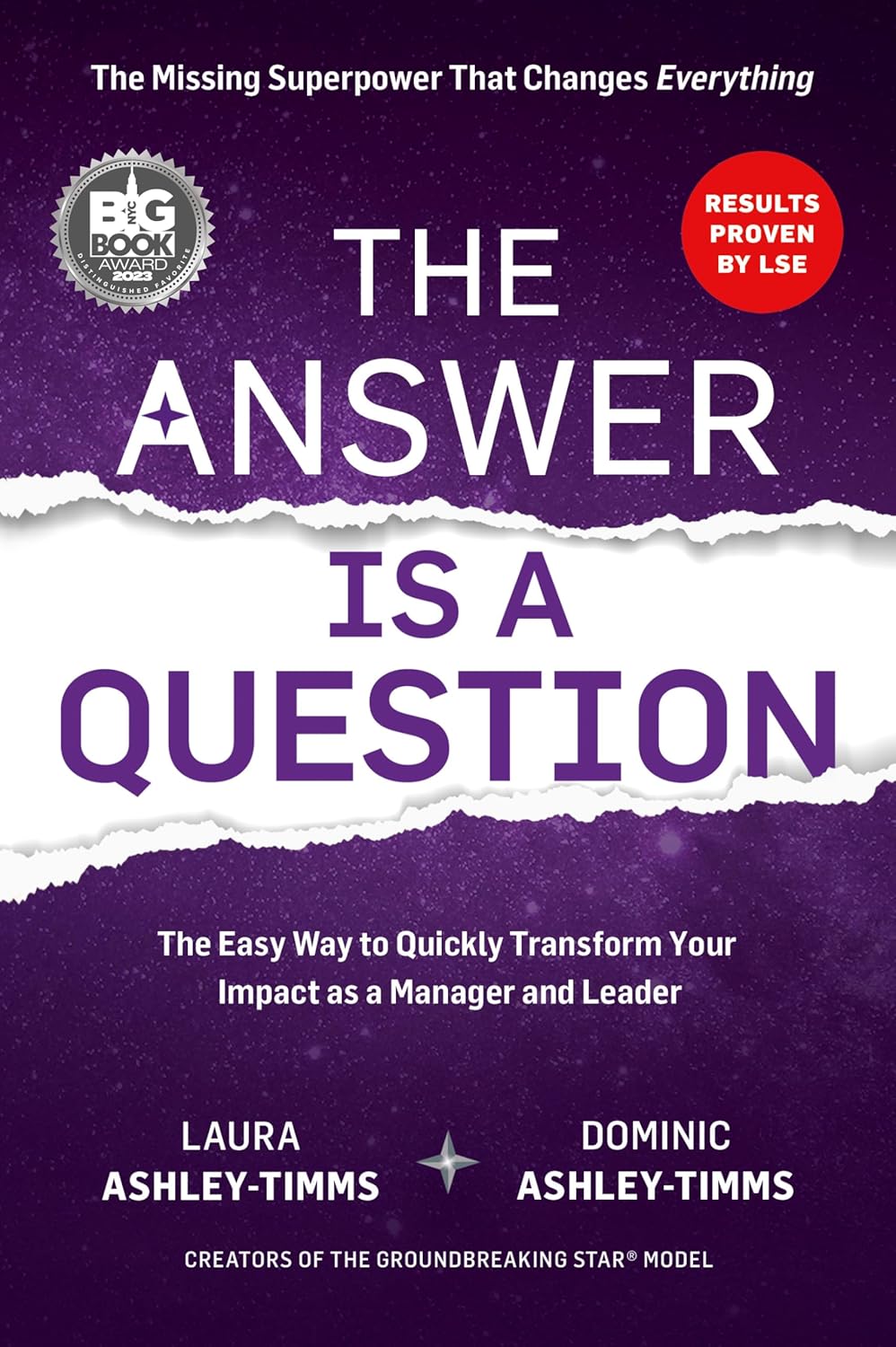
The Answer is a Question, by Laura and Dominic Ashley-Timms, explores how asking thoughtful questions, rather than simply giving advice, can improve leadership and communication.
A questioning approach encourages greater ownership, critical thinking, and better problem solving.
They introduce the STAR model to help readers apply these ideas in everyday conversations.
The book, which Paul describes as one of his top ten favourite reads, focuses on how to be able to implement STAR (Stop, Think, Ask and Results) in the real world to develop the skills and talents of your team by enabling, empowering, and delegating. Not only does this make them better team members, but it frees up your time to focus on working on your firm, not just in your firm.
It takes time, rehearsal, intention, and triggers, but the payoffs are clear.
If you want to read Laura and Dominic Ashley-Timms book, The Answer is a Question, please click the link in the button below.
Here are some links to the STAR manager programme if you'd like more information:
Your Firm’s Future – by Douglas Aitken and Paul Shrimpling of Remarkable Practice

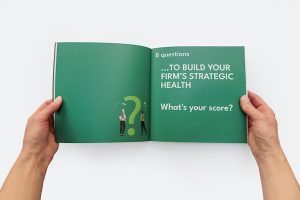

In a world of constant change, uncertainty, and increasing client expectations, one thing separates ambitious firms from the rest: strategic health.
In our book, Your Firm’s Future, we share a practical framework built around 8 essential questions that will help you assess and build your firm's strategic health.
Why does strategic health matter so much? Because when your firm is strategically healthy, it benefits your team, your clients, in fact, everyone connected with your firm.
Strategic health isn’t just an internal metric. It delivers a better outcome for everyone connected to your firm.
Click the button below to take the strategic health of your firm seriously by completing our Strategic Health Diagnostic
or
click the button below that to buy the book.