
Every time we work with a firm and every time we make a podcast, we seek to challenge the status quo. What we mean by that is that we want to challenge your thinking, your decision making, and even the actions you take, with the aim that you achieve transformative results. When I invited Sam Pearce, of Train of Thought, onto the podcast, I felt that challenge myself, as he coaches and mentors people from the creative sectors, as opposed to the number industry that we're all in. I was therefore expecting to hear a lot about differences that would challenge my thinking. What actually stood out for me, though, were the similarities of the challenges that he and the people in his industry are facing, and how we, in our profession, the accountancy profession, can learn from that. So please come and have a listen to this podcast with Sam Pearce. Scroll down this episode page for the contact information for Sam and for the additional, downloadable resources mentioned in the podcast. |
The Solution:
I'm thinking of a CEO I work with, who is still not sure they're good enough, a CEO of an incredibly well-performing business, still not sure they're good enough.
When will they be? And it's the realisation – they're not running a race that has a finish line. No one's going to tell you you're okay, because that's not how life works.
And so what if they focused on… and this is the other facets of what humans are like, we have a negativity bias, for example…but what if they focused on what they love doing rather than trying to prove they're good enough? Trying to prove you're good enough is the biggest cause of resistance.
-
SHOW NOTES
-
TRANSCRIPT
-
CHAPTER MARKERS
SHOW NOTES



The Never Ending Good Enough Race
Paul Shrimpling 0:05
Welcome to the Humanize the Numbers podcast series. Leaders, managers, and owners of ambitious accounting firms sharing insights, successes, and issues that'll challenge you and connect you and your firm to the ways and means of transforming your firm's results.
Sam Pearce 0:21
I'm thinking of CEO I work with. Still not sure they're good enough. A CEO. You know? And they're still of an incredibly well-performing business, still not sure they're good enough. When will they be? You know, and it's the realization they're not running a race that has a finish line. There is no, no one's gonna tell you you're okay. That's not how life works. And so what if they focused on, and this is, you know, other facets of what humans are like, you know, we have a negativity bias, for example. But what if they focused on what they love doing rather than trying to prove they're good enough? Trying to prove you're good enough is the biggest cause of resistance.
Paul Shrimpling 1:09
In this discussion with Sam Pearce, you'll see the strong similarities between the creative agency world and the accountancy world, and then unpack some really key insights on how we as leaders, how you leading and managing your firm, can start to see yourself differently, to build greater trust, and therefore become more effective as a human leader in your accountancy firm. Let's dive into the podcast with Sam now.
Sam Pearce 1:39
Hi, I'm Sam Pierce. I'm an executive coach and founder of Train of Thought, a consultancy uh and coaching practice. I predominantly work with people in the creative space, so ad agencies, branding agencies, those kind of things. I think my purpose, as it were, my why, is um I'm a big believer in creativity and its power and its impact. I also uh believe that if we can find clarity, people can do the difficult and the important, which are very easy to avoid in this busy, busy world. And on a personal level, I live in Bristol. I have a three-year-old and a beautiful wife who was my client, so I'm that guy. And uh I have uh I have several hobbies. Um, I paint Warhammer for a hobby, which is incredibly nerdy and I love. So there is, you'll see behind me all sorts of detritus on the camera pool. But I also was an improviser, uh have been an improviser for 10 years, taking a show to the Ember Fringe multiple times. I've been in plays and um which informs an enormous part of my work as well.
Paul Shrimpling 2:46
Right, cool. So the reason I wanted you on the pod, Sam, was because you're coming from one could consider as the poll at the opposite end of the spectrum from the accountancy world that we work in. So I'm here representing the leaders and managers of accounting firms listening to this podcast. So um, and uh as I explained before we got on air, it was um I don't want echo chamber here, I want challenge because if we can uh challenge the status quo in the way I think, the way our firms, their leaders and their managers think, uh maybe just maybe we'll run a better business and transform the performance of those businesses. So my first question is what does the phrase given your experiences, what does the phrase humanize the numbers mean to someone in your world working with creatives predominantly as opposed to I'm working with if you're in the left brain space, I'm in the right brain space, I guess.
Sam Pearce 3:45
What does humanize the numbers mean to you?
Humanising Numbers In Real Terms
Sam Pearce 3:48
So I'd say there's probably two big answers. The first one's probably uh more pressing in some ways. So the creative space is not in the rudest of health. It has suffered quite a lot from the rise of particularly tech. Um, the you know, the days of madmen, the money, the you know, one of my MDs told me that when he started in the 80s, the ridiculous salary, and they just they flicked a Porsche catalogue across the table to him and said, pick one. You know, that that that was the money, the wealth, and creativity has been eroded to a certain extent. So in the in the first instance, it's quite pressing. So redundancies mergers, consolidations are happening non-stop. And so there was a huge structural merger between two holding companies of ad agencies uh at the end of last year, uh, Omnicom and IPG. And 10,000, 15,000 people were kind of just written off, lost their jobs. And so there are decisions being made for organizations that are creative, and and I have a very strong point of view about how creativity happens, and fear is not how it happens. But that they are they are lines on balance sheets and and investor documents. And so in the first instance, there's actually the these numbers are our human beings. The commodity that we have in the creative industry is just people. There isn't much else. And so when you look at a balance sheet, those are those are people, those are human beings. So in the first instance, procurement or or the people making these decisions, those are people. They're not they're not fixed assets. So that's the that's kind of the first bit. Okay. The second bit, I would say, is that we the world is there's a great Rory Sutherland is is obviously fantastic. I watched his predictions on the drum the other day, and he talked about the Chicago School of Economics and the Austrian School of Economics, and the Chicago School of Economics being so much around cost and cost reduction, and the Austrian School of Economics being so much about value creation. And from my perspective, neoliberal economics makes far more sense as a religion than it does as an economic model. So so the economy, like these figures, they're just economists are now soothsayers who read the whims of the gods, the economy, and make decisions. And that's so inhuman to me. What's the point? We're human beings and these are human problems. And so what I find from human laser numbers is that the fact that we are polar opposites to me, these industries are perceived, is mad. Because the point of the creative industry is to increase those numbers, and those numbers should be used to help and inform people who want to increase the numbers. And yet, anyone with a spreadsheet and anyone who's creative are sort of viewed as polar opposites. That's insane. The whole point of creativity is to make things better, but creativity again, I've got a whole trunk of this, but creativity is viewed with suspicion in our society. There's a great, that great Ken Robinson talk from 20 years ago where he said, you know, creativity isn't taught in schools. But creative people are seen as oddbulls who sit over there, they're they they they're they're weird and they don't get business. And so they sit over there, and and uh creativity and innovation is the only way you grow and make things better, but creative people aren't near the numbers or the levers of power, and uh I I could go on and on. But so for human age and numbers for me is uh how why aren't they human? What what is the reason there's an arbitrary divide?
Paul Shrimpling 7:36
Well, I think uh you know you you bring um Robert Sutherland's book, was it that Alchemy? Is that his book? I think so. Yeah, yeah. So he was he was the he's the guy who said, Why why have we spent literally uh I don't know how many billions on, for example, the uh speeding the trains from London to Birmingham and and it's improved it by six or will improve it by six minutes or seven minutes or something when actually that would fund some very good food for every passenger and fund catwalk models to serve it on every trip and still not have spent all of that money, and you'd get more people travelling on the trains. Um, so he's coming from that creative perspective, but also I think it's a creative value perspective, which is what you're bringing into this conversation. There's a value equation that plays out for the business that's connected to the creativity and performance of the team, whether they be accountants or uh you know ad agency programmers, whatever the um whatever the job role is, irrespective as to where they are on the um you know creative to numbers uh perspective. But your your other point, I think, is and we're all this in this together, um for it to work together. Um and ultimately, and I think this is what comes out of my reading around Rory Sutherland, is to deliver value for the client. Yes. Right. Okay, so the balance there's also, I think, uh it's worth flagging, lots of mergers and consolidations in your industry. There is in ours. You know, the the amount of uh PE money that's flooding into the accounting profession and has been for years and continues to, and the number of consolidations is off the charts. Um we're also a people dominant industry. You know, the the single number one cost of an accounting firm are the salaries and and and and offshorers that they're uh that they're investing uh time and money with. Uh so there's the similarities there.
Clarity Beats Noise And Busyness
Paul Shrimpling 9:39
Um in your introduction, uh Sam, you talked about the need for clarity. Well, what what was that about? It's a trigger word for me. So there's this what what what what are you hunting for there?
Sam Pearce 9:54
I think the world is unstable, it's scary, it's difficult, the rate of change. I I actually put a linked in for saying hey that I I'm quite bored of yeah, very VUCA. I'm quite bored about the conversation of AI. I find I find the conversations genuinely tiresome because they're loops of evangelicals, and I f I I just personally find that very dull. But it's incredibly uncertain and stable. And on a personal level, all that VUCA volatile, uncertain stuff makes people unsure. But at the same time, busy has become a cultural value system. So you know, the busy has replaced I'm fine as the kind of standard reply to how are you, you know, busy lots on, which is a bit mad as well. So clarity, I think it's the competitive secret source for any company because clarity means you have answered hard questions. And and it's never been easier to avoid hard questions. It's just really, really easy. And I spend probably most of my time with clients, so I kind of do group away days and I do one-to-one stuff. And I spend most of my time trying to get them to answer the thing they're kind of slithering away from. Because without clarity, no one in an organization knows what to do. But but it's just it's it's so easy. And and just to add to that, all of this uncertainty makes people incredibly risk-averse. Of course they are. People are at the moment, they don't want to take risks. And in the creative world, in the marketing world, that's become very, very true. So a lot of advertising is very beige because you haven't taken any risks, therefore, it doesn't work, and etc. etc. So clarity for me is you can't act unless you you have some sort of North Star or direction. Clarity gives you the direction. But clarity, this is where I come back to like the boring and difficult, the the difficult, important stuff in a business. It's not usually not the glamorous, glitty stuff that moves the dial, unfortunately. And it's also not the fire that's on that that's emerged today, because there's fires every day, and none of them are that important. Why are we here? What do we do? What should our people be focusing on? A lot of that stuff is relatively dry conversation sometimes. It's it's not that glamorous, it's not that pressing, and yet it's really, really important. And so clarity is a is the cut-through, the the like cutting through the noise, through everything to reach. I spoke to I spoke to a couple of guys this week who are running uh what's evolved into kind of five businesses, and it's exactly this these are all exciting, difficult things, and it's so they can get lost in in it. In the noise. Um in the noise. But they've got some big questions to answer so that that their employees can do stuff. Um, and I enjoy digging into that. I really enjoy digging into that hard stuff and making people answer hard things. I find that.
Paul Shrimpling 12:59
Yeah, no, good, good, good. Let's revisit those questions. So uh question, one of them was why are you here? Uh what were the other two?
Sam Pearce 13:08
Uh that's a good question. Uh why are you here? What do you need to focus on? What's the focus? And what your people need to do. Um, what do we do? Yeah, yeah, yeah, yeah. Most most people think their job is to send and receive emails and attend meetings. Deep down. If you dig far enough, that's what most of us think work
Deep Work Versus Always On Tools
Sam Pearce 13:29
is now.
Paul Shrimpling 13:29
Yeah. No, I agree. I would I was in a uh uh I run a training program for the uh manager layers within accounting firms, and um one of the uh more savvy, knowledgeable, advanced uh leaders in that uh group. Um we were talking about when when's your brain at its best, you know. Your pre-front frontal cortex is what uh five percent-ish plus or minus of your brain um mass and capacity capability. Um that's the um the decision-making part of the brain. That's the where the real hard, grunty work, deep work gets done to take a line from Kal Newport. Um and it gets worn out pretty quick. So when are you at your best? And typically, you know, everyone sort of agrees, is when you when you when you've just woken up, whenever that is, in in in in and around your natural circadian rhythm, um, you're at your best. So that's when you should do your deep work. So what's your deep work or emails? Yeah, yeah. No, no, no, no, no. That's admin. That is admin. Yeah.
Sam Pearce 14:33
And it is like a disco ball being dropped into if your concentration is a beam of light, it's like a disco ball being dropped in and just shattered. And Slack, I mean, I I I I think Slack, uh everyone uses Slack, and I think Slack is, in many ways, one of the least helpful tools that has ever been invented. But but it this constant weight because it makes communication too easy, right? And and so it devalues how people communicate and makes them, quite frankly, lazy. It also creates no hierarchy of information. So every message is as important as any other. And so you have to you have to interact with it as if every message is urgent. So if you're saying a CEO, for example, then then you the the every message on that looks the same. That's not a good way to communicate.
Paul Shrimpling 15:22
Yeah, yeah. I'd I'd add into the mix Sam that distraction. You know, if you've got email notifications, Slack notifications, WhatsApp notifications, it's uh there's that constant barrage of interruption. So you've got no hope of investing your prefrontal cortex in quiet time, deep work that's going to be either creatively or deep work in an accountancy practice might be, you know, reviewing a file, you know, an accounts file uh to work out what are the best questions to ask the client that you're going to see tomorrow or the l or next week, um, in order to deliver greater value for that client. Um amazing. Um so why we're here? So you you you brought up the phrase North Star, which is that why you're here. So what exactly are you talking about there? I've got my own views on that, but I want to know what the things are. Why are you it's a big question that I do? I don't know how you could possibly, by the way, say that's just like boring group work. I'm just like, really?
Sam Pearce 16:20
So I think people, yeah, it's not it's not boring, but it is difficult. Exactly. That is difficult. People people find it, people find it hard. And I think those of us who work in any sort of coaching profession are so used to it by this point. So I've been running my coaching practice for seven and a half years. It is now just normal that that is how I think and interact with the world, and at some point it wasn't. So I the reason I did this was I was working at agencies, I was working 90-hour weeks for £30,000. I would have earned more per hour working in a in a supermarket. So I was working incredibly long hours. Yeah, my my partner had a bereavement very, very tragically. I lost a friend in very tragic circumstances, and so these and my uh family member got ill. And I remember sitting there after this burnout and going, what what? You know, my world had been turned upside down. Suddenly I looked at it in a different way. And I kind of looked around and I couldn't understand why we were doing what we were doing. So we were meant to be creating creative products, and obviously I just had a burnout, so my prefrontal cortex wasn't anywhere near the the game. I was running on animal fear and instinct. And what I couldn't understand is if our if our product was creativity, why was I so stressed? How is how is that in any way, shape, or form a useful business? Literally, if you take the human out of it, just on a business pragmatic level, this is madness. You you have designed a working system that deactivates the parts of the brain required for your output. Mad to me. So so I started going asking asking just what I I guess were harder questions, and I enjoyed doing so, but I think the why I think there's two things. There is there is the thing you want to there's one thing at the heart of it more than the other. What life do you want? And I and the reason I asked that is I I I think a lot of people you mentioned PE and investment, and the complete norm in the industry I come from has to be you if you start an ad agency, you're you're looking to sell it in five to ten years and get a couple of million. Now, loads of people who do that just start another one. Because they're those people and it's what they know. And the the thing I always sit under the back of that is is did you think about the life you wanted? Did you want the millions to retire? Because most people who start businesses like that don't like retiring for a start. And so it's a broader question of kind of what life do you want. So the reason coaching attracted me is I wanted a job that I could do forever and not retire from, that I could turn up or down. The the biggest motivation above that was I really, really wanted to be around my kids when they were small. You and I looked around ad agencies and saw all the parents and thought, maybe never. This is parenting is incredibly hard. And so my the beats of my life, or what I guess I call the texture of my life, was what was most important to me, which meant in my case, no employees. I didn't want employees, I didn't want the overheads. So very low overhead business, enormous amounts of autonomy. The thing I take is it's incredibly volatile and I have nothing to sell. It's all me. My clients believe in me, they buy into me. So that was the kind of cost-benefit analysis I did. But I work four to five hours a day, four days a week, and I see my daughter and my wife broadly whenever I want. That is what I wanted. That's the life I wanted. That's why I do what I do.
Building A Business Around Life
Paul Shrimpling 19:54
Okay.
Sam Pearce 19:54
And so I think because we live in a world where numbers become so attractive to people, what you can measure, income, etc. I think very often people said, Why am I, why am I running this business? What do I want at the end of it? And then I think it makes it then hard. And so, and and then the second layer is what do we find interesting? What do we love doing? What what what do we get energy from? And again, I come from an industry that because the finances got hard, it started doing things it didn't want to do to make money, and of course, that just eroded client trust, it eroded the short the short-termism had a had a large consequence. And I really feel for the people who made those decisions because they're trying to keep businesses open.
Paul Shrimpling 20:42
Okay, okay.
Sam Pearce 20:43
But it lost, it lost my industry, lost a lot of why it does what it does. What what value does creativity bring?
Paul Shrimpling 20:51
Okay, so the there's a number of things in there for me. So one is there's why why am I here? Um, why am I doing what I'm doing is slightly different. Um, I get the from a personal goals perspective, Sam. Um and then I I'm in the you know, I've come from the same space you're in, on the grounds that um uh the people listening to this podcast already know this, but you know, four kids. Uh right, I'm having the school holidays off then. You know, set a business up, I'm having the school holidays off. We all we did that from the get-go 19 years ago. Um, so I can't, you know, when you do the maths on 19 years, 12, 13 weeks holiday a year and go, wow, wow, that's amazing. What have I sacrificed in terms of earnings? Nothing significant. Um, don't care because the relationship with the kids, the relationship the kids have with each other um is is is the payoff. So that was in my personal goal space, um, which is you know a key driver. Uh, when you said North Star, for me that was all what you raise on debt, or why you on the planet, why you why are you doing what you're doing to make the difference that you want to make, whatever that is, um, is is different from the personal goal. Space. So I think as hard as the business vision personal goals thing is, and it pays to invest prefrontal cortex time on working out what your have goals, be goals, and do goals are. And we've got a um I'll I'll make sure that uh Kelly from my team sticks the um we run these, we generate these business breakthrough reports which just sort of try to encapsulate the key insights around goal setting. So we'll get that that business breakthrough in the in the show notes, and I'll forward a copy to you, Sam, so you can navigate it. Um but there is the what's your raise on debt or what's your north star? What's you know, the north star you never quite reach. Business goals, personal goals you can reach. There's a difference, isn't there?
Sam Pearce 22:45
But I think I think it's really interesting because I think they're more connected than they sometimes are. When I'm working with clients, one of the things I really talk about is what are you what are your foundations as a as a as a human being and a practitioner of what you do. So everyone gets imposter syndrome and feels like they're not good enough, and you know, all of the human things, particularly when you get promoted, particularly when you start entering the C-suite or you know, all those kind of things, very, very common. And um I I guess the the words I use for it is either orientation or also foundation. So the the the thing about you as a human being that is valuable, special, unique. So one of one, one of mine, for example, the clarity to help people do the difficult and important, which is both kind of a business line to a certain extent, it's also a personal, to use your language, reason d'être. It is something that I it's so intuitive to who I am as a person. And and when I feel insecure or I'm working with a CEO and I'm like, what am I doing? You know, how am I, how have I got here? What have I got to offer? I can go back to that as kind of a safe harbor for my own sense of self. Yeah. And I always I can do that all day, every day. And and were my coaching practice to close and collapse overnight, and I need to go make more money, it'd still be what I'd be doing because it's just so intuitive to who I am. Okay. And so I I think the kind of the goals and the and the way you are, your North Star that kind of, I guess, for for people who run businesses becomes your business. I think they're really linked. And I think because we work in a but you know, why do we work nine to five? We work nine to five because it's eight hours, and factory shifts could are 20, we're you know, 24 hours of running a factory, and you needed to divide that number by something. You'd have three shifts after work after after working, you know, reforms. Three shifts. Why weekends? I don't know, it's kind of easy, two days to get people off. So so we're used to a very industrial view of work. I'm more interested in blending the two together and going, here's the person you are, and here's the value, I guess, that your business brings, the North Star. Okay. How can they be more closely linked? And then how can people share in that? I guess. Yeah.
Paul Shrimpling 25:05
Well, I love the way that what you've done is brought the uh North Star raison beatra core purpose of your firm into the this is part of the value equation that your your clients, your customers are buying. Um you know, I love that phrase, you know, clarity to do the difficult and important work. Well, the difficult and important work is connected with the value that the client experiences, because if it's not, um we'll you we're spending and investing time in things that don't have a uh let's be brutal about it, any monetary value because the client's not willing to pay for that wasted time. Yeah, yeah, completely. Um so I I like that. Uh and you've made me think now in terms of you know, um, yeah, let's answer the why question from a personal perspective, which is undoubtedly connected to personal goals. You know, what do you want to have? What do you want to do? What do you want to be? You know, what sort of parent do you want to be by being available for your kids? What do you want to do in terms of you know what work interests you and you know, okay? I've been swimming this morning, so I want to stay fit. So they're all the do goals, uh, and then have okay, I want to have a house big enough so that my four kids can come back to any time they want, and they have which is you know, you know, three three living back at home, two just about to leave again, which is you know, that's the way of the world now, and uh we love
When Measurement Erodes Trust
Paul Shrimpling 26:24
it. Um you touched on and and built the connection between trust is degrading because of I think you were referencing like the short-term view of business. So and and I'd like rather than from a personal perspective, I'd like to hear what what you've got to say around that in terms of how you're helping clients improve trust. Because the trust equation is a massive part of uh why a business leader chooses a particular accounting firm. And I guess it's the same in the in the agent, you know, the creative agency space. You know, if there's if the trust isn't there, they ain't gonna um they ain't gonna sign you on the uh into spending their money with them in order to build their campaign, whether it be a digital one or a you know poster one or whatever it is. You can see me, yeah, starting and stalling in what actually you guys do in your world, but what it's the questions around trust versus short term, and I also wonder about that stress and fear piece that you brought in. You know, if they if we're obsessed with the numbers and not balancing the numbers with the human creative stuff, and we're creating stress and fear, we're not gonna get the best out of our people.
Sam Pearce 27:37
No, and I think for my industry, there's some quite specific context, which is basically the rise of digital. So the the the creativity at its heart, the reason creativity isn't is it's incredibly hard to measure. How do you measure creative impact? How do you it it's just so difficult, if if possible at all. And this is, you know, this is quite classic stuff of the the most that I mean, there's a famous Bobby Kennedy speech about GDP, it measures everything but nothing of value. That that love, relationships, community, the things that value most. And this is what I mean about we live in this kind of Chicago School of Economics world where if it's not measurable, then it's almost dismissed. And so what happened was the rise of digital, and particularly the rise of the tech platforms, they could say to you, we can tell you what your money's got you. We can tell you, we can tell you how many clicks, we can tell you the ROI, we can tell you how many customers you've got. Now, firstly, huge allegations of fraud in that world. So whether that is true or not is massively out of question. But but between essentially, if you can't measure it at the moment, it's hard to make a case for it. And I run a coaching practice, and coaching is incredibly hard to measure. So the the the it recordly, it requires trust to believe in things that can't be measured at the moment, because it's hard to make a case. So we live in a world obsessed with measurement. The digital advertising space promised measurement and it eroded stuff that couldn't be measured. Basically, kind of brand big advertising. Very hard to measure, it's very expensive to measure. So if you're a chief marketing officer and you're making a case for something, you either go, hey, trust me, I'm spending four million pounds on this ad campaign, or hey, I spent 500 grand with Google and they told us that we got, you know, three customers per pound or whatever. Which one of those is an easier case to make? So what happened was I what in my and sorry, the other context is um advertising in the kind of madmen days, you would pay that you'd pay 8 million pounds for a media media campaign, uh media spend on literal advertising, TV advertising, and the agency would take 10%. So you got paid on a kind of percentage of the spend. What happened with Martin Sorrel and WPP, which was the doing very badly now, but until recently, the the the successful one, they did was they split that apart and they started paying for time. So advertising agencies bill time. Now, this is slightly mad because creativity is not a time-dependent exercise. Sometimes an idea takes two minutes, and sometimes it takes a year. But what it did was it started, it made people internalize those dynamics, right? That that if you if you are charging for time, firstly the client wants you to spend that time on it, which doesn't equate to the output. The outputs are relevant to how much time it takes. But it also made people think about themselves in a numbers way rather than a human way. Their value became about working longer hours, basically. So there's a huge problem with how long people work in advertising. I told you that I worked 90-hour weeks. Well, why did I work 90 hour weeks? One, things internally were a bit of a mess. But two, I didn't know if I was like I was in my late 20s and not sure if I was doing a good job. So I was looking for something I could measure. And so ours, of course, gave me a hook of personal, you know, I'm achieving something because I'm working so long. Anyway, I've gone uh slight tangents to come back to the point.
Paul Shrimpling 31:32
No, but it's a brilliant tangent because it's perfectly relevant to the accountancy profession, which is also obsessed with the time on the job. And the time on the job, as opposed to let's reduce the amount of time on the job. So the values attached to the time on the job when actually, what if we could do it in less time and actually invest more thinking time delivering greater value to the client? That would be an interesting perspective.
Sam Pearce 31:58
Completely. Completely. And the and the trust eroded because as as money kind of flew towards digital in my industry, people in creative agencies needed to make money. And so they just started doing stuff that they A, weren't particularly good at, and B, was literally less valuable. So the industry, because because the industry is very inherently competitive, because they have to pitch for work against one another, there's very little institutional collaboration. The best thing they could have done is got all together and gone, procurement, we can't pay for town anymore, it doesn't make any sense. Here are the new terms, we're going to stop pitching because that's just free work, all this kind of stuff. Pitching is mad. But because it's inherently competitive, there's always someone who'd undercut. So things have gone down and down and down and down. But the net result of all of this is the industry doesn't trust itself as much as it could. It doesn't, with a few exceptions, it doesn't walk into the room with the energy of we are going to solve your problem, which matters. But it also led to I work with uh quite a few in-house clients, so people who work in the creative departments of companies. So a lot of companies have in-house creative, and they go, agencies don't get us. They're not listening, they're not work, they're not collaborative enough, because there's a scarcity mindset, which means they scrape for everything they can get rather than going, great, this bit, definitely don't want to do that bit. And so the c so when I'm working with clients, what I'm trying to do with the individual first, and it's often you know the CEO kind of runs this or the founder, is you need to believe that you have value. Like creativity, the creative industries attract very, very sensitive people. Sensitive people tend to be very insecure, and they tend to have a need to prove themselves. This is where the long hours in these dysfunctional countries. You've got a lot of people trying to prove themselves. Well, what if you didn't prove yourself? What if you trusted yourself? And I like I have this as a personal challenge all the time. I've had one of those weeks. I've had a great week in my coaching practice. I had four clients tell me I'm great what I do this week, uh spontaneously. What an amazing week. I in my head have thought that I'm a fraud and useless all week. Like that's what the human brain does. And so I have to trust myself. I can continue, I can try and prove myself, that doesn't work. I have to trust myself, and that's a personal work that then cascades into a company.
Paul Shrimpling 34:33
Okay, all right, let's unpack that then. Um, because I have a sneaking suspicion that most managers, most leaders of accounting firms are resonating with what you've just said. Okay, and so what what are the how-to, Sam, that you've experienced that works with your clients when it comes to helping them build trust in themselves that they are of worth, value to their team, to their firm, to their clients?
Sam Pearce 35:05
The biggest shift is a perspective one. So the important thing is firstly to reveal the old operating system. So our school system with its grading, etc., leads you to think about yourself and your value. Basically, we live in a world, capitalist world, where value is inherently
Identity Shifts After Promotion
Sam Pearce 35:27
conditional. So we don't live in a more Eastern philosophy of every human being has inherent value. The the if I get nerdy for a second, the origins of Western capitalism are quite puritanical. So if you think about the Victorian world, which we live in still, the legacy of the Victorian Industrial Revolution, when people were um when when people were decided, when people decided people were wastels, etc., where did they go? They went to a workhouse. So so we do have quite a strong cultural and ethical belief that you need to kind of work yourself into being valuable. That you your value is conditional. I don't think it's coincidence if you if you'll indulge me going to a hard place. The words above the gates at Auschwitz were Arbeit macht frei, work will set you free. Now, as much as that is an extreme ideology, there are roots that all of us live in. This idea is a work to in God's love.
Paul Shrimpling 36:29
You could go method is work ethic, you know, it's a you know, you know, a phraseology people will be familiar with um is coming from the same space, isn't it? Uh not as the ethical space. Exactly. So you're not as well born space is what was going on in that. No. But but it's it's all the same.
Sam Pearce 36:44
It's uh it's this work ethic piece, yeah. It's the same philosophy, which is basically you are born sinful and you must work to earn God's love. So whilst we don't live in that world, we live in its its successor. And so people see their value as conditional and that they need to work to be uh to and to kind of earn um purity. And there's a there's a different version of that, which is everyone's born with inherent value, uh, which is more an Eastern philosophy. So it so firstly, kind of the reveal that you're trying to prove to someone that you're good enough your whole life. I think the second thing is I kind of go back to what is it? How do you do that? Before we get on to the second thing, how do you do that?
Paul Shrimpling 37:24
How do you work with how do you coach that with your clients? What do you get them to do? What do you get them to think?
Sam Pearce 37:31
Just talk, just talk about it, really. Once you point it out, most people get it quite quickly because they're just so used to it. There's a lot of people. Awareness is the key that unlocks that door that's never locked in. That's the first thing. So what I'm unaware of controls me, what I'm aware of I control. Like, and and the the I'm a huge, huge fan of the rest is history. And Tom Holland's whole book, Dominion, is about the fact that we live in this Christian world and it's so Christian that we can't tell it, right? And it it's pain, it's painfully true. Once you see it, you can't unsee it. And I think the same thing. So you've got to talk about it, ask hard questions, make people feel uncomfortable, cut through the busyness and the noise, and and just talk about the stuff that no one is used to talking about. Right. Really? The first bit is is this, are you are you doing all this to prove to someone you don't know that you're good enough? And the answer is invariably yes. It's like, do you wanna do you wanna spend your life spend your life doing that? Because that sounds rubbish. Um and then from there it's you've got to have your own personal, we're storytelling animals. So what's the what's the narrative? What's the what's it for you? So the the clarity to do the difficult and the important, which is my personal one. I have several, but it's probably it's probably the key one. Is to my point of if I if my coaching practice folded tomorrow and I had to go find another job, it's still all I would do. It's it's so intrinsically who I am that I I've been doing it my whole life. Yeah, yeah, yeah. And and and and love it. And so and so everyone needs to be.
Paul Shrimpling 39:16
When you find that space, Sam, when you find that space, and you know, I I would argue that I'm um you and I in a similar space. Um, you know, the people that are listening into this podcast have set their own firm up or have become a leader in that firm or a manager in that firm, and aren't necessarily as confident that they've found the perfect space, but it's good enough. It's working. Um and you know, that your phrase, and I I may have the word order slightly wrong, but are you trying to prove yourself to someone you don't know? Is a really, really interesting question because it takes you into an awareness space of going, actually, why am I doing this? Uh, what do I want to focus on? What are what am I really interested in? That then starts influencing your life and career decisions. I think that's a stunning practical outcome. I interrupted you, Sam. You were going to one of the one one thing that we've got to talk about is perspective. Uh, I I wonder if that's um connected with self-identity. What how you see yourself is how you behave. If you see yourself slightly different, you'll behave in a different way. I think I think you're in that space, which is what all the psychologists tell us is important. If you don't change your self-identity or perspective on yourself, your behaviours will continue to be habitual. You won't challenge the status quo. Um, you you're about to open another door, and in and you're saying there's a second piece, a second thing that influences your ability to unlock the greater potential in your creative clients. What was what was the second piece?
Sam Pearce 40:51
Well, it kind of is the idea, it's the identity thing. The identity is a story, it's the story about who you are and what you do, and it is a story. So most people, when they get promoted, promotion's the key point of this, right? That most people who get promoted do the old job they were doing.
Paul Shrimpling 41:08
Yeah.
Sam Pearce 41:08
Because that's where they feel safe, and what was rewarded will be repeated. So they never update the identity. And I mean, obviously, I'm aware of my self-interest in saying coaching is really important because I, you know, on a functional level, sell coaching.
Paul Shrimpling 41:22
Yeah.
Sam Pearce 41:23
But without the identity work, people don't update to the new job, or they do it incredibly slowly, and it happens by chance. As budgets, as as because my industry has had financial challenges, budgets for this kind of stuff have have reduced. Training that used to be, you know, when I started, there was loads of training. There isn't really any more, it's very little, and and a lot of people work from home, and that has all the consequences it has for development and all that kind of stuff. And I I don't take a side on that because I can see advantages to both models. But if you're gonna have people working from home, you better have more training because they're not gonna learn on the job in the way they would have done. But the identity piece is essential, and we we don't have a culture that's trained people to think this way, to think about themselves. People think about themselves kind of in a very fixed mindset because that's how culture teaches people in our society to think about themselves, that you are this fixed thing rather than a flexible story. But the final point I'd I'd kind of make all of this work requires quite a lot of courage because you are unpicking your it's a bit matrix-like. Because you are unpicking this very like yeah, yeah, exactly. You are pulling those weird leads out of your head because it is safer and easier but less fulfilling to just stay with the assumptions you've had all your life, and it can for some people be pretty scary to unpick it. And I don't really judge that because that guy who ate that I whenever I see a steak, I think about that guy in the Matrix film eating that steak, talking about wanting to go back in, you know?
Paul Shrimpling 43:03
Yeah, I think so. What what what questions, what coaching questions do you pose then to help your uh your coaching clients on pick and be brave around this identity and perspective and story piece that we're talking about now?
Sam Pearce 43:27
So, really interesting question that tees into probably some of um some of my own insecurities. So I was mentored into coaching, I wasn't trained in a conventional coaching program, which a lot of the best coaches I know weren't. And I think it is two sides. I think there are the questions, but there is also the sharing and reframing, which is what one of my critiques of conventional coaching theory that says you only ask questions, is um I I'm holding up a box uh for for those. Listeners, if your frame of reference is this small box, you can only ever answer within that box. And so I think part of the job of a coach is to expand the frame of reference.
Paul Shrimpling 44:11
Okay.
Sam Pearce 44:12
And so this is where storytelling is really important. The examples, the metaphors that can help people to understand what it
Reframing Stories To Remove Resistance
Sam Pearce 44:20
is you're talking about are crucial. This is why I don't think you can just do this work with just questions. Because they need to understand the story, and we are storytelling animals. This is the I I think it's odd that coaching, dis conventional coaching, discourages this. Because I think it's very important to how humans understand things. You need to understand what it is that you're talking about. And so there's different clients or myself, I can talk about this is the old story, this is the new story, this is the thing we're talking about. And then and then my the the second a second really important thing is one of the reasons people find this work scary is they've they feel like they're they're filling in a blank piece of paper. And I think it's the absolute opposite of that. I think most people know who they are and what they're about and what they really want. And if you imagine it's a beam of light coming out from their chests, all life has done is just put stuff in the way. And so I think this process is actually much more about taking things out of the way than it is about filling in a blank sheet of paper. That's A, less scary, and B, intuitively true. Most people know, they just don't want to say. And so people do know themselves, they've been in their own experience for a long time, but they doubt it, they question it, they undermine it, other people have done the same. And so it's more a process of revealing, really, and admitting and being honest in a very safe. This is where trust comes back in. Yeah, yeah. My relationship with my clients is crucial.
Paul Shrimpling 45:46
Safe space, yeah. So give me an example of taking things out of the way so I can anchor I can anchor this. This is a uh a glib example, forgive me. But this morning I um I did uh a series of swim swim sets, you know, I did uh four of them four two hundreds, uh, six one hundreds and then uh six fifties. And I just tested something on the the uh last two hundreds in terms of head position. So I actually removed some resistance or I was experimenting as to whether it would remove the remove the existence and knock two seconds off the hundred metres. When I was actually uh at the uh I peaked in terms of ability, and I was in, you know, um uh I was breathing harder and the it was less in my system that I couldn't put but I knocked two seconds off the hundreds. I was like, wow, I've got to tell I've got to try that again. So I tried it on the 50s and I brought my 50 time down. And it's that's an example of removing some of the friction, the resistance, and I'm just picking up on you take things out of the way. So I'm trying to tell a story, Sam, around what that might look like in the physical world. I'm just wondering, what does that look like in the human world when you're coaching your clients? When you so what what what things are you helping them find to take out of the way so that they actually deliver on what they want for their personal goals, their life, their core purpose, north star?
Sam Pearce 47:11
So I I really love that you introduced the the words resistant of friction, because I think there's a lot of that. So so let's uh but I'll take on with a client, but the personal thing. I I paint Warhammer, right? And I I I have been slowly walking past shops that sell this for eight years before I did it, looking in the windows, going, that looks quite cool, but I I still're not ready to open that door. Um and then one day I was like, well, I just want to do this thing. I found some stuff in and and I love it. And I used to hide you you can see on camera, but you can see some of the stuff behind me, right? I used to hide this because I didn't want anyone to know. What an odd yeah, what an odd thing. It's a bit odd, you know. It's really many fun. Yeah, I I love this, I love this thing, it's absolutely great, and I've made friends, and like I find one of the reasons I did it is because it's not based on a screen, and like I have a fancy world's on this guy. Yeah, yeah, yeah. Just so I let you know, Sam.
Paul Shrimpling 48:08
My daughter who's living with us, uh, she's uh one of her best friends, absolutely a bloke, um, accompanied him to a Warhammer uh uh exhibition with you know the the greatest painters and what have you. And um and she's an artist and she came back and went, you know, there's something quite cool about it. It's odd.
Sam Pearce 48:25
Yes, but it's quite cool. No, I just thought you know full of creativity, it's a great rich hobby. And I've met great friends through it, and it's something that's mine, and I can do solo and brilliant, brilliant thing. But the resistance is you shouldn't do this. Like, this is nerdy. You don't like people will think like all of that is resistance. So with my clients, so if you let's take the proving yourself thing. Yeah, proving yourself is just resistance because if you're true, if you're proving yourself to someone, essentially you're proving yourself to that voice in your head that tells you you're a piece of you know, crap, right? Yeah, that's ultimately who we're all trying to prove ourselves to. Firstly, that voice is designed to tell you you are rubbish. That's that's the that like that. Is the that part of the human mind is a survival thing that basically tells us things are going to be bad. And we've bought buying it. By the way, it's quick tangent. I've read all the books on that human mind. I have an incredibly strong one. You know, don't believe everything you think, Inside Out Revolution, all of these books. My wife did literally three weeks ago turned to me, we were talking about it, she said, Well, you're just codependent with a voice in your head. And it was the most brilliant thing anyone's ever told me about this, because it's completely true. I I am prediscisioned towards codependency, and I'm just codependent with this voice in my head, and I think I'll be safe if it tells me I'm safe. And it was just brilliant because it did two things. One, it focused on my relationship with the voice in my head, and two, it made me feel icky because I think codependency is quite icky, and it made me want to change. So that's just a nugget of brilliance from my from my wife. Really enjoyed it, completely agreed with it.
Paul Shrimpling 50:03
Yeah, albeit that you've just you've just triggered something for me, which is based on just reading some um uh uh Krishnamurti uh speeches at the moment, um, and you're going all of uh and oh how how how can you communicate Krishnamurti in about two sentences? Um we are relational beasts. You know, you talked about story, stories, stories are usually about character progression, uh which is usually connected with other people as well. It's very rare that you'll come across a story without multiple people involved. So we are relational beasts, beings. Um, and uh where we're at and who we are is is moving all of the time because the relationships that we have are moving all of the time, and so it's in constant flux, as opposed to thinking that we're gonna find you know the imposter syndrome will drop because we found this fixed fixed place called Nirvana or whatever label you want to give it a piece. Don't worry like that, is what Krista Murphy. That's my interpretation of what this particular uh speech from uh Chris Krista Murphy was on with. And I think it's connected with that. I think codependent, we are we are relational people.
Sam Pearce 51:13
Um I'm not sure whether it's as icky as maybe, but now that's me maybe trying to fix you the well you're aiming broadly for interdependence, I think is that codependence is condition is conditional, interdependence is there. But but the the friction with clients, you know, if you are trying to, if you're I'm thinking of CEO I I work with, still not sure they're good enough. A CEO, you know, and they're still of an incredibly well-performing business, still not sure they're good enough. When will they be? You know, and and it's the realization they're not running a race that has a finish line. There is no, no one's gonna tell you you're okay. That's not how life works. And so what if they focused on, and this is you know, other facets of what humans are like, you know, we have a negativity bias, for example. But what if they focused on what they love doing rather than trying to prove they're good enough? Trying to prove you're good enough is the biggest cause of resistance.
Paul Shrimpling 52:17
And you your point earlier about good enough to someone you don't know. It's like Yeah, I mean Oh wow.
Sam Pearce 52:23
Yeah, not not even literally someone you don't know. As in very often, again, it's the voice in our head. So I guess to a certain extent, we're I I had a reveal a couple of years ago when I realized that I did, I I don't have any faith, but I I did live my life as if there was a dude on a cloud with a big beard keeping score. And most of us do, because we've grown up in a culture that had those stories, right? I was like, I uh I believe there's someone keeping score at some point in my psyche, despite rationally not believing that at all. Yeah, yeah, yeah. So so what if I don't what if I don't do that anymore? And the other resistances are your point about in the morning people going to clients, I I don't think any CEO should have Slack on their phone. I don't think CEOs should have I think it's a complete waste of their mental resources. A CEO should be thinking about three, six, eighteen months time. Too many of them are working on fires day to day. And so they're enabling the people working for them to not step up. They're also enabling dysfunctional uh processes to proliferate. A CEO should not be working on the fire that is today.
Paul Shrimpling 53:32
Is that because they see themselves, you know, that identity perspective piece, see themselves as the problem solvers as opposed to the grower of people? I don't I'm just throwing that out there.
Sam Pearce 53:44
Yes, I I think I think it's a legacy of execution, but it's also it goes back to what's a
Leading Without Daily Firefighting
Sam Pearce 53:50
good day. So I once worked in a project for Heathrow Airport, and job satisfaction at Heathrow Airport is really, really high. Do you know why? Or can you think why? Look out the window and the planes take off.
Paul Shrimpling 54:04
Okay.
Sam Pearce 54:07
Yeah, you can see you can see the result. Right. It's the story of the person on the Apollo mission who was a cleaner and they said, What do you do? And they said, I'm I'm helping put a man on the moon. Like, you look out the window and the planes take off or not. But if you work in an office in either of our industries and you're in a senior leadership position, what makes a good day? How it's not every day that you're signing a giant deal that that lets you know that you're doing days. Those if they're valuable deals, they happen irregularly. That's kind of the the way they work for most people. Um, so if you're in a leadership position, you're dealing with tricky human stuff. No resolution to a lot of that. That's just messy, difficult, challenging. Or you're dealing with client relationships, which sometimes you have good meetings, sometimes you have average meetings, but a lot of these interactions you you come away going, there aren't tangibles. All the stuff you do that's valuable is hard to measure. And it's hard. And if you don't have clear parameters for a good day, you're probably going, Have I made any difference? So what do you do? You look for a difference to make. And so you start leaning into stuff to go to feel good about yourself. And it's a very human, very human thing that I don't have any judgment for because when I feel fearful running my coaching practice, I do the same thing. I I start going on LinkedIn too much and I start messaging people from a not great place and like I work longer hours and all this kind of stuff because my value is contingency. I'm looking for I'm looking for someone to tell me I'm doing okay. I don't have anyone. If you're in a senior leadership position, there broadly isn't anyone. And so I do the stuff that I can tick boxes in my own head. That is not a powerful or valuable place to be working from. And it's got that short-termism attached to it as well, has it? Uh-huh.
Paul Shrimpling 55:53
Yeah. Yeah. Because you you want something that gives you the dopamine hit quickly. Yeah, yeah, yeah, yeah. Um, but as CEO, or I and I'd go as manager, if you're not spending some of your time every day, every week, thinking about how this is going to work better for your team, your clients, yourself, the firm, um, maybe you're not really fulfilling your role as well as you could should as a manager or leader. Uh, as opposed to just firefighting every day.
Sam Pearce 56:19
Yeah, management's a great example because people, because a lot of people find management very difficult. Um, not many people, I mean, the the stats are that not many people are are particularly good at it. It's very, it's it's hard, it's hard, difficult work. But if you if you are not finding it satisfying, an example of how you can start to measure it in a different way is going into sessions, going, can I learn one more thing about my report this week? I just want to learn one more thing about them. Because it changes that interaction. You're probably going to ask more questions, but also you're doing something that has a long-term benefit. If you learn something new about them every single week for a year, you know 50 more things about them. The chances are that you are going to be able to manage them better.
Paul Shrimpling 57:03
And they'll trust you more. Because you're curious, you're interested genuinely. And it might feel like a technique the first time. When it becomes habitual and automatic, it will not be technique, it will just be normal, therefore, habitual, therefore, um genuinely curious, therefore genuinely trustworthy.
Sam Pearce 57:22
Yeah, exactly. And there's loads of like one-to-ones. Most one-to-ones are not effective because no one's even defined what they're for. And so I haven't come up with you know, people do one-to-one, so I put them in. Another great example is like leadership meetings. Most people, most people and most organizations dread leadership meetings. Why? Because they they become these quite boring status meetings. And Patrick Lencioni of Five Dysfunctions of a Team Fame, not into fanboy management consultants, obviously do for Lencioni. But you know, he says, Why are meetings so rubbish? Because they lack two things, context and drama. So leadership meetings, what are they for? If it's a status meeting, get rid of that. As a as a for these people are far too well paid to just talk out what's happening.
Paul Shrimpling 58:03
Yeah.
Sam Pearce 58:04
What's it for? And so a lot of the clients I work with where we do away days and leadership stuff. The first question is, what on earth are these meetings for? What are you meant to be discussing in them?
Paul Shrimpling 58:14
Yeah.
Sam Pearce 58:14
They've never been defined. Yeah, other people have meetings, so let's put them in the calendar.
Paul Shrimpling 58:18
Yeah, yeah, yeah. Yeah. But I think um, and then you're back into what things are we going to take out of the way of those meetings, get out them out of the meetings so that we can use that time in a constructive way that delivers value for our team and our clients, which is back into the human space. Really hard to measure. So try and get it into the numbers space if you want, but ultimately, um, if our team improve and we deliver better so that our clients improve, uh, we're probably gonna do alright.
Sam Pearce 58:45
Uh 100%. So it's not giving complicated. No, it's not. This is the thing. This is the thing. People people want things to be complicated because it will give a silver bullet. The truth is, most things are actually very, very simple. They're just hard. And all the work I encounter broadly is quite simple, it's just really hard. So to give a really specific example, senior client of mine was avoiding some people dynamics, took on a new team when the dynamics were complicated. And so we just set, we set that any difficult personal thing with a with an individual, she had to solve within 24 business hours. Like that was just the rule. If she identified a knotty difficult problem, she had to deal with it in 24 hours. Her workload plunged, literally plunged. She just had so much time emerge because all of the time being wasted by these people stuff evaporated by addressing it quickly. That's hard. You don't want to do it, but it becomes easier. But that's now her reflex. Is that if there's a tricky, knotty, difficult thing, she just addresses it quickly. And it just worked better. Yeah, it's not it, it's not actually that complicated. It's just hard, and it takes emotional weight and effort and all that kind of stuff. And prefrontal cortex that hasn't done three hours of emails, probably. Yeah, sat in sat sat in nine hours of pointless meetings and them as well. 40 emails, yeah. Yeah, absolutely. Yeah, 40 emails that were completely pointless and couldn't have been dealt with in a conversation.
Paul Shrimpling 1:00:18
Um who'd have thought we'd have a uh more like a philosophy uh, you know, it's the the rest is philosophy, not the rest is history. Uh I did laugh when you said that just because my wife is absolutely obsessed with Dom and Tom and she dragged me to a live event at um jealous. So jealous. Uh no, it was a bit pants, to be honest. Um, even Kate said it was a bit you know, the podcast is good. I I I am uh I'm listening to the stuff on Iran at the minute just for obvious reasons. Um I agree. Um very bright fellows. Uh Sam, we've we've covered uh some ground. Um I'm wondering of everything we've covered, uh if you could wish one thing that's proved to be of profound value to your coaching clients in the creative world, uh what would it what have we talked about that you think is the the the the the best key that unlocks the door to um a a more human and successful experience as an account leader manager?
Sam Pearce 1:01:26
I would say it's actually kind of in the title. I th numbers numbers give the illusion that the world is controllable and stable and clear and has answers. It's the day always the danger with numbers. And and of course they they they
The Human Advantage In An AI World
Sam Pearce 1:01:48
are going back to your your original, you know, we are in polar opposites, that is how it looks. And that illusion is so damaging because there is enormous amounts of creativity in the best accountancy, the best finance, you know, it it it is such a that the the true practitioners are creative people. Creativity is a is not a it's not a job title, it's a human function. And and so the best accountants, all the best CFOs I've ever worked with are enormously creative people, the best ops people are enormously creative people. And the value, why why would you pick an accountant over another? It's the trust and the creativity that they can bring. Now, I I think sometimes you can hear creativity and accountants and think fraud. That's not what I mean. I mean I mean it's it's it the numbers the numbers are not gods, but they are they are a means to an end. The value to any there was a bit in the Rory Sutherland speech where he says the post office, he had a client who was CMO of the post office, and they were trying to affect how people perceived royal mail. And they said they did so many service things, you know, different collection times, different delivery times. None of it made any difference. Do you know what the biggest factor by Mars in how people perceive royal mail is? It's whether you like your postman. And so they they retrained they all their money went into training their postmen and making sure they were dressed well and all this kind of stuff. I think it's a long time ago, but your perception of royal mail is is your postman. And and I I the human bit, particularly to people who feel more comfortable with numbers, the human bit looks like it's optional. And my my plea is swap it. The human bit will and always. This is the I I I was hearing uh I was exposed to a chat about AI agents the other day, and I thought this is mad. Why would I like why would I want a robot version of my coach? The thing I'm paying my coach for is that he's a human being. That's the whole point. Why do I want an accountant? Because they're humans? That's the point. So so I I think human first, everything else second. And I think and I and the the the hope I have is, and I I I I do hold this to be true, the consequence of AI will be that the human bit is the most valuable bit. If AI is coming for the bits that we think it is, the only competitive advantage you will have is the relationship. And so invest your time. If you have the resources, invest the money, but particularly your time, but invest your prefrontal cortex, invest your energy in the human stuff. What else is there? That's all we are.
Paul Shrimpling 1:04:38
Perfect place to end. That is. I agree 100%. Um what's if there was one thing that stood out for me, and there's been many, Sam, is um you know, in that coaching space, bearing in mind every leader is coaching, managing their team, their managers, their C-suite, whatever level they're at. The managers, they've got their team working to them. All of them are connected to clients. Um, every everyone's trying to prove themselves to a stranger that um doesn't uh doesn't really exist. Um as opposed to working out where the value equation lies, and you know, um uh our our assessment of the uh the post services down to that how much we like our postman. We still miss our postman from about 10 years ago. We've had three since then. But he was a joy, yeah, he was a joy, so that's that's an indicator of that. Um but actually where I'm getting to is uh coaching isn't just about the questions, it is about the stories, the reframing, the the positioning of what we want to talk about that enables us to take things away and get stuff what what fix what bugs you comes out of the lean space, you know, lean improvement kaiz and all of that. Fix what bugs you to just work out, get some clarity on what's bugging you. Well, these meetings are a waste of chuffing time. Well, they probably could be used better. Let's fix what bugs us. Get the stuff out the out of the way. Yeah, do do do the hard thing tomorrow. Do it today. Just do the hard thing. Do it and fix it in the next 24 hours. Right. Bang. Sorted. You know what's the best way to uh improve your time management? Do it now. You know, do it, you know, fix it in 24 hours with that as well. Sam can't thank you enough. Um it's been profoundly stimulating. Um, and um in a philosophical way, actually very practical. Um uh challenging ourselves to see ourselves differently, you know, CEO long-term, not firefight. Um, I think there's a big uh something big in there as well. Um building strategic health into your business, which is what we talk about a lot, is is is part of that. Um, but let's grow our people because if we don't grow our people, we won't grow our firms. Um, and no one will trust us. So um, Sam, you're a star. Loved it. Thank you very much. Thank you. Pleasure. Thanks, Paul. I just want to take another few moments just to share with you what stood out for me in this conversation with Sam Pierce. Uh the clearly, there's similarities, really strong similarities between the creative agency world and the accountancy world. But some of the or did it go knots? It was my watch on the uh on the cabinet. Okay. I just want to take a few extra moments just to zero in on a small handful of key insights that I think are profoundly valuable. And it's that, you know, that connection or disconnection, if you will, between building trust and short-term thinking. So if we're constantly in a short-term space, we won't be building the trust with our team or the trust with our clients unless we're taking a more longer-term perspective. I thought
Key Takeaways And Trust Equation
Paul Shrimpling 1:07:50
that was really powerful. Uh the trust equation, which is credibility plus reliability plus intimacy divided by self-orientation. It's the self-orientation about look, I'm serving you as a client for the long term, not just the short term, is a very, very powerful positioning piece that builds trust. And um, also, by the way, I think it builds credibility because you're not just there to share with them their accountancy numbers, you're there to sponsor, support, uh, influence, help in any way you can their long-term business interests. I think that was really, really, really powerful. Um, you know, that quote from uh I don't remember which of the Kennedys he he mentioned, but GDP measures everything but nothing of value. And Sam's insistence that it's the humans, our team members, our fellow managers and colleagues, our clients, it's these people and working better with these people to deliver value for our clients where the value, the results, the effectiveness of what we do as leaders and managers really takes place. And if I was to pick up on um one other thing, it's that let's uh work out what things to get out of the way so that we can just be better at being who we are. Uh, quite philosophical that one, but that struck a chord with me. Um, I hope you enjoyed that podcast discussion with Sam as much as I did. And I look forward to seeing you on the next. Bye for now. In the early part of the conversation with Sam, he suggested that clarity is the secret source that makes a profound difference to your ability to transform your results, your team's results, and maybe even your clients' results as well. Clarity is something that is fundamental to the Accountants Growth Academy. Every in-person workshop with your peers and every support group teams call and every individual accountability conversation is structured in such a way, is delivered in such a way that you get clarity that delivers you a shift in performance in results. If you want to find out more about the Accountants Growth Academy, please click the link in the show notes and we'd look forward to having a chat with you if you wish. You'll
CHAPTER MARKERS
START TIME | CHAPTER TITLE |
|---|---|
0:00 | Introduction |
3:45 | What does Humanise The Numbers mean to you? |
9:39 | Clarity gives you direction |
13:29 | Deep work delivers value |
16:20 | Why does the 'why' matter so much? |
22:45 | Can you ever reach your North Star? |
26:24 | How do you help clients improve trust? |
32:32 | Value versus Time |
35:33 | The 'How to' builds trust in yourself |
41:51 | Identity is the story about who you are |
44:27 | The questions, sharing and re-framing |
46:46 | Removing the resistance and friction |
52:13 | The race has no finish |
54:50 | Leading without the daily fire fight |
59:45 | Simple but hard |
1:01:18 | |
1:05:38 | Conclusion |
Click the play button below and use the slider on the audio below to get quickly to the chapters in the podcast.
Resources relating to this podcast:
Sam and Paul talk a lot about knowing your 'why', or your 'North Star', and about the importance of goals, whether professional or personal, or, even better, both.
Why I am here?
Why I am running this firm?
What do I want this firm to deliver for me, for my life, for my family, for my team, for my clients?
Knowing your goals gives you value and purpose, and your team will value this too, as they then know the role they have to play in achieving this 'North Star'.
If you want to know more about goal setting and the importance of it to yourself, your team, your clients and the success of your firm, please read the Business Breakthrough report below by clicking the link on the button.

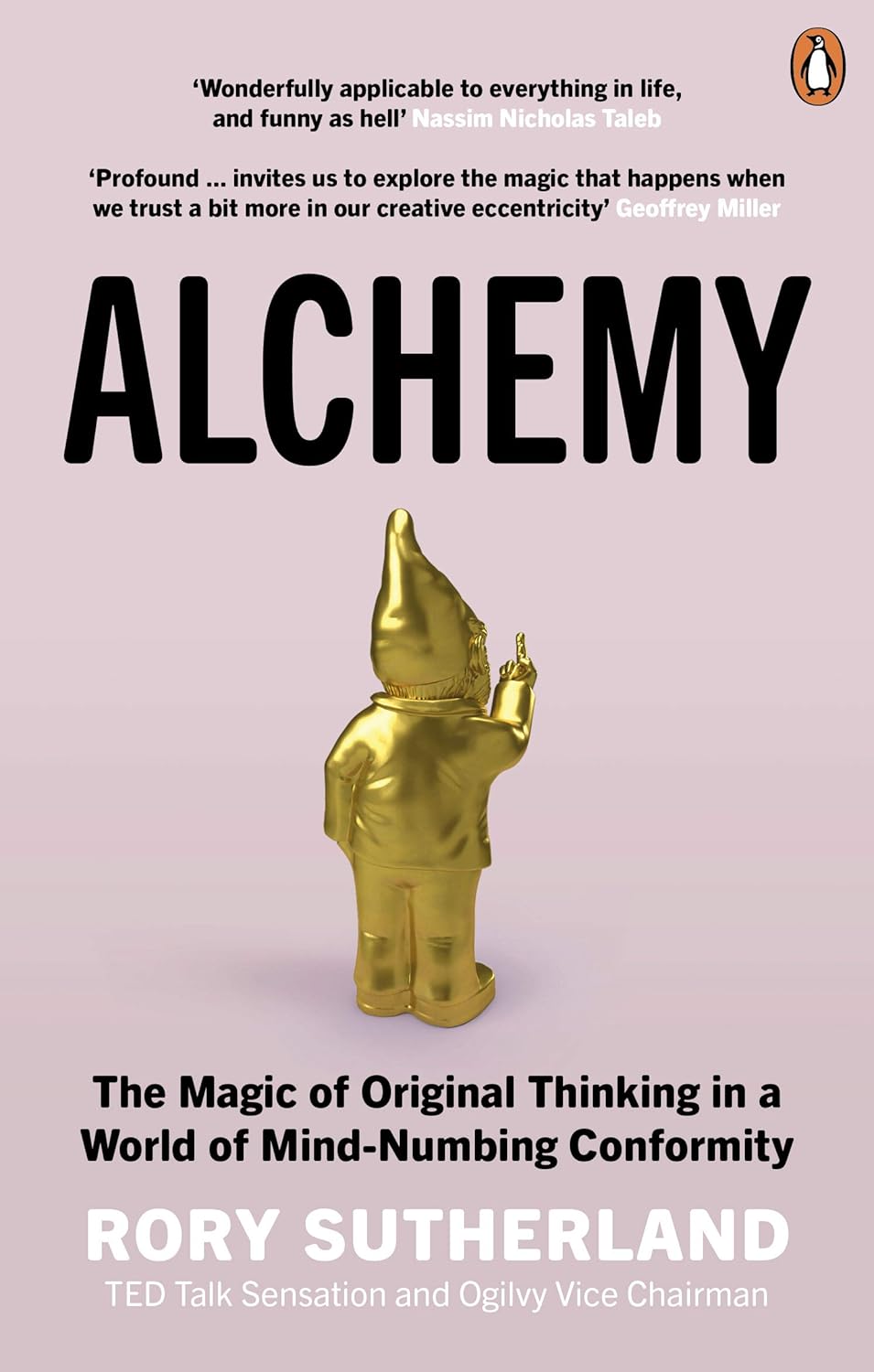
Sam mentions Rory Sutherland's book, Alchemy, during the podcast. If you'd like to read this book, click the link in the button below.
Click the button below to discover more about the Accountants Growth Academy.
Your Firm’s Future – by Douglas Aitken and Paul Shrimpling of Remarkable Practice


In a world of constant change, uncertainty, and increasing client expectations, one thing separates ambitious firms from the rest: strategic health.
In our book, Your Firm’s Future, we share a practical framework built around 8 essential questions that will help you assess and build your firm's strategic health.
Why does strategic health matter so much? Because when your firm is strategically healthy, it benefits your team, your clients, in fact, everyone connected with your firm.
Strategic health isn’t just an internal metric. It delivers a better outcome for everyone connected to your firm.
Click the button below to take the strategic health of your firm seriously by completing our Strategic Health Diagnostic
or
click the button below that to buy the book.
Remarkable Practice Client Manager Programme
You secure your firm’s future growth and profitability when your clients are loyal, recommend you more, buy additional services and are open to regular price increases.
And what drives all of that?
Not just technical quality. Not just deadlines met.
It’s the behaviour and mindset of your client managers.
When your client managers improve how they engage and care for clients, your firm’s results improve.
So the question is: Could you be doing more to build your client managers’ skills and mindset?
That’s exactly what our Client Manager Programme is designed to do.
It helps client managers:
- Build deeper client relationships
- Deliver value beyond the numbers
- Handle pricing conversations with confidence
- Spot and act on opportunities for additional services
Great client care is no longer a soft skill. It is a strategic advantage.
Click the button below to read more about our Remarkable Client Manager Programme and, if you want to discuss it further, please get in touch via the 'chat with us now' button on the website. You'll speak to a real person, not a bot!