
How do you prepare your firm to use Artificial Intelligence – AI? What problems are you actually trying to solve? In this podcast with Hugh O'Neill of FloQast, Hugh lifts the lid on what it's like to work in an accounting firm that's using AI. He also tells us what isn't changing, which I found really interesting. We cover a lot of ground in the space of around 40 minutes, so please join Hugh and I on this podcast and scroll down the podcast’s episode page for the contact information for Hugh and for the additional, downloadable resources mentioned in the podcast. |
The Solution:
I think the speed of change is really taken that. So there was a keynote at Gartner where they were talking about the advent of technology, and it talked about the railways, and the analogy they used was that the railways came along, and then people used them, and they made sense.
And that’s great, but the world heard about ChatGPT at the end of 2022, and already people are saying Claude has replaced it. So I think there's just so much speed and so much hype.
I also think how we consume the news has changed dramatically as well; everything is expected immediately, it's so instantaneous and fast and now, and I actually think one of the challenges people have with figuring out AI is: what's the problem I'm trying to solve?
Remove the word AI for a second and just say: can technology help me solve this problem?
-
SHOW NOTES
-
TRANSCRIPT
-
CHAPTER MARKERS
SHOW NOTES




Paul Shrimpling 0:05
Welcome to the Humanize the Numbers podcast series. Leaders, managers, and owners of ambitious accounting firms sharing insights, successes, and issues that will challenge you and connect you and your firm to the ways and means of transforming your firm's results.
Hugh O'Neill 0:21
I think it's the speed of change is really what's what's what's taken that. So there was a there was a keynote at Gartner where they were talking about you know the advent of technology and it talked about the railways and the analogy they use is the railways came along and then people used them and they made sense. But it was like that's that's great and all, but you know, everybody the world heard about Chat GPT the end of 2022, and already people are saying, Oh well, Claude has replaced it. So I think there's just so much speed and so much hype. I also think how we consume the news has also changed dramatically as well. So everything is expected, it's so instantaneous and it's so fast and it's so now. And and I actually think one of the challenges people have with figuring out AI is well, what's the problem I'm trying to solve? Remove the word AI for a second and just say, can technology help me solve this problem?
Doug Aitken 1:09
If I were to say to you that using artificial intelligence was a bit like opening Pandora's box, how would you react to that? In this podcast with Hugh O'Neill of Flowcast, you'll hear how Hugh's views on the profession and how they can use AI is impacting his business right now. Let's go to that podcast.
Hugh O'Neill 1:31
Hi, my name is Hugh O'Neill. Um I currently work as the accountant in residence in the RD department of Flowcast. I've had about 20 years' experience in accountancy from being an auditor, and now I work for a technology company, and my job is to help shape the vision in the roadmap where we take AI and accountancy over the next few years.
Doug Aitken 1:47
Fab. Um, thank you, Hugh. Great to have you on the podcast. Thanks so much for giving up your time. Um, if I heard you earlier, you're at a Gartner conference today, is that right?
Hugh O'Neill 1:57
Yeah, I'm at the Gartner uh CFO Symposium uh in London. One of the uh things about my job title, the Accountant in Residence, it kind of sounds like a stand-up comedian in residency, and it's the fourth year I'm back at Gartner. Um so yeah, looking forward to it today. And I think the best thing I've seen as it's evolved is we're starting to see people who we met you know two or three years ago now come back as customers. So yeah, it's it's a really, really exciting session.
Doug Aitken 2:21
Good stuff, good. And accountant in residence, yeah, I did notice that and it didn't make me chuckle. So just tell us what that actually includes.
Hugh O'Neill 2:32
Yeah, no, it it it is, it's a it's a it's a new job, and I I think just uh it it makes sense when you understand a little bit about the company I am. So Flowcast is a is a technology company. We've been working with accountants, and the company's been around for I think 13 years at this stage, but two of the founders are CPAs, and um I've worked, I built out the solutions consulting team. Uh so I've been on loads of customer conversations, and the leadership in the product team uh said to me, Would I be interested in this role? So, what this is around is really helping shape um the vision of where we are. And I think it's really it's not very common that you have subject matter experts so embedded. Uh so I'm learning coding and details and how it all fits together, but fundamentally, uh, my job is to represent the voice of the customer within how we design the product. So it's it's really you know, it's a progressive role, and and we see a lot of these as well. We work with a lot of private equity companies, so this idea of you know operating partners and subject matter experts who can take that knowledge and then try and help and leverage others. So, yeah, it's it's been a really exciting development and one I'm really
Humanise The Numbers Through Story
Hugh O'Neill 3:34
enjoying.
Doug Aitken 3:34
Yeah, fab, good stuff. Um, Hugh, one of the questions we uh always ask our guests is around our core purpose, humanize the numbers. Um, I'm just interested in your take on that as a as a starter for 10. Um, what do you get from that phrase and um you know what does it mean to you?
Hugh O'Neill 3:55
Yeah, this is uh it it's a great it's a great prompt. And the way I'd sum this up is you know, what's the point of the numbers if there isn't any humans to interpret them? It's a lot of data, it's a lot of noise. And one of the lessons I learned early on in my career, so I started out as an auditor with KPMG, and I remember one of uh a director at a company I I moved into, she was like, you know, it isn't about whether it's right or wrong. You can be right or wrong, but it's how you deal with people. So when you say humanize the numbers, we've a lot of information, but my job is fundamentally to track what's going on and help inform the business to make decisions as an accountant. So, you know, what's the outcome? What's the detail? Because, you know, without the humans to interpret it or without a point of it, it's just a lot of you know, numbers and information that doesn't really mean that much to people. And I think that's that's one of the things as a profession. People think accountants are very, you know, straight-laced or factual people, but you know, we're storytellers ultimately. We're just telling a story of how the business is performed. If and if we're not doing that, we're not really doing what we're supposed to do.
Doug Aitken 4:56
Yeah, I love that. Um, storytellers. It's it's funny. I'm reminded of a story. Um we we have a group of accountants that we work with and get them together every so often. And one accountant told a story about um very badly about how he'd helped a client just move from annual accounts to quarterly with a bit of forecasting and a bit of accountability thrown in. So he was focusing on the cross-sales part. As it happened, um, one of our team uh came to us at the team meeting the following week and said um I had a brilliant weekend with my brother. Um saw him for the first time in ages. He's been running this garage business for Young's, never has weekends off because he's so wrapped up in the business. And um someone asked him, uh asked Sally, Well what had changed. Um and he said, uh I just started meeting with my accountant quarterly instead of once a year, and we're both talking about the same person. So you saw it from you saw it, you heard it from the accountant side. I cross-sold some product and you heard it from the um the the concerned sister side who was full of emotion saying, I've got my brother back.
Hugh O'Neill 6:12
Yeah.
Doug Aitken 6:13
And so the storyteller part of it is really quite interesting. It it just makes me um think of that as a skill that a lot of accountants don't necessarily have and yet have the capability to deliver it. Would you would that be a fair summation?
Hugh O'Neill 6:30
Yeah, I I I think it is, and it's I it it is a skill, and it's you know, that softer skills around it is quite key because you know, I I learned a lot from you know, when you work in the big four like I did, you know, you didn't really need some of those soft skills. I go around to somebody and say, Doug, you produce a piece of numbers, and I'd come around to you and say, Well, yeah, I don't I don't agree with you. And if you don't agree with me, then I don't really care because there's an accounting standard, and I'll get a KPMG partner to tell you that it's right anyway. So, you know, you you didn't need to develop that soft skill, whereas really when you get out into the real world, it's it's how do you how do you you know convince people and what's the story behind this? And a lot of it comes back to you know credibility and trust. But you know, I I remember I've been in many kind of meetings where I was presenting stuff, and it'd be sitting there going, Oh, here's the profit and loss, and here's the balance sheet, and here's the cash flow, and you put it in front of somebody, and you and I remember I had one guy in my career, and he's like, Okay, so he he he'd take the pack as red and he just goes, So how much cash do I have in the bank? It's like okay, well, there's a story behind this, like what's going on, or you know, what should we do here? And he he caught me on it and he said, No, are you giving me a textbook answer? Are you telling me what I actually need to do? And I think there's so much information and data and process that accountants do that you kind of have to stop and realize, no, there's there's like there's a value in this, and even if you have the right information but you don't communicate it very effectively, a lot of that can get lost. And if you're not providing value and insight, then it's that that's a that's a key part of the job, and in my opinion.
Doug Aitken 7:58
Yeah, absolutely.
Doug Aitken 8:00
Um I mean you you made me think about AI uh almost right at the start, Hugh, when we started talking. Uh I guess it was when you gave your interpretation of our core purpose, humanize the numbers. Um, because it felt very much like we we could have cut the podcast down to that chunk almost where it said, you know, you've got all the numbers, you've got the data, but you need a human to interpret it. Or it was words to that effect. Do you want to elaborate a little bit on that, um, Hugh? Because especially in in light of this AI world that we're now um swamping through, um, you know, what what does that actually mean?
Hugh O'Neill 8:38
Yeah, and I I I I think it's it's really interesting, and I think everybody's at this cusp of we've realized this thing is here and everybody's talking about it, but people are struggling to think why. So, you know, I I was I was doing some um I was reading a book about AI recently, and it told me that, which shocked me a bit. It's like, well, AI has actually been around for 70 years. So on the 18th of June 1956, a bunch of academics at Dartmouth College got together and they said we should figure out this artificial intelligence thing. So, yes, ChatGPT came along a while ago, but people have been doing this for ages and they've been trying to figure this out. It's you know, AI was Gary Kasparov losing to Deep Blue in chess, or there's robotics and details and everything embedded in what we do every day. There's robots around us that we don't even realize. So people driving with an automatic gearbox instead of manual gearbox, like you're trusting just something that you shouldn't really be doing to a machine. So when it comes to accountancy, everybody's a bit like, oh, you know, it's tricky, or I don't. There's a lot of trust and details, but fundamentally, if it helps you get to something quicker, but you still overview and interpret it at the end, I think that's the skill. So it's it's a challenge that people have, but I think you know, accountancy has been around for a lot longer than computers have been around for. Like it traces back to Mesopotamia in 5000 BC. So, like, you know, this is just another stage in the evolution. We went to the cloud, we went to ERP, we went to computers. I think it's a phase that accountancy is just learning how to deal with, but it's just a change that people are the pace of change is what people are struggling with, I think.
Doug Aitken 11:05
Yeah, I was going to ask actually why this is different, because we've heard so many times about you know um compliance is dead, advisory is the next thing. That was you know, for a few years at Kintex, that was the the the the uh flow, and then latterly it has been AI, AI, and it's it does spread panic in the accountancy profession. Um and yet you know, and yet we're still here. What if if there's anything different about where we are right now, Hugh, compared to other um initiatives, trends, if you want to call it that, what would you how would you sum that up? What is the the difference, if any, between what's happened before and now?
Hugh O'Neill 11:49
Yeah, I I think it's the speed of change is really what's what's what's taking that. So um, you know, we were there was a there was a keynote at Gartner where they were talking about you know the the advent of technology and it talked about the railways and the the analogy they use was the railways and you know the railways came along and then people used them and they made sense, but it was like that's that's great and all, but you know, everybody the world heard about Chat GPT the end of 2022, and already people are saying, Oh, well, Claude has replaced it. So I think there's just so much speed and so much hype. I also think how we consume the news has also changed dramatically as well. So everything is expected, it's so instantaneous and it's so fast and it's so now. And and I actually think one of the challenges people have with figuring out AI is is well, what's the problem I'm trying to solve? Yeah, remove the word AI for a second and just say, can technology help me solve this problem?
Doug Aitken 12:41
Yeah.
Hugh O'Neill 12:41
So if you put something into an ERP with where an ERP could pick up a bank feed from your bank and try to partially allocate it, and then you do the last 10% of it because it's a little bit tricky, that's technology solving a problem. So it's it's a different type of technology that's solving a problem, but I think the thing is the job hasn't changed, it's just how we track and manage around that. And I think I think it's just a lot of listen, there's some great sales salesmanship in these AI companies, and the valuations are amazing, but it's it's really taking a step back, which is the whole point of accountancy and figuring out, well, what am I trying to solve and can this technology help me solve it? Because it can help solve some things, but can't solve everything, so it's just using it in the right way.
Doug Aitken 13:26
Please forgive this interruption to the podcast. You've heard Hugh O'Neill talking about the importance of adding value to clients and also figuring out what problem is it that we're trying to solve. You'll find a link in the show notes to a business breakthrough that will tell you more about that very subject. Let's get back to the podcast. Yeah. I love that phraseology. What's the problem I'm trying to solve? Um it's a great place to start actually addressing what's going on and you know what do we need to change versus what would we like to adopt and and so on. Yeah. Tell us more about um Flowcast, Hugh. Uh I I I've done a little bit of research and a little bit of digging.
Flowcast And Preparers Become Reviewers
Doug Aitken 14:09
I love the phrase uh elevate preparers to reviewers. That really stuck with me um in some of the earlier stuff. But yeah, tell us in your words, uh, what's Flowcast and what's its journey been so far?
Hugh O'Neill 14:23
Yeah, it's a great point. The guy who uh the guy who coined the phrase elevate preparers to reviewers is is would be at the conference, so we'd be very happy to give a shout-out for that one. Um it's so it's a it's it's a really interesting story. So you know, Flowcast started off as I was saying about it's about 13 years ago. So it was headquartered in in LA. And the two of the founders who were still with the business were accountants just looking for a different way to do things. Um and so the the product started out really around managing the clothes, making that more effective, putting structure, detail, organization around what's a pretty chaotic and messy process, and then evolved to automate that. And then, as you know, we've been around and we've got a huge amount of investment, but we're really at the forefront of AI and figuring out hey how AI needs to be used and to be used going forward. So I came across a company. Um, so I've been at the company for five years. I came across about five and a half, six years ago because I was an accountant struggling to do the job. So I was uh in a socks listed company. Uh I had four Lever Arch files to track all my processes. I was trying to figure out what was going on. I had a team of about 10 or 12 people. Where is everybody? Can we get into the office? Can we organize? Can we do this? Can we do that? And accountancy is a tough sport, Doug. Um, you know, if Rory McElroy hits 95% of the greens at Augusta, he usually has a pretty good score if you get 95% accuracy in your audit. Not a great, not a great outcome. So I spent a huge amount of time struggling with that organization, and then we came across this product, and immediately it was like, okay, I can understand where the team is, what they're doing. So what are the details? Can we pull in a trial balance? Can we agree the work papers? Can I go from seeing that, you know, I my job as really as a financial controller was to figure out of the 95% of reconciliations that are done, what are the five that aren't done? And the system showed me that. And then as as the company's gone on and evolved, you know, AI is playing a big part of that, like you said, trying to elevate the preparer into the reviewer. So, how do we take the work that the accountant is doing, get AI to do some of the heavy lifting? But then if if you're the reviewer in the first place, then your manager is seeing a more elevated story afterwards. So that elevation is is key. And if you wouldn't mind me indulging in a story about I wasn't the most successful auditor in the world, Doug. Um, but I got one audit right, I got my last audit right because I had already got my bags packed and I was I was mentally checked out and I was moving off to London. And I remember it was so it was the same partner. When the partner taught me when I was like I was very green and I was six months in, he sat down and I'll I'll show my age here, it's like the there's dog ears on the paper, this doesn't work and that doesn't work, and he couldn't figure out what was going on. And then the last job I ever did for the same guy three and a half years later, I kind of gave him a complete file and he sat there and he flicked through it. And we were working, I was working in Dublin, so we had a lot of American tech companies, and he goes to me, How do you know that that intercompany recharge percentage is correct? I just kind of stopped and said, You've never asked me a question like that in three and a half years. But the point of it was is he'd a clean audit file, he'd structured he detailed information, and he sat back and he goes, actually, like, should that be this percentage or should that be that percentage? And I think the elevation of preparers to reviewers comes back to that. I'm like, if you can use technology to get there, if I was getting to that question, then he was getting to a higher level of questioning. Yeah, and I think that's what people want to get to. We get so lost in the weeds of I have to do this and I have to figure out and I need to get home and I need to beat the traffic, and the kids need to be fed, and the dog needs to be walking, this, this, and the other. Like people struggle, and if you can just take that step back in that breathing space to go, actually that doesn't smell right. I think that's that's what we're trying to do. So that's what we want to do and elevate accountants to really add more value.
Doug Aitken 18:12
Yeah, yeah. Um in terms of you know, this shift that we're seeing right now, Hugh, and I'm thinking
Training The Next Generation Of Accountants
Doug Aitken 18:20
again about the phrase preparers to reviewers. Um what do you think are the longer term implications for accountancy? You know, if that was to happen, so we've got a whole load of grunt work at relatively low level now being done by AI. We've got preparers um almost as a level that might be skipped, and we're pretty much on to reviewers. So what's the what are the implications for the profession, I guess, which is a very wide question, I know, but you can take whatever angle you want, just in terms of how that plays out over time.
Hugh O'Neill 18:56
Yeah, it's I think it comes back to so I I think there's there's two things, um, and I'm gonna take two two tracks on this. One, I want to talk a little bit about how people in the profession change and adapt. But I think so there's there's a whole conversation we can have about that, um, of being open-minded and changing. But I think one of the real struggles, even before we get to that, is how we educate the next generation. So, you know, I learned by doing. I again shown my age, my first audit, I was sent down the at the end of the road in Dublin. I was given a list of invoices, and they pointed me to a wall of Lever Arch files, and they said, Go check that they're all right. So, like I had to go through and I'd the process and I'd physical stuff, and I could learn by doing, and you know, all this kind of stuff. And it took time, but I assimilated what I was doing as I was doing. If I can just click a button and it goes, right, well, there's the answer. It's like, okay, but what's the process? And I think we need to start teaching the next generation about the architecture and and the process as much as the problem. So you won't like people learn by when I worked with great accountants who started off keen invoices and AP, and then they go through and then they become a management accountant, and then get like you can work your way up, but I think that that skill set of really understanding the the broader problem, not just the individual transactions, is where we need to teach people because the one of the things that the profession is is struggling with is a legacy of just incomplete data. So now you need to figure out where's the data is, how does this connect, how does this connect to that, where does it link through, and what's that? So I remember you know, when when I was in that the last job I was at an industry, you know, we used to just pass stuff over the desk to each other because we were in an office. So we never built the technology to plug the gap of this because I could just like if somebody would hand me a batch of paper and I'd look at it and yeah, grant this, that, and the other, hand it back. And then we got sent home and I was like, how do we do that? And then you think of technology and how do you do that? And it it it a problem that you can solve in five minutes by just having a conversation with somebody, you need to figure out a different way to do stuff. And I think how we've traditionally done accountancy is changing, but it's it's you know, how do how do we get that broader sense of that's that's where I think the education piece is going to be interesting, and we need to reskill people and how to prompt, how to understand systems, how to understand data, how to understand architecture, because the people who understand that don't understand accountancy, and that's where accountants are so critically needed is to add that financial layer to the data.
Doug Aitken 21:27
So so what implication is there for recruitment then for accountant? What what type of roles will we be recruiting for in future that we might not be recruiting for right now?
Hugh O'Neill 21:39
Yeah, uh I think um data scientists and understanding the volume of data. Um I'm seeing people appearing uh in conversations. It's like who are you? It's like I'm the data guy. It's like you're a dude. But uh I think that's critical because the volume of the volume of transactions and details that we've built around a process has just got so much more complicated over the last 20 years that I don't think we even realise how complicated it's got. So I think understanding that data is key. You know, I I I tell a story, if you went if you went into buy something, um you went into buy something in John Lewis, Doug, you went in and said, I want to buy a new suitcase. So I bought a suitcase when we got married uh a while ago, it's about 10 years ago. But like you walked into John Lewis and there's there was either a suitcase or there wasn't a suitcase, and you figured it out and that was it. Whereas now you walk into John Lewis and to buy the same suitcase, they'll offer you Clarna, they'll offer you a store card, they'll offer you this, they'll realize actually the suitcases are centrally held in Mental Keynes, so I'm going to dispatch that suitcase to your house. So actually, I'm just going to take an order today on iPad and do that. It's like at the end of the day, I get a suitcase, but there's about 15 ways to get the suitcase to me now, and that explosion is exponential. So I think what people are what people Are struggling with is the amount of data. So I do think data science, data structure, understanding the right type of data and making it flow through the different systems you have is going to be key. So I think that data, data and systems element is going to be key. What's an SFTP connection? What's an API? What's data at rest, what's security, what's all this kind of stuff? Because that's that's what they're dealing with today. Um so we need to get them ready for that one.
Doug Aitken 23:25
Yeah, yeah, absolutely. Um what's the and what are the opportunities around this? So far we've been maybe a little bit negative
Client Upside And Rethinking Month End
Doug Aitken 23:34
in terms of oh gosh, this is changing how we're going to deal with it. But what's the upside, especially to the client, Hugh?
Hugh O'Neill 23:42
Yeah. I think I think the upside is once you understand the technology and what you're you're doing with it, there is a huge amount of upside to do stuff that we haven't been able to do before. And I think that's one of the things, you know, Doug, if we think about that, what you're saying about you know, preparers to reviewers, you can get a lot more um information process quicker to add more insights, and I think I think that's what it is. Is you everybody thinks you know it's gonna be super simple. I'm gonna tell the computer to do it, and then I'm gonna have a lot of free time, and I can play golf at the weekends and all that kind of stuff. But there is a process of changing it, but I do think the ability to parse through stuff, find errors that weren't there. Um, and one of the things I really like about this as well is it's just like it's it's a good self-review process, just taking a step back from all the systems. But like I I talk to myself now, and you can record myself, I can put it in a transcript, and I can give it to LLM, and that'll play back something to me and go, Oh, I don't, I'm not sure about that. You know, we see people recording um meetings. So if I want to before I'd have to sit there and say, Oh, I need to get a process ready for an order, I need to document this. You can just talk to it now. It'll take the ideas, assimilate it, put some sense and logic on it. You may misremember things, but you're like, actually, that's quite good. And a colleague of mine, she we were at a conference the other week and she was walking around talking to her phone. I was like, Who's she having a chat to? And she's like, It's a dictaphone. I was like, Well, and she just goes, Yeah, because we have Gemini internally. So she just turned to the Gemini app and it was like a doctor, uh, like a consultant with a dictaphone. So she just hit the button, she went around, and then all of a sudden, when we came back a week later after the conference, she was like, I remember that conversation exactly. So, like the ability to see all this information, track it a lot quicker, do stuff that we couldn't do before is still there, but it's it's uh it's almost like Pandora's box of we can do everything, and if you're trying to do everything, you can do nothing. So I think just having that clarity. But there's a huge amount of upside with this that I think we're still trying to understand and trying to shape.
Doug Aitken 25:48
Yeah, definitely. Um I like the Pandora's box analogy too. I often think about it from the client angle that you know I I I've had people on this podcast saying things like, Well, clients you know, clients don't want that type of information. But my counter to that is often, well, clients don't know what they don't know. Yeah. So if we teach them what they don't know, uh a certain portion, and I'm not sure what portion, do actually want to know more. They they get their interest peaked and think, yeah, tell me more about that. So the data interpretation part that you were talking about earlier becomes even more important.
Hugh O'Neill 26:29
Absolutely. And to to take that thought on a bit as well, like if you go on Amazon and Amazon have a sale on something, do you think that the sales managers in Amazon are waiting until the 12th day of the following month to find out what the sales happened? We had we yeah, we ran a promotion on the 5th. Yeah, grand. Uh yeah, I'll tell you about it on the 10th of the following month. No. Like, and and like the month end exists because it used to take a long time to do stuff because the systems aren't very good, people don't invest in accounting. There's a lot of spreadsheets. One of the things I've I've uh I'm I'm coming around to with AI is I'm very used to the mentality of I work with a limited tool set of what I have and I solve my way out of a problem. And I'm sitting there with these guys like, yeah, well, what what what do we want to do next? I'm sitting there going, well, this is what I can do today. And I'm I'm so just I've 20 years of attuned of solving the problem with my spreadsheet that it's like, no, we need to take a step back. So, like the month end, I I I remember talking to a customer about sales analysis, and you know, if a sales analysis report takes two or three days to do, you only do it once a month because it's not worth the effort to do it. If a machine can do that in 30 minutes and you can review it, who wouldn't want that every week? Yeah, you know, and and and I think that's where the challenge is. I think people I I love what you're saying there, people know what they know, but the capability to actually turn around something that took six, eight, ten hours to do as a result of bad integrations and a process and a spreadsheet. And I think one of the other things as well is is people spend a lot of time in a process that just evolves. So, like processes, yeah. Remember, I was chatting to a guy, he was working at a company and they were listed, but they they were a carve out, so they started from scratch. But like I've worked in businesses where I was like it was a material cause in which we were spending on office lunches. So like I have a spreadsheet for the office lunches, and then all of a sudden I become a more elaborate spreadsheet, and then I put all the other overheads into it, and all of a sudden there's a three-day process that is a concoction of like all this stuff that's appeared in my and then somebody will say to me in the business triples in size, like, are we still like are we still counting how much we're spending on pizzas? Like it's just yeah, like just do you want to do an allocation journal for the pizzas, or do you just want to say roughly we bought pizza for the office and we've had a few beers and everybody's had a good week? So a lot of process and and things, I think people need to rethink what they do because the month end takes a long time because it grows arms, and it's like uh I don't know if you've seen Harry Potter like the Weasley's house. You start off with a little spreadsheet, and then you add this tab, and then you add that tab, and then you add this, the other, and this, and that the other and it's it it's just too complicated. But that it's hard to change, and I think that's that's a challenge people have.
Doug Aitken 29:12
Yeah. What what do you see happening from the client side? Um the reason I'm asking, we've
Positioning Accountants When Clients Use AI
Doug Aitken 29:19
had a couple of announcements in the industry recently about uh software providers having a press this button to solve your tax computation and whatnot. Um and and that caused uh a strumash, as uh I don't know if that translates to Irish well, but it's a good Scottish one. Yeah, so it caused a fair bit of excitement in the profession, but it's been coming for a long time, and there will be clients who press that button too. So, what's the implication for accountants and how do they position themselves the right way?
Hugh O'Neill 29:54
Yeah, I and I think this comes back to something I touched on earlier. I think the change is is the hardest thing, and it's it's what what accountants need to do is they need like what's gone before isn't going to be good enough for what we do, and sometimes that's uncomfortable. But if somebody can sit down who has a non-finance background and they've an an access to a professional cloud account and they can say, create me a forecast based on this data, they could do a pretty good job. Yes, it won't be perfect, but your job is to figure out like if you can say, Well, I can create that spreadsheet as well, they're like, Yeah, well, that can do it over there. What are you gonna do that's better for that? Yeah, so it's the the change and letting go of that stuff is gonna be hard, but I think what accountants need to do is you need to firstly educate yourself on what this stuff is because it's it's pretty wild what it can do now, but and it's hard, and it's it's it's just Doug, it's core human nature of resistance to change and fear. But I think change is just inevitable, like humanity has got to the point where it has, and I think what is hard for people is sitting there and saying, you know, what I've done that's got me to this point. I now need to rethink and I need to relearn and I need to figure this out. And I think that kind of mindset is is hard, but I think that's really important because the people who embrace this technology and understand how to do this, like you said, can move through a preparer to a reviewer, can figure out problems, can do a lot more stuff than they can before. And I think that's just a challenge to people. I think one of the things that's that's really hard with this is that you know, there's gonna be people who need to learn new skills or do things differently. But I think that's that's part of the challenge. It's like I remember I was chatting to a guy, and it was a bit like you know, there's been huge technological advances in loads of different fields and areas. But if you look at the you know, an unemployment number broadly at a top-line basis 50 years ago, like unemployment in the UK hasn't really changed 50 years ago, but it's a hell of a lot of jobs I could tell you that happened in 1976 that don't happen today, people gradually change. And I think that that change is hard and it's scary, but you need to start somewhere and try and do that because I can I can tell you now, if I had access to an LLM, I worked in a team, one of one of my early jobs in London. There was myself and I had a finance assistant and another finance assistant quite easily today. I could have an ERP licence, I could have uh an access to Claude, and I could have done the job for three people to do that because I could have taught it how to allocate the cash and I could have tweaked that, and I could have taught it to this about the revenue, tweaked that, and I could have taught it to there's my report, and I want you to recreate that report for me. So it can do a lot more, but it's uh it's like we need to up-level our skills and figure out well, what are you adding in the room? If you're just adding up the numbers, that's great. But like any good boss who tell me is like, well, there's a report, and they go, Cool, what do I do with this? You need to learn the answer to well, what do I do with this information? That's where you're going to stand out.
Doug Aitken 32:59
Yeah, yeah. It's a really interesting point about the unemployment rate. I was going to ask you a specific question about that actually, because it reminded me of um not the employment rates for the last 200 years, and not that complex detail, but it made me think of um the amount of blacksmiths at the turn of the century when they when the car came along. Yeah. Um and I remember looking into it one point and the the figures were just as you've described 50 years ago, the the unemployment rate didn't change, which tells me that these smiths were re-employed elsewhere. And some remain, but maybe one, two percent of the number that were there a hundred years ago. So first of all, what did the other 99% do? They clearly went into other industries, but I I guess what I'm trying to get to is what's our equivalent of the blacksmith's work right now that won't be there five years from now.
Hugh O'Neill 33:58
Yeah, it's it it's it's a great point. I think some of the I think some of the brilliant spreadsheets people create and some of those brilliant analysis documents can be done for you. So there's people who are very good at spreadsheeting, very good at formulas, and very good at at that level of detail. Uh an LLM can do that. I think date there's been huge evolutions in in data input. And I think it's, you know, if you take something like OCR and reading invoices and invoice capture, the skill now is figuring out, oh, well, why did that one not work? It isn't, can you process them all as quickly? So I think that you know, we've seen that evolution of that data entry, that that detail, but it can it can do some it can do some of that base level entry work. And this is interesting because it comes back to the the question you asked earlier about the profession. Like we need to teach the kids who are coming out of university these higher level skills. I was chatting to a guy and he was saying, you know, his his brother did a computer science degree, and he's sitting there going, Well, I learned how to write Java code. I was like, Well, Claude can do that now. You know, like and it's it's you need to figure that out. So I I think I think some of that report generation, some of that detail, some of that upfront work. Um, I think the scourge of uh the accounting profession is journal entries and how many journal entries we have. And every journal entry is either a decision point that hasn't been automated or an integration that hasn't been built. When we figure out how to build these integrations and how to connect that and how to reduce some of that work, then the fun stuff starts of okay, I've got I've got people here and and what do I do with it? And I I was talking to a customer, it's a couple of months ago now, but he was saying actually, so he he works in a technology company in Denmark. Uh, he had close to 50 million transactions going through the ledger. Uh, he had half half a person in his team was a bookkeeper, like a traditional bookkeeper because everybody else was you know, the system was doing this and he built all the integrations. And I said, Okay, so what about the accounting team? He goes, Oh no, no, it's actually grown. So what he has now is he's 10 MIDI controllers running around. So rather than like I remember when I started my first job in London, I was building the profit and loss reports to go and talk to the business about. He now presses a button, he gets the profit and loss reports, and now the guy sit there for two days and go, Why did you do this? Why'd you do that? What's going on here? What promotion are you running? Where's the connection? Okay, how how do you want to think about that? Have you thought about this? Have you thought about that? Like that general business sense that an accountant can bring, I think that's what we want to get to. But to your point, I think a lot of that entry-level base person, and to be honest, if somebody's an absolute wizard with a spreadsheet, Claude's very good with an Excel spreadsheet as well. So you know, you know, just just being that guy in the corner who can do spreadsheets. Um you know, you need to figure out what and why is coming next.
Doug Aitken 36:56
Yeah. I I also read a really interesting story. I think it was done by a consultant who'd been working with a solicitor,
Confidently Wrong AI And Auditability
Doug Aitken 37:03
and the gist of it was that the a client of the solicitor had approached him to say, Look, I need help with a big litigation problem, massive issue. Um so the solicitor had quoted traditionally and said, Look, 50 grand retainer for a kickoff, that's before we get into it. So through desperation, the client engaged Claude and put the data in, got a whole screed of information out, to the point where it told it told the client what to say during negotiations, and long story short, he solved it without the solicitor's input at all. And the consultant was actually posing a great question, which is where should the solicitor have positioned themselves? Now, my take on it was first of all, admitting to the client, yep, you you've got AI, but let's work through it together. I'll help you input the right prompt, I'll give you the guardrails to apply, so that you know, and then I'll help you interpret what comes out of it. So his 50 grand um engagement wouldn't would never have been 50 grand, but it might have been five grand, and he'd have got through 20 of those in the time that might have taken the 50 grand done without Claude.
Hugh O'Neill 38:22
Is is that a fair that's summary do you think of? Yeah, yeah. That's that that is absolutely it. And it's about I I love the way you say insert yourself to do that because that's coming back to you know what my role is. I think that's that's my role within Flowcast to help interpret that. So I can get I can go to Claude as a non-accountant and say, right, give me the detail of IFRS 16 and how you should calculate a lease. And then I'll sit there and I go, Well, actually, in practice, would you do that? Would you capitalise all of them? What's the materiality level? How do we capture this? How do we not capture this? So Claude can give you an answer around that, and Claude can give you a good framework, but it won't do something else. And there's a really interesting development as well in the US. Um, not to bring back my delightful time with SOCS being a SOX accountant, but the COSO framework around internal controls was put in place about you know, about 10-15 years before Enron happened, and COSO, who's an industry body in the States, have come out and said, Well, this is what we think you should be thinking about for AI. And you know, history repeats itself. Um, so there will be something that goes wrong here, but one of the things my favorites, my favorite snippet in that is it goes, uh, there's a risk that AI can be confidently wrong. And Doug, if you've met solicitors or accountants or human beings, there's a lot of people who are very confidently wrong all the time. Absolutely. So back to so back to your solicitor example, one of the great skills is going to be, okay, Claud has said that, but does that pass a smell test?
Doug Aitken 39:55
Yeah.
Hugh O'Neill 39:55
And it was funny, I was I was I was trying to, I was, I was having a conversation with my Claude Terminal the other day, just going, uh, could you just you seem very confident in that? Like, do you want to double check your homework? Oh yeah, he was a bit confident in that. I was like, okay. And then I sat down and I spent a couple of hours and I put a skill into it of like, well, if if you're in if you're in doubt, ask me. Don't make assumptions, and I want you to think like a CFO. And he goes, What does the CFO think about? Well, I want to think about this, this, this, this, this. So, in that example there, the solicitor, the accountant, or something else will take what Claude can do and enhance it and add that real world experience to get us from that, you know, 80% to 100%. Because there is a risk that you could stand up in court and Claude said something that, you know, with a with a poor prompt, Claude, Claude is programmed to give you an answer, so it will give you an answer. But you need to understand is that there and and when it comes back to accountancy, like that auditability is is so key. I cannot stand in front of my boss, I cannot stand in front of a board, I cannot stand in front of an auditor and say, Oh, sorry about Claude said that. No, sorry, Hugh, you're on the hook. You put the paper in front of us. I don't care, I don't care who created it. That's like me saying, Oh, well, you know, Sean and Account got that wrong. The Debbie got the number one wrong. Like, yeah, you can't you can't sit there and say that with any credibility. It's like, well, you manage the team, you need to figure that out. This is just another team member you need to figure out how to manage.
Doug Aitken 41:19
Yeah, absolutely right. I I remember having an argument with mine recently about how many times Liverpool had won the Champions League. It was it was trying to tell me the the wrong number, so I indignantly asked it to check again and it got there. Yeah. Yeah, that was um it's quite interesting, isn't it? I liked um what you said there about correcting it, uh, but also teaching it. Don't guess, don't make assumptions, blah blah blah. Yeah.
Hugh O'Neill 41:44
Yeah.
Doug Aitken 41:44
Interesting. And I loved your point. Sorry, carry on.
Hugh O'Neill 41:49
No, I was just saying it tried to sell me something the other day as well. I was I was I was doing some research. I was doing I was doing some research. I was like, tell me this different options, tell me this, tell me that. And I goes, okay, go off and use this voucher code. And I put in the voucher code and said, sorry, that feature code doesn't work. He goes, Ah, I thought it would. It was a good combination of letters, it usually works. I was like, Can you tell me I get 20% off this? And I was like, I can't. So anyway. How many Champions Leagues? How many Champions Leagues did it say, Liverpool won?
Doug Aitken 42:16
Um, well, it it missed out two, actually. Yeah. Which I found just incredible. I thought, how how on earth? Maybe it missed the most recent one. Well, it's not recent, even six years ago now, seven years ago, but um for it to miss two, I thought was just bizarre. So I don't know where it got his information from.
Hugh O'Neill 42:35
I'm I'm a Spurs fan, Doug, so maybe somebody put a prompt in that uh that one, that that one. Maybe that but maybe that but somebody somebody programmed it in the background. But that's exactly it. It's is yeah, and accountancy trust but verify, trust but verify. That hasn't changed. Despite the technology, still trust but verify.
Doug Aitken 42:57
Yeah, you look okay as well if I've been a Spurs fan.
Hugh O'Neill 43:01
I've aged uh dramatically, and half these lines were too uh a few months ago. I I realized I had I had a sleepless night the other night, and I realized I was on I what was it? I I was on I finished up probably about half six, seven o'clock, then straight into this the stress of putting the kids to bed, and then I sat down and I watched Spurs against Leeds, and then I was sitting there at halftime at night wondering how how am I so stressed? I was like, no, this is actually adding to my stress levels.
Doug Aitken 43:28
Yeah.
Hugh O'Neill 43:29
Not taking away from it.
Doug Aitken 43:30
But yeah, it's uh I do have uh a brother in law who's avid Spurs, and um by about February I'd stopped teasing him because it became unfunny. It became deadly serious.
Hugh O'Neill 43:43
Oh it it wasn't. It was uh it was it was very, very, very unfunny. Um but yeah, it was uh I I we've uh we've a fantasy football uh league out on in the office, and my funnily enough, my performance dipped uh this year because around February March time I started avoiding all football-related news. Yeah, so somebody else somebody else won the money this year, but uh not for me.
Doug Aitken 44:07
Yeah, good stuff. So um back to Flowcast. Tell me about uh maybe if you've got a
Real Client Results With Flowcast
Doug Aitken 44:15
um client story or two of how they've actually gone and implemented Hugh and what difference it's made to them, you know, just bring it to life for the foot people listening.
Hugh O'Neill 44:26
Yeah, it's um it's so that we've we've lots of clients, we've about three and a half thousand clients. Uh the one that springs to mind for me um because they're here and I'm I met them, I met them at the event I am this morning. Uh but we work a lot with the uh the team at Jackie Rand Rover, and we were lucky enough I got them to come to uh our customer conference last year and tell their story. So fundamentally, um we help shine a light into um those processes and How do we structure the work? How do we reduce some of the work? How do we give them insights into see what they do? So that's that's a big customer that we work with. Um, I think another customer case study as well uh that we released uh recently was around Huel. Uh so they're a big brand in the UK and and they've done that. But we our marketing team did a video, and what I really liked about the video was it it talked about just the human impact and what was going on. So they were in a perpetual month-end cycle, we were always busy. Uh, this lady came over from being an auditor and was saying, Oh, well, you know, I was an auditor, I thought this month-end LARC was really easy, but actually, I'm doing it the whole time. So we really helped demystify that process for them, put some structure, put some automation around it, but take the pressure off the work. And fundamentally, that's that's what it's trying to do, is help accountants work more efficiently, work smarter. Um, but you know, we give visibility over the process, we automate the processes, we embed AI. But really, that I remember being at an event with a C a CE or CFO, and he said, still, after 40 years in accountancy, the checklist was the number one tool. What are we doing? Who's doing it? Is it done? Where is it done? Yes, I want to automate it, yes, I want to reduce it, but at the top, you want to understand that all the parts in the machine work correctly, and I think that's something we do really well.
Doug Aitken 46:13
Yeah, yeah. So, what does the future hold for Flowcast? What's the what's the five-year vision or um what whatever time frame
The Five Year Vision And Closing Advice
Doug Aitken 46:20
you're working to?
Hugh O'Neill 46:23
Yeah, it's a it's a great question. Um, I think there's there's two things we're really passionate about. Um, one of them is is AI and being at the forefront of that. Uh, I think the point you said about preparers to reviewers, but also empowering people to build, understand, and use the technology in a responsible way. So it's really around that. And then I think two, one of the things that our founder Mike and myself are very passionate about um is just about the evolution of the profession. I think it's it's how do we help accountants um do the job more efficiently, add the value, and do that. And I think it's really interesting that there's a lot of accounting, there's there's a huge amount of processes and there's a huge amount of companies, and there's a lot that we do, and a lot of accounting is a accounting is a wonderful field because no two spreadsheets are the same, no two finance departments are the same, no two businesses are the same. But really the challenge is how do we embrace technology to pay make people more efficient and to do that? Um, so understanding and empowering accountants, but really being at the forefront of the responsible and auditable use of AI, because I think that auditability is is going to be uh a rumbling topic um over the next while. And I I I await to see who's gonna be the the N run of the AI generation, but I'm afraid there's gonna be someone somewhere that's gonna restate that there's gonna be someone somewhere that restates a public set of financial figures because they put a model into an LLM incorrectly, and I just think we need to figure out and just not be that person.
Doug Aitken 47:52
Yeah, absolutely. So, in closing, you if if you were to give us a feel for what accounting is going to look like in the next few years and how positive or negative you feel about it, how would you sum up?
Hugh O'Neill 48:08
I'm I'm very positive and bullish on this. I think accountants are accountants of predata technology, we're problem solvers, we understand the business in a way, and we have a unique position by understanding the financial processes of a business. I think there's a coming challenge of who's going to lead this. Is it going to be IT? Is it going to be the business? But ultimately, everything a business does has to have a financial lens on it. So accountants need to step away from behind the spreadsheet and get out into the business and use that knowledge and common sense and details we have. I think just asking why is just a number one question. So I would I would I I would be advising any accountant come through, work on your soft skills. You need to have those communications, you need to have the ability to talk to people, you need to get out and just just talk and listen. I think that's critically important. And then two, you need to figure out what this technology is doing because you know there is things that we can do smarter and faster. And you know, if if if somebody from your business turns around and says, Well, actually, I've just created that forecast myself using this level of detail and these inputs, you know, and that's all you're adding to the conversation, you need to figure out what else you can add to the conversation. So it's it's a good challenge, but I think accountants and our and our um and our ability to to see and and piece the whole picture together is quite key. And I'll just leave you with one closing thought on this, Doug. I was chatting to um a customer and he was he was saying he tried to teach an IT guy to um to build a process around revenue. And IT goes, okay, and then you sit down and the the the accountant wrote up on the board, right? Well, we've got deferred revenue, we've got PL revenue, and the accountant and the IT guy goes, Yeah, uh revenue. Okay, and we started. And that's that's yeah, that's the problem. So if you can understand the systems and the data, and you can understand that process, then you're gonna be fine.
unknown 50:06
Yeah, yeah.
Doug Aitken 50:07
Brilliant. Um, Hugh, our time's come to an end, unfortunately, but um really, really enjoyed our conversation. It could have gone on for quite a bit longer, actually. I really enjoyed the chat. I'll let you go back to your uh seminar. Hopefully, it's um enjoyable this afternoon. And many thanks again for giving up your time, really appreciate it.
CHAPTER MARKERS
START TIME | CHAPTER TITLE |
|---|---|
0:00 | Introduction |
2:32 | What is an Accountant in Residence? |
3:34 | Humanising the Numbers through storytelling |
6:13 | Soft skills matter |
8:00 | AI versus the human |
12:05 | AI and the speed of change |
14:09 | FloQast - preparers to reviewers |
19:20 | Educating the next generation of accountants |
22:27 | What are the implications for the future recruitment of accountants |
24:34 | The positives for the client of the growth of AI & Tech |
27:29 | The value of real time data |
30:54 | Change is inevitable for accountants |
34:58 | What work will not be there in the future? |
38:03 | Using AI in the right way |
39:22 | |
45:07 | Real client results for FloQast |
47:20 | What does the future look like for FloQast? |
49:08 | What does the future look like for the accounting profession? |
Click the play button below and use the slider on the audio below to get quickly to the chapters in the podcast.
Resources relating to this podcast:
Click the button below to discover more about the Accountants Growth Academy.
Remarkable Practice Client Manager Programme
You secure your firm’s future growth and profitability when your clients are loyal, recommend you more, buy additional services and are open to regular price increases.
And what drives all of that?
Not just technical quality. Not just deadlines met.
It’s the behaviour and mindset of your client managers.
When your client managers improve how they engage and care for clients, your firm’s results improve.
So the question is: Could you be doing more to build your client managers’ skills and mindset?
That’s exactly what our Client Manager Programme is designed to do.
It helps client managers:
- Build deeper client relationships
- Deliver value beyond the numbers
- Handle pricing conversations with confidence
- Spot and act on opportunities for additional services
Great client care is no longer a soft skill. It is a strategic advantage.
Click the button below to read more about our Remarkable Client Manager Programme and, if you want to discuss it further, please get in touch via the 'chat with us now' button on the website. You'll speak to a real person, not a bot!
Your Firm’s Future – by Douglas Aitken and Paul Shrimpling of Remarkable Practice

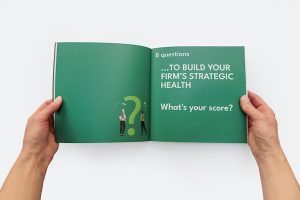

In a world of constant change, uncertainty, and increasing client expectations, one thing separates ambitious firms from the rest: strategic health.
In our book, Your Firm’s Future, we share a practical framework built around 8 essential questions that will help you assess and build your firm's strategic health.
Why does strategic health matter so much? Because when your firm is strategically healthy, it benefits your team, your clients, in fact, everyone connected with your firm.
Strategic health isn’t just an internal metric. It delivers a better outcome for everyone connected to your firm.
Click the button below to take the strategic health of your firm seriously by completing our Strategic Health Diagnostic
or
click the button below that to buy the book.