
When someone with an engineering background moves into accountancy, what skills do they bring along with them? What struck me in this podcast with Gareth Burton of Assure UK was Gareth's curiosity about the way that accountancy is carried out and the potential improvements to processes that can happen across virtually every part of our business. Gareth has got that down to a tee. To listen to more about that, along with further useful insights about how and why Gareth set up his firm, please join us on the podcast. Scroll down this episode page for the contact information for Gareth and for the additional, downloadable resources mentioned in the podcast. |
The Solution:
If somebody said, ‘Would you do it again?’, I probably wouldn't do it again because I didn't realise how much effort there was.
However, we're now going through some amazing milestones, and it's worth every bit of effort, but I think sometimes you need the naivety to just find your way through to realise what you don't know.
-
SHOW NOTES
-
TRANSCRIPT
-
CHAPTER MARKERS
SHOW NOTES

Connect with Gareth
- LinkedIn: Gareth Burton
- Website: https://progressaccountants.com/
- Website: https://assureuk.co.uk/


Welcome to the Humanize the Numbers podcast series. Leaders, managers, and owners of ambitious accounting firms sharing insights, successes, and issues that'll challenge you and connect you and your firm to the ways and means of transforming your firm's results.
Gareth Burton:Yeah, if somebody said would you do it again? I probably wouldn't do it again because I didn't realise how much effort there was. However, we're now going through some amazing milestones and um and it it's worth it's worth every bit of effort, but uh I think if it sometimes you need the naivety and just find your way through to realise what you don't know.
Doug Aitken:How does a background as an electrical engineer manifest itself when it comes to accountancy? In this podcast with Gareth Burton of Assure UK, you'll hear how his natural curiosity and his background as an engineer has forced them to challenge the way that he's doing things continuously and seek improvements in every process and system in his firm. Let's go to that podcast now.
Gareth Burton:Hi Doug, and thank you for inviting me on to Humanize the Numbers podcast. It's very much appreciated. Um, my name's Gareth Burton. I'm the founder and CEO of Assure UK and Progress Accountants. Assure UK are a specialist niche pensions audit and assurance firm, and we audit pension schemes across the UK. Umusiness. Um personally, I was very keen to have a good accountant around me that would help me with my compliance needs, my growth needs, and also bring me some new ideas as well of how I could make my business more effective at what we were doing for a lower cost. So I'm lucky enough to have two businesses that I'm that I'm responsible for. In my spare time, um, I obviously love my family, do love by travel. I've recently got married as well, so uh that's obviously taken a lot of this year out of out of play, which I'm which I'm lucky because one of my key goals is to have a self-managing business. So both Assure UK and Progress are, if not 100%, they're 90% self-managing businesses.
Doug Aitken:Fab. Thanks, Gareth. Uh great to have you on the podcast. Thanks, Brick. Uh thanks for joining us, and lots to dive into already from what you've said. Um, give us a bit of background, uh Gareth, in terms of younger years, you know, how long has Assure been on the go and what have you done over your career today?
Gareth Burton:Yeah, so Ashure UK was was born in 2012, progressed probably about five years later. Um, my career started with the with the big four audit firms. Um, once I qualified, I moved to Ernst ⁇ Young, where I was lucky to be a part of their Centre of Excellence for Pensions when it when all the regulations first came in. I then moved to a company called Anderson where I set up a little to um again do pension audit and I loved my time there. Um and then we got took over, and then suddenly I looked at I started questioning what was it all about. Um I wasn't enjoying work quite as much as I was. Um it was changing culture. Um, so I decided at that point it was time to set up my own audit firm. I looked at um joining other firms and actually being like a department within that firm. I looked at a firm in Oxford. Um I didn't like it. I thought let's start from a fresh. Let's let's not everybody gets pension audit, not everybody loves pension audits as much as I do. Um so I start afresh, build a business. You can only do it organically, there was nothing for sale out there. So I had to win um one client at a time, and now we've got over 300 clients which range, and they're all they're all well-known clients. So we're we we we're fortunate to have a a wide range of well-known clients in that business. On the yeah, brilliant. On the progress side, so my before I was a charter accountant, I'd I've got a degree in electrical and electronic engineering, and the one thing I hated was all paper, paper receipts, paper, paper, anything. But I love paperless, I love paperless, I would tell you. So when Xero came out and um I started, I started Assure UK, I decided that we were going to do 101% improvements, and and one of those ones was that we were gonna go um to the cloud for our IT, but we also went cloud to our accounting. Um, that then moved on to other people that I've seen at various industry events where we then put on their dexter, we then put on solder um prepaid cards, anything we could do to actually go paperless and actually give us more information about how the business was doing in a more timely, timely fashion. And again, working with progress accountants have made that dream come true. That I've now got my numbers at my fingertips, and what we're working to, the next step will be to get further into that and have better analytics over what we're doing and how we're doing it.
Doug Aitken:Yeah, fab. Um, so a fair bit of variety in the background here. Where's where's the passion for pension? How did it come from, Gareth? It's it's clearly got you interested and excited.
Gareth Burton:I was I was looking but it is quite niche. It's very niche. I was lucky when I when I started my career in accounting, um, I wanted to be an insolvency practitioner, to tell the truth. That was one thing I wanted to do. Right. When I qualified, the economy was booming. Um, the the business I wanted to join was basically laying off people, and I suddenly decided that's not a route I want to go down. I don't want to go down a down a business, I don't want to go down a career path where it's boom or bust. I want to have some consistency. And I I looked into industry, couldn't see anything I liked. Um, I was then lucky enough to to meet a gentleman called David Jones in in Reading, and he said I've moved to Reading with Ernst Young to create this new centre of excellence, and we agreed that I would do 70% of my time um doing pension audit and 30% doing corporate. So I was I could still go on each way. But the more and more I did pension audit and we did the technical side of it all, um, and also I quite enjoyed um building relationships and developing business that um there was no looking back really. And I think as we built the team, the more and more work we got, um, I didn't need the 30% of corporate audit. I was I was busy enough. I was I was actually too busy. Uh yeah, so that's what I love. I think when you surround yourself with people that love doing what they do, uh that's that's got to be your purpose, isn't it? You you're with people that love doing what and they can see continuous, endless improvement. Um it's a great place to be. And then when I went to Anderson, there were some new ideas there, and then actually being in the business in the shore UK, it's the one thing that we are looking at is constant, never-ending improvement. It's like, how can we make it better for our clients next year? How can we keep our prices competitive but give them more quality, whether that's through technology, whether it's through processes, whether it's through project management, anything then, yeah.
Doug Aitken:Yeah, brilliant. Wow. Well, lots to dig into there, definitely. Um, Gareth, as you probably know from if you've listened to one or two of the podcasts, which I know you have, one of the questions we ask early on is around our core purpose to humanize the numbers. What does that phrase mean to you?
Gareth Burton:I suppose you've got two sides of it. You've got me as a business owner of Visual UK, where we advise clients, and that's all about close work and relationships. There's there's too many people just see things as a contract and it's to be delivered, and they forget there's real people behind it. They deliver accounts late and they forget that some of these people will be with their grandchildren when they when they receive those accounts for signing, and it's not the best time for those those people. So if you understand what's going in somebody else's lives, you can actually make it easier for them. And it's you know, whether that's the timeliness of when you you deliver signed accounts, whether it's to do with um how you communicate what you're doing, um, whether it's just picking up the phone and saying, hi Doug, our audit team are stuck. We've got one problem that they're all stuck on, and we can't go anywhere. Can we just have a quick conversation? And that's how we've that's where I've built the business originally, and that's how we continue to build the business now as a team go forward. It's it's making sure that you um you don't forget there's people behind all these contracts that we have. And on on the progress side, I'm a business owner as well. So I don't want to work with an accountant that just tells me I've got problems. I want I want to I want to work with somebody who's proactive, I want to work with somebody who's gonna help me solve my growing growing pains. Um so it's about working relationships is is pretty pretty good pretty pretty important, and that runs throughout the whole team as well.
Doug Aitken:Yeah, yeah. I loved your um what you said about the empathy part of it there. It's something that we um I think a lot the the perception of it is that a lot of people think oh it's just being soft. But actually the definition of empathy is like putting yourself in someone else's shoes, and once you're in those shoes, what does the view look like from over there? And it's amazing how it changes your literally changes your perspective on things. Um so yeah, really interesting. Um let's go back to the start of Assure in particular, um, Gareth. How how did that feel taking the big scary step of starting a business on your own with presumably no clients at the time, or did you have one or two lined up?
Gareth Burton:No no clients, it was just an idea. It was just an idea that I could build a business um that specialized in pension scheme audits. There was nobody else in the market where they were a standalone business, standalone audit business, they just audit pension schemes. So going to the market, you know, you know, meeting 146 people in my first year, saying, I've got this great idea, um it definitely toughens up the resilience um of your body left. Um kind of business, I appreciate how difficult it is to get off the ground. And it was important to um, I I did think that certain clients I used to work with would come across during the first two years, but after two years, I had to find a way to market and sell to new clients that I'd never met before and ask them to join a very small company when they're used to dealing with the big four accountancy practices and say we can actually do a better job than what you can do. And um it's the people that I've met on my journey that have made the difference between you know 77% of people don't change their supplier because they just think you're all the same. So it's about emphasizing the differences about what makes your business different to others. So if you've got a general accounting practice, they just see one accountant as a same as another. Yeah, I know many accountants out there where if you're looking for ideas, you know, there's some there's some accountants out there for with great ideas. If you want technology, I'd go to certain other accountants, tax advice and other ones. If you've got so it's about knowing which accountant is right for you at the stage of of your business.
Doug Aitken:Yeah, yeah. How did you go about that, Gareth? That's it's a really interesting point about how you articulate the difference between you and others, and and I was assuming you'd be up against the big four in terms of pensions audit. So, how did you go about articulating the value of what you do to make people change their mind or see you in a different light?
Gareth Burton:I think it again it was about aligning what we thought was valuable, so we did a lot of client feedback with the initial clients. We did a lot of feedback and we listened to them very closely at the beginning. Yeah. Um you know, it mustn't be hassle-free. So we make switching very, very easy. Um, it's it's not about your technical technical knowledge. You need to know, you know, you need to have been in the industry for a certain period of time to have any chance with these clients. But it's not just about you, you need to find their pay points. Are they being served? What about their fees? Do they they do they hit people at the end with a massive fee that they didn't expect? Which is okay when when times are good, then people just pay it. They don't really think about it too much. In the current environment, and probably the environment over the next few years, people would probably prefer a fixed fee. Um also give them a little bit of you know, treat them like an individual, give them some a little surprise, tell them something they didn't know, and that's what we try and do on every order.
Doug Aitken:Yeah, yeah, good. Um yeah, we we're living in a world that we want to have it personalised, don't we? I think um I was thinking about it the other day when I was talking to a firm about how Netflix do it well, Spotify, they base their recommendations on what you've listened to.
Speaker 4:Yeah.
Doug Aitken:So if I get Spotify recommendations telling me to look at some kind of weird jazz, um I would probably be raging at it, but but I won't because it it learns what I've listened to. So the personalization bit I'm really interested in. How did you how did you do that in terms of you know what give me an example of one or two little value ads that you did um or that made it more individual that allowed your clients to see you in that different light?
Gareth Burton:Um things change over a period of times. So when we went through COVID on my accounting um business, progress, we did collect accounts from home because just you know it was just easier for us to go and collect the records rather than wait for people to post them to us or or get their accounts, scan them. So we actually did a collect from home. So it's it's it's also being aware of the environment you're in at the time, and that was a well-received um service. Um, it could be to do with being more transparent with with what you're doing and actually understanding you know the idea of a timetable. And I remember many years ago, I was saying to a client, you know, we delivered the accounts on time, and they said, but you missed the other six milestones. So, yes, you you got to the final, you got to the final outcome, but actually every milestone that we promised was important, so we don't just measure it on the did we meet the statutory deadline, we go, did we keep every mini promise we made as well? So you're also polite to people, you know, just saying please and thank you. It's a cool thing, but you know, it's nice, you know, thank you for having me here today. This is a great opportunity for for me to share my story and hopefully help other people, and it's a great resource that you're providing other accountants as well. So just a simple one, say please and thank you, and also sorry, we we practiced somewhat internally, which is the three R's, which I got from a book. I must know I can't remember which book it was, but you know, show regrets or say sorry, explain what went wrong, what was the reason that you didn't do what you said you were gonna do, and how are you gonna put it right? Well, so very simple, but um you know clients generally don't leave us, um, they only leave because they they they close the pension scheme. So once they stay with us, you know, they you know the idea is that they see a real distinction in service and service value compared to their previous. That's the whole that's how we know we're doing it right.
Doug Aitken:Yeah, yeah, I really like that. It made me think of the the definition of trust, which is a um or or the trust equation as we say it's a model that we use quite a lot. You yeah, you've probably heard of it, you're recognising it, Charles Green. But the um reliability part is so easy to do, just just do what you said you would do every time without fail, yeah, and yet so many people overlook it, yeah, don't they? Yeah, but when you put it in the context of you're breaching trust if you don't do it, yeah, people get really offended. Oh my goodness, I have no idea. It's almost that they treat reliability flippantly until they realise that intrinsic link with trust, yeah, and suddenly it's oh, it's a big thing. Um so in in terms of that journey, uh let's just go back to progress. So you've had five years at Asure and presumably going uh well. What was the catalyst again for for starting the accountancy firm?
Gareth Burton:Assure was growing so quickly, and as many people said, they they said, well, actually, I should I needed some time to let the the finances catch up with Ashul growing so quickly. Um we probably needed a good accountant around us. So when accountants say that clients don't want advisory, um they've probably never been in a fast-growing business before because you need a good accountant at that point, and you know you need real figures, you need to you need to have your forecasts, you need to have regular meetings each month, and we needed some the better our routines have got in our business, whether that's client delivery, HR, IT, finances, the more successful we've been. And if it's not working, then you have to increase the amount of time that you that you look at um whatever's not working. So that's that's that's one of the things. And again, we just didn't have good routines in place. We we know I suppose we're accountants, you just assume everything's working okay, but actually working with somebody who keeps the discipline in place and helps us manage our finances, then it saved us uh tens, if not hundreds of thousands of pounds.
Doug Aitken:Yeah, you strike me as someone um uh quite studious about business, Gareth, or or curious, maybe uh a better word. Um is it is it the engineering background you just need to understand why something works or doesn't work, as the case may be.
Gareth Burton:Yeah, I think that's I think you're very right. They're very curious. Um, I don't get stuck on traditions. So when I first started, like you said, in those early years, you know, I saw people going to networking events, and I thought that's how you win business. Um, but when you've got only a few networking events per year, that's not much contact. Yeah, so you can you know you start off with cold calling, as you get clients, you get referrals, and then so you have to learn a different strategy to win to win work. And I was lucky that I met a good coach in my early years, one who taught me don't focus on you as an accountant what you think clients want. They gave me some feedback saying this is what clients want. Yeah, that's very valuable. And then the other one was here are some strategies to make you an outstanding advisor. And he had 12 of these strategies, and it was yeah, one of them was making time for life. Yeah, I was working very, very hard. Yeah, my godfather was taken very ill at one point, he came to live with me for a period of months, and he said, Gareth, I didn't realise how hard you were working because you're obviously looking for business during the day and then you're delivering work at night. Um, so you know, when people say, Oh, it looks very easy, I can promise you it's not easy.
Doug Aitken:You get what you no, I didn't.
Gareth Burton:Yeah.
Doug Aitken:Yeah. How did that message land with you?
Gareth Burton:Um, which which message is that though it's very easy. Yeah, it's um I think it's naivety. I think it's absolute naivety. But that it's easy, it's like you obviously don't know what's happening under the water or or behind the scenes.
Doug Aitken:Yeah, so sorry, Gareth, that was a bad question from me. I I meant more what you're got. Father said about how hard you worked. Um, you know, because sometimes people can say that to you and and we just brush it off. But I'm just wondering, someone that you maybe weren't you know in their presence all the time, so they didn't realise, and they're offering a more objective opinion, if you like, as opposed to someone who's too close to you can be too close, if that makes sense.
Gareth Burton:Yeah, no, it's true. It was a school teacher uh down in Bournemouth, and um yeah, I I I think you know professionals work hard. Um you know we've got a good work ethic. I I can't I don't know any accountants without a good work ethic would be truth. Um but I think you know you don't quite realise how much you have to work hard to to um you know to get some off the ground. The effort, you know, if somebody said would you do it again? I probably wouldn't do it again because I didn't realise how much effort there was. However, we're now going through some amazing milestones and um and it it it's worth it's worth every bit of effort, but uh I think if it sometimes you need the naivety and just find your way through to realise what you don't know. And um earlier, Dougie, it's about the curiosity. So at the beginning I was told you know things aren't going very well. I took a step back, I wrote a business plan, I spotted that I didn't know anything really about sales and marketing. So I basically read as much as I could, attended events on sales and marketing, um, and I've continued to do that as well. Um, learned as much as what I can do about sales and marketing because I think it is the most valuable thing that you can do. Um, there'd be, I'm pretty sure that we'd be a very good business, but we would have gone bust without having effective sales and marketing. And obviously, that over a period of time, as you get as you get bigger, your sales and marketing gets more effective as well. Because you know what works, what doesn't work, and you you know when it does work, keep repeating it, but then you test some house and see whether that works.
Doug Aitken:Yeah, yeah. How did that feel to you, um Gareth? This this testing out stuff. I often the reason I'm asking, often in our work with accountants, they'll search for the the best possible model they can come up with. Whereas we're very much advocates for just start, just trial something, if it doesn't work, shift focus, fail fast, move again. Yeah, you know, how do how does that resonate with you?
Gareth Burton:I think it's disappointing. Some you know you expect it to work and then it doesn't work, um, but then it doesn't matter whether it's cold calling, whatever it is, I've heard people that have they've played the game and they've made it work for them. So it's it's not somebody always said when you do cold calling, try and get 50 no's. Yeah, and it's like you can't get 50 no's at some point they'll say yes, yeah. Um yeah, you're gonna find somebody out there that's nice enough that won't say say no. Um, so it's it's it's whatever you're doing, you've got to make it a game, and you've got to you've got you've got to gamify it to give yourself some hope, especially, you know, yeah with my team on Friday, and they'll say, God, you must be very proud of what you've achieved. And I am very proud of what I've achieved, but also my wider team as well, because I couldn't have done it without them. That goes without saying. Yeah, um, but you do forget that day when you go, I'm self-employed, uh, the business you work with have taken your car away from you, taken your computer, taken your uh mobile phone away from you, and you'll just sat there with a desk, a chair, and your new phone, computer, and your you know, one at a time building a business, and you're not busy, and you're used to being busy as well, which is hard. Free time is yeah, and I and I know my friends would say, Gareth, what are you doing? I said, Oh, I'm just cycling to the post box now to uh do my do my letters because I found that if you go to a cult call, it's a 1% success rate. If you send them a letter and a call, it was a 5% success rate. So you've just got to keep changing. And and the one thing I would say, and I think you're right with your advice, Doug, is don't give up too soon with whatever you're trying, whether it's a newsletter, you know, we sent our first uh newsletter out to 12 people, and I must admit, I did think this is a complete waste of time. And then we finally got out to about 500 people, a very targeted list, and it was bringing us in about 5,000 pounds every single month with a new lead that we kept testing it, trying it, changing a little bit. We never sold anything on the newsletter, it was just creating a system to stay in touch with people and just you know think about us. You know, we're there, we're the we're we're we're not we're ready for when you need us. But it's like you need to be aware, you need to raise awareness of whatever you're doing.
Doug Aitken:Yeah, yeah. There's loads in that as well. Um, Gareth, you you made me think about uh, amongst other things, when you said about clients wanting advisory, I've asked a few guests this question just to get the perception of it, because clients don't know what they don't know. And so until we actually proactively provide something that adds value, I would argue that um many people in business just carry on in in ignorance. Is that is that fair given your experience, or uh or would you disagree?
Gareth Burton:I think there'll be certain ideal clients and they'll stand out very, very easily that these people need help. They might just be naturally, naturally growing, and and you can see it through their numbers, um, especially if they're using a system like zero, where you know it's quite easy to look at the figures week on week, month on month, quarter on quarter, year on year, whatever it is, you can see what's changing, and you can say you and also you can see pain sometimes. You know, you can look at the amount of cash they've got, you can look at the emergency fund they've got there and go, You're just too close, you're just too close to your margin. Let us let us figure out how we can help you. And also, when you look at the changes that we've had over the last couple of years, and you know, we've got the budget in the next next week. Next week, um you know, you need to be speaking to your accountant and appreciating what impacts that's gonna have in the next 12 months. What you do want to do is suffer the impact and then have to go to clients in in 12 months' time and go, oh, we've got a problem, because it'll probably be worse then rather than being proactive and going, You're aware of the budget, this is what we're doing. Um and also there might be within your data, there might be something in there that's probably a better opportunity than what you're currently doing as well, which is quite an interesting thought.
Doug Aitken:Um yeah, uh how how do you mean with that? Uh Garnet, would you explain that a wee bit?
Gareth Burton:With bigger insights, sometimes you can spot a a growth market. You know, for example, we're we're now looking at niches within our main niche. You know, I was I was looking for years ago, I was looking for, well, what else will we do? And it was actually sometimes you don't have to look too far, sometimes there's other companies that once you've got one of them, you can get another one of them, and then you can actually give them all insights that they wouldn't have unless you had the whole group of them together. Um, yeah, and you just give them a benchmarking report, and sometimes they'll go, you know, we're happy with this, but sometimes they'll go, and sometimes you like say you Doug, you said you don't know what you don't know. I think everybody thinks, Am I earning well? You know, am I earning well compared to others? Well, why not create and why not, you know, if you're a niche practice of whatever you're looking at, why not create a benchmarking report that sanitizes where you give people seven key indicators for their business?
Doug Aitken:Yeah, I love that. What what would your seven be, um Gareth? You know, what what are they because I love the thought of am I earning well? You're right, that tends to be a comparison that everybody wants to make. Um and and sometimes having it pointed out, you know, I I hear people saying flippantly, if you're just taking what's left once everyone else is paid, you've just got a not even a well-paid job. It may not be a well-paid job, it may just be a job. Yeah. Um so I'm curious to to understand what are the seven um uh uh key things that that you would provoke conversations with.
Gareth Burton:Depends on the business. You know, if it's a professional services firm, then you know we look at new business, it's obviously a key performance indicator. We look at our emergency fund to make you know how many months could we not do business and still survive. Um three months, six months. I met just met one business owner and they had four years worth of cash, which I said even I thought that was a little bit, you know, it's bad days, but there's really bad days, but you know, I'm not gonna if they think that's the right number, it's their choice, isn't it? Really, um satisfaction, I think, is a is a key thing to look at. We also look at for our practice employee satisfaction, employee engagement. Good.
Doug Aitken:Um, yeah, absolutely.
Gareth Burton:Which is a which is a key one. So that you know, happy clients, happy staff. We also look at um the amount we've invoiced against against um our plan, actually cash collection as well, because again, it depends on your business, but they're the they're the type type of KPIs. I've said seven there. I probably wouldn't, if I was taking a top-down view, I probably wouldn't look at more than five um and focus on five KPIs. One thing that we did a couple of years ago, now might be three years ago now, is we implemented something called the profit first methodology on our finances, and that was interesting to see how far we were adrift from their suggested percentages. And then what we did was that um I think it was each quarter now, we aimed to reduce our CR overheads by 1% to get closer to their um that their split. And I found that really useful. But if you said to me, you know, if you compare us to other accountants on the amount we spend on marketing, I know most accountants probably spend about 1% of their revenue on marketing. I think that's that's not enough by far. You know, it's five or I mean probably no more than 10% should be spent on marketing, but I think one percent is you could pay it a bit more attention than than that for a greater reward.
Doug Aitken:Please forgive this interruption to the podcast. You've heard Gareth Burton talking about the importance of tracking and measuring the right uh KPIs or key performance indicators. You'll find a link in the show notes to a business breakthrough that will tell you more about that. Let's get back to the podcast. Yeah, I and some that I know uh you're they're lucky if they get to one percent. Which is quite quite sad. Um but it's uh is that an ignorance thing, um Gareth, or is it uh giving up too early? You know, I was very conscious of what you said earlier that and we have the same challenges working with firms that we're effectively challenging the way that they go about doing business. So they've got to create a new habit, yeah. And it takes time and persistence and energy and uh often a sense that they get so far and then think this isn't working, there's no point. So I guess the analogy with what you've said uh today is they maybe do seven cold calls and get no's and think this isn't working, I'll just stop.
Gareth Burton:Yeah, I think um Daniel Priestley said something and where it was like sending out postcards. I used to do 20 um letters per week, you know, he said do 200. 200, you know, people often don't do enough activity to get the to get the result they need, is the truth. So is the level of activity enough for um you know for for you for the result you're trying to achieve is is one thing. And Daniel Priest's things words were most businesses don't do enough. Um I thought that was that was an interesting one, and probably one I would would uh resonate with. And also some businesses just give up too soon. You know, it's like they they try it, they go, Oh, this is not working, newsletter's not working, and they never get to their first year. Whereas, you know, I've got the data that says over my first year, I spoke to or I met, say, 500, 600 people. Yeah, the second year I touched 7,500 people. Yeah, I now know we've 10x that again over our new marketing activities. So more and more people are aware of us, and I still know there's plenty of work to do in that area. You know, again, being data driven, do you do client testimonials? You know, if you if you look on Facebook, they always see when they try and sell your product all these happy people at the bottom. Well, if you look at the stats behind it, uh products that sell with or all services that sell with a testimonial get a 17% um increase in or increase in the likelihood of them saying yes. So, you know, play the odds, you know, play the odds. You know, don't do it because everybody else is doing it. Um and that's sometimes a reason not to do what everybody else is doing.
unknown:Yeah.
Doug Aitken:Yeah. Yeah, absolutely. And I love the thought about measuring things as well. We're we're great advocates for what gets measured gets managed, what gets managed gets better. And and in actual fact, you can sometimes leave the um the manage bit out of it. What gets measured gets better. Yeah. Because people get competitive, they there's a focus, and suddenly, you know, we was talking to one of our firms a couple of weeks ago and they measured response times to client queries within 24 hours. The moment they started measuring it, it was 50%. The next week it jumped to 85. Yeah, amazing. Just because it was being measured.
Gareth Burton:Amazing, mate. That's that's that's fantastic. The one thing I wanted to get better is more whiteboards or TV screens around us so that we've got real-time KPIs for the whole team so that they could see that and uh you know improve their performance based on that. It's yeah, it's not the deal, you know. At the end of the day, I prefer people to delay their response for a quality response rather than just trying to meet a KPI. There is a there is a yeah, there is a risk with it, but I I still it achieves the right outcome. And again, it's conversations and learnings that we go through internally of you know when we do whether it's audits, we're just getting to well, we've just completed audit season now, so we'll sit down and we'll go what worked, what didn't work, have we got any ideas to make the process even better next year, and what's our new process going forward? So, and we'll look at that rather at a client level, we'll look at that across all our clients and and break the team into little groups so that they they focus on different bits of it and go, actually, this is what we need to do in this area, which is if you keep doing it, it's surprising the the benefit they that it gives your business.
Doug Aitken:Yeah, yeah, absolutely. We're huge fans of it's that lean manufacturing outlook almost, isn't it? Um we were over at a uh brilliant business over in Northern Ireland um called Seating Matters, right? And they're huge uh fans of the the Toyota way, if you like lean manufacturing, and so much so that over the um the last few years they've managed to increase their output of orthopedic chairs from 13 a week, I'm pretty sure it is, to 24 a week with reducing the work workforce.
Speaker 4:Yeah.
Doug Aitken:Um it's just incredible what they're doing. Um I I love it from the viewpoint as well that the team are involved in that. So I love the fact you're involving the team because they're closest to the work. You know, they I think everyone sometimes in a work culture we see people deferring and referring to the boss all the time.
Speaker 4:Yeah.
Doug Aitken:But you're the ones doing the job. Come up with the ideas of what will make it better, what will make it easier, what will make the client's life easier, and suddenly you've got huge involvement and engagement. Yeah. Fab. Okay.
Gareth Burton:And in terms of button, sorry. We're over in Northern Ireland again, working with the pension administrator over there, and my team said, Gareth, can you come on service place? You need to have a look at something, yeah. Which is that they've known that they know that I like processes, they know like I like deficiencies, and and sometimes you just think through it and go, that is so clever, that is that is genius, yeah. And they'd implemented five S's, which we've then brought back into our office, which it does look quite strange when you've got a you know a stapler with with stapler written on it, yeah. But it goes to one place, you only have one stapler, you don't, you know, you don't have 26,000 reams of paper in the print room, you keep everything to just the right level, and um you know it was one of those ones where we go, this is a way to be more efficient. It is a 1% gain, I would say. Um, yeah. You've got the top team engaged, you know, you you have the first draw, the second draw, and they know there's a pen there if they need it. Um, you know, obviously a redundancy thing now because I'm not sure too many of the team actually physically use pens now within a paperless office. So um, but yeah, it's surprising what you get from other people just being being being aware of you know what ideas do you see when you walk into other people's offices and that you can then take back to your own office. And I know that our environment here, you can see we're in our podcast studio at the moment, we're looking to extend this this environment around the whole office because I said I just feel more energized. The new rooms that we've decorated, I just feel more energy in those rooms, and I want the whole team to get that energy. And also, I saw Zero's offices before Christmas, and they've got a lovely set of offices in London. I said, I want that here because it also generates a sense of community with our team, and uh it brings people together, and I can see some issues at the moment that I think will make the working environment even better than what it is at the moment. There you go.
Doug Aitken:Yeah, yeah, definitely. Yeah, I love that. It's funny, I was at a firm of accountants a couple of weeks ago and found myself scrabbling about in the kitchen looking for a spoon to uh stir my coffee with. Yeah, and it and it made me think straight away of five S's. Um and a lot of people think, oh, it's really it's really basic, isn't it? I mean, you you're in a kitchen, you know where the drawers are and whatnot, but you're right, you waste a lot of time. Yeah, and and that in itself causes stress and uncertainty and blah blah blah, and um just spelling out things like that. It's amazing what a change it makes. Yeah, um, yeah, but I I could spend hours down that lean rabbit hole, but we we better move on, I suppose. Um I'm interested, Gareth, in what you've said so far about the from the accounting firm angle. You're clearly a um a proponent of giving figures to people by explaining what they actually mean by making sure that meetings are forward focused and not just focused on what's happened and whatnot. Um How do you feel about the profession as a whole? So you're clearly good at it, and most accountants we get on this podcast are. Are good at it, but what about you know, if we looked at Joe Average Accountant, how well does accountancy service the small business market in the UK? In your own thoughts?
Gareth Burton:Um, I'd probably say they're not charging enough and they're too busy. Um so I would say it's uh look at look at the value you're creating for your clients. Um could you be more proactive with each of your clients? If you you know the first set of advisories, I would I would have thought there must be um there must be one one one checklist, one aid that you can give your clients that would help them you know manage their time, manage their money. Obviously, we can't give financial advice, or most of accountants can't give financial advice, but there must be something you can give to your to just start the advisory journey. Um but I do think there is an issue of trying to serve too many clients uh and not charging enough. So and also you just you know if you look at the way you use your dentist, I don't call my dentist the book of appointment, I call the receptionist. Um I think we're too accessible as well. And yeah, I'm stopping it there. Yeah, I think we're too accessible.
Doug Aitken:It's just interesting, isn't it? How uh and maybe it's the model. I'm putting words in your mouth here, Gareth, but correct me if I'm wrong. But isn't it the model that we're we're paid for compliance? So there's almost not a need to go above and beyond. Do you think that's fair? Does that make you lazy? Sorry, not you, but does it make accountants in general lazy?
Gareth Burton:Potentially, yeah, potentially. It's um you know, we're we're a very lucky profession. Clients need a tax return every year, and they you know they they come back whenever suits them really, um, which creates a massive workload for accountants. You know, January there's some exhausted accountants, and January they'll take February off, which is fine until you've got making tax digital and doing quarterly tax returns. You know, you can't survive. You can't, you know. Most people, after a 40-year career of doing of going through the same process again, again, again, um, are exhausted, I would say. Um if you do that every quarter, that is gonna be, you know, you've got to look after your health as well. You've got to say, is this right for me? And actually, you know, you need to give clients some leadership on on on when you want them to deliver their accounts um and their records so you can do what you need to do. Um totally agree. I think there needs to be you know a little bit of leadership and not just waiting for things to happen um and and setting some boundaries in place that you know it should be an expectation that you get your your records done in the last month. Um you know most people most people should know their tax liabilities before then. If they do, then that's good. But um I think there's some that are hiding and you need to help them. And so like, you know, if you've got six months to plan your tax liability, you've got a chance. If you've got three hours, then you are gonna go to some dodgy lender, pay too much money, and actually you could save yourself a fortune, so which would probably more than your fee in doing it. So there you go.
Doug Aitken:Yeah, yeah, definitely. Um, Gareth, really interesting conversation, but we're coming towards the end of our time. I'm just interested, I guess, from your perspective, what's the future of accountancy? Just from what you see happening, the trend lines, things like MTD, AI, what how how do you see accountancy playing out, let's say in the next five years or so?
Gareth Burton:A lot more automation, a lot more automation. I think there's gonna be some forward-thinking firms out there that will embrace automation, AI, um the the new team member of the future, which might be implementing it for yourself first, but then advising clients how they can implement it too, and some simple wins as well. Um clients will keep on compliance, you know, the MTD, MTD, and it I think you've either you've got to be aligned of if you're gonna do MTD, you need to have processes and procedures in place to deliver it because there is gonna be a whole host of clients out there that need your help, but you can't do everything, you just you just can't do everything. So, you know, it's it's it's um it's an exciting time to be an accountant. I wish I was 20 years younger because I do think AI is gonna be massive, and there is a massive opportunity to take a lot of the work that we currently do that clients don't really value, and actually spend more time helping them with forecasts that that that protect their potential income um over the next um you know, it gives them forward-thinking information. There we go.
Doug Aitken:Yeah, absolutely. Yeah, I totally agree with you. Um, and and if I had my time again, yeah, I would focus on these things too. It's the the market or circumstances are compell um compelling accountants to change their model effectively. Um, and some will be better at it than others, of course, but those that are ready, I think, is a massive opportunity.
Gareth Burton:Yeah, and it's fabulous. That are only in the development stage at the moment, and they're only gonna get better. You need to be on the journey with them, and you need to evolve with them because you are gonna provide so much value to your clients by by doing and make their lives so much easier, but they are gonna need some education in the process. And before I yeah, before I turn to the dark side of of Star Wars, I will end at that point. I've gone very far.
Doug Aitken:Okay, Gareth, uh, really enjoyed our conversation today on the podcast. Thank you so much for uh joining as a guest.
Gareth Burton:Thanks, Doug. Thanks for having me on the on the podcast. Really appreciate it and I love your content as well. Keep it up, please.
Doug Aitken:You've just heard Gareth Burton of Assure UK talk about the importance of client selection and adding value to clients so that they'll pay the prices that you want them to pay. These are subjects taught in the Accountants Growth Academy. To find out more, go to remarkablepractice.com or follow the link in the show notes.
Paul Shrimpling:You'll find more valuable discussions with the leaders of ambitious accounting firms at humanize the numbers.online. You can also sign up to be notified each time a new podcast is made available.
Doug Aitken:This is a short snippet from a podcast with Phil Hobden of Sage in which he talks about how AI enhances the client experience and doesn't replace the human interaction. If you'd like to hear more, go to your usual podcast platform or listen to it on humanize the numbers.online. Better still, if you like it, please hit the subscribe button.
Phil Hobden:If you're not doing more for the fees that you're charging, people will start to question the value. And if you start to question the value, that's when you then there's that increased risk around actually, will we have this level of recurring revenue and repeatable revenue each year? So I think I think actually the model the model is pretty sound, right? Like it's a pretty good business model, it's why there's so many accountancy firms and why so many are successful. But I think the model is being pushed by external factors, and then you add in changes within legislation and everything else, which again fundamentally pushes how you operate as a business. I think at that point you then start to go maybe we do need to evolve our model because actually this model is very good for 20 years ago, but actually, is that model necessarily relevant for today?
CHAPTER MARKERS
START TIME | CHAPTER TITLE |
|---|---|
0:21 | Introduction |
2:21 | Gareths journey |
5:12 | Gareths passion for pensions |
7:18 | What does Humanise The Numbers mean to you? |
9:51 | The idea of Assure |
11:57 | How do you articulate value? |
14:38 | Personalisation, milestones and service rituals |
17:34 | Starting an accountancy firm |
20:32 | Hard work, working hard and making it a game |
27:50 | KPIs and the importance of measurement |
32:38 | Profit first and investing in marketing |
37:27 | The Fives S's and creating an energetic working environment |
41:06 | How well does the accountancy profession service the small business market in the UK? |
45:00 |
Click the play button below and use the slider on the audio below to get quickly to the chapters in the podcast.
Resources relating to this podcast:
Doug and Gareth discuss KPIs during this podcast, along with seven keys things that provoke good conversations with your clients.
Gareth then talks about the importance of focusing on five key KPIs. Because the measurement possibilities for your firm are almost endless, it pays to sense-check that you’re measuring the right things:
Cash, revenue, profits, key costs, capital value, team engagement, team absence and churn, client loyalty, productivity, speed of delivery, etc., etc., etc.
To ensure you stay focused, you need to home in on just a handful of the right measures, minimising the number of KPIs to avoid KPI overload.
But first you’ll need to investigate what you could and should measure for sustainable success.
Measure what really matters to your firm and then act fast to improve these measures, and the heartfelt success of your firm will be safe and secure.
If you want to know more about the right things to measure in your firm, please click the button below to read the Business Breakthrough report 'Sustainable Success with KPIs'.

Click the button below to discover more about the Accountants Growth Academy.
Remarkable Practice Client Manager Programme
You secure your firm’s future growth and profitability when your clients are loyal, recommend you more, buy additional services and are open to regular price increases.
And what drives all of that?
Not just technical quality. Not just deadlines met.
It’s the behaviour and mindset of your client managers.
When your client managers improve how they engage and care for clients, your firm’s results improve.
So the question is: Could you be doing more to build your client managers’ skills and mindset?
That’s exactly what our Client Manager Programme is designed to do.
It helps client managers:
- Build deeper client relationships
- Deliver value beyond the numbers
- Handle pricing conversations with confidence
- Spot and act on opportunities for additional services
Great client care is no longer a soft skill. It is a strategic advantage.
Click the button below to read more about our Remarkable Client Manager Programme and, if you want to discuss it further, please get in touch via the 'chat with us now' button on the website. You'll speak to a real person, not a bot!
Your Firm’s Future – by Douglas Aitken and Paul Shrimpling of Remarkable Practice

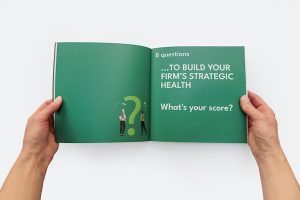

In a world of constant change, uncertainty, and increasing client expectations, one thing separates ambitious firms from the rest: strategic health.
In our book, Your Firm’s Future, we share a practical framework built around 8 essential questions that will help you assess and build your firm's strategic health.
Why does strategic health matter so much? Because when your firm is strategically healthy, it benefits your team, your clients, in fact, everyone connected with your firm.
Strategic health isn’t just an internal metric. It delivers a better outcome for everyone connected to your firm.
Click the button below to take the strategic health of your firm seriously by completing our Strategic Health Diagnostic
or
click the button below that to buy the book.