
I suspect that every one of your business clients seeks to work with you and your firm because you bring a dose of good business sense to everything you do with them. Yes, there's accounts. Yes, there's tax. Yes, there’s audit and other accountancy services that you provide but, ultimately, their reason for working with you is connected with more than just the services. It's connected with the way you help them feel that they've got a better, safer future – for themselves and their business, their families, their team, and their clients. In my discussion with Neil Campbell about sustainability, I was able to see, all of a sudden, how important that subject is, because it makes good business sense. If you want one or two very simple, very practical frameworks around which to form a sustainability conversation with every one of your clients, a conversation that's got a practical edge to it, that raises the bar in the way they trust you, then please listen to this podcast. Please also scroll down the podcast’s episode page for the contact information for Neil and for the additional, downloadable resources mentioned in the podcast. |
The Solution:
The regulations and compliance are irrelevant, but the risk and how that feeds into your strategy matter. The regulations have four pillars. They're all based on the original TCFD, which you can look up. It's governance, strategy, risk management, and targets and metrics or how you run the business.
And if your board decisions are reflected in the strategy, that is then reflected in the material risks that you manage, and they are then reflected in the targets and metrics of the business, i.e., how you run your business, and that information then feeds back up the chain into the board to do that exercise - that's just good governance.
I used to be on the corporate governance committee, and it's very much about running your company in the right way. So if those four are talking to each other, that's nothing to do with ESG or climate or sustainability; it's just good governance.
-
SHOW NOTES
-
TRANSCRIPT
-
CHAPTER MARKERS


Paul Shrimpling 0:04
Hello, my name is Paul Shrimpling from Remarkable Practice. Welcome to this series of podcast interviews, with the owners, leaders, managers of accounting firms who've done a brilliant job of challenging the status quo in their firm, challenging their thinking and the way they work, as well as connecting it into both the team and their customers and their fellow owners as well. So that they ultimately transform the results of their strategy.
Neil Campbell 0:33
The regulations have four pillars. They're all based on the original TCFD, which you can look up. It's uh governance, strategy, risk management, and targets and metrics or how you run the business. And if your board reflects um, you know, their decisions are reflected in the strategy, that is then reflected in the material risks that you manage, and they are they are then reflected in the targets and metrics of the business, i.e., how you run your business, and that information then feeds back up the chain into the board to do that that um that exercise. That's just good governance. I I used to be on the corporate governance committee, and it's very much about running your company in the right way. So if those four are talking to each other, that's nothing to do with ESG or climate or sustainability, it's just good governance.
Neil’s Journey From Finance To ESG
Paul Shrimpling 1:30
What would you say is good business sense is part of every conversation you have with every one of your business clients, of course. It's to do with accounts, yes, it's to do with tax, yes, it's to do with audit, maybe, and other services you deliver. But more broadly, good business sense is about looking after, helping your clients look after the future sustainability of their business so that they've got continuity built in. In this podcast discussion with an ESG expert, Neil Campbell, who's a council member at the ICAEW, we unpack what we mean, what he means by good business sense using ESG as a way of establishing your trusted advisor status with every one of your clients because you're taking a long-term view around their business, which I think every client would appreciate, especially if you're helping them reduce or mitigate risk and make the most of the opportunities their business is seeking to succeed around, if you will. So let's uh see what Neil's got to say. It was an engaging podcast. I hope you enjoy it.
Neil Campbell 2:40
Hello, my name's Neil Campbell. I'm a chartered accountant by training. I'm now a member of ICAW Council. But uh throughout my career, I left the profession fairly early on and went into finance and uh into financial services and from there into transformation programs on um many systems. Um about five years ago, I realized that uh financial services was just not for me after about 20 odd years and wanted to do something with a bit more purpose. So I've moved into looking at sustainability and ESG reporting. Um I have tried to bring that down to a business level to help people understand it and the implications for their business, rather than thinking this is a huge job that uh you know the world has to fix, and I uh it's too big for me. Um if uh if I wasn't helping companies to get onto that journey and uh realize that it just makes good business sense, I would probably be spending more time at my uh home team of Manchester City uh watching them, or traveling around obviously by train, being in sustainability around Europe, visiting uh the amazing cities that we we have around there. And uh I'm here hopefully to talk to you about the practical and simple implementation of ESG for your business. Brilliant.
Humanising Sustainability Through Real Risks
Paul Shrimpling 4:14
Thank you, Neil. And what's challenging now is uh my wife's a Man United fan. Uh so only two weeks ago, uh all of a sudden the red side of Manchester lit up, as you know. Um I'm a Burley fan, so you're on safe territory with me. My other um shareholder director is a Liverpool fan who's just recently been to the 6-0 drugging of whoever it was, I don't know. Um but we'll let that pass. We'll let that pass. Um okay. So uh we're in the ESG sustainability space, and I'm just really curious then, uh Neil, how do you interpret the phrase humanize the numbers in your space? And when when we've got that out of the way, I'll then want to dig into a little bit more detail about your business and how you work. So let's just go with what does the phrase humanize the numbers mean to you in this sustainability space?
Neil Campbell 5:09
In sustainability, I I try not to talk about you know ESG sustainability, saving the planet, because it's all about risk management. Um things like weather events are just risks to your business. And so you can look and humanizing it, you watch the news every day and you see a weather event somewhere in the world. We're still one of the biggest importers from Europe. Um, but it's um Spain, for instance, they've had uh such bad fires up in the northeast and on the Portuguese border that they've introduced unilaterally in Europe, they've uh which is unheard of, they've introduced their own carbon reporting um regulations from this year. And we still import huge amounts from Spain, but they have fires, they have floods. If that's in your supply chain, you lose your business potentially, you lose your supplier, and that's how you you can humanize it because there are people suffering in Spain because of these events, but it then comes to your business that you are facing these risks, and you know why would you not look at minimizing those risks?
Paul Shrimpling 6:28
Okay, so uh it's a global issue, so one country can start to make great strides towards on uh reducing their carbon footprint, whether as a business or as a region or as a country, but ultimately there's this global element. So we're not going to touch into that. What you're saying is from a human perspective, um these events are happening, will happen as accountants working with business leaders if we're not having a risk management conversation, we're not humanizing, and we're not reporting the numbers around what might challenge the future of that business. Am I interpreting that in the right way?
Going Concern Insurance And Supply Chain
Neil Campbell 7:09
No, a hundred percent. I've just been contacted by someone who sits on the uh audit faculty at the university at the institute, and they've said, can I talk to them about this? And I said, Absolutely I can, because all of your members of that faculty in their audits, they have to give a going concern report. They also have to um validate the asset values. Now, if you haven't considered these risks, which aren't it's nothing to do with climate or well, it's a result of climate change, but it's not really ESG or sustainability, it's all about the risk management mitigation of those risks. So if you are in a floodplain, for example, um, your insurer may come to renew your property insurance and say, no, we don't cover that anymore in that in that postcode. And you might be just in the wrong postcode where you're not touched by the flood, but they've pulled the insurance. If your mortgage has an insurance um condition in there and you can't renew your insurance, do you lose your mortgage? If you lose your mortgage, do you lose your building and hence do you lose your business? Now, if you haven't considered these, these are that's a finance risk, not a climate risk. If you haven't considered those, then how do you, as an auditor, say, yep, he's he's going concerned? Because I remember those days when going concern was you look at the cash flow, yeah, last kick last 12 months, he's fine, he's he's ongoing. It's got a lot more risky, the world has got a lot more risky. Um you would do the same for a cyber risk, cyber attack. So why not do it for a weather event risk? And and that's exactly what for an auditor, if you're not considering that risk, and the risk in your supply chain. Um I heard a story this morning. A lady, one of her clients, she uh they have uh about 90% of their goods coming from Bangladesh. Now they've just had a flood, which I don't know, is 40-50% of the country was underwater, uh, didn't affect their supply chain, but that's just luck. Now trusting to luck has never been a good business strategy. So if you aren't advising your clients about uh not doing ESG or these regulations or what have you, one, it sets you up for tenders if you've got these credentials, and two, why would anyone want to do business with you if you're not considering these very real risks that you see on the news every day? Um and that's how when a CEO, CFO, CSO, COO, whatever is watching the news, I don't understand how that can't trigger just that risk response. We should really be thinking about that. And that's that's where I have a bit of frustration with the market in general, and accountants do tell me uh we're not seeing demand from our clients. Yeah, well, where else are they gonna hear it from if not from their accountant?
Paul Shrimpling 10:23
Yeah, so so I think therefore, are you not saying that um there's a responsibility, almost an obligation on the firms to have those conversations with every one of their clients? Uh or is there a way of identifying which clients you should be doing this with and you shouldn't? I'm just you know, I'm trying to get into the practicalities of the firm being able to take this message and turning it into something practical and focused so that something can happen in there, say in the next 13 weeks with those firms.
Neil Campbell 10:54
Yeah, well, the unfortunately the next this is a really bad time for accountants. My partner's wife is an accountant, she's been snowed under for a couple of months, and uh so it's a bad time to talk to accountants about doing anything outside of that. But yes, there's no legal obligation, but um if you had a going concern qualification six months later you go out of business, now then do you have and you haven't considered the risk that took you down, is that something the accountant would be liable for? I mean, that's going further, but if you it would certainly be a a reputational risk if you haven't um talked to your clients about it.
Paul Shrimpling 11:41
Right. And are are we talking uh because of the you know the the legal framework around audit, are we talking audit clients really here, or is it is is it more broader than that?
Neil Campbell 11:51
No, it's it's a business risk, it's not something uh that is a reporting risk. There's most of the companies and 99% of companies are SMEs, there's no obligation for them to do this reporting. And as I tell people, you're not recognising these risks to your business to make a report out of it and submit it somewhere, you're doing it because they're very real risks to your business. That's right, okay. Oh we have to do a report at the end of the year, and uh it's it's the regulations and compliance is irrelevant, but the risk and how that feeds into your uh your strategy. Um there the regulations have four pillars, they're all based on the original TCFD, which you can look up. It's uh governance, strategy, risk management, and targets and metrics, or how you run the business. And if your board reflects um, you know, their decisions are reflected in the strategy, that is then reflected in the material risks that you manage, and they are they are then reflected in the targets and metrics of the business, i.e., how you run your business, and that information then feeds back up the chain into the board to do that that um that exercise. That's just good governance. I I used to be on the corporate governance committee, and it's very much about running your company in the right way. So if those four are talking to each other, that's nothing to do with ESG or climate or sustainability, it's just good governance. Similarly, risk management it's not climate risk management, it's risk management, and there's as you know, identification, impact, assessment, um, mitigation, and reporting. Those are the five elements of risk management. There's nothing outside of that. Just because it's a climate risk, you still do exactly the same. So, and the one thing about that is that accountants do this all the time already. They have this skill set, they look at the numbers, they make sense of it, they report back to the client with the material things that they should be focusing on for the following year. And that this is the trusted advisor status of an accountant, and then that goes into their board, their governance, etc. So it's it's very much something that accountants are really well set up to do. And it's just some sorry, go on.
Paul Shrimpling 14:29
No, no, I just want to step in because there's uh the the uh you've brought into this discussion that you know the positioning and reputation as a trusted advisor. Uh, and you know that I think sometimes that can be in terms of the skills needed misleading, uh, in that it means you've got to tell people stuff as opposed to actually you establish trust by asking really savvy, street savvy, relevant to that business risks questions.
Neil Campbell 14:59
Absolutely. Absolutely.
Paul Shrimpling 15:00
Well, let me just before you let me just expand on that before we dive in just because there's something I've really got to get out here. So you just unpacked five elements of risk analysis. For me, that they're they're flags and go, ask your clients about this, ask your clients about that. And it's so I've got I captured identification and impact. What were the other three?
Neil Campbell 15:20
Um, yeah, identification, impact, assessment, what would the impact be? And a monetary impact, and the likelihood, then mitigation, how can you address those risks? And then reporting. Um and the the assessment is also things like your asset values. Do you need to put a provision in against a property or a um you know something that is a physical asset? Is there a risk of that if it's by the coast, for instance? We've just seen on the south coast a huge number of properties, a beautiful village, it's basically not there anymore. Yeah, um and that's from coastal erosion because of storms, and storms are getting worse so far.
Paul Shrimpling 16:05
Yeah. Okay, so uh I got the identification, impact, assessment, mitigation reporting. And so there's a conversation around identification, a conversation around impact, a conversation around assessment, similarly, mitigation and then reporting. So there's creating those conversations, creating the questions that trigger those conversations, it puts any every firm into trusted advisor status around risk, of which one element is you know, uh climate impact, another element, cyber, and there are other elements, clearly, uh, depending on the business. Uh, so that's useful and practical to begin with. I'm just wondering, you will have come across firms or particular partners or managers in firms who do this really well. What is it that um uh shows up with those people, those firms? What what practically are they doing that makes them really good at this and have earned the right for that trusted advisor status in this space?
Risk Frameworks For Trusted Adviser Work
Neil Campbell 17:09
Yeah, this is it is something on uh council, ICAW council that we one of the core themes is you know the reputation, and that's the trusted advisories. And some of the studies they show that accountants I think are the third highest of in trust terms as a an annual study. But it's when you again is looking at the human element and looking beyond the figures to say, right, well, you have this property here. Did you hear about this report that you know there was a flood in that area? And some of the houses there you can't actually get insurance on them anymore, so they're unsaleable. Your property or one of your suppliers' properties that you get a big chunk of your goods from is in that area. Did you and it's thinking about the very practical, real uh impacts, not about accounting standards or what the the legal implications are, it's about you know what does it mean for your business, and that is something that I try and get across. You know, I talk to people, I say, I'm an ESG consultant, but I'm not gonna talk about ESG because this is about your business and building resilience um and for having a sort of forward-looking longer time frame. If you want still one one put it really well, they said if you're looking at net net zero by 2030, said you shouldn't be looking at what you know by 2030, what your net zero target is. Said you should be looking at uh what are you doing to still remain in business by 2030. All right.
Paul Shrimpling 18:58
Uh so what I'm fishing for, hunting for are you know specific practical things that the best firms, the best partners are doing. And what you've just said there is they're sharing insights around um the the potential areas of challenge to that business. And you made me instantly think of, for example, um Porter's Five Forces framework from the world of strategy. So they may there may be customers that are actually on a floodplain that you supply in their work, and that's that's 40% of your business. So actually, um, accountants prompting business leaders to consider the physical location of their customers as well as the physical location of their suppliers, key suppliers, the key strategic suppliers, just understanding um what the cyber risk, the climate risk, the weather event risk, whatever it is. Um so there's those two spaces. Um and then obviously there's the risk on your own business in terms of location and positioning and so on. Uh so it's not I I maybe going down a blind alley here. I'm just wondering whether that's um triggering something.
Neil Campbell 20:12
It's it shows that they understand your business, an accountant that really knows your business, not just knows the figures, but understands. And not and they should also be talking to them about the opportunities. There are massive opportunities. I think Deloitte's um a couple of years ago put the global opportunity within the ESG world as something like $12 trillion, and that's in all the transformation into you know the new energy grid, the new uh things like uh electric vehicles. Uh anyone in the motor industry, that that's uh you know an absolute boon for them. But there's all sorts of other things like moving your products towards a more sustainable nature. Your clients, if they are interested in sustainability, will want those new clients to replace their old ones. But then they'll also want to uh get rid of those old clients, so anyone in recycling, that's it's going to become um a massive industry, it's already a massive industry, but it's it's just going to become bigger as people make that transition, and that that's what it's called the transition to net zero, but it's much more than that. Things like you know, water use, modern slavery, deforestation, all of these things. If you can help your clients uh get that that um traceability of their their products in a practical way, and and this is one reason why we very naturally have we are an ESG consultancy, but we've gone into the business system side because it's the the thing about ESG. the problems we have is is the data and reporting. Now that's not from me. That's from a guy from PWC about five years ago. And when he told me that that's why I changed my approach to ESG to be the practical. Because I've been in transformation programs for many, many years, 20 odd years. The program with any transformation program, the problem with any transformation program is the data. It's always the data. And so ESG and systems just go hand in hand. And it's finding the data, automating the data, making it easy but I also tell people three things keep it simple, keep it relevant, and make it actionable. Because doing all this work and reporting without then taking action is verging on greenwashing. You're just telling people I've got done this. You've got to show the action but the action then has to have the data behind it. And that's the audit trail again. It's only the bigger firms that have to have any uh sort of audit on their ESG reporting. But it's again all about the data. Because when when I consider this humanize the numbers uh core purpose of this podcast is I've got a business owner or a board of directors from a business having a conversation with their partner manager or team of accountants and what we're introducing here Neil is a conversation around where you've started here is risk management of which you know the the uh weather events climate impact etc etc so you you uh to begin with we're in the in the it's not about reducing your carbon footprint this conversation this is about is the business going to survive which is a bit melodramatic yeah um but and I want to dive into you in a little bit I don't think so I don't think that's melodramatic I really don't because as I say the mortgage that insurance and the mortgage and the property uh your supply chain if that's you know compromised to a great degree and if you get a big chunk of your the goods you're gonna sell from one supplier yeah that you know are they at risk and is their supply chain at risk so it's it is looking further and but I when you first said about humanizing the numbers one of the things I do a few posts on LinkedIn and I and I end them by some some of the times especially you know oil executives and certain industries I'll say do they proudly look in the uh in the mirror um or the eyes of their children and grandchildren and proudly say I did that you know about climate change and it's that do you go home and your you know 15 20 year old son says what are you doing in your company dad about climate change if you can honestly answer and say well we're actually looking at the risk to our business from weather events what that means is we have to take action and it might not be on carbon because our carbon footprint isn't very big and unfortunately it it's it's all about carbon for most people there's so much more to it but what we are looking at we're looking at deforestation modern slavery water usage we've cut down the use of AI because it uses so much energy this sort of thing there are so many aspects to it that it doesn't have to be about carbon yeah it can be about what's relevant to your business.
Paul Shrimpling 25:46
Brilliant brilliant so so no I I I'm I'm I'm one for all is looking for frameworks so you've given me um uh two frameworks so far that any firm any leader can go into any conversation with any client and start to can create a valuable conversation one is one's around the identification impact assessment mitigation reporting another is uh we can already see accountants I can already see them rolling their eyes going oh here we go um and the same for the business owners and I witnessed this week yeah I witnessed uh a a presentation by uh you know an ESG provider uh to a board of directors on how the 40 things that they've worked out because of the investigation they've done could have a positive impact. So I watched this in real life this week um and I was party to the conversation after they'd left the room and um there was a little bit blinded with science there was a little bit too much ambiguity so the numbers weren't firm enough and it wasn't crystal clear what the net impact would be on the humans as well as the business. So it was all all the numbers were really vague and unclear and maybe that's just the world we're living in but just going back to the other framework you've just created is let's keep it simple let's make it absolutely relevant and let's make it actionable and in there that framework almost trumps the identification impact assessment mitigation reporting framework but probably they work best together.
Keep It Simple Relevant Actionable
Neil Campbell 27:21
Yep definitely on that look at what you've already got because most people there's the original regulations were called the TCFD the task force for um climate related financial disclosures TCFD and they came in uh in about 2017 but they were uh in enacted into um mandatory reporting for the public limited uh public uh companies listed companies but their framework is governance risk um strategy risk management targets and metrics most companies already do all of that they might not be fully aligned but that's nothing to do with climate change or saving the planet that's just good governance and so when you say oh yeah well it's all a bit nebulous and it it we're not sure about the figures well if you're not sure about the figures go and find some data look at what data you have got don't start thinking about reporting frameworks and building new systems what have you already got and some of it the S people often forget the S is environment social and governance now the governance you've probably got may not be that good but you've got a framework the uh the E is the one everyone's you know talking about the S is how you look after your people how you look after your community you know that's something that you can look at immediately and there's the advert about private health and the guy saying oh give everyone free tea bags and someone says well why don't you give them free private health now that's that's part of the S in ESG. So it's not anything to do with saving the planet or being a goody goody it's just saying well how do we motivate our staff and then from a business perspective if you're that's this is where the communication importance of communication internally as well as externally but internally if your employees feel that you are a company with purpose and you're trying to do something one apparently 80% of the you know population are concerned with climate change if they're working for a company that shows they mean and they have a purpose and they're doing something about it you have less churn of staff you get more productivity now take it to the next step what does that mean we pay recruiters less or our productivity's gone off. Now that's just bottom line straight to bottom line yeah straight to bottom line and people often think about it's just going to cost us loads of money most small companies are dealing with cost of living crisis but don't look at the massive solutions look at what you're doing now and if you want a reporting framework um which is an another framework there's one specifically introduced by Europe not yet in the UK but we won't go too far from it it's called the VSME which is uh voluntary um voluntary climate related reporting for unlisted SMEs but they've shortened it to VSME and if you look at VSME it's it's not a huge document um it it's about 60 pages but the meat of it is in about the first 10 pages and this is presumably accessible online is it Neil Absolutely you just type in VSME look under that and it can take you straight to the standard and most of them I would say look for a summary but the the VSME I've read it you know the whole thing uh it didn't take long but the main element or the main meat of it is in the first 10 pages the first two and a half pages tell you that in paragraph one it says the objective of this standard is to support business in accessing finance you know understanding the risk of their business um and uh meeting the possible reporting requirements that your supply chain may demand of you and then the fourth of the the four is a more inclusive and environmentally friendly planet. You know so but it's it's one it's voluntary so you can ignore it but it's also proportionate and it says only report what's relevant to you and if accountants have said to me oh well we don't know what to report what does a report look like well you've got a guide now yeah it's called the VSMA that's looking and it'll take to read the first 10 pages it'll take 10 minutes. Yeah it's a cup of tea in it yeah drinking cup of tea read 10 pages there sort of yeah yeah why not and the big thing about it is that doesn't seem to resonate with accountants is that this is a new revenue stream yeah and most practices grow through introducing a new a new product a new offering and it's advisory business it's not you know standard PL tax returns this is advisory so the rates are better on a very practical level.
Paul Shrimpling 32:48
So yeah yeah yeah but and and I I'd push back on that a little bit in that actually I don't know if the accountants really know how to charge for it. Yeah okay chargeable times one thing but let's uh you know let's look at the you know value pricing this is a toughie because there's the long term impact long term impact equivalent to capital value long term impact um well I'd I'd push back on your pushback though uh because yeah one of the one of the biggest things I see now in in accounting events is about advisory you've got to get into advisory whatever it may be not Leo they're not you know no I know I'm hugely passionate about this because I've spent the last 25 years as a to the accounting profession and and spent a lot of time and a lot of air and a lot of words uh contributing to the debate around okay compliance is not going anywhere it is changing thanks to the technology in AI but it's not going anywhere in the short to medium term it it's you know the technology has always had an impact on it um and there's a huge opportunity to better help your clients have a better business just define better business from client to client to have a better conversation with them which is why we're on this podcast and you've given us some really useful um constructs and frameworks already for that um but the the advice step away from the big four and say the you know the next 10 or 20 and advisory is a um seems like a bit of a dark art and I'm and I'm sure I've got some listeners on this podcast going, hey I'm I've mastered that great you know you've got competitive advantage what I'm trying to do with this podcast is how do we scale this so that we have a bigger impact across more firms and more business leaders around things that are important to those business the people they employ the owners their customers and their suppliers for crying out loud um and this that's why I've got to be on this pod because this is so important.
Neil Campbell 34:50
Contradictory slightly is that the way you build that trust is potentially to start giving something for free. Not giving a report for free but that advice about how you should start to look at your business in with a longer time frame um a wider scope so you really need to start understanding your business just give them a few advice you know advisory meetings of you know half an hour.
Paul Shrimpling 35:21
You know I heard this the other day or do a uh client event you know get someone in like me or whoever on carbon or ESG or and say we've got a client event it's drinks afterwards uh so you know six o'clock we're gonna have a reception afterwards and just a mingle networking but we're gonna give you a presentation as well give them something for free and it I I'm just you could see me laughing and obviously people who just listen to the podcast won't uh but the video version if they can find it well is I've just got this image of people having bacon butties and then having a beer afterwards at six in the morning whereas you actually talk about six in the evening back to my drinking days no no no that's just making light of an important point what what what you made me think there Neil is you know you mentioned keep it simple stupid but make it relevant and make it actionable well the having a a conversation with a prospect or a client about which aspects of this are relevant to them is probably very hard to bill for. However when you start jumping into the yeah initially yeah and and and you build credibility and and so on in the space but it's a place to start and that's what I like about this part of this conversation is where do we start?
Starting Conversations And Charging For Value
Neil Campbell 36:40
Well start by having conversations about which aspects of this from whether you use the um you know the VSME report to trigger the shopping list of discussions for example which I'm I I'm assuming is in there you can start easily simply in that space but as soon as you step into the what's actionable then we're into oh how do we help you do that how do we help you report it now we're into a billable um situation with real value attached tangible value I don't know what do you think I think next time there's a big storm or there's a I've got friends down in Yeoville and they're on the flood plain next time that that is underwater so did you see that big flood now you're talking about the weather the Brits love talking about the weather but then you can develop that conversation around do you know what this uh one of the businesses there just went they were underwater and they just they went out of business and they didn't have insurance because they you know didn't have they couldn't get the insurance and you can just develop those you know half of uh America 150 million people are at risk of losing their power and about 30 or 40 million have lost their power now because of the snowstorms because of the snowstorms because of the snowstorms yeah and why have we got such a recording this just everyone knows now we're recording this in January 20 uh 26 yeah yeah yeah um yeah and that is uh just a conversation about the weather and if you start talking about another client who you know they suffered because of the storm in Spain and they were importing a lot of stuff from Spain and it really put them under pressure they had to scrabble about to get a new supplier in the UK prices were higher um but they had a guaranteed supply and it made them think about their business that's just a conversation about the weather that you just take it the next step you don't talk about the business side and how much you can charge them for the VSME report you're talking about the weather and it's that sort of thing there was um uh an amazing thing there was this person I was talking to this morning they were talking about uh they've got someone in uh who was looking at doing some education in the um Mauritius I think it was um and they were asking her for input and they developed this training course and the guy went out to all the businesses no one was interested in looking at this training course now if you saw one of the cops there was a guy from a tiny island called Tuvalu and he reported in by video link uh from Tuvalu he had a lectern he had a suit on and he was stood in the sea and the reason he was stood in the sea was not because he's on a holiday island he said where I'm stood used to be dry land and there was a woman in the sea next to him you know playing around in the sea and he had a suit on and a lecture and he was saying I'm now stood in the sea this used to be dry land and people even though they're in risk areas aren't getting it so it's if there's a business in the UK that isn't getting it I can understand why.
Paul Shrimpling 39:58
Yeah yeah yeah and it's you know Neil I I'm coming into this conversation having had uh two discussions this morning with the managing partners of uh two substantial firms who are um both of them and their leadership teams and their next tier teams are all running around like scattered cats they're all snowed under and okay we're recording this on the 30th of January so that there's there's there's an excuse called tax season in the UK by the way one of these firms is not in the UK so that's not relevant. But bottom line is every leader every firm has to pick and choose where to invest time effort and energy to move their firm forward and help their clients in the best possible way. And so I'm sort of making this really hard for you to go well what's the pitch around ESG that will have the listeners to this podcast going yeah I can do this I can fold this in this is something we really could should be folding into the way we and our firm and the you know purpose of our firm gets delivered one the the main driver for this is that the market is only going one way.
Neil Campbell 41:18
There's a thing you everyone's heard of Davos and well the people who organize Davos is called the World Economic Forum and every year they do a risk report and it shows the something like three and a half thousand I think global CEOs and give their report uh of the top ten risks that they see over the next two years and ten years. Now for the two year horizon and they they group them by you know geopolitical weather uh um natural uh and market uh and there I think about five or six categories and the green ones are the nature related impact so that's climate weather you name it pollution um in the two year time horizon two of those are green you go right next to it has got the 10-year time horizon five of the top ten including the top four are all weather related events and those are including things like supply chain extreme weather events and supply chain disruption um so it the market the global market is looking forward ten years they're not looking at how do we how do we pay the wages this month they're looking 10 years hence and they are going that way if the global market's going that way national markets go that way local markets go that way so ultimately I mean we see with the NHS you can't deal with the NHS now unless you have a carbon figure and a net zero plan that is credible now they've actually added it has to be credible and backed up by data. So the they're I think they're the fifth biggest employer in the world so their supply chains are massive absolutely massive um and if you aren't looking at your supply chain as well um you um you will be uh excluded from tenders government work local government work all of that is um is something that you um you will you'll be straight under the no pile yeah not quite now but definitely for the NHS you are yeah so that chain you've got you've you you've got almost no no choice but to absolutely be clear in the space yeah yeah yeah I've just pulled up that um uh that that report on weforum.org and I'll put the um you
Paul Shrimpling 44:00
In the show notes, which has got it's got you know in the next two years and the next ten years in slightly different lists. Um and it and so that in itself is a shopping list of conversation. Oh, it is.
Neil Campbell 44:11
Um I actually think that the 2026 report has it's not the top four agreement anymore because probably of Trump, it's um geopolitical uncertainty and unrest is has moved up the list because of uh yeah, the um I won't say anything because there may be people who support uh Donald Trump.
Paul Shrimpling 44:34
Uh yeah, well clearly there are. Um I can quite blatantly say I'm not one of them, but I've got no qualms about on the grounds that my if my children ever listen to this, then that's then you know it's about getting off the fence. Um my daughter's just come back from the um the the movie about behind the the late the uh the I've not seen it, but it's about the you know what's going on in Palestine. But let's move away from that. Um uh so uh within these podcasts, I'd like to make it practical. So that report gives a shopping list of conversation. Um, you have repeatedly said on this podcast is the conversation's got to be relevant to the client in front of you, and so maybe a little bit of prep around the key topics before you go into a client meeting, referencing you know, the the the World Economic Forum insights, because and this is where I think you've probably got this nail, Neil, but the the the way trusted advisors establish a sense of value in any discussion with any client is that client has to be challenged around something they aren't yet aware of or connected to or have considered as important enough to actually make some decisions around. And you know, this topic, ESG, uh risks attached to each of those, business by business, is an opportunity to challenge the status quo by so have the accountant challenge the status quo of the thinking with each of their business clients and establish a level of trust they didn't have the minute before they asked that question. Yeah. So I think that's a very strong argument to have this folded into an annual, at the very least, and part of your annual framework of discussion, which just elevates you, moves you away from the normal run-of-the-mill accountant who's just talking about accounts and tax. Don't get me wrong, there's value in accounts and tax.
Market Pressure Tenders And Cost Savings
Neil Campbell 46:31
Oh, yeah. Oh, it's it's necessary. You know, you get big fines if you don't do it. Um but it's possibly um the cost of living crisis is in everyone's mind. You know, people are companies are looking at how we're gonna pay the wages this month, not you know, what's well how do I make the planet a better place? But if you can talk to them about cost savings, as we mentioned earlier, with you know, staff costs, you can reduce your recruitment, you can increase productivity. But also if you look at your waste, is there anything in your waste that you can sell? You know, is there a byproduct of what you produce? Things like can you uh do you produce CO2? Well, can you capture that and sell it? Um not and you know, can you get people cycling to work? Can you just easy stuff? And with that, you know, you're looking at cost savings for the business, not um doing the right thing for the planet. And it's bringing it down to you know uh cutting your electricity usage. Um, you know, we've one of our IT partners, they've got a tool, they put in sensors in on all sorts of things, like doors opening, closing, you know, temperatures, and and they they might measure usage in all sorts of different ways. Like there was one that was a university, they had a hall of residence, and their energy was spiking, and they just didn't know how. So they brought brought this company in and they put the sensors in. Turned out that their uh socket usage was massive, and they couldn't understand it. Everyone had a heater in their room, which they weren't contracted as uh possible, they weren't allowed to do that, but everyone did. Um, and so they said, All right, well, let's look at how we heat the building for a much, much cheaper way than having everyone having their own heater, and it saved them a fortune. And it's things like that doing the analysis, it was the data behind it. And the one that I love this story, and there was one company had these automatic windows that opened in the summer when it was too hot and shut in the in the winter when it's too cold, and uh they sort of they got the staff involved, and that I would say is key. Get your staff involved. What ideas have you got? And same with an accounting firm, what most of them will be concerned about climate, the younger people, especially, get some ideas from them, yeah. However, this company that had the automated windows, one guy turned around and said, Well, we should probably take that toaster from under the window then. And because they had a toaster under the window, the door, the window is constantly open. That's not rocket science, is it? No, it's not. That's not rocket science. No, it's not.
Paul Shrimpling 49:23
But it's interesting, you you forged uh some links in my head because you mentioned the word waste, cost savings, always connect the dots. So we're in that lean improvement space. Um, we're just about to take uh another uh bunch of leaders from uh accounting firms in to see one of the most impressive uh lean process improvement spaces I've ever been in. And I've been studying, I've been connected to it for over 30 years now. Um, in order to create this culture of improvement within the firm, which by the way, I think, and I haven't seen it until this conversation, so thank you, Neil, then triggers a conversation about improvements in your client businesses, not just around what's going on in terms of financial reporting and tax payments and so on, but in all aspects of the business, so that you go out of the oh, we've got a compliance accountant into we've got a trusted advisor accountant that's actually worth hooking my wagons up to for the next five, ten, fifteen, twenty years. So you've got loyal clients.
Neil Campbell 50:27
Well, it's making sure your business is is there for the next five, ten, fifteen years. Yeah, yeah. I I was talking to another guy about valuations and he said it um valuation is what is it, cash flow. It's basically discounted cash flow, but it's cash flow divided by risk, uh the risk, uh sorry, the discount rate minus your growth rate. And I said, well, ESG affects every single one of those, because if you have a supplier go down, or you know, if something is as bizarre as the levels of water in the Panama and Suez Canal are shrinking because of the heat around there. That means that they haven't got the draft, they've told ships they cannot pile as much on them. So what does that have? Oh, that means your shipping cost goes up. So it's all these things that but it's um yeah, making that uh link between uh the the practical aspects of your business, how you can save money, how you can um look at the risks to your business and practically make sure that you are gonna be there in five, ten, fifteen years. And on a valuations basis, if you think you're gonna sell your business in five, ten years for five million, if you haven't considered these risks, especially things like private equity, we're very big in the profession at the moment, it's been discussed on council many times. Um that is um something that you've not taken these risks into account, so your business is only worth two million. And then do you turn around to your business, your accountant, and say, You told me you know five years ago that it was worth five million, and now I'm coming to sell it, and it's only worth and especially owner owner-managed businesses, talk about the kids again. If you think you're gonna pass your business over to your kids, they will not want a business that is not environmentally friendly.
Paul Shrimpling 52:39
Yeah, or socially sensitive. And have you had that discussion? Yeah, yeah.
Neil Campbell 52:43
Exactly. Have you had that conversation with your kids? And if you did, and you said I'd like you to take the business over, and they say, Right, you've got to make some changes though. Changes, yeah, yeah, yeah. It's interesting. Simple as that. That's the human element. Oh no, nice, nice.
Paul Shrimpling 52:56
I've just um I'm trying to bring a few strands together as as as we head towards the end of this discussion, Neil. And it's you you brought up purpose earlier in terms of uh you know how's how's ESG connected to the purpose of the business? Because if you as a firm have have connected your team better to what it is you really stand for, what's your North Star that influences all the lumpy, if not all the decisions in your business. And I just want to because it might help is we, you know, it's a it's a discussion we've had with every firm we've worked with over the last best part of a decade. And when we have those discussions, one of the things that shows up quite a lot because there's a connection between the core purpose of the firm and what really matters to clients. Yeah, there is a connection, uh, and and the connection often is they go to their accountant so that they and they trust them if you say they're back, you know, one of the if the third most trusted provider to the business community, and there's various studies on that. Um they want the accountant to help watch their back as a business, and I think and you're saying this conversation is part of the look after the certainty, the security, the future of the business by posing questions that could impact on the valuation, could impact on their ability to trade next week, never mind next year because of certain events and so on.
Neil Campbell 54:28
Yeah, these these risks can hit you without any warning. Whereas making tax digital, you know, they prepared their clients for that, or they were prepared to to have the information come through and get them doing quarterly reporting, etc. etc. They prepared them for that because they knew about it. They they should know about ESG, it's so important at the institute. They put out so much content, but I'm uh so not I won't say a loggerhead, so I'm I am advising where I can, and I've talked to the CEO and the chair um about this. There's a lot going on with uh of course one thing and another, but um I've said you can't think about this content as being sufficient because people can ignore it and are are ignoring it, the you know, outside the big companies. Um they're only doing it because it's an opportunity as well, not because you know they think it's the right thing to do. And and I I treat keep trying to tell them you you give information on this aspect or that aspect or this reporting regulation, and you you never really focus on the small company and just looking at it holistically and bringing it down to it's really about risk, risk management, and there are frameworks around all of that, but governance, risk, and data are the key points. Most companies I won't say understand it, but they're doing something about all those areas already governance, risk, and data. Um might not be very good at it, but you can improve. And but they understand all those areas, and that's what you should be focusing on. Not there's a new regulation out where they're talking about double materiality. What? It turns out that is just materiality, but there's just two directions in it. But you know, keep it simple and talk to your clients in terms that they understand and things that they already know and do, and just say, Well, you're just expanding those. If you just with the risk that you consider for your business, just expand that to think about climate and weather events.
Paul Shrimpling 56:53
And you know, what I'm gonna do is I'll I'm there's uh I'm gonna put a uh the purpose chapter from Doug and I's book uh in the show notes that people can just access directly uh off the URL. Um and it and there's some there's a few stories in there. One of one of them's you know about the profitability of products that have got a core purpose uh contribute to 70% of the profits of Unilever.
Speaker 4 57:22
Yeah.
Paul Shrimpling 57:23
You know, the other products contribute significantly less. Um, and so there's purpose is one aspect of this conversation today. Um, and there's there's there's many podcasts in our series that are connected to this because it's such a powerful motivator that means people stay, your team stay, your clients stay, your team and your clients recommend more people to come to you because they can see you stand for something, you're not just another vanilla accountant. Um hundred percent. And but the the that chapter which people can access free of charge um clearly shows, and there's more research than we've shown in that book, but um, there's a connection between purpose and profit. There's a connection between people and profit, and there's a connection between planet and profit as well. And um, you know, if accountants are there to watch their clients' backs, these conversations have to be had, don't they?
Neil Campbell 58:20
Yeah, absolutely. You know, there's a big thing in ESG, they talk about uh people, planet, profit. Um, I would say planet, people, profit, but there's another one which says there's no profit on a dead planet. Uh every year they produce the um uh the the earth boundary, and it's getting earlier and earlier. And what it is is the date by which we've used the resources that the planet can produce for that year, and it should be a whole year, you know. We should be able to, and as one person said, we're using the capital of the planet, not the interest, so which I thought was perfect, but that date is now sometime in early August, so two-thirds of the way through the year, we've used up that year's resources, and the rest is just the capital we're eating into. Wow.
Paul Shrimpling 59:18
Yeah. Um so there's this pressure to do something here, whether you like it. Whether whether you believe it or not, the the research tends to suggest there's something to be done.
Neil Campbell 59:27
Well, I I was talking, I was mentioned this double materiality thing, and it's one of the uh European regulations. But what it is is you should be doing half of it already. The risks coming into your business, you should be measuring those and identifying those as any good business should. But then it's the the double bit is the same impact that you're having on the planet. Now, if you're using something and depleting it like wood, your impact on or your input, your uh one of the risks to your your bringing in of the wood is that that source won't be there anymore. But if you're depleting that resource, that's your impact on the planet. So it's a circular thing. It's not they're not, oh, these risks are one thing, and then our impact is something different. It's almost like a circular thing. If you're using wood and you're not using it effectively or efficiently, that reduces the source, which means the price of your input goes up in business terms, but then your source of supply, if that's gone, you might have to find a new source of supply, and it might be more expensive, might not have the quality, etc. So this is about protecting what we're using and using, you know, just using the interest, not the capital. Yeah. Um business. But you mentioned purpose earlier. Yeah, yeah. But I you mentioned purpose earlier, and there's one company, I think it's um Southeast Water uh S SSE. Um, and a guy there, Andy Brown, who was he's been involved in this. It was PAS 808, the uh um British standard that is becomes a PAS before it becomes a British BSI. And it was PAS 808. Unfortunately, what they've turned it into in the BSI is so complex and we they've had to rewrite it, I think. But PAS 808, he said, Yeah, we've been instrumental in that. And he said, What we have is every single person, we have a vision for the company, and everybody has a purpose card in the organization, it's big organization, how their role relates to that vision, and that I think is where you've got it, you've cracked it.
Paul Shrimpling 1:01:40
If um well, I I I I would take issue with that. I think you you've got it clear, you've communicated to everybody, then you've got to bring it to life. That's a completely different piece of work that is. Every day every decision, every action, yeah.
Neil Campbell 1:01:54
It took them a long time to get to that stage. They've been doing this for years, and it took before they got to that, they'd done a lot of work. But that was so the old story about NASA when the guy, the president visits NASA and talks to the janitor and says, What are you doing here, son? We're sending men to the moon, and he's a cleaner. Now that is yeah, yeah, that's what you've got to get to.
Paul Shrimpling 1:02:16
Absolutely. And but lots of firms and lots of firms' clients haven't yet got that actually build recognized, often because it exists in every business, it's just not clearly communicated well enough. And and and get it crystal clear around what core purpose means in your firm with your clients. Uh, and and in there, there's a conversation piece which is a massive opportunity to uplift fees per full-time employee. We see it all not all the time, but you know, we've got we work with firms on strategic health, which includes a huge dose of get clear on purpose, communicate it, and bring it to life. And you see their fees per FTE go up. It's you know, fair, you know, is it statistically uh significant, but we haven't got that many, but we've got dozens. Um, and the the the chapter in the show notes will add to that. And within that space is the um, you know, your team, especially your younger team, and your point, your children will want you to be uh ESG credible, not ESG uh discreditable. Pretending, yeah. No, indeed, and that you know uh washing it through whether it's purpose washing or you know, sustainability washing, whatever the right label is, ESG washing is a fine there's a fine line between using it for marketing and doing the right thing or just using it. Uh for the right reasons. I agree, I agree 100%. So um for me, the stand, and I'm I'm gonna post my last question to you in a second here, but I just want to frame that up. For me, uh the profession's job is partly to help each of their business clients continue in business next year and beyond. So part of the accountancy world's job is to watch the back of their clients who are busy doing what they do, and they just need to be dragged away from the uh coal face and just consider the big risks, the big issues, strategic opportunities as well going forwards. That's the accountant's job because no one else is doing it for the clients. Um, so today for me, you've connected ESG into that watch your client's backspace. So you have an annual accounts meeting, fold some conversations around which elements of ESG are creating the greatest risks in your client. It's that in front of you. If there isn't anything, at least you've asked and you're therefore credible. If there is one, you can work with them to earn fees.
Neil Campbell 1:04:48
Well, a bit of prep for yourself, get your own understanding a little bit, and you know, we're what we do with firms of accountants, we get them up to speed with their own reporting and carbon. Yeah, get your own house in order first, yeah. Yeah, absolutely. So you know what you're talking about. And our our goal is to get in, do it with the accountant, help them with however many clients it takes before they know what they're talking about, and then step back. And we're there if you need us, but we don't want to be there doing it year in, year out. We I'm an you know, my I'm an accountant by training, I'm on council, I feel a responsibility. I'm trying to drag the ICAW to look at it in a more practical, holistic way. I'm actually proposing that the annual survey should have an a question in there about ESG. What are you doing? So if people start thinking about their own practice and maybe you know more on that um you know, practical help from ICAW. Not sure if that's possible. I'm I'm pushing for it, but it's It's also what I'm I'm trying to do. But accountant, just for an example, there's one guy who is on council. He's he's a great guy. I love him. He's a West Ham fan. Good guy. And uh he's there on his own. Um, but he's been talking about this with me for two years. I've even presented to his board, and he's even got to the stage where we've got a new board now. Coming and present to them, they might be more inclined. Right. So it is tough for them to go on.
Paul Shrimpling 1:06:34
It is tough. And and and this is a tough space, especially with you know the tone that, for example, Trump is giving this space. But we're not going to delve into that because I've got I need to get this last question over the line. Uh, which is in this conversation, Neil, we've considered uh many elements, uh, a few frameworks, um, you know, things like purpose, risk, uh, key thing relevant to the client in front of you so that you help watch their backs is the big standout for me. I'm wondering of everything we've covered today, you know, accountant by accountant sat, so it's one accountant sat in front of one SME, because there's more SMEs than any others, uh, client, of everything we've covered off today, what's the one thing you would wish for them to do?
Purpose Valuation And Long Term Resilience
Neil Campbell 1:07:23
Start the conversation about the longer-term time horizon and longer term thinking about where they want to go with their business. Um, do they have a vision for their business? If so, let's put the building blocks in place to make that happen. And part of that is risk management. Uh, the world is a terrifying place at the moment. Let's build resilience so that you're still here in 10 years, 20 years. You know what I'm saying? That's it. The long-term discussion.
Paul Shrimpling 1:08:00
Yeah, long-term resilience, sustainable future for your business means a sustainable team. Sustainable initiative in a more broad sense.
Neil Campbell 1:08:10
Yeah, yeah, it means keeping going on and on, and that's what you want for your business.
Paul Shrimpling 1:08:15
Yeah, absolutely. Absolutely. I think there's a nice bridge there in the nature of that conversation, um, and watch your clients' backs as a consequence of that conversation. Brilliant. Uh Neil, um, can't thank you enough for bringing your uh insight, your experience, and your energy for a topic which um uh is key to everyone on the planet at the end of the day. So thank you very much, really appreciate it.
Neil Campbell 1:08:36
Yeah, uh uh it's been an it's it's been a uh a pleasure. So you know I uh it's you know I've really enjoyed bringing my thoughts together. So yeah, it's been good.
Paul Shrimpling 1:08:49
Thank you. Thank you.
Neil Campbell 1:08:51
Yeah, and I I do hope it helps. If anyone has any questions about this, I'm more than happy to have a chat. You know, the free chat show notes too.
Paul Shrimpling 1:09:00
Yeah, we'll put the links in the show notes so they can get to you nearly work. That's it.
Neil Campbell 1:09:04
I feel I feel great about getting accountants over the line with this. It gives selfishly, it makes me feel I've done it. Yeah, it's your purpose, isn't it? It's your purpose. Absolutely, yeah. Yeah, yeah, very good. Good way to finish. Good way to finish. Again, thank you very much, Neil.
CHAPTER MARKERS
START TIME | CHAPTER TITLE |
|---|---|
0:21 | Introduction |
1:58 | Sherelyn, and ultra marathons |
6:16 | Mind over matter |
7:52 | What does Humanise The Numbers mean to you? |
10:19 | Sherelyns journey to doing what she loves |
13:39 | The journey of Gooding Accounts, from bedroom to £1.8M |
15:21 | The in-house training academy |
17:40 | Letting your people do what they are good at |
19:31 | The corporate structure for the firm including HR & Marketing |
22:00 | Success driven by structure, processes and procedures |
25:00 | Pods and a focus on the client experience |
27:47 | Weekly one to ones building team engagement |
31:40 | The importance of loving what you do |
34:16 | Expansion, new office and bringing the team together |
37:55 | |
43:49 | What does the future hold for Gooding Accounts |
45:05 | The difference team led values and behaviours have made to the culture of the firm |
49:39 | Conclusion |
Click the play button below and use the slider on the audio below to get quickly to the chapters in the podcast.
Resources relating to this podcast:
Sherelyn and Doug talk a great deal in this podcast about the team at Gooding Accounts and why the engagement of the team matters. This is one of the priorities of the business – they have regular 1-to-1s with the team, they are moving offices to ensure the team is together, and there are rewards and recognition for great work, some of which is team-led.
Sherelyn discusses how engagement is based on the fact that the team are doing what they love and, if they are not, this is recognised and something is done about it.
How many of your team are doing the right job and love what they do? Have you ever measured your team engagement with a survey such as the Gallup Q12?
The more actively engaged your team, the more likely you are to improve the productivity, profitability, client care, and team retention in your firm.
If you want to know more about the importance of Employee Engagement to the overall success of your team and your firm, then please click the button below to read the Business Breakthrough report 'Improve Employee Engagement'.

Click the button below to discover more about the Accountants Growth Academy.
Remarkable Practice Client Manager Programme
You secure your firm’s future growth and profitability when your clients are loyal, recommend you more, buy additional services and are open to regular price increases.
And what drives all of that?
Not just technical quality. Not just deadlines met.
It’s the behaviour and mindset of your client managers.
When your client managers improve how they engage and care for clients, your firm’s results improve.
So the question is: Could you be doing more to build your client managers’ skills and mindset?
That’s exactly what our Client Manager Programme is designed to do.
It helps client managers:
- Build deeper client relationships
- Deliver value beyond the numbers
- Handle pricing conversations with confidence
- Spot and act on opportunities for additional services
Great client care is no longer a soft skill. It is a strategic advantage.
Click the button below to read more about our Remarkable Client Manager Programme and, if you want to discuss it further, please get in touch via the 'chat with us now' button on the website. You'll speak to a real person, not a bot!
Your Firm’s Future – by Douglas Aitken and Paul Shrimpling of Remarkable Practice

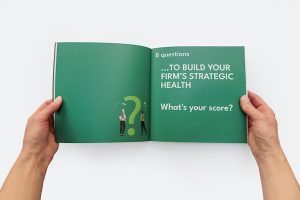

In a world of constant change, uncertainty, and increasing client expectations, one thing separates ambitious firms from the rest: strategic health.
In our book, Your Firm’s Future, we share a practical framework built around 8 essential questions that will help you assess and build your firm's strategic health.
Why does strategic health matter so much? Because when your firm is strategically healthy, it benefits your team, your clients, in fact, everyone connected with your firm.
Strategic health isn’t just an internal metric. It delivers a better outcome for everyone connected to your firm.
Click the button below to take the strategic health of your firm seriously by completing our Strategic Health Diagnostic
or
click the button below that to buy the book.